What’s actually slowing this PC down?
Free tools Windows power users keep installed
One-click scans. No signup required.
Pick the symptom - the matching free tool is one click away.
ThatPainter is reader-supported. When you buy through links on our site, we may earn an affiliate commission. Learn More
As an Amazon Associate I earn from qualifying purchases.
The most reliable winter bird garden is a mixed planting, not a single “best” shrub. Combine fruiting shrubs and trees with seed-producing flowers, grasses or sunflowers, and (where space allows) nut- or acorn-bearing trees. Different birds use different foods, and a plant is valuable only when its fruit or seed is available at the time birds need it.
The ten plants below are evidence-backed options drawn from regional guidance in Oregon, New Hampshire and Mississippi. They are not a universal ranking: climate, moisture, sunlight, soil pH, mature size and local native-plant and invasive-species rules should determine what you actually plant.
#1 Best Overall

- Chew-Proof Metal Build: The top and base of this bird feeder are made of metal. Advanced metal processing techniques make it more sturdy for outdoor use and resistant to squirrel damage.
- 2 Steps Disassemble Easy Clean Thoroughly: No tools needed! Disassemble in just 30 seconds. Easy to maintain and refill weekly. Say goodbye to the hassle of cleaning and reassembling bird feeders.
- One-Handed Refilling Made Simple: Press the roof button and slide up to lock it in place on the steel cable. No need to remove the entire feeder, making refills quick and easy.
- High Guardrail Seed Tray Design: Prevents seeds from falling while birds feed, reducing waste.
- No Assembly Required – Just Unbox and Use: 360-degree perch design allows multiple birds to feed simultaneously without being limited to fixed feeding holes, providing a more comfortable and free feeding experience for your birds.This is an excellent gift choice, adding vibrant colors to your yard and enriching garden life. It brings more joy to families and children.
What plants feed birds in winter?
Birds may eat berries, fleshy fruit, dry seeds, nuts or acorns, and some species also benefit from the insects and shelter associated with structurally diverse plantings. Autumn fruit can support migrants and resident birds preparing for cold weather; fruit that remains after ripening can carry winter residents and early-returning migrants. Conifers, grasses, forbs, nuts and acorns broaden the menu beyond berries.
Dana Sanchez, a wildlife specialist with Oregon State University Extension, puts the principle simply: “Different birds are attracted to different foods and it’s good to have a variety.” A planting that offers food in more than one form and season is therefore more dependable than a bed built around one berry-producing shrub.
Ten regionally appropriate plants at a glance
The table compares the options using the information established by the cited extension and bird-conservation sources. “Not stated” means the source did not establish a general value; it is not a recommendation to ignore the factor.
Quick wins for a faster PC:
Clear out junk files and repair common Windows errorsFree Scan →Scan for outdated or missing drivers - takes under a minuteDriver Scan →Rank #2

- Squirrel Proof Bird Feeder
- Bird Feeder,Gardening Gifts for Women,Fathers.christmas gifts for dad,mom and more bird lovers
- Metal Bird Feeders for Outdoors Hanging
- Squirrel Proof Wild Bird Feeders with Finch Cardinal Chickadee
- Large Capacity Bird Feeders
| Plant | Food | Availability | Native status and invasive risk | Site, size and regional notes |
|---|---|---|---|---|
| Oregon grape (Mahonia aquifolium) | Blue-black berries | Fruit follows midwinter flowering; winter availability is described for Oregon | Regional Oregon native example; local invasive status not stated | About 6 ft tall × 5 ft wide; hardy to USDA Zone 5; confirm suitability outside the Pacific Northwest |
| Snowberry (Symphoricarpos albus) | White berries | Persists well into winter | Listed as a useful native-region shrub; invasive risk not stated | About 5 ft tall × 6 ft wide; hardy to Zone 3; vigorous roots can help stabilize slopes |
| Winterberry (Ilex verticillata) | Fruit | Fall and winter fruit | Native shrub in New Hampshire guidance; local invasive risk not stated | Mature size and soil range not stated; choose a species suited to your area |
| Dogwoods (Cornus spp.) | Autumn fruit | Fall fruit, with some value extending into winter | Native examples include gray, red-osier and silky dogwood; risk varies by species and region | Size and exact site needs depend on species; use local guidance |
| Serviceberry (Amelanchier spp.) | Fleshy fruit | Seasonal fruit; winter persistence is not established in the cited material | Native species are listed regionally, including Amelanchier arborea in Mississippi | Size and soil requirements vary by species and location |
| Viburnums (Viburnum spp.) | Fruit and, for some species, seeds | Fall fruit; several viburnums provide valuable winter fruit | Native status and invasive risk vary by species and region | Use a locally recommended species; mature size not stated generally |
| Sumacs (Rhus spp.) | Fruit or seed clusters | Persists into winter | Smooth and staghorn sumac are named native examples; verify local status | Space and growth habit vary; regional selection is important |
| Purple coneflower (Echinacea spp.) | Seeds | Fall seed supply | Choose a locally appropriate species; invasive risk not stated | Site requirements and mature size depend on species and cultivar |
| Sunflowers (Helianthus spp.) | Seeds in flower heads | Fall into winter when heads remain standing | Native status varies by species; check local lists | Height and soil needs vary; leave healthy heads in place over winter |
| Oaks (Quercus spp.) | Acorns | Food persists into winter | Native status and suitability are species- and region-specific | A long-term, space-intensive tree choice; mature dimensions were not stated |
The ten plants, with practical planting notes
1. Oregon grape
Oregon State University Extension describes Oregon grape as an Oregon-oriented shrub with yellow flowers in midwinter followed by blue-black berries. The cited plant reaches roughly 6 feet high and 5 feet wide and is reported hardy to USDA Zone 5. Those figures are useful for planning a bed in a comparable climate, but they should not be treated as a national guarantee. Check whether the particular Mahonia species sold in your area is native, permitted and adapted to your soil and rainfall.
2. Snowberry
Snowberry is a strong choice when winter persistence matters: its white berries are described as lasting well into winter. The Oregon source gives an approximate mature footprint of 5 by 6 feet and hardiness to Zone 3, while also noting vigorous roots that can be useful on slopes. Cornell Lab of Ornithology includes snowberry among valuable winter-fruiting plants. Give it enough room for its root system and confirm that the species is appropriate rather than invasive in your locality.
3. Winterberry
New Hampshire Extension includes winterberry among native shrubs that provide fruit through fall and winter, and Cornell Lab lists it as a valuable winter-fruiting plant. Because the sources do not establish one nationwide size, soil range or performance profile, buy from a regional native-plant program or consult your extension service before choosing a cultivar. Treat the name as a starting point for finding the right local Ilex verticillata, not as proof that every plant sold under the common name fits every garden.
Rank #3

- FUN-TO-INSTALL: This bird feeder features a traditional oriental architectural style with a retro pagoda design. It offers a feeding spot for sparrows and provides you and your family with a delightful 1-minute assembly experience. Get ready to enjoy a fun and simple installation process
- HOW FEEDING BIRDS: The 8.2 x 8.2 x 9.8 inch feeder can hold up to 5 pounds(2 Pcs) of seeds, typically lasting 1-3 days. Sunflower and Niger seeds are more likely to attract Cardinals, Goldfinches and Chickadees
- GARDEN GIFT IDEA: Bird feeders are a unique gift idea. Create an opportunity for family, children, grandparents and even pets to see nature’s colorful wild birds up close, bring the birds and best wishes to them
- EASY BIRD FEEDING: The transparent panel allows for effortless monitoring of the remaining bird seeds, while the wide opening makes refilling straightforward
- WARM TIPS: To ensure that the bird feeder is secure, follow the user manual steps for installation
4. Dogwoods
“Dogwood” covers several species with different growth habits. New Hampshire guidance names gray, red-osier and silky dogwoods; Oregon and Cornell materials group dogwoods among native fruiting trees and shrubs and autumn fruits for birds. Select the species that matches your available space and moisture conditions. A locally native dogwood can add fruiting structure while also making the planting more useful to birds that need cover, but the cited sources do not support one mature size or a single winter-persistence claim for all Cornus.
5. Serviceberry
Oregon State University Extension recommends serviceberry among native fruiting trees and shrubs for future bird food. Mississippi State Extension lists Amelanchier arborea as a native plant in its regional material. Since serviceberries differ by species and region, identify the botanical name before planting. The evidence supports them as a fruit source, but it does not establish that every serviceberry will hold fruit through the deepest part of winter, so pair one with a plant whose availability timing is later.
6. Viburnums
Viburnums appear in both New Hampshire and Mississippi planting guidance, and Cornell Lab identifies American highbush cranberry and other viburnums among valuable winter fruits. The useful decision is therefore species selection: compare the local native list, mature dimensions and moisture tolerance before buying. Do not assume that a viburnum with an attractive name has the same bird value or ecological status as another species in the genus.
Rank #4

- BUILT FOR SMALL SONGBIRDS — AND IT KEEPS THE BIG ONES OUT: Six small ports with 1.4" perches are sized for finches, chickadees, sparrows and nuthatches. Larger birds like blue jays, grackles and cardinals can't get a grip, so they stop raiding the tube and flinging the small seed on the ground to get at the big kernels. If you want cardinals or woodpeckers too, pair this with a platform or hopper feeder — this one is deliberately the small-bird station.
- WIDE LIFT-TOP + SEE-THROUGH TUBE — REFILL IN SECONDS: Lift the metal lid straight up and pour; the opening is wide enough that you are not funnelling seed through a narrow neck. The clear tube shows the level from across the yard, so you refill before it runs empty instead of checking by opening it. Holds 1.5lb of sunflower, safflower or mixed seed — a small tube on purpose: seed gets eaten before it can sit and go stale.
- HOW TO CLEAN IT: The lid lifts off and the tube is clear, so you can see exactly what needs cleaning. The base is fixed — not removable — so here is what works: tip the feeder upside down and tap to empty packed seed, run a bottle brush or pipe cleaner in through the ports, rinse, then stand it upside down until fully dry before refilling. Do this every 2-3 refills and after any spell of wet weather, so damp seed never sits at the bottom.
- METAL LID, BASE AND PORTS: The lid, base, perches and all six port surrounds are metal, so beaks and claws land on metal rather than thin plastic; the seed tube itself is clear polycarbonate, which is what lets you see the level. Note: this is not a squirrel-proof feeder — the ports are open and a determined squirrel can reach seed. If squirrels are a problem in your yard, hang it from a pole with a baffle, which is what owners who have no squirrel trouble do.
- HANG IT WHERE YOU CAN WATCH — POLE, BRANCH OR SHEPHERD'S HOOK (POLE NOT INCLUDED): The metal hanger fits a standard shepherd's hook, deck pole or tree branch. Most owners hang it within sight of a kitchen or living-room window — finches find a new feeder within days, and you get the show from inside. Works all four seasons, with the busiest months being late autumn and winter when wild food runs short. A ready gift for a parent, grandparent or anyone who watches birds.
7. Sumacs
Mississippi State Extension lists Rhus among plants whose fruit or seed persists into winter. New Hampshire specifically names smooth and staghorn sumac, while Cornell Lab also includes sumacs among valuable winter fruits. Their growth habit can occupy more space than a small border shrub, so place them where spreading or suckering will not conflict with paths, utilities or neighboring plantings. Verify the species’ native status and any local restrictions.
8. Purple coneflower
Mississippi State Extension lists Echinacea among plants providing fall fruit or seed. The bird benefit comes from allowing the mature seed heads to remain available rather than cutting the flower stalks immediately after bloom. Choose a species proven for your region and site; the cited material does not establish one universal height, soil prescription or winter duration for every purple coneflower sold in catalogs. A locally appropriate seed source is more important than a particular flower color.
Do these 3 things before closing this tab:
1Fix the driver behind crashes, sound loss and screen glitches2Clear out junk files and repair common Windows errors3Scan for outdated or missing drivers - takes under a minute9. Sunflowers
Mississippi State Extension includes Helianthus among fall fruit-and-seed plants. The Royal Horticultural Society notes that sparrows, finches and nuthatches take sunflower seeds and recommends leaving herbaceous seed heads standing over winter. Let healthy heads dry on the stalks, and remove only diseased or unsafe material. Species differ greatly in height and habitat preference, so select one that will not shade smaller plants or fail in your soil.
Best Value
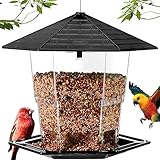
- 【JEALOEUR BIRD FEEDER】Jealoeur retractable bird feeders, can be expanded to store a large amount of food. It has a unique Latch Feature, which makes it easy to open and close the top for filling and cleaning.
- 【SCENES TO BE USED】Press PUSH to open the lid, put the wild bird seeds, sunflower seeds for birds , safflower bird seed etc, into the bird feeder, close the lid, and then hang the bird feeder under the eaves or in the garden.
- 【LARGE CAPACITY】It is made of durable, high quality plastic. Holds up to 2.2 Lb of seeds. Size: 8.7 x 7.6 x 7.8 inches.
- 【HUMANIZED DESIGN】Comes fully assembled and ready to hang. With its Hexagonal roof, the bird feeder features an inclined roof to shade birds from the sun and rain. When the seeds are eaten, more seeds will naturally fill the tray.
- 【EASY TO USE】 For your convenience and the health of garden birds, please use the Jealoeur wild bird feeder that is easy to fill, empty, and clean.
10. Oaks
Oaks supply acorns, a winter food for mast-eating birds. Cornell Lab names titmice, jays, turkeys and some woodpeckers among birds that use oak mast, while Mississippi State Extension lists oaks among plants whose food persists into winter. An oak is a long-term tree decision, not a quick seasonal crop: allow for its eventual canopy and root zone, and identify a locally suitable species before planting. The sources do not establish one mature size that applies to all Quercus.
Independent reader supportYour contribution helps us test, update, and keep practical guides available for everyone.How to choose the right plants for your yard
- Start with your local plant list. Check your state or provincial extension service, native-plant society and invasive-species authority for the exact species name. A plant described as native in Oregon or New Hampshire may be nonnative or unsuitable elsewhere.
- Map the site before shopping. Record the hours of sun, wet and dry areas, drainage, soil pH, winter exposure and the space available at mature size. Mississippi State Extension specifically recommends matching plants to climate, moisture, light, soil pH and available space.
- Build a food calendar. Put at least one fall-fruiting plant, one option that retains fruit or seed into winter, and one seed, nut or acorn source on the plan. The calendar matters more than the number of species: a bed that ripens everything in one week can leave birds without food later.
- Mix growth forms. Combine shrubs or trees for fruit and cover with standing perennials or sunflowers for seeds. Cornell Lab’s plant-group framework emphasizes that conifers, grasses, forbs, nuts and acorns complement autumn fruits.
- Check wildlife value beyond the label. Favor plants that serve food or shelter and support several kinds of wildlife. Remove invasive exotic plants rather than adding them for a short-term berry display, and ask the seller for the botanical name so you can verify the plant’s status.
- Plan maintenance before planting. Decide which seed heads will stay through winter, where fallen fruit can remain, and how you will prune without removing the season’s food. A low-maintenance plan that preserves mature seed heads often helps more than a heavily tidied garden.
What should you leave standing in your garden for birds?
Leave sound sunflower heads and other herbaceous seed heads in place over winter. The RHS guidance is specifically written for UK gardens, so its supplementary-feeding dates should not be transferred automatically to North American or other regions; the general seed-head principle is broadly useful, but local climate and disease advice still govern.
Standing stems also add structure while shrubs and trees are dormant. Remove material that is visibly diseased, damaged or likely to create a hazard, but avoid cutting every perennial to the ground solely for appearance. Where a plant’s fruit naturally persists, allow it to remain until birds have used it.
What’s actually slowing this PC down?
Pick the symptom - the matching free tool is one click away.
How feeders fit with a planted bird garden
Feeders are supplemental, not a substitute for habitat. Oregon State University Extension lists black-oil sunflower, nyjer, fruit and suet as possible supplementary foods and recommends planting native fruiting trees and shrubs such as elderberry, serviceberry, dogwood and snowberry for future food.
Because feeders concentrate birds, clean them on a regular schedule, keep seed dry and discard spoiled food. Follow local wildlife and public-health guidance for disease outbreaks. A planted food source spreads foraging over a larger area, while a feeder can fill a short seasonal gap; using both works best when neither is treated as the entire habitat.
Common mistakes to avoid
- Choosing by common name alone: “Viburnum,” “dogwood,” “sumac” and “oak” each cover multiple species with different ecological effects.
- Planting for berries without checking timing: A fruit that disappears in early fall will not supply a winter resident. Include at least one source documented to persist into winter.
- Ignoring mature size: The Oregon grape and snowberry dimensions are reminders that even shrubs need real space; a tree such as oak requires a long-term canopy plan.
- Assuming every attractive exotic is harmless: Confirm native status and invasive risk with local authorities before purchase.
- Removing all seed heads: Immediate cleanup eliminates the seeds that finches, sparrows and other birds may use later.
- Relying on one food type: Berries alone do not meet the needs of every bird. Pair fruiting plants with seeds, nuts or acorns and structural shelter.
A practical planting decision
Choose the ten options as a menu, not a mandate. In a small yard, a locally native winter-fruiting shrub plus two or three seed-bearing perennials may be more useful than an oversized tree. On a larger property, add an oak or another suitable nut-bearing tree and layer shrubs beneath it. In every case, match the species to your climate and soil, preserve food-bearing parts into winter, and verify local native and invasive-plant guidance before you buy.
Quick Recap

Product prices and availability are accurate as of the date/time indicated and are subject to change. Any price and availability information displayed on Amazon at the time of purchase will apply.

