What’s actually slowing this PC down?
Recommended Free Tools
Pick the symptom - the matching free tool is one click away.
ThatPainter is reader-supported. When you buy through links on our site, we may earn an affiliate commission. Learn More
As an Amazon Associate I earn from qualifying purchases.
English paper piecing (EPP) is a hand-sewing method: fabric is wrapped around individual paper templates, then the covered shapes are stitched together. It is different from machine foundation paper piecing. Start with a few accurately cut hexagons, leave a consistent seam allowance, and join the shapes with small, light whip stitches. These 10 tips walk through the process without requiring a large project or complicated setup.
What is English paper piecing?
Each paper shape stabilizes its fabric while you prepare it and sew it to its neighbors. The paper helps hold the intended shape; accurate templates and careful folding help repeated pieces fit together. The American Quilter’s Society (AQS) describes the method as starting with a paper piece and fabric cut larger to leave a seam allowance: AQS’s English paper piecing tutorial.
#1 Best Overall

- Potter Craft Books-Quilting On The Go
The basic supplies are paper templates, fabric scraps, scissors, a hand-sewing needle, and thread. Pins, a thimble, and a needle threader can help, but are optional. Choose a simple shape such as a hexagon and make a small flower or cluster before planning a larger quilt.
10 tips for accurate, neat EPP
1. Begin with a small, repeatable shape
A few hexagons make a useful first project: the shape is repeated, so you can practise covering templates and joining edges without having to plan a large quilt. A small flower motif lets you see how the pieces meet before expanding the design.
Rank #2

- Package Contents: You'll receive 120 trapezoid pieces, each approximately 2.2" long and 1.65" wide, along with 12 flat round pieces, each about 1.5" in diameter. Refer to our pictures for more details.
- Simply place the cardboard template on the fabric, trace along the edges, leaving a 0.4" seam allowance. Cut along the traced lines, flip the fabric over, fold along the traced lines, apply glue, and press. Sew the edges together to form the desired shape.
- DIY Different Shapes: Our quilting template paper supplies 2 types of shapes, allowing you to mix and match templates to unleash your creativity and create intricate patterns. Ideal for patchwork, sewing projects, and creative fabric design.
- Templates can be reused when sewn with needle and thread. If using glue, choose fabric-friendly glue to avoid thinning the cardboard after repeated use.
- Versatile Usage: These templates are perfect for crafting wallets, handbags, pillowcases, tea coasters, carpets, aprons, book covers, collages, dolls, and insoles. Transform ordinary fabric into extraordinary creations.
2. Use accurately cut paper templates
Repeated small template errors can add up across a unit. Use a dependable template or cut your own carefully. If buying pre-cut EPP hexagon papers, check the shape and size, cut accuracy, paper firmness, whether the papers can be reused, and pack quantity. Pre-cut pieces save preparation time; self-cut pieces let you choose a template size or shape. The cited instructions do not identify or test a particular brand.
3. Leave a consistent seam allowance
Cut fabric larger than the paper so there is enough to fold over every edge. About ¼ inch is a practical starting point in both the AQS tutorial and the Thames Valley Quilters Guild handout, which describes a generous quarter-inch allowance. It is guidance, not a mandatory measurement; avoid cutting so close to the template that the folded edge becomes unstable.
Rank #3
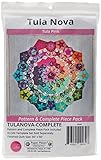
- Tula nova complete pattern and paper piece pack. Contains all of the Paper Pieces to make the tula nova quilt by tula pink. Pattern instructions include a coloring sheet
- Package Height is 0.5 inches
- Package Length is 7.5 inches
- Package Width is 5.25 inches
4. Keep the fabric centered over the paper
Position the paper in the middle of the fabric allowance and hold it in place with a pin or your fingers. AQS says the fabric can be eyeballed or measured and cut with a template. Whichever approach you use, check that there is enough fabric around every side before you start folding.
5. Fold one side at a time and form crisp corners
Fold the allowance over one paper edge, then move to the next. Keep each fold snug against the template and shape the corners neatly so the covered piece holds its outline. A light crease can help, but the aim is a stable, even edge rather than a bulky stack of fabric at the corners.
Rank #4

- CREATE A PATRIOTIC EPP QUILT ANYWHERE - Enjoy the relaxing art of English paper piecing while creating a stunning star-spangled throw quilt from the comfort of your favorite chair, during travel, or on the go—no sewing machine required for piecing.
- COMPLETE ENGLISH PAPER PIECING KIT - Includes illustrated instructions, acrylic templates, coordinating EPP papers, glue sticks, and 32 fabrics needed to piece and bind the quilt top, making it easy to start stitching right away.
- DESIGNED FOR PRECISION & FUSSY CUTTING - Features three Missouri Star acrylic templates with corresponding paper pieces for accurate cutting and beautifully aligned quilt blocks. Ideal for detailed piecing and showcasing fabric motifs.
- PREMIUM PATRIOTIC FABRICS INCLUDED - Includes 32 unique fabrics in a classic Americana-inspired palette.
- FINISHED THROW QUILT SIZE 54"" x 67"" - Create a beautifully detailed throw-size quilt perfect for seasonal décor, patriotic celebrations, gifting, or everyday display. Backing fabric sold separately.
6. Pick a basting method that suits your hands
Basting holds the fabric against the paper until the pieces are joined. AQS describes both thread basting and glue basting; neither is established as the best choice for every quilter.
Do these 3 things before closing this tab:
1Repair Windows errors before they cause bigger problems2Scan for outdated or missing drivers - takes under a minute3Clear out junk files and repair common Windows errors| Method | Useful when | Watch for |
|---|---|---|
| Thread basting | You want a portable method and stitches that can be removed. | Keep the fabric folded firmly as you baste so it stays against the template. |
| Glue basting | You prefer a quick way to tack folds in place. | Use glue sparingly and keep it away from the edge you will sew. |
The Creative Spark beginner course from C&T Publishing also covers both methods in its Hexie Flowers 101: Explore English Paper Piecing curriculum.
Best Value

- COMPLETE HEXAGON QUILTING KIT – FABRIC + PAPERS INCLUDED:This Soimoi kit includes 120 cotton hexagon precuts AND 120 matching EPP papers, giving you everything needed to start English Paper Piecing immediately—no extra templates or cutting required.
- SOIMOI HEXAGON PRECUTS FOR EPP: Skip the tedious cutting and start stitching right away. The Soimoi Hexagon Precut Quilt Kit is designed for quilters who love English Paper Piecing and want perfectly matched fabric and paper shapes for faster, more accurate results.
- PERFECTLY MATCHED SIZES FOR EPP ACCURACY: Fabric hexagons measure 1.75" per side and are designed to fold neatly around the included 1" paper hexagons. The generous seam allowance ensures easy wrapping, smooth edges, and sharp joins—helping you achieve precise, professional-looking quilt blocks every time.
- PRECISION CUT FOR CLEAN JOINS & SHARP SHAPES : Uniform machine-cut hexagons ensure consistent sizing across all pieces, helping you create aligned flowers, honeycomb layouts, rosettes, borders, and geometric quilt designs with professional results.
- LIGHTLY STARCHED FOR STABLE, NON-FRAY EDGES : Each cotton hexagon is lightly starched to reduce stretching on bias edges and control fraying during folding and stitching. Starch washes out after laundering, leaving your quilt soft and natural.
7. Baste through fabric only unless you need another approach
With fabric-only basting, the basting stitches can remain in the fabric when the paper is removed. It is one practical option, not a rule: AQS notes that basting through the paper can also be used when needed. For a fabric-only method, see Devoted Quilter’s hexagon preparation instructions.
8. Align neighboring pieces before sewing
Place the covered shapes right sides together and match the edges and ends before you begin the seam. Take a moment to make sure the folds meet evenly; a mismatch at the start can carry along the edge.
9. Use small, gentle whip stitches
With a hand-sewing needle and thread, catch only a few fabric threads from each folded edge as you whip stitch the shapes together. Avoid piercing the paper while joining. Keep your tension light and even: pulling too tightly can distort the seam and the shape.
Free tools Windows power users keep installed
One-click scans. No signup required.
The AQS tutorial and guild handout offer roughly 12–15 stitches per inch as technique guidance; AQS also notes that some EPP stitchers use 20–25 per inch. These are examples, not a required stitch count. Aim for secure, even stitches that hold the edges together without puckering. Choose a needle that feels comfortable in your hands, and use thread that does not draw distracting attention against the fabrics.
10. Leave each paper in until its surrounding sides are sewn
Keep the template in place while you assemble the shape’s neighboring sides. Once all its sides have been sewn, remove the paper. The support helps preserve the shape during assembly, and reusable papers can then be used for another piece.
Quick Recap
Common beginner problems and their fixes
- Folded edges do not meet: Check that the template was centered and the seam allowance is consistent before basting.
- Corners look bulky or uneven: Fold one side at a time and keep the folds snug to the paper rather than piling extra fabric into a corner.
- Seams pucker or shapes warp: Ease up on stitch tension and use small stitches that catch the fabric edges rather than pulling them together tightly.
- Joining stitches catch paper: Take a shallower stitch through the folded fabric edges; the paper is there to stabilize the shape, not to be sewn through during joining.

Product prices and availability are accurate as of the date/time indicated and are subject to change. Any price and availability information displayed on Amazon at the time of purchase will apply.




