Free tools Windows power users keep installed
One-click scans. No signup required.
Crashes, No Sound, or Screen Glitches?
Random freezes, missing sound and display glitches usually trace back to one bad driver. Find and replace yours safely.Free scan · under a minuteWindows Errors? Fix Them Before They Spread
Repair common Windows errors and clear accumulated junk for a smoother, more stable PC - no reinstall needed.Free scan · no reinstallThatPainter is reader-supported. When you buy through links on our site, we may earn an affiliate commission. Learn More
The best garden fence starts with a job, not a style. Decide whether you need a visible boundary, privacy, rabbit exclusion, space organization, or support for plants; then match the material, height, openness, and planting to that purpose and to your site. A picket fence can frame a front garden, a solid panel can screen a patio, and a correctly meshed wire fence can protect vegetables without making the yard feel enclosed.
As an Amazon Associate I earn from qualifying purchases.
The ideas below cover those different jobs. Use them as design directions rather than universal prescriptions: local rules, soil, exposure, mature plant size, the target animal, and your home’s architecture all affect the right choice.
The Tool Desk
Outbyte Driver Updater FREEScan for outdated or missing drivers - takes under a minuteDriver Scan →Outbyte PC Repair FREEClear out junk files and repair common Windows errorsFree Scan →Choose the fence’s purpose before its appearance
Penn State Extension recommends identifying the fence’s purposes and studying the landscape before designing or building it. A useful starting list is boundary definition, privacy, screening, noise reduction, animal exclusion, and organizing outdoor rooms. NC State Extension similarly treats fences and evergreen screens as parts of a unified landscape plan, not isolated objects. Read the guidance from Penn State Extension and NC State Extension before you draw a layout.
#1 Best Overall

- Rustproof & Durable: Make your outdoor space a charming oasis with our garden fencing. The garden border fence features an arched design and is coated with black rust-resistant material to ensure durability and making it able to withstand outdoor conditions such as exposure to sun and wind
- Easy to Install: Our yard fence features a unique snap circle design that eliminates the need for digging. Each fence panel board is designed with snap circles that can overlap each other. Simply overlap snap circles, insert the metal posts, and hammer them into the soil with a small hammer to secure them in place. Enjoy a beautiful and functional sturdy small garden fence without the hassle of traditional installation methods
- Customizable Size: Our garden fence border comes with 10 panels, each fence panel 13" wide by 17" high, with a clearance of 1.7", for a total length of 10 ft. The metal fence is also equipped with 11 sturdy 17" metal stakes to securely anchor it to the ground , the maximum depth for inserting into the soil is 7 inches. The fence panels are flexible and can be easily extended and customized to fit your specific landscaping needs
- Versatility: For an elegant addition to your outdoor space, flower bed edging borders fences not only enhances the beauty and organization of garden, creating defined areas for your plants to prevent them from overflowing, but also serves as a animal barrier that keeps unwanted critters, such as rabbits and dogs, out of your garden and prevents them from spoiling your plants. Its ornamental design showcases the beauty of your plants while keeping them protected
- Easy to Maintain: Decorative fencing is very convenient and easy to install and store at any time. Convenient for you to set up your garden view at any time, so you can spend less time worrying about maintenance and more time enjoying your garden
- Need visibility? Choose an open style such as pickets or wire.
- Need visual privacy? Use a solid panel or a planted screen, while checking setbacks and local height rules.
- Need pest control? Identify the animal first; mesh and installation details are species-specific.
- Need a garden room? Use the fence to define beds, paths, or a seating area and coordinate it with planting.
- Need vertical growing space? Add a properly supported trellis or vine system rather than hanging heavy plants from a weak panel.
Fence height, property-line placement, easements, permits, and neighborhood or homeowner-association rules vary by jurisdiction. Check your local planning office and property documents before buying materials or digging.
Material choices that change the result
Material affects openness, maintenance, structural needs, and how naturally the fence blends into planting. The University of Georgia’s Garden Fencing publication describes the broad differences below.
| Material or style | Source-backed characteristics | Good fit |
|---|---|---|
| Wood | Can form posts, panels, pickets, or privacy panels; typically costs more than wire and offers many style options. | Architectural definition, screening, and coordinated residential designs. |
| Metal wire | Durable; lower gauge numbers indicate thicker, stronger wire. Galvanizing is used to increase life expectancy, and additional treatment after manufacture may extend it further. | Containment and animal-exclusion projects where visibility is useful. |
| Plastic fencing | Light and inexpensive but described as flimsy; it may work when properly supported. | Temporary or lightly loaded boundaries where strong exclusion is not required. |
| Solid privacy panels | A named wood style intended to reduce views through the fence. | Screening a patio, service area, or neighboring view. |
These are general material comparisons, not current prices, product guarantees, or universal service-life predictions. A decorative fence may define a bed without stopping animals, and open fencing does not create opaque privacy. The Georgia publication notes that fencing may deter minor vandalism but should not be treated as protection against serious vandals.
11 garden fence ideas, matched to real landscape needs
1. Classic picket fence for a visible garden edge
A wood picket fence gives a garden a clear edge while keeping the planting visible. It works especially well where you want to distinguish a front border, cottage-style bed, or walkway from lawn without creating a visual wall. Varying the planting behind it can make the same picket profile feel formal, informal, or contemporary.
Use the fence to repeat an existing architectural detail such as porch trim or window proportions. Keep enough clearance for mowing and maintenance, and check whether gates need to open toward a path rather than into a public sidewalk. Pickets organize space; they do not provide full privacy or reliably exclude every animal.
Rank #2

- 【Our animal barrier fence is not suitable for blocking large animals or pets.【
- 【Sturdy and Rustproof】Goovilla garden fence border is made of solid metal throughout and a thick black coating on the exterior. Heavy duty material and design make it not eat to bend, waterproof, rustproof, and a must-have factor in guaranteeing year-round outdoor use. In addition, the smooth exterior is easier to clean, so say goodbye to the time-consuming and troublesome maintenance of wooden railings.
- 【Keep Animals Out】Each piece of metal fencing has 10 narrow grids that keep critters like cats, dogs, raccoons, rabbits, chickens, skunks, etc. out and prevent them from burrowing in. Meanwhile 2 thick metal fence stakes, which are inserted deeply into the soil, hold the fence barrier stable to the ground and are less likely to be knocked over. Fencing off the ground you want to protect with our dig defence animal barrier will prevent the mess caused by critters digging around!
- 【More Than Just Flower Bed Fencing】 First, use our garden fence panels fencing off your saplings or plants to prevent animals from chewing on them. Second, fence off pond to ensure children and pets playing safely in your garden. Thirdly, fence off your pets to fix their range of movement in the backyard. Fourth, used as a vegetable garden fence to protect from animal damage. Lastly, our outdoor fencing can be used as a temporary fencing for raising small poultry such as chicks and small ducks.
- 【Complete Accessories & Easy Installation】Except 10 PCS garden fence animal barrier, 20 S-clips and 10 zip ties are also provided in the package. This saves the time and effort of going to offline store to make a purchase. Using the 2 optional linking methods of S-clips as well as zip ties, it can be quickly and easily installed by following the instructions. This decorative garden fence fits for inserting in gardens, lawns, patio, landscape, flower edging and road edges to form a protective border.
2. Solid wood privacy panels for screening
Choose solid panels when the primary problem is an unwanted view: a patio facing a driveway, a bin-storage area, or a neighboring window. Wood privacy panels are one of the styles identified by the University of Georgia Extension. Their uninterrupted surface can also provide a calm background for ornamental grasses, shrubs, or containers.
Because a solid fence changes sightlines and wind exposure, map the view from the rooms and sitting areas that matter most before setting posts. Break up a long run with a gate, a change in panel direction, or planting placed on the garden side. Confirm local rules for height and boundary placement; no single height limit applies everywhere.
Do these 3 things before closing this tab:
1Repair Windows errors before they cause bigger problems2Scan for outdated or missing drivers - takes under a minute3Clear out junk files and repair common Windows errors3. Open wire fencing for functional containment
Wire fencing is a distinct functional option, not a cheaper substitute for an opaque privacy fence. It keeps a garden visually connected to the yard and can contain a bed, mark a path, or discourage selected pests while allowing light through. Select mesh openings and wire strength for the animal and the pressure the fence must withstand.
Metal wire is generally durable, and the Georgia guidance explains that a lower gauge means thicker, stronger wire. Avoid treating a generic roll of mesh as a universal wildlife solution: rabbits, deer, pets, and climbing animals require different dimensions and installation details.
4. Galvanized wire where exposure demands longer service
Galvanizing is a practical variation on wire fencing. The University of Georgia publication says wire is often galvanized to increase life expectancy and notes that treatment after manufacturing can extend it further. Present that as material guidance, not a guarantee for every product or climate.
Rank #3
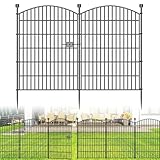
- Tall Garden Fence Animal Barrier: The set includes 9 panels and 1 spring lock gate, each measuring 40" H x 29" W with a 1.57-inch gap, connecting to a 23.6 ft total length. Protects flower beds, vegetable gardens, yards, and patios from dogs, rabbits, and other small animals.
- No Dig Fence with Deep Stakes: This no dig fence includes 11 deep ground stakes for setup without trenching, extra tools, or lawn damage. Press the stakes 11.95 inches into standard soil or grass to anchor each panel connection, forming a stable barrier around yards, patios, and gardens. Assembly instructions included.
- Spring Lock Gate for Easy Access: Decorative fences feature modular panels with classic arched design, allowing curved, straight, or zigzag configurations. Spring-lock gate enables easy access while keeping pets safely contained. Easily rearrange or expand to border pathways or block small wildlife.
- Rustproof Welded Metal Construction: Constructed with welded metal and finished with a glossy weather-resistant anti-corrosion coating. This treated structure withstands outdoor wind, rain, and variable seasonal conditions, maintaining structural integrity for long-term exterior use.
- Multi Outdoor Scene Compatibility: Suitable for homeowners, renters, and pet owners. Works for temporary seasonal use or permanent installation. Easy setup and maintenance without professional help. Relocate or reconfigure anytime as needs change.
Use galvanized wire when an open, utilitarian appearance suits the garden and you want corrosion resistance to be part of the material selection. Compare the wire gauge, coating specification, post material, and fastening method together; a coated mesh attached to weak posts can still fail as a system. Keep cut ends turned away from paths and protected from contact.
Recommended Free Tools
5. A rabbit fence around the vegetable garden
For rabbits specifically, the University of Georgia recommends a 2-foot-high chicken-wire fence with 1-inch hexagonal mesh openings. That is a rabbit-exclusion recommendation, not a general standard and not a specification for deer. Install it around the complete vegetable plot, including gates and corners where a rabbit could find a gap.
Inspect the lower edge after settling soil, cultivation, or heavy rain. A gap that appears after installation can defeat an otherwise correctly sized mesh. If deer are the problem, do not assume this two-foot, one-inch-mesh design will solve it; seek advice tailored to deer behavior and local conditions.
6. A trellis along the fence line
Fence lines are suitable locations for vertical gardening, according to Virginia Cooperative Extension’s guidance on trellises, stakes, and cages. Add a trellis in front of or beside a fence to grow climbers upward where ground space is limited. This can turn a narrow side yard into productive or ornamental growing space while preserving a walkway.
Plan the trellis as a separate load-bearing element unless the fence was designed to carry it. Leave room for air circulation, pruning, and access to the fence for painting or repairs. Match the support height and spacing to the mature plant rather than to the small plant you buy.
Rank #4

- TOTAL 30 PANELS, 42.5FT LONGER SIZE - Included 30 panels of fences, total length: 42.5 feet, more fences, and longer lengths can meet more of your needs, including filling the gaps under the bottom of the existing fence, building garden edging border, surrounding the garden bed to avoid plant damage, etc
- EXISTING FENCE GAP FILLER - The gap of the no dig fence is reduced to 1.5 inches, extending the protection of your fence to the ground, which can effectively prevent your dog from digging under the fence and escaping your yard, prevent small animals from visiting your garden and yard, and causing damage to your yard
- STURDY & RUSTPROOF - The animal barrier fence is made of heavy metal welded. The upgraded welding technology improves the stability, durability, and reusability of the fence. The three-layer design ensures that the garden fence panels are not easy to bend and break. The surface has anti-rust coating, not easy to rust, not afraid of bad weather, can be used for a long time
- EASY TO INSTALL - The decorative garden fence is installed by cable tie connection, compared with the snap connect method, which is difficult to install and easy to hurt hands, the cable tie method is safer and more convenient. This set includes gloves to protect your hands and cutting pliers to help you cut off excess cables. The bottom of the garden fence is sharp so that you can easily insert the fences into the ground
- WIDE APPLICATION - You can use these fence panels as a no dig fence barrier to prevent your dog from digging under the fence and escaping from your yard, and also to prevent small animals from breaking into your yard and causing damage. You can also use these fences as animal barrier fences to keep your dogs or small animals away from your flower beds, vegetable gardens, protect your plants. You can also use these fences as garden decorations to add charm, elegant touch to any outdoor space
7. Climbing vines on a sturdy support
Vines can soften a blank fence, add seasonal color, or screen a view, but the support must be sturdy and durable. Missouri Extension’s discussion of ornamental vines emphasizes choosing a support suited to the plant’s growth and weight.
Check whether a vine climbs by twining, tendrils, adhesive pads, or by needing ties; the attachment method affects trellis spacing and maintenance. Reserve clearance around gates, gutters, and electrical equipment, and prune before stems become trapped behind panels. Also verify that the selected species is suitable for your climate and is not invasive locally.
8. A mixed planted privacy screen
A privacy screen does not have to be a continuous wall. University of Maryland Extension recommends combining a variety of plants and favoring native choices; a mixed screen is more resilient to pests, disease, and climate change than reliance on one species. Layering trees, shrubs, and lower plants can provide depth while retaining some seasonal visibility.
Design for mature width, not nursery-container size. Set plants far enough from the fence for airflow, pruning, and access, and account for sun, soil moisture, and winter exposure. Maryland’s mixed privacy screen guidance also cautions against invasive plants named in its recommendations; check your regional invasive-species list before planting.
What’s actually slowing this PC down?
Pick the symptom - the matching free tool is one click away.
9. A living hedge as the fence
A hedge can function as a living fence or barrier when you have room for establishment and ongoing trimming. Colorado State University Extension advises considering location, exposure, available space, desired landscape effect, budget, and immediate needs when selecting a hedge. Its hedge guidance is a useful planning reference.
Best Value

- Dog Fence for Yard --- Each panel of the dog fence measures 33" H x 29" W. The modular design lets you connect panels to expand or reshape the fence, so you can easily adjust the length and layout to fit any outdoor space. Upgraded to 33-inch heightening design to prevent large dogs from entering the garden.
- Animal Barrier Fence --- 1.4" gap of the no dig fence is smaller than the gaps of ordinary fences, effectively preventing small animals and deterring intruders, providing a strong physical barrier. Great for protecting plants, trees and vegetables from small animals, it's also an ideal pet fence for dogs, chickens, rabbits and more.
- Low-Maintenance Stable and Rustproof --- Thickened metal stakes anchor the fence securely, resist bending, and provide years of reliable performance. Made from heavy-duty wrought iron with a protective coating, rustproof metal that won't warp over time. It stands up to harsh weather, keeping your garden protected all year round.
- Easy No-Dig Installation --- Just insert the stakes into the holes between two fence panels to connect them — no digging, no post holes, and no special tools required. Quick and clean installation — no mess, no damage to your yard or garden.
- Multipurpose Decorative Fence --- Classic black design complements any garden, patio, or landscape. Use it to define boundaries, create safe play areas, keep dogs and small animals out of restricted zones, or perfect for to decorative borders, flower beds, walkways, patios, pool edges, and temporary fencing needs.
Choose a hedge when gradual fill-in is acceptable and the planting strip can accommodate mature roots and branches. It may be unsuitable where a narrow access route, utility easement, or immediate screening is non-negotiable. Confirm mature dimensions and water requirements, then plan how you will reach both sides for pruning.
10. Fence plus a coordinated planting backdrop
Treat the fence as one layer of a unified composition. NC State Extension’s landscape-design guidance frames fences, screens, paths, and planting as related elements. A simple fence can look intentional when its color, lines, and scale repeat the house or hardscape, while shrubs and perennials soften the transition to lawn.
Start with the views that matter from inside the home and from the main approach. Place taller plants where they screen a service area, medium plants where they hide the fence base, and groundcovers where erosion or bare soil is a concern. Do not crowd plants against panels that need repainting or inspection.
11. A low or open boundary integrated with planting
When complete privacy is unnecessary, a low or open boundary can define the garden without closing it off. This design direction follows the documented range of fence purposes and materials: use the fence to signal a change from lawn to bed, then let planting provide texture and seasonal emphasis.
Combine an open edge with a gate, path, or change in paving so visitors understand where to enter. This approach is especially useful for front gardens and small yards where a tall opaque barrier would dominate the view. Because the exact form is site-dependent, test the boundary with temporary stakes or a hose before committing to post locations.
Independent reader supportYour contribution helps us test, update, and keep practical guides available for everyone.How to decide among the ideas
- Write the primary job in one sentence. For example: “Keep rabbits out of the vegetable bed,” “screen the patio from the driveway,” or “separate the path from the lawn.”
- Mark the important views. Stand inside the house, on the patio, and at the street or approach; note where privacy, openness, or a planting backdrop is actually needed.
- Measure the usable strip. Include gate swings, mowing clearance, mature plant width, utility access, and any easement shown on your property documents.
- Choose openness and material together. Pickets and wire preserve visibility; solid panels block views; hedges and mixed screens change over time and require growing space.
- Match exclusion details to the pest. Use the rabbit specification only for rabbits, and obtain species-specific guidance for deer or other wildlife.
- Check local approvals before construction. Confirm permits, boundary rules, height limits, and neighborhood requirements with the relevant authority.
- Plan maintenance access. Leave room for painting, tightening fasteners, pruning, weed control, and inspection after storms or soil movement.
Common mistakes to avoid
- Choosing a look before a function: an attractive open fence cannot deliver privacy, and a privacy panel may be unnecessary for a simple bed boundary.
- Using one animal specification for every pest: the two-foot, one-inch chicken-wire recommendation is specifically for rabbits.
- Attaching heavy vines to an inadequate fence: use a sturdy, durable support designed for the plant’s mature growth.
- Planting a single-species screen without considering resilience: mixed screens can reduce vulnerability to pests, disease, and changing climate conditions.
- Ignoring mature size: shrubs and vines planted too close to panels can block access, trap moisture, and make future repairs difficult.
- Assuming a fence is a security system: garden fencing can organize space and deter minor interference, but it is not a guarantee against serious vandalism.
A practical design brief to take to the installer
Record the fence’s purpose, the target animal if exclusion is involved, the sections that need privacy, the views you want to keep, and the locations of gates and utilities. Add a simple plan showing property lines, easements, existing trees, mature planting zones, and access for maintenance. Bring the material choice and any trellis or hedge requirements to the same discussion so the hardscape and planting are designed together.
The result should be a fence that performs one clearly defined job while belonging to the landscape around it. Pickets, panels, wire, trellises, vines, hedges, and mixed screens are all useful when their limits are understood and their details are matched to the site.
Quick Recap

Product prices and availability are accurate as of the date/time indicated and are subject to change. Any price and availability information displayed on Amazon at the time of purchase will apply.

