The Tool Desk
Quick wins for a faster PC:
Scan for outdated or missing drivers - takes under a minuteDriver Scan →Clear out junk files and repair common Windows errorsFree Scan →Outbyte PC Repair FREERepair Windows errors before they cause bigger problemsFix Now →Outbyte Driver Updater FREEFix the driver behind crashes, sound loss and screen glitchesFind Drivers →
ThatPainter is reader-supported. When you buy through links on our site, we may earn an affiliate commission. Learn More
Some of the most serious dangers in a house give no warning you can see, smell, or hear. Carbon monoxide and radon are invisible; overloaded wiring, aging gas connectors, concealed moisture, and unstable furniture can remain unnoticed until someone is hurt. The checklist below focuses on eleven hazards that can be hidden or made worse by neglect. It is U.S.-oriented guidance: local codes, inspection rules, radon programs, and professional licensing vary.
Use the routine actions for prevention, but treat an alarm, suspected gas or carbon-monoxide exposure, flood damage, exposed wiring, or a structural problem as an urgent situation. A detector or consumer product can warn you; it cannot repair a failed appliance, vent, connector, circuit, or building component.
As an Amazon Associate I earn from qualifying purchases.
How to use this checklist
Walk through the house with two questions: what can I check safely today, and what requires a qualified professional? Never open, move, or dismantle fuel-burning appliances, gas connections, energized electrical equipment, or flood-damaged systems to investigate a problem yourself. If a situation is immediately dangerous, get people and pets to safety first, then call the appropriate emergency service from outside the hazard area.
1. Carbon monoxide from fuel-burning equipment
“Carbon monoxide (CO) is an odorless, colorless gas that can cause sudden illness and death if inhaled,” the Centers for Disease Control and Prevention says. Furnaces, boilers, water heaters, fireplaces, portable generators, charcoal grills, and vehicles can produce it. The CDC reports more than 400 Americans die each year from unintentional, non-fire CO poisoning, more than 100,000 visit emergency departments, and more than 14,000 are hospitalized (2026).
#1 Best Overall

- Electrochemical sensor technology detects CO gas
- Easy installation, no wiring needed, detects during a power failure by operating on 2-AA batteries (included); Install on a wall of your home or place on a tabletop
- Green LED indicates power to the carbon monoxide detector, while an 85-decibel alarm & a red LED indicates the presence of carbon monoxide
- Event Memory records the last time carbon monoxide was detected or when the unit was last tested
What to do routinely
- Install battery-operated or battery-backup CO alarms near every sleeping area. Check batteries whenever clocks change, and replace each alarm according to its instructions or every five years.
- Have fuel-burning heating and water-heating equipment serviced annually by a qualified technician.
- Run a portable generator outdoors, more than 20 feet from doors, windows, and vents. Never operate it in a home or garage, even with the door open.
Alarm choices and limits
| Choice | What to consider |
|---|---|
| Battery-only | Works where there is no suitable wiring; batteries require regular checks. |
| Hardwired with backup power | Uses the home’s wiring while retaining operation during a power outage. |
| Standalone | Each alarm sounds only at its own location. |
| Interconnected | When compatible and installed as directed, one alarm can signal others. |
| CO-only, smoke-only, or combination | Choose the sensing functions required for the location and follow the manufacturer’s placement and service-life directions. |
When it is an emergency
If a CO alarm sounds or anyone has headache, dizziness, weakness, nausea, chest pain, confusion, or other possible CO symptoms, get everyone into fresh air immediately and contact emergency services. Do not stay indoors to troubleshoot the alarm or search for the source.
CDC: Carbon Monoxide Poisoning Basics
2. Radon entering through the foundation
Radon is radioactive gas that cannot be detected by sight or smell. It can enter through construction joints, foundation cracks, sump openings, and gaps around service pipes. The CDC describes radon as the second leading cause of lung cancer in the United States. “Testing is the only way to know if there are high levels of radon in your home.”
Choose a test
| Test | Duration and use |
|---|---|
| Short-term | Runs from 2 to 90 days; useful for an initial result when the home has never been tested or the level is unknown. |
| Long-term | Runs more than 90 days and better represents longer-term exposure patterns. |
| DIY kit | Follow the kit’s placement, handling, and laboratory instructions exactly. |
| Qualified tester | Use a qualified professional when you want on-site testing or help interpreting and confirming results; state programs differ. |
What the result means
CDC guidance relays the EPA recommendation to use a licensed professional mitigation system when the result is at or above 4 pCi/L, and to consider action from 2 through 4 pCi/L. A short-term result at or above the action threshold should be followed using CDC and EPA guidance rather than treated as a complete diagnosis on its own. Retest after mitigation and after relevant renovations, and arrange post-mitigation confirmation with the contractor.
CDC: How Radon Gets Into Your Home · CDC: Testing Your Home for Radon
3. Overloaded or damaged electrical systems
Electrical faults can start a fire inside walls, power strips, appliances, or outlets. U.S. Fire Administration estimates for 2021 counted 24,200 residential building electrical fires reported to U.S. fire departments, with an estimated 295 deaths, 900 injuries, and more than $1.2 billion in property loss.
Rank #2

- Keep your family safe with this easy to use plug in carbon monoxide alarm; It works with any standard outlet and also has a battery backup for continuous monitoring of Carbon Monoxide levels, even if there's a power failure
- Features an advanced electrochemical carbon monoxide sensor that accurately detects carbon monoxide levels, no matter where the detector is placed in the room
- Simple to use, with a single test/silence button; a loud 85 decibel alarm sounds when Carbon Monoxide levels reach dangerous levels. Low battery signal mute, quiets low battery signal for upto 8 hours
- To ensure complete protection make sure to place one on each level of your home and in each bedroom
- 7 year limited warranty; Equipped with end of life signal chirp, so you know when it’s time to replace the unit for safety
Reduce the risk
- Plug major appliances directly into wall outlets instead of extension cords or power strips.
- Remove cords with cuts, crushed insulation, exposed conductors, melted sections, or loose plugs from service.
- Do not overload an outlet, adapter, or extension cord. Use equipment only within the ratings on its labels.
Get qualified help when
Stop using an outlet, cord, appliance, or circuit that is damaged, sparking, overheating, or repeatedly tripping a breaker, and arrange a licensed electrical inspection. Do not remove a cover or attempt a repair on energized equipment.
Do these 3 things before closing this tab:
1Clear out junk files and repair common Windows errors2Fix the driver behind crashes, sound loss and screen glitches3Repair Windows errors before they cause bigger problemsU.S. Fire Administration: Appliance and Electrical Fire Safety
4. Dryer lint and blocked exhaust
Lint that escapes the screen can accumulate in the dryer, exhaust duct, or exterior termination. Restricted airflow raises heat and gives a small ignition source more fuel.
Routine action
- Clean the lint screen after each load.
- Clean the dryer vent and exhaust duct periodically, including the outside termination where accessible.
- Keep the area around the dryer clear and follow the appliance manual for ventilation and maintenance.
A brush or home-cleaning tool is not a substitute for service when the duct is damaged, crushed, excessively long, inaccessible, or still restricting airflow. Arrange qualified dryer-vent or appliance service instead of disassembling a hidden or unsafe section yourself.
U.S. Consumer Product Safety Commission safety education materials
Free tools Windows power users keep installed
One-click scans. No signup required.
Rank #3

- DETECTS CARBON MONOXIDE: With backlit display that shows CO levels & sounds a loud 85 dB alarm when CO is detected to signal evacuation; sleep peacefully with no nighttime chirps; LED warning light indicates hazard; Test/Hush button for quick checks
- PLUG-IN POWER WITH BATTERY BACKUP: CO detector plug-in operates on 120V AC with 2 AA backup batteries (included) for detection during outages; rotating plug fits vertical or horizontal outlets; includes power surge immunity to help maintain performance
- TRAVEL-READY DESIGN*: Compact carbon monoxide detector is suitable for use at home or for travel; lightweight design allows you to take it on the go to use in hotels or vacation rentals when detection is needed away from home
- TESTED & TRUSTED: This carbon monoxide alarm is rigorously tested to meet UL 2034 5th Edition standards, and is ETL Listed; includes a 10-year limited warranty on alarm
- BUILT FOR EVERY HOUSEHOLD: Designed to help provide dependable carbon monoxide monitoring for everyday residential use; supports renters, homeowners, and pet owners seeking added awareness and protection from CO hazards in the home
5. Smoke alarms without a working escape plan
A smoke alarm only helps if it is installed correctly, powered, and audible from sleeping areas. A household that has alarms but has never practiced leaving can lose critical time during a fire.
Make the system dependable
- Install and place smoke alarms according to local requirements and the manufacturer’s instructions.
- Test them on the schedule in the instructions, replace batteries or sealed units as directed, and replace alarms at the end of their stated service life.
- Plan at least two ways out where possible, choose an outdoor meeting place, and practice the route with every household member, including children and guests who need assistance.
An alarm that fails its test, repeatedly chirps after the prescribed battery change, or has reached its service life needs replacement—not a taped-over speaker or removed battery. If you cannot hear alarms from a sleeping room or a household member cannot evacuate independently, ask the fire department or a qualified alarm professional about a compliant solution.
CPSC smoke-alarm and escape-plan guidance
6. Aging brass appliance gas connectors
Some older brass connectors used with gas appliances can fail or come apart. CPSC warns that a failed connector can cause fires, explosions, deaths, and injuries.
Safe response
Do not pull, twist, slide, or move a gas appliance to inspect its connector; that movement can stress a connection. If an older connector is suspected, arrange an inspection and replacement decision with a qualified gas-appliance technician or other professional allowed by local rules.
If you smell gas, hear hissing, or see a suspected active leak, leave immediately, avoid switches and flames, and call emergency services or the gas utility from a safe location. Do not return until authorities say it is safe.
Rank #4

- DETECTS CARBON MONOXIDE: Model COB monitors CO and sounds a loud 85 dB alarm to signal evacuation to fresh air; LED warning light indicates hazard; Test/Hush button allows quick checks or temporary silencing
- AA BATTERY POWERED: This CO detector is battery-powered, installs without wiring, mount it on the wall or set it on a table, and operates during outages using two included AA batteries
- TRAVEL-READY DESIGN*: Compact carbon monoxide detector is suitable for use at home or for travel; lightweight design allows you to take it on the go to use in hotels or vacation rentals when detection is needed away from home
- TESTED & TRUSTED: This carbon monoxide alarm is rigorously tested to meet UL 2034 5th Edition standards, and is ETL Listed; includes a 10-year limited warranty on alarm
- BUILT FOR EVERY HOUSEHOLD: Designed to help provide dependable carbon monoxide monitoring for everyday residential use; supports renters, homeowners, and pet owners seeking added awareness and protection from CO hazards in the home
CPSC gas-appliance connector safety materials
7. Lead paint dust, chips, and contaminated soil
Lead in old paint, household dust, or soil can harm developing bodies. EPA’s January 2026 family-protection pamphlet identifies children under six as most at risk of lead poisoning. Renovation, friction from windows and doors, dry sanding, and peeling paint can spread fine dust farther than visible chips.
Prevent exposure
- Do not dry-sand, scrape, drill, or otherwise disturb suspect paint until you know what precautions apply.
- Keep children away from deteriorating paint, renovation areas, and bare soil that may be contaminated; use cleaning and work practices recommended by current EPA guidance.
- Use EPA lead-safe renovation and testing resources for older housing, and hire properly qualified professionals when work will disturb painted surfaces.
Seek professional advice when paint is peeling, windows or doors create dust, renovation is planned, or a child may have been exposed. A household cleaning product or a coat of ordinary paint does not establish that the underlying lead hazard is controlled.
EPA, Protect Your Family From Exposures to Lead (January 2026)
8. Floodwater, hidden moisture, and mold
Flooding can leave several hazards at once: unstable structures, contaminated water, energized electrical equipment, and mold growth. Moisture trapped behind walls or under floors can continue causing damage after visible water is gone.
Before re-entry
Wait until officials or qualified professionals indicate that the home is safe to enter. Wear the protective equipment specified for the cleanup conditions, and keep children and people with health vulnerabilities away from contaminated areas.
Best Value
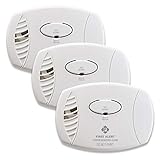
- Keep your family safe from carbon monoxide in multiple rooms with this convenient plug in carbon monoxide alarm 3 pack; The alarms work with any standard outlet and also have a battery backup for continuous monitoring of CO levels, even if there's a power failure
- Features an advanced electrochemical carbon monoxide sensor that accurately detects carbon monoxide levels, no matter where the detector is placed in the room
- Simple to use, with a single test/silence button; A loud 85 decibel alarm sounds when Carbon Monoxide levels reach dangerous levels
- To ensure complete protection make sure to place 1 on each level of your home and in each bedroom
- 7 year limited warranty; Equipped with end of life signal chirp, so you know when it’s time to replace the unit for safety
During cleanup
- Never use wet electrical equipment. Have electrical systems and appliances evaluated before energizing them.
- Dry the home and contents within 24–48 hours if possible to limit mold growth, using safe ventilation and equipment appropriate for the conditions.
- Document areas that remain wet, visibly moldy, structurally damaged, or contaminated, and use qualified flood-remediation help when the work exceeds safe household cleanup.
EPA: Emergencies and Indoor Air Quality · CDC: Returning Home After a Flood
9. Furniture and televisions that can tip over
Dressers, bookcases, televisions, and appliances can overturn when a child climbs, pulls a drawer, or grabs a screen. CPSC states that one child dies every two weeks when a television, piece of furniture, or appliance falls on them.
What’s actually slowing this PC down?
Pick the symptom - the matching free tool is one click away.
Anchor before there is a near miss
- Anchor furniture to a wall or floor using hardware suitable for the furniture and the building surface.
- Place televisions on sturdy, low bases or secure them as directed by the manufacturer.
- Keep tempting items, remote controls, and heavy objects away from the edges and upper drawers.
If a unit wobbles, leans, has damaged fasteners, or cannot be anchored to a sound structural point, stop using it in an accessible area and have the installation corrected. Do not rely on a child-safety gate or supervision as a substitute for anchoring.
CPSC tip-over prevention materials
10. Bathtubs, buckets, and other small water containers
Young children can drown in only a small amount of water and may not be able to call for help. A bathtub, mop bucket, pail, or other container can become dangerous during an ordinary chore.
Make supervision and storage explicit
- Stay within arm’s reach of a baby in a bathtub for the entire bath.
- Empty buckets, pails, tubs, and other containers immediately after use and store them where children cannot reach them.
- Keep bathroom access controlled when an adult is not present, and never leave a child alone near water even for a brief task.
Supervision cannot be replaced by a bath seat, alarm, or other product. If a caregiver cannot maintain arm’s-reach supervision, end the bath and move the child to a dry, safe location.
CPSC drowning-prevention safety materials
11. Baby-monitor cords and accessible poisons
Two ordinary household conveniences create preventable risks: a monitor cord within a child’s reach and medicines or chemicals that are easy to open or find. CPSC advises keeping monitor cords out of arm’s reach of babies and toddlers.
PC Slower Than It Used to Be?
A free scan shows the junk files, broken settings and background clutter dragging Windows down - then fixes them in one click.Free scan · Windows 10 & 11Outdated Drivers Are Slowing You Down
One free scan finds every outdated or missing driver and matches the right update for your exact hardware.Free scan · exact hardware matchChange the setup
- Route baby-monitor cords out of reach and away from the crib, bassinet, play yard, and other places a child can climb or pull.
- Keep medicines, cleaners, pesticides, cosmetics, and other chemicals secured according to their labels, preferably in a locked location rather than on a counter or bedside table.
- Keep products in their original labeled containers and follow the label’s storage instructions.
If a child may have swallowed, inhaled, or contacted a medicine or chemical, move away from the exposure and contact emergency services or your local Poison Control resource for immediate instructions. Do not wait for symptoms or rely on a child-resistant cap as the only safeguard.
Quick Recap
A practical order for the next seven days
- Today, verify that CO and smoke alarms are present, powered, audible, and within their service lives; leave immediately for any active CO alarm or suspected gas leak.
- Within the week, test the home for radon if it has never been tested or the result is unknown, and schedule annual fuel-burning-equipment service.
- Inspect appliance cords, extension-cord use, dryer lint and exhaust access, furniture anchoring, monitor-cord routing, and water-container storage.
- If the home has older painted surfaces, planned renovation, flood damage, suspected gas connectors, damaged wiring, or a failed vent, stop the risky activity and arrange the appropriately qualified inspection or remediation.

Product prices and availability are accurate as of the date/time indicated and are subject to change. Any price and availability information displayed on Amazon at the time of purchase will apply.

