Outdated Drivers Are Slowing You Down
Free tools Windows power users keep installed
One-click scans. No signup required.
One free scan finds every outdated or missing driver and matches the right update for your exact hardware.
Scan My Drivers Free →Free scan · exact hardware match
As an Amazon Associate I earn from qualifying purchases.
ThatPainter is reader-supported. When you buy through links on our site, we may earn an affiliate commission. Learn More
The best flower bed is not a copy of a photograph; it is a layout adapted to your yard’s light, soil, drainage, climate, mature plant sizes and maintenance time. The 32 ideas below provide distinct visual directions for narrow strips, compact entrances, open lawns, sunny borders, shade, wet ground and different design styles. Choose a form first, then substitute plants that your local extension service or native-plant nursery confirms for your conditions.
#1 Best Overall

- Large capacity: Provide enough growth space for deep-rooted plants like potatoes, tomatoes, broccoli, etc. Tall enough to keep pets away from the garden planter and give you easy access!
- Stable and Solid Construction: Double card frames on the two sides of the sheet make the raised garden kits more durable and stable, and 4 reinforcing rods make the whole raised garden bed more stable. Never worry about its distortion or collapse and it presents a much more beautiful design.
- Open bottom: Sits on the ground garden bed, provide good drainage, keep weeds away from soil, defense against pests, and protect your plants. An open base design supports soil drainage, It is more conducive to the healthy growth of plants and balances soil moisture. Planter raised beds will be the best choice for your garden planting.
- Environment-Friendly: Built with an open bottom so it keeps the plants away from root rotting and water built up.
- Easy to assemble: We come with nuts, bolts, washers and instructions so that you can easily assemble without any experience.
Start with the site, not the plant list
Walk the proposed bed at several times of day and in different seasons. Record direct sun, reflected heat from walls or paving, prevailing wind, standing water, runoff, dry pockets and frost-prone low spots. University of Georgia Cooperative Extension classifies full sun as at least 6–8 hours of direct light, partial sun or shade as 4–6 hours, and shade as fewer than 4 hours, while noting that labels vary. Its central warning is: “Great landscape design cannot compensate for poor growing conditions or improper plant selection.” Read the full UGA site-analysis guide and observe your own yard rather than relying on a label alone.
Test soil before adding compost, lime or fertilizer. Texture, compaction and water table all affect drainage; the Royal Horticultural Society explains how to assess these factors in its border-planning guidance. Note whether the bed is dry, evenly moist or periodically saturated, and identify your climate or hardiness zone. A plant that thrives in a regional extension example may fail elsewhere.
Turn an inspiration into a workable plan
- Measure the space. Record length, maximum and minimum width, existing trees, utilities, doors, windows, paths and mowing routes. Draw the outline to scale, including how the bed meets a building, boundary or lawn.
- Choose the bed geometry. Broad curves, deeper and shallower sections, and floating island beds are options described by UF/IFAS planting-plan guidance. Select the shape that leaves comfortable circulation and safe sight lines.
- Place the permanent structure. Mark shrubs, small trees, grasses, climbers, boulders or evergreen forms first. Then add focal plants and repeated masses. This follows UF/IFAS’s structural, focal and massing approach.
- Plan mature spacing. Use the plant’s expected spread, not the size of the nursery pot. As an initial estimate only, the RHS lists five herbaceous perennials, three small shrubs or one large shrub per square metre (11 square feet); the selected plants’ mature dimensions determine the actual count.
- Repeat before adding variety. Repeating a manageable selection gives proportion and rhythm. Add contrast through height, flower color, foliage texture and form rather than collecting one of everything.
- Plan establishment care. Leave room for air circulation, monitor moisture while plants establish, and apply amendments only when a soil test supports them. Maryland Extension recommends mulch no deeper than 3 inches on its native-landscape page; adjust for local soil, mulch type and drainage.
32 flower bed ideas for different yards and conditions
1. Compact entry border
Make a welcoming threshold with one narrow, repeated planting band beside the front walk or steps. It suits small lots and should keep mature width clear of doors, paving and sight lines. Repeat a few plants instead of mixing many short-lived accents; verify eventual spread before planting.
Recommended Free Tools
2. Narrow side-yard strip
Use a linear bed between a wall and fence to soften a passage. Select plants for the strip’s actual light, which may be brighter at the top and shaded at ground level. Keep a maintenance path or stepping stones, and avoid crowding where air cannot move.
3. Container-and-bed combination
Extend a small in-ground bed with containers that supply seasonal color or height near a door or patio. Containers make experimentation easy, but they dry faster than soil and need a watering plan. Match pot locations to the same light and wind observations used for the bed.
4. Vertical accent with a climber or support
Add height without widening the bed by training a suitable climber on a trellis, arbor or wall support. Confirm that the structure can carry mature growth and that roots will not invade foundations or utilities. Pruning and tying are part of the design, not optional extras.
5. Repeating mini-drift
Create a strong pattern in a tiny yard by repeating one compact plant group at intervals, with low edging or mulch between groups. The visual repetition makes a small bed read as one composition. Choose plants that share the site’s moisture and light rather than forcing a single palette everywhere.
What’s actually slowing this PC down?
Pick the symptom - the matching free tool is one click away.
Rank #2
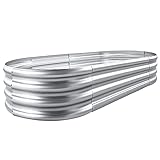
- Each raised metal garden bed size: 4×2×1ft ,7.14Cu
- Upgraded quality and structure: raised garden beds outdoor are made of Q195 galvanized metal sheet, double-layer anti-corrosion galvanizing and oval structure design, which is more beautiful, can withstand greater pressure at the interface, is not easy to loose, and the interface will not Deformed and can be reused for many years.
- Easy to set up, this galvanized stock tank only takes about 5 minutes to easily assemble and continue planting plants.
- Open base: This planter raised garden bed metal galvanized is designed with an open base, which can effectively avoid water accumulation and decay, protect the roots of plants, and allow the roots to better absorb nutrients
- Double thickness: The average thickness of this galvanized planter galvanized sheet reaches 0.78mm, and the thickest part can reach 1.56mm, which is extremely stable. Compared with the ordinary rectangular elevated garden bed with a thickness of 0.3mm, it will be the right choice for you. buy it! ! !
6. Small focal plant with lower massing
Center a small ornamental form, bold foliage plant or seasonal focal point inside a ring or crescent of lower plants. Leave enough mature clearance to see the focal plant and reach it for care. In very small beds, one focal element is usually more effective than several competing ones.
7. Sweeping curved border
On a larger property, a broad curve can connect the house, lawn and boundary while making mowing lines easier to read. Use a deep enough center for layered planting and a smooth, continuous edge; tight zigzags are difficult to mow and maintain.
8. Broad perennial drift
Plant large, repeating groups of perennials for a field-like effect viewed from the house or a terrace. Leave gaps for mature spread and access during division. Bloom timing and foliage longevity matter as much as flower color, so verify a sequence that fits your climate.
9. Island bed in the lawn
A floating bed gives an open yard a destination and can be viewed from multiple sides. Place taller structure near the center or toward the principal viewing direction, with lower plants around the edge. Keep the outline broad and mower-friendly, and protect the bed from accidental wheel traffic.
Free tools Windows power users keep installed
One-click scans. No signup required.
10. Layered foundation planting
Build a foundation bed in tiers: durable structural forms nearest the wall, medium plants in front, and a low edge by the path. Check mature height against windows, vents and gutters. Soil near foundations may be dry or compacted, so test and improve it selectively.
11. Mixed shrub-and-perennial bed
Combine a few long-lived shrubs with seasonal perennials to balance year-round shape and changing color. Space shrubs for their mature width and place perennials in irregular groups around them. Confirm that roots, shade and water demand are compatible before combining categories.
12. Bed framing a path or patio
Use paired or asymmetrical beds to guide movement toward a patio, gate or seating area. Leave the full walking width plus mature overhang, and avoid plants that obstruct turning or become slippery on paving. Repetition on both sides can be formal; one-sided massing feels looser.
Rank #3

- Multifunctional Design: This garden planter is separated into two growing areas for different plants or planting methods. The baffle can be removed to form a bigger growing area.
- Practical Use: With this plants box, you can cultivate plants like vegetable, flower, or herbs in your patio, yard, garden, and greenhouse, making it more convenient to manage.
- Simple Assembly: This divisible garden bed is built in a simple yet stable structure by heavy-duty screws and tight connection piece by piece. It is very easy and quick to put them together.
- Flexible DIY: The corner posts have been upgraded that the number of slotting on the posts is increased from 2 on the opposite 2 faces into 4 on 4 faces. Such a change enables users to combine two or more such planting beds more flexibly and fixedly.
- Stable Construction: Our planting raised bed has a piece of complete side plate at each side of the garden bed. It is fixed firmly without leakage of soil. The whole structure is very stable, and the installation is very easy.
13. Sunny pollinator border
In a site with roughly 6–8 hours of direct sun, combine nectar- and pollen-producing flowers with varied heights and bloom periods. Provide some shelter and avoid treating one regional plant list as universal. Select locally appropriate species and confirm their mature size through an extension source.
Do these 3 things before closing this tab:
1Fix the driver behind crashes, sound loss and screen glitches2Repair Windows errors before they cause bigger problems3Scan for outdated or missing drivers - takes under a minute14. Dry sunny bed
For fast-draining soil, a slope or reflected heat, use plants adapted to lower moisture and leave generous air space. Shape the bed to shed water away from structures, and establish new plants with deliberate irrigation until roots spread. Do not assume “sun-loving” also means drought-tolerant.
15. Part-shade foliage-and-flower mix
Where the bed receives about 4–6 hours of sun or shifting light, let foliage carry the composition and use flowers as accents. Repeat leaf shapes or colors for cohesion. Track seasonal shade from trees and buildings; a spring-bright spot may become deep shade in summer.
16. Woodland-edge planting
At the transition between lawn and trees, layer lower plants at the edge and taller forms toward the canopy. Account for root competition, leaf litter and dry shade. Use plants verified for your region rather than copying a woodland palette from a different climate.
17. Damp-site or rain-garden bed
Where runoff collects and local regulations permit, make the moisture pattern the design feature. A shallow basin with moisture-tolerant plants can slow water, while the outer edge holds plants for average conditions. Confirm infiltration, overflow and utility locations before digging; do not place a basin against a foundation.
Quick wins for a faster PC:
Fix the driver behind crashes, sound loss and screen glitchesFind Drivers →Repair Windows errors before they cause bigger problemsFix Now →Scan for outdated or missing drivers - takes under a minuteDriver Scan →18. Cottage-style abundance
Use informal drifts, varied heights and a relaxed edge for a generous cottage impression. Keep a repeating backbone so the mix does not become visual noise. Choose plants with compatible moisture and light needs, and leave access for deadheading and division.
19. Formal geometric bed
For a crisp look, use a clear axis, symmetrical or balanced masses and a sharply defined edge. Formality increases trimming and edging work, especially where plants overhang paths. Select slow-growing structural forms and measure carefully before installing repeated blocks.
Rank #4

- 2 feet height: Compared with the ordinary 1-foot garden bed, this raised garden box has been improved in all aspects in terms of aesthetics, stable performance, and soil volume. It is time to replace the previous small planter box with a large raised planter box Now, it must be your better choice! ! !
- Large volume: Our large metal raised garden boxes of several specifications have a planting volume of 8×4×2ft=64 cubic meters Feet = 396 gallons. The box with 24 inches deep is very suitable for planting beans, broccoli and other medium to deep root plants
- Durable high-quality material: Galvanized steel raised garden bed is made of upgraded coated steel plate, which has strong anti-rust and corrosion resistance. It can be exposed to the sun, rain and snow for a long time, Reinforced cross bars and fixed piles have been added to help the metal panel maintain its shape and prevent warping and soil leakage over time. Environmentally friendly paint is used on all parts, which does not pollute the soil and provides a healthy environment for plants.
- Open base: This Galvanized planter raised beds uses a bottomless design that allows crops with developed rhizomes to grow without restriction, allowing excess water to be easily drained, and maintaining soil and nutrients.
- Easy to assemble: We provide detailed installation instructions, you can complete the assembly in a short time and start your planting immediately
20. Contemporary block planting
Limit the palette and arrange bold blocks of contrasting height, texture or color. This works beside modern architecture or a simple patio, where clean negative space is part of the composition. Keep the bed broad enough for each block to read at mature size.
21. Wildlife-supporting bed
Combine flowers, seed-producing forms, shelter and a shallow water source where appropriate to create habitat. Leave some stems or leaf litter over winter if local guidance supports it, while keeping paths and structures clear. Avoid invasive plants and verify regional wildlife value with local extension advice.
22. Prairie-inspired drift
Use repeated grasses and flowering perennials in broad, wind-moved masses for a meadow-like effect. This style needs room to sway and may look sparse before establishment. Confirm mature height, reseeding behavior and fire or maintenance requirements for your locality.
23. Japanese-inspired composition
Emphasize restrained repetition, asymmetry, open space and carefully placed stones or evergreen structure. The style depends more on proportion and editing than on a fixed plant list. Choose regional substitutes that tolerate your moisture, winter and light conditions.
24. Alpine or rockery bed
Build a sharply drained mound or rock arrangement for compact plants suited to lean soil. Set stones securely and provide pockets of soil rather than a flat gravel blanket. Confirm that selected plants tolerate your heat, rainfall and winter conditions; many alpine examples come from very different climates.
25. Tropical-look bed
Create a lush, layered impression with large leaves, strong verticals and saturated color where the climate supports them. In colder regions, use hardy substitutes or treat tender plants as seasonal containers. Protect the bed from wind and verify winter survival before investing in permanent specimens.
26. Spring bulb layer
Plant spring-flowering bulbs beneath later-emerging perennials so one bed changes through the year. Mark planting locations to avoid damaging dormant bulbs during later work. Check chilling requirements and drainage for your region; bulbs that thrive in one climate may not return reliably elsewhere.
Best Value
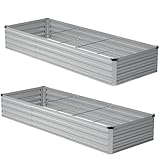
- Specialized in Garden Bed: Size:10x2x1ft.Ideal choice for your gardens,yards and patio to grow vegetables,flowers,fruits and other plants.
- Upgraded Structure and Extra Thickness: The garden bed is made of galvanized metal steel, which can be used for many years without getting rust and deformed.
- Open Bottom Design: The transparent structure at the bottom can prevent water accumulation and protect the roots of plants.At the same time,it can be planted in any position as needed.
- Four Plastic Caps: The garden bed come with 4 protective caps, which install in the 30 corners of the garden bed. Compared with the ordinary rectangular raised garden bed with none components, the caps can protect you from injuring and better looking!
- Quick Setup: With lesser screws and better structure, you just need few minutes to setup your new raised garden bed!
27. Succession-bloom perennial bed
Design a calendar of early, middle and late bloom rather than one simultaneous display. Include foliage that remains attractive between flowers and group plants by care needs. Record bloom dates in your own yard because weather and climate shift timing.
28. Evergreen framework with seasonal color
Anchor the bed with dependable evergreen or winter-persistent forms, then weave in seasonal flowers. The framework keeps the composition legible in dormant months. Confirm winter hardiness, eventual width and whether nearby evergreens will cast increasing shade.
29. Foliage-led bed
Make leaf color, shape and texture the primary event, using flowers sparingly. This is useful in shade or for gardeners who want a long display with less deadheading. Match water requirements carefully, since dramatic foliage plants often differ greatly in drought tolerance.
30. Ornamental-grass structure
Use grasses as repeating vertical or arching forms that move in wind and hold seed heads into winter. Place them where mature blades will not block paths or windows. Cutback timing, spread and local invasiveness vary, so verify each choice regionally.
31. Winter-interest planting
Design for the months when flowers are absent by combining bark, stems, seed heads, evergreen foliage, stones or strong silhouettes. Leave selected stems standing when they provide habitat and structure, but remove diseased material. View the bed from indoor windows as well as outside paths.
32. Three-zone transition bed
Connect lawn, planting and boundary with three graduated zones: a low edge, a middle mass and a taller backdrop. The arrangement works in many yard sizes because each zone can expand or contract. Keep the tallest zone from shading sun-demanding plants and maintain a clear mowing edge.
Independent reader supportYour contribution helps us test, update, and keep practical guides available for everyone.Choose among concepts with the conditions in mind
| Decision factor | Usually favors | Check before committing |
|---|---|---|
| Bed width and yard scale | Mini-drifts, focal circles and narrow borders for tight spaces; curves, islands and broad drifts for large yards | Mature spread, mower access and enough depth for layered planting |
| Sun exposure | Pollinator, dry-sunny and prairie directions in strong sun; foliage, woodland-edge and part-shade mixes in lower light | Hours of direct light in summer and winter, plus reflected heat |
| Drainage | Rockery or dry bed for fast drainage; rain-garden concept for permitted wet areas | Compaction, water table, runoff route and overflow protection |
| Desired formality | Formal geometry and repeated blocks for crisp order; cottage, prairie and wildlife beds for looser masses | Edging, trimming, deadheading and division time |
| Seasonal versus evergreen structure | Succession bloom and bulb layers for change; evergreen framework and winter-interest beds for persistent form | Winter hardiness, foliage longevity and views during dormant months |
| Native availability | Wildlife and regional naturalistic concepts can use locally native plants | Confirm native status, mature dimensions and nursery availability with local extension resources |
UF/IFAS’s Florida-Friendly pattern book demonstrates proportion, repetition and variety with layouts tailored to USDA Zones 8A and 8B. Treat those plant selections as regional examples, not a universal palette.
Crashes, No Sound, or Screen Glitches?
Random freezes, missing sound and display glitches usually trace back to one bad driver. Find and replace yours safely.Free scan · under a minuteWindows Errors? Fix Them Before They Spread
Repair common Windows errors and clear accumulated junk for a smoother, more stable PC - no reinstall needed.Free scan · no reinstallInstall and maintain the design
- Mark the outline. Lay a hose or rope on the ground, view the curve from the house and adjust it before cutting the edge.
- Prepare only what the test supports. Relieve compaction, correct drainage problems and incorporate amendments according to soil-test results rather than habit.
- Set plants in their pots first. Place structural and focal forms, then arrange irregular groups of massing plants. Step back from several viewpoints before digging.
- Plant at mature spacing. Crowding creates weak growth and poor air circulation; excessive gaps invite weeds. Use the nursery label and regional extension information for final distances.
- Mulch without burying crowns or trunks. Maryland Extension’s native-landscape guidance recommends no more than 3 inches; keep mulch off stems and adapt depth to local drainage.
- Monitor establishment. Check soil moisture below the surface, watch for wilt or standing water, replace failed plants only after diagnosing the cause, and revise irrigation as roots develop.
- Reassess each season. Record bloom dates, mature spread, shade changes and maintenance trouble. Move or divide plants when the evidence from your own yard shows the original arrangement needs adjustment.
Localize every plant choice
Extension recommendations are regional, and native-plant inventories differ by climate and county. Use your state or provincial extension service, botanical gardens and reputable native-plant nurseries to identify alternatives with the same height, spread, bloom period and moisture tolerance. Maryland Extension’s perennial-garden guidance emphasizes irregular masses, soil and light matching, air circulation, varied bloom periods and moisture checks; NC State Extension’s landscape-design guidance likewise calls out moisture, light, soil, mature size, growth habit, bloom cycle, seasonal interest and invasive-plant risks. Those principles travel well even when the plant names do not.
Quick Recap

Product prices and availability are accurate as of the date/time indicated and are subject to change. Any price and availability information displayed on Amazon at the time of purchase will apply.

