Recommended Free Tools
Crashes, No Sound, or Screen Glitches?
Windows Errors? Fix Them Before They Spread
Repair common Windows errors and clear accumulated junk for a smoother, more stable PC - no reinstall needed.Free scan · no reinstallCrashes, No Sound, or Screen Glitches?
Random freezes, missing sound and display glitches usually trace back to one bad driver. Find and replace yours safely.Free scan · under a minuteFree scan · under a minute
PC Slower Than It Used to Be?
Free scan · Windows 10 & 11
Outdated Drivers Are Slowing You Down
Free scan · exact hardware match
ThatPainter is reader-supported. When you buy through links on our site, we may earn an affiliate commission. Learn More
The most effective kitchen cabinet makeover combines a clear door profile, a deliberate color or wood finish, and hardware and storage that fit the way you actually cook. Use the 39 ideas below as mix-and-match treatments rather than 39 rigid styles: a painted Shaker door can pair with ribbed glass, a dark range surround, or natural-wood drawers.
As an Amazon Associate I earn from qualifying purchases.
Before choosing a look, separate four decisions that are often confused: the visible door profile, the finish and color, the material, and the cabinet-box construction. A beautiful front does not by itself reveal how the box, drawers, hinges, or finish will perform.
Start with the four cabinet decisions that control the result
Homes & Gardens distinguishes the door and drawer fronts from the cabinet box (carcase). Construction, finish, and drawer details matter just as much as the visible style. As Rebecca Mahoney of Robinwood Kitchens puts it, “Taking some time to understand cabinet construction, materials, and the different levels of quality will help you make more informed decisions and feel more confident throughout the design process.”
#1 Best Overall
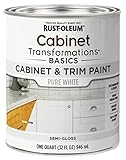
- CABINET TRANSFORMATION: Refresh outdated cabinets, vanities, furniture and trim with rich Pure White color and a smooth semi-gloss finish
- DURABLE PERFORMANCE: Easy-to-clean finish resists dirt and grime while standing up to household chemicals
- SMOOTH APPLICATION: Outstanding flow and leveling help create a beautiful finish with brush, roller, pad applicator or airless sprayer
- FAST PROJECT COMPLETION: Dries to touch in 30 minutes, recoats in 2 hours and is ready for normal use after 24 hours
- INTERIOR CABINET COATING: Ideal for kitchens, bathrooms, laundry rooms and other interior cabinet and trim applications
Jen Baxter of Baxter Hill Interiors makes the separation even clearer: “The box, the door, the drawer construction, and the finish are four separate material decisions, and cheap quotes usually skimp on the ones you can’t see.” Ask every supplier to identify the material and finish for each part instead of accepting an unqualified quote for “wood cabinets.”
- Profile: Shaker, slab, raised panel, molding, or another door shape.
- Finish: Painted, stained, veneered, laminated, matte, or glossy.
- Material: Solid wood, veneer, MDF, laminate, melamine/TFL, thermofoil, or another surface.
- Construction: The box, shelves, drawer sides, runners, hinges, and joinery.
39 kitchen cabinet design ideas
1. Classic Shaker fronts
A flat center panel surrounded by a simple frame gives Shaker doors a versatile, architectural look. Paint them in a light neutral for a quiet kitchen or a saturated color for contrast. Check that the frame width and rail details work with existing trim and that the recessed center can be cleaned easily.
Free tools Windows power users keep installed
One-click scans. No signup required.
2. Slim or micro-Shaker doors
Narrower rails and stiles make the Shaker outline feel more contemporary without becoming a slab. This suits a transitional renovation where you want profile but not ornate detail. Request a full-size sample: very thin frames can make hardware placement and door alignment more visually demanding.
3. Traditional raised-panel doors
A raised center panel and deeper molding bring formality to a period-inspired kitchen. Use them on a perimeter run or a furniture-style island when you want the cabinetry to read as built-in millwork. More ledges and profiles mean more edges to dust and more paint surface to prepare.
4. Clean-lined transitional cabinetry
Combine a restrained framed door with simple crown, square legs, and understated hardware. This middle ground works when the architecture is neither fully modern nor fully traditional. Keep the number of trim profiles limited so the room feels intentional rather than visually busy.
5. Decorative crown or furniture molding
Add molding at the ceiling, around an island, or beneath a hutch-style section to give standard boxes a custom appearance. It can visually connect cabinets to the room’s baseboards and casings. Measure ceiling variations and appliance clearances before ordering long decorative pieces.
What’s actually slowing this PC down?
Pick the symptom - the matching free tool is one click away.
6. Cut-through or decorative rail details
A shaped rail, perforated panel, or small cut-through can turn one cabinet section into a focal point. Place the detail on an island end, a baking station, or a display cupboard rather than every door. Confirm that the opening will not trap grease or compromise the door’s strength.
7. Flat slab fronts
Slab doors remove the frame and leave a clean, uninterrupted plane. They suit contemporary kitchens and make a strong background for expressive backsplash tile or lighting. Check the edge treatment, because a square edge, softened edge, or contrasting band changes both the appearance and how fingerprints show.
8. Integrated finger pulls
A routed groove or recessed grip keeps the front visually quiet while providing a fixed opening point. This is useful where projecting handles could catch clothing or interfere with a narrow aisle. Test the grip with wet or flour-covered hands and ask how the recess will be cleaned.
Rank #2

- Includes 30 featured and newest released color card. Sprayed on color to see our colors in your homes lighting for more accurate color choices.
- ALL-IN-ONE Paint - NO Sanding, NO Priming, NO Top Coat Required, Low Luster, Velvet Sheen Finish
- Interior/Exterior - Paint your whole house - Ideal for hard surfaces including walls, doors, cabinets, counters, furniture, metal, glass, ceramics and floor and wall tile
- Durable yet stretches to paint smooth fabrics, vinyl and leather
- Results cannot be guaranteed. Digital screens may not show color accurately. Product search "ALL-IN-ONE PAINT by Heirloom Traditions, Color Confidence Card", for an accurate color choice.
9. Discreet edge pulls
Short pulls mounted along the top or side edge add a small metal line without dominating the doors. They work particularly well on slab or slim-Shaker fronts. Align them consistently, and verify that the chosen projection leaves enough clearance from adjacent doors and walls.
The Tool Desk
Outbyte Driver Updater FREEFix the driver behind crashes, sound loss and screen glitchesFind Drivers →Outbyte PC Repair FREEClear out junk files and repair common Windows errorsFree Scan →10. Push-to-open handleless doors
Mechanical or magnetic push latches create the most uninterrupted front. They can make a compact run look calm and modern, but the opening mechanism must be reliable for heavy drawers and frequently used doors. Try the hardware in person and plan where fingerprints will be wiped most often.
11. Upper cabinets taken close to the ceiling
Extending wall cabinets upward uses vertical space and reduces the dust-collecting gap above them. Richard Davonport of Davonport says, “Maximizing storage and creating a sleek uncluttered appearance is a big trend right now, and so one thing we’d always recommend when it comes to cabinets is to go with floor-to-ceiling if possible.” Treat that as a design opinion, not a universal requirement: verify ceiling height, ducting, crown detail, and safe access.
12. A full-height pantry wall
Group tall pantry, refrigerator, and oven units into one continuous wall so the kitchen reads as a deliberate architectural block. This is efficient for bulk storage, but doors and appliance panels need generous opening room. Map handle swings and walkway width on the floor before committing.
13. Light neutral fronts
White, ivory, pale gray, and other light neutrals can create an airy visual impression. IKEA describes light finishes as airy, but that is a design description rather than a guaranteed change in how every room feels. Compare samples in daylight and evening light, and specify a washable finish appropriate to the substrate.
14. Earthy green cabinetry
Sage, olive, and moss tones bring an inviting, grounded character without the intensity of a jewel tone. They pair naturally with timber, stone, and aged-looking metals. Check undertones against your floor and backsplash; a green that looks gray in the showroom may read yellow at home.
15. Warm beige or mushroom fronts
Soft beige, putty, and mushroom shades create a gentler alternative to stark white and can bridge warm and cool finishes. They are useful in open-plan rooms where the kitchen should recede slightly. Paint a large sample and view it beside fixed surfaces before selecting the final color.
16. Deep charcoal or navy cabinetry
Dark fronts create a richer, cozier impression and can anchor a large kitchen. Use them on a full run, island, or lower cabinets depending on how much visual weight the room can carry. Dark colors do not automatically make a small kitchen feel smaller, but they will be more visually dominant; test the effect at different times of day.
17. A dark frame around the range
Surround a contrasting range or hood with dark cabinets while keeping neighboring units lighter. The darker zone acts like a visual frame and gives the cooking area a focal point. Confirm that heat, ventilation, and the appliance manufacturer’s required clearances are respected before adding decorative panels.
Quick wins for a faster PC:
Scan for outdated or missing drivers - takes under a minuteDriver Scan →Repair Windows errors before they cause bigger problemsFix Now →Rank #3

- Ultra-White Brilliance: Experience the transformative power of Titanium Infusion, an ultra-white hue inspired by the artist’s palette – perfect for a modern, timeless look.
- One-Day Transformation: Redefine your kitchen cabinets in a single day with our brush-and-roll application - no professional help needed.
- All-Inclusive Kit: Each package covers 100 square feet, ideal for the typical kitchen, and includes all the necessary tools for a flawless finish.
- Eco-Friendly & Safe: Enjoy the peace of mind with our low-VOC, water-based formula, ensuring a safer painting experience.
- Effortless Transformation: No stripping or priming required; our paint adheres beautifully to wood, laminate, and metal cabinets with minimal preparation.
18. Soft matte fronts
Matte surfaces absorb more light and give a quiet, contemporary impression. IKEA describes matte as soft and modern, not as a performance guarantee. Ask about the exact coating, cleaning instructions, and touch-up policy, then inspect a sample for sheen consistency under your kitchen lighting.
19. Reflective gloss fronts
Gloss reflects light and can brighten a darker room or make a small run feel visually active. It also reflects nearby clutter and shows smears more readily than a textured surface. Use gloss selectively on tall units or uppers if you want brightness without turning every door into a mirror.
20. Two-tone base and wall cabinets
Pair one color on the base cabinets with another on the wall cabinets to divide the room horizontally. A darker base with lighter uppers grounds the floor while keeping the eye moving upward. Order physical samples together so the contrast is judged under the same light, not from separate screen images.
21. Painted fronts with natural wood accents
Combine painted perimeter doors with a wood island, open shelf, or selected drawer bank. The contrast adds warmth while preserving a controlled color field. Match the wood undertone to flooring and furniture, and confirm whether the wood will be clear-finished, stained, or left to change appearance over time.
Do these 3 things before closing this tab:
1Clear out junk files and repair common Windows errors2Fix the driver behind crashes, sound loss and screen glitches3Repair Windows errors before they cause bigger problems22. Mid-century wood cabinetry
Natural wood, simple slab or slim-frame doors, tapered legs, and modest hardware evoke a mid-century direction. Helen Parker, creative director of deVOL Kitchens, says, “People want their homes to feel calm and tranquil, and the mid-century look offers this along with a less ostentatious feel and more of a recycled and authentic look.” Use the restrained geometry consistently, and check grain direction across adjacent panels.
23. Horizontal-grain veneer
Run veneer grain horizontally across slab doors to emphasize the length of a galley or one-wall kitchen. Veneer is a thin layer of real wood bonded to an engineered core, so ask how edges are banded and how matching is handled at corners. Keep strongly patterned grain away from areas where seams will be unavoidable.
24. Dark stained wood fronts
A deep stain on oak, walnut, or another grained species gives the kitchen a dramatic, furniture-like presence. Reserve it for an island or lower run if a full dark wall would dominate the room. Obtain a finished sample because stain color varies with species, grain, and the clear coat.
25. Exposed plywood edges
Layered plywood edges can become a deliberate visual detail on open shelving, an island end, or selected drawer fronts. Plywood is described as a strong, stable option for boxes, shelving, and drawers, but edge quality depends on grade and finishing. Specify whether edges will be sealed, painted, or left visible.
26. Smooth painted MDF doors
High-quality MDF provides a uniform surface well suited to painted fronts, and Homes & Gardens notes that it is less prone to paint cracking than solid wood. Deep impacts can be harder to repair. Use it where a consistent color is the priority, and ask how damaged edges will be repaired.
Rank #4
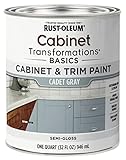
- CABINET TRANSFORMATION: Refresh outdated cabinets, vanities, furniture and trim with rich Cadet Gray color and a smooth semi-gloss finish
- DURABLE PERFORMANCE: Easy-to-clean finish resists dirt and grime while standing up to household chemicals
- SMOOTH APPLICATION: Outstanding flow and leveling help create a beautiful finish with brush, roller, pad applicator or airless sprayer
- FAST PROJECT COMPLETION: Dries to touch in 30 minutes, recoats in 2 hours and is ready for normal use after 24 hours
- INTERIOR CABINET COATING: Ideal for kitchens, bathrooms, laundry rooms and other interior cabinet and trim applications
27. Laminate, melamine, or TFL color blocks
Easy-care laminate, melamine, and thermally fused laminate (TFL) can deliver saturated color or convincing patterns with consistent surfaces. Constructions and repair options differ, so identify the exact product rather than treating all sheet surfaces as identical. Pay special attention to edge sealing near sinks and dishwashers.
28. Clear glazed doors
Clear glass breaks up a long run of solid fronts and lets you display everyday dishes. It also makes contents visible, so reserve it for orderly shelves or use it above a serving area. Confirm glass thickness, safety treatment, hinge capacity, and an interior lighting plan before fabrication.
29. Ribbed or reeded glass
Ribbed glass keeps the lighter visual break of glazing while obscuring contents more than clear glass. It suits a pantry, bar, or upper cabinet where you want texture without a fully open display. Choose the rib direction and spacing carefully; dust still collects in the grooves.
30. Limited open shelving
One or two open shelves can make a solid cabinet wall feel less heavy and give frequently used items an easy landing spot. Open shelving removes enclosed storage and exposes everything to view. Install it where the household can maintain a small, useful edit rather than treating it as overflow for clutter.
31. Glass uppers over solid lowers
Use glazed doors only on the upper row and keep base cabinets opaque. The arrangement adds display at eye level while protecting heavier cookware and less decorative items below. Check that the glass sections do not compete with a busy backsplash or create reflections toward seating areas.
32. An open display niche
Replace one short cabinet section with a recessed niche for ceramics, cookbooks, or artwork. A niche gives a planned stopping point to a long run and can be painted as an accent. Detail the depth and shelf load before construction; a shallow recess may be safer for display than a deep one.
33. Plate rack or open rail cabinet
A plate rack, peg rail, or rail-equipped cupboard turns storage into a visible feature and keeps frequently used pieces within reach. It works best near the sink or dishwasher, where unloading is simple. Measure the largest plates and mugs first, and leave enough clearance for hands and cabinet doors.
Free tools Windows power users keep installed
One-click scans. No signup required.
34. Deep drawer bases
Use wide drawers for pots, pans, plates, and small appliances so the contents can be reached from above. Group the heaviest items in drawers with runners rated for the load. Confirm that adjacent doors, appliances, and the user’s standing position leave enough room for a fully extended drawer.
35. An appliance garage
A countertop cabinet with a lift-up or pocket door hides a toaster, mixer, or coffee equipment while keeping it plugged in. Plan ventilation, outlet placement, and the appliance’s working height; a door that cannot stay safely open becomes an obstruction rather than a convenience.
Best Value

- Includes 30 featured and newest released color card. Sprayed on color to see our colors in your homes lighting for more accurate color choices.
- ALL-IN-ONE Paint - NO Sanding, NO Priming, NO Top Coat Required, Low Luster, Velvet Sheen Finish
- Interior/Exterior - Paint your whole house - Ideal for hard surfaces including walls, doors, cabinets, counters, furniture, metal, glass, ceramics and floor and wall tile
- Durable yet stretches to paint smooth fabrics, vinyl and leather
- Results cannot be guaranteed. Digital screens may not show color accurately. Product search "ALL-IN-ONE PAINT by Heirloom Traditions, Color Confidence Card", for an accurate color choice.
36. Corner drawers or a shaped corner unit
Use drawers that turn the corner, a diagonal cabinet, or a pull-out corner mechanism instead of leaving a deep void. The best choice depends on the room’s geometry and the storage you need. Draw the door and drawer arcs at full scale so handles will not collide.
37. Tall pantry and broom storage
Combine adjustable shelves, internal drawers, and a narrow vertical compartment in a tall cabinet. This concentrates food, cleaning supplies, and long tools in one place. Separate chemicals from food, provide secure shelves for heavy items, and verify that the tallest door can open without hitting a wall or island.
What’s actually slowing this PC down?
Pick the symptom - the matching free tool is one click away.
38. Organized under-sink cabinetry
Design the sink cabinet around plumbing rather than accepting a single empty box. A shallow pull-out, removable tray, or door-mounted rack can hold cleaning supplies while leaving access to shutoff valves. Keep leak-prone areas easy to inspect, and coordinate the organizer with the sink and waste-disposal layout.
39. Statement hardware
Oversized pulls, aged metal, leather-wrapped handles, or contrasting knobs can change the character of otherwise simple doors. Choose grip first and decoration second: compare handle length, projection, finish, and mounting-hole spacing. Order a sample before drilling, and confirm that the hardware clears neighboring doors, walls, and appliances.
Independent reader supportYour contribution helps us test, update, and keep practical guides available for everyone.Match the visible idea to the underlying material
The same profile can behave differently depending on what it is made from and how it is finished. These broad descriptions come from the cabinet-selection guidance in Homes & Gardens; the actual specification depends on manufacturer, grade, design, and installation.
| Material or construction | Useful characteristics | Questions to ask |
|---|---|---|
| Solid wood | Natural grain and potential to refinish; timber expands and contracts with humidity. | Which species, joinery, finish, and allowance for movement are included? |
| Wood veneer | A thin layer of real wood bonded to an engineered core; consistent panels are possible with careful matching. | How are edges banded, and can damaged veneer be repaired? |
| MDF | Smooth, uniform surface suited to paint; high-quality MDF is described as less prone to paint cracking than solid wood, while deep impacts can be harder to repair. | What grade is used, and how are sink and dishwasher edges protected? |
| Laminate, melamine, or TFL | Easy-care sheet surfaces with different cores, textures, and edge treatments. | Identify the exact product, edge seal, and repair process rather than accepting a generic label. |
| Thermofoil | A formed surface that can be easy to clean, with repair and heat limitations determined by the specific construction. | What temperatures, cleaners, and replacement options does the manufacturer allow? |
| Plywood cabinet box | Described as a strong, stable option for boxes, shelves, and drawers. | What thickness, grade, edge treatment, and hardware reinforcement are specified? |
When comparing quotes, request a written breakdown for the box, doors, drawer parts, finish, hinges, runners, and installation. No independent comparative laboratory test, quantified lifespan, or universal price ranking establishes one of these choices as best for every kitchen.
Do these 3 things before closing this tab:
1Repair Windows errors before they cause bigger problems2Fix the driver behind crashes, sound loss and screen glitches3Clear out junk files and repair common Windows errorsPlan the makeover around daily use
- Record the room: Measure walls, ceiling height, windows, doors, utilities, appliances, and walking routes. Mark door swings and drawer extensions, not just cabinet widths.
- Describe your routines: Note where groceries are unloaded, where pans are used, how many people cook, and which items need one-hand access. Put storage near the point of use.
- Choose a visual system: Select a profile, two or three related colors or wood tones, and a hardware family. Use samples beside flooring, counters, backsplash, and paint.
- Specify construction: Ask what the box, doors, drawer sides, shelves, and finish are made from. Confirm hinge adjustment, runner capacity, edge sealing, and care instructions.
- Test clearances: Mock up island edges and cabinet fronts with tape or cardboard. Open opposing doors and drawers together to find collisions before ordering.
- Check access: If cabinets rise toward the ceiling, decide how upper shelves will be reached safely. Do not trade everyday accessibility for unused height.
- Approve a finished sample: View the actual color, sheen, grain direction, glass texture, and hardware in both daylight and artificial light before production.
Painting and finish checks before installation
For painted fronts, confirm that the selected coating is compatible with the door material and that the supplier’s preparation includes sealed edges and a consistent finish on exposed sides. Matte and gloss are visual choices with different cleaning expectations; neither should be treated as a guaranteed solution to fingerprints, glare, or wear.
For stained or clear-finished wood, approve the species and a sample panel because grain and absorption change the final color. For sheet materials, inspect edge banding and corners, especially around sinks, dishwashers, and trash pull-outs. Keep the care instructions with the kitchen documents so future touch-ups use the correct products.
How to narrow 39 ideas to one coherent kitchen
Start with one dominant move, such as Shaker profile, slab geometry, a wood grain, or a strong color. Add one supporting move—ribbed glass, a contrasting island, or special hardware—and reserve the remaining ideas for functional zones. This keeps the room from becoming a collection of unrelated samples.
Finally, judge every attractive detail against grip, visibility, clearance, cleaning, and access. A cabinet is successful when its appearance and construction support the household’s routine, not when it follows a trend name.
Recommended Free Tools
Quick Recap

Product prices and availability are accurate as of the date/time indicated and are subject to change. Any price and availability information displayed on Amazon at the time of purchase will apply.

