Do these 3 things before closing this tab:
Quick wins for a faster PC:
Clear out junk files and repair common Windows errorsFree Scan →Scan for outdated or missing drivers - takes under a minuteDriver Scan →1Repair Windows errors before they cause bigger problems2Fix the driver behind crashes, sound loss and screen glitches3Clear out junk files and repair common Windows errors
ThatPainter is reader-supported. When you buy through links on our site, we may earn an affiliate commission. Learn More
Affinity is now the closest professional desktop replacement for Photoshop on Windows, and Canva made the current Affinity app free in October 2025. If you prefer open-source software, choose GIMP; if you need to edit PSD files without installing anything, use Photopea; if you paint with a tablet, Krita is the better choice; and if you want a tiny portable Windows editor, try PhotoDemon.
No free application is a perfect Photoshop clone. The important question is whether it preserves the layers, masks, text, blend modes, color information, and other project data your workflow depends on—not merely whether it can crop a photo and apply a filter.
As an Amazon Associate I earn from qualifying purchases.
Versions and availability checked August 10, 2026.
Quick comparison
| Editor | Runs on Windows as | Free model | PSD workflow | RAW workflow | Best for | Main limitation |
|---|---|---|---|---|---|---|
| 1. Affinity | Native desktop app | Free proprietary app; a free Canva account is required for activation | Open and save; test complex files before handoff | Non-destructive RAW development | Professional photo editing, compositing, vector design, and layout | Requires a Canva account; Photoshop-specific features may not round-trip perfectly |
| 2. GIMP | Native desktop app | Free and open source | Import and export, but XCF is the safer working format | Supported RAW workflows; not a Lightroom-style catalog | Open-source photo manipulation and compositing | Steeper learning curve and imperfect PSD compatibility |
| 3. Photopea | Browser-based editor | Free with advertising; Premium removes advertising and adds account benefits | PSD is its primary project format | DNG opens and is converted into a regular image in a PSD document | Photoshop-like PSD editing without installation | Browser memory, ads, caching, and unsaved-work risks |
| 4. Krita | Native desktop app or portable ZIP | Free and open source | Loads and saves PSD for interchange | Some RAW-opening workflows | Digital painting, illustration, comics, animation, and tablets | Not primarily a photo-retouching application |
| 5. PhotoDemon | Windows-only portable app | Free and open source under a BSD license | Supports PSD, with Photoshop-specific limitations | Supported RAW workflows | Lightweight, offline, portable Windows editing | Smaller ecosystem and less familiar workflow |
These recommendations separate fundamentally different categories: a professional desktop suite, an open-source raster editor, a browser editor, a painting application, and a lightweight portable photo editor. A single overall score would hide those differences.
What counts as free?
GIMP, Krita, and PhotoDemon are free and open source. You can download and use them without a subscription or vendor account. Their source code and licensing models also make them the most independent choices in this list.
#1 Best Overall

- Battery-Free Pen: StarG640 drawing tablet is the perfect replacement for a traditional mouse! The XPPen advanced Battery-free PN01 stylus does not require charging, allowing for constant uninterrupted Draw and Play, making lines flow quicker and smoother, enhancing overall performance
- Ideal for Online Education: XPPen G640 graphics tablet is designed for digital drawing, painting, sketching, E-signatures, online teaching, remote work, photo editing, it's compatible with Microsoft Office apps like Word, PowerPoint, OneNote, Zoom, Xsplit etc. Works perfect than a mouse, visually present your handwritten notes, signatures precisely
- Compact and Portable: The G640 art tablet is only 2 mm thick, it's as slim as all primary level graphic tablets, allowing you to carry it with you on the go
- Chromebook Supported: XPPen G640 digital drawing tablet is ready to work seamlessly with Chromebook devices now, so you can create information-rich content and collaborate with teachers and classmates on Google Jamboard’s whiteboard; Take notes quickly and conveniently with Google Keep, and effortlessly sketch diagrams with the Google Canvas
- Multipurpose Use: Designed for playing OSU! Game, digital drawing, painting, sketch, sign documents digitally, this writing tablet also compatible with Microsoft Office programs like Word, PowerPoint, OneNote and more. Create mind-maps, draw diagrams or take notes as replacement for mouse
Affinity is a free proprietary desktop application. Canva says the current Affinity combines photo editing, vector design, and page layout and is available at no cost on Windows and macOS. Activation still requires a free Canva account. Optional Canva AI features inside Affinity are associated with Canva Premium; they are not evidence that the core editor is a paid trial. See Canva’s Affinity announcement and its explanation of why Affinity is free.
Photopea is free to use in a browser, but its free version is ad-supported. Photopea Premium removes advertising and provides additional account benefits, according to its account information. A free trial, a restricted demo, or a service whose free tier cannot save layered projects should not be described as an equivalent free Photoshop replacement.
1. Affinity by Canva: best overall professional alternative
Affinity takes first place because it now covers the broadest range of professional desktop work without an Adobe subscription. The current app is not merely a photo editor: Canva describes it as one application combining photo editing, vector design, and page layout.
Its feature set includes non-destructive RAW development, retouching, compositing, live filters, smart selections, batch processing, customizable workspaces, and support for formats including PSD, AI, PDF, SVG, TIFF, and IDML. That combination makes it the most practical choice for a designer or photographer who wants one polished Windows application instead of separate tools for raster editing, vector artwork, and page layout. The feature and format claims come from Canva’s current Affinity announcement.
Why choose Affinity?
- It is a native Windows desktop application rather than a browser tab.
- It has a more polished, professional workflow than many free alternatives.
- It combines photo, vector, and layout tools.
- It supports layers, masks, live filters, smart selections, RAW development, and batch processing.
- It is the strongest first choice for photographers, designers, freelancers, and Photoshop users moving to another desktop application.
What to watch for
Free does not mean account-free: you must create or sign in to a free Canva account to activate Affinity. Canva says creative work is stored locally unless the user chooses to export or upload it, and says Affinity content is not used to train or develop its AI features. That is a useful privacy distinction, but the account requirement still matters to people who want entirely independent software.
PSD compatibility also needs a qualification. Affinity can open and save PSD files, but PSD is an exchange format, not a guarantee that Photoshop-specific structures remain editable. Older Affinity documentation and user discussions record cases in which text exported to PSD was rasterized rather than preserved as editable text. The current app should therefore be tested with representative files before a production handoff. Do not assume that editable text, smart objects, fonts, layer effects, masks, and blend modes will all return to Photoshop unchanged.
Recommended setup
- Create or sign in to a free Canva account.
- Download Affinity from the official Affinity/Canva channel and install the Windows app.
- Activate the application with the account.
- Open a copy of a typical PSD, not the original production file.
- Check text, fonts, masks, smart objects, blend modes, color profiles, and layer visibility.
- Save active work in Affinity’s native format and export PSD only when another application needs the file.
Verdict: Choose Affinity if you want the closest current professional desktop replacement for Photoshop and do not object to creating a free Canva account.
2. GIMP: best fully open-source Photoshop alternative
GIMP remains the strongest choice for users who want serious image manipulation without a subscription, account, or commercial vendor lock-in. It supports layers, channels, paths, transparency, selections, masks, transformations, filters, scripting, plugins, and a wide range of image formats. Its official feature documentation describes the core editing capabilities.
The current stable Windows release listed by GIMP is GIMP 3.2.4, released April 17, 2026. The official download page lists Windows x86_64 and ARM64 builds. Its MSIX package lists Windows 10.0.20348.0 or newer, and GIMP 3.2.2 and later no longer provide 32-bit Windows builds. Use the official GIMP download page rather than an unverified mirror.
What GIMP does particularly well
- Layer-based compositing and photo manipulation.
- Layer masks, channels, paths, selections, and transparency.
- Clone, heal, transform, paint, and retouch tools.
- Plugins, scripting, and automation.
- Local, offline editing with no account requirement.
- Native XCF project files that preserve GIMP’s editable project structure.
GIMP 3.0 introduced non-destructive layer effects, and GIMP 3.2 added non-destructive layer types including link layers and vector layers while expanding non-destructive filter handling. The GIMP 3.0 release notes and GIMP 3.2 release notes document those changes.
What’s actually slowing this PC down?
Pick the symptom - the matching free tool is one click away.
GIMP’s important limitation: PSD is not XCF
GIMP can import and export PSD files, but it does not promise Photoshop-perfect compatibility. Blending modes and some Photoshop-specific structures may be interpreted differently. GIMP’s own PSD export documentation warns that not all blending modes necessarily convert precisely.
Use XCF as the working file. Export PNG, JPEG, TIFF, or PSD only for delivery or interchange. GIMP’s file-format documentation explains that XCF is the format that preserves all project information handled by GIMP; a flattened export cannot preserve the complete layer and editing structure.
RAW photography
GIMP can participate in RAW workflows, and independent testing by Tom’s Hardware found RAW support in GIMP. However, GIMP is not a replacement for a full photo cataloging application such as a Lightroom-style system. Photographers who need catalog search, collections, lens corrections, and large-scale asset management may want a dedicated RAW developer alongside GIMP.
Rank #2

- Word-first 16K Pressure Levels: The upgraded stylus features 16,384 levels of pressure sensitivity and supports up to 60 degrees of tilt, delivering smoother lines and shading for a natural drawing experience. With no battery or charging needed, it operates like a real pen, making it easy for beginners to create effortlessly. This functionality helps novice artists develop their skills and explore their creativity without the intimidation of complex tools
- Designed for Beginners: This drawing pad desinged with 8 customizable shortcuts for both right and left-hand users, express keys create a highly ergonomic and convenient work platform
- Perfectly Adapted for Android: The XPPen Deco 01 V3 art tablet supports connections with Android devices running version 10.0 and above. It is recommended to download the XPPen Tools Android application, which adapts to your smartphone's screen aspect ratio, ensuring accurate mapping. It also supports mapping on Android screens with different aspect ratios in portrait mode
- Large Drawing Space, Bigger Bold Inspiration: This expansive drawing pad has10 x 6.25-inch helps you break through the limit between shortcut keys and drawing area
- Easy Connectivity for Beginners: The Deco 01 V3 offers USB-C to USB-C connectivity, plus adapters for USB C. This ensures easy connection to various devices, allowing beginner artists to set up quickly and focus on their creativity without compatibility concerns. Whether using a laptop, tablet, or desktop, the Deco 01 V3 provides a seamless experience, making it an ideal choice for those just starting their digital art journey
Recommended working path
- Open the source image with File → Open.
- Immediately use File → Save As and create an XCF working copy.
- Use layer masks instead of erasing pixels when you may need to revise a composite.
- Use non-destructive filters and layer effects where practical.
- Use File → Export As for PNG, JPEG, TIFF, or PSD delivery.
- Keep the XCF file and exported image together; the export is not a substitute for the project file.
Verdict: Choose GIMP if you want the deepest genuinely free and open-source general-purpose alternative and are prepared to learn an interface that does not behave exactly like Photoshop.
3. Photopea: best Photoshop-like browser alternative
Photopea is the closest match for a Photoshop user who wants familiar layers, menus, masks, adjustment layers, layer styles, smart objects, and PSD saving without installing software. It runs in a Windows browser, accepts local files by drag-and-drop or through File → Open, and can save projects as PSD or export PNG, JPG, SVG, and PDF. Its opening and saving guide explains the workflow.
Why Photopea is useful
- PSD is Photopea’s primary project format rather than an afterthought.
- It supports layers, folders, raster masks, adjustment layers, layer styles, smart objects, and smart filters.
- It supports scripts and Photoshop ATN action files, although individual actions will not necessarily behave identically to Photoshop actions.
- It is useful on school, library, workplace, or borrowed Windows PCs where installing software is not possible.
- Basic use does not require an account.
- Files opened locally are processed on the device according to Photopea’s privacy policy.
Photopea also supports 8-, 16-, and 32-bit color depths and has documentation for layers, adjustments and filters, smart objects, and actions.
Browser-based does not mean simply online-only
Photopea can continue working after the site has loaded and the computer is disconnected, because processing takes place locally in the browser. That makes it a reasonable privacy-conscious option for local files. But offline use is cache-dependent: the page must load successfully first, and browser settings, extensions, private-browsing policies, cleared caches, or blocked scripts can interfere.
Save frequently to the local computer. If you close the browser or tab before saving, the current document can be lost. Photopea’s privacy policy also distinguishes local editing from optional cloud-storage integrations: if you authorize a cloud service, Photopea can access the files you permit, and those transfers are encrypted.
Free tools Windows power users keep installed
One-click scans. No signup required.
Free model and limitations
The free editor includes advertising. Premium removes advertising and provides additional account benefits; it does not turn Photopea into a native Windows application. Large compositions may be limited by available browser memory, and users should not assume that every Photoshop plugin will run. Photopea’s ability to load and save ATN action files is useful, but individual actions and plugins still need testing.
Recommended working path
- Open Photopea in a normal browser window and allow the application to finish loading.
- Choose File → Open or drag a local image or PSD into the editor.
- Work in the layered document and save early.
- Use File → Save as PSD to preserve the project structure.
- Use File → Export As for a final PNG, JPG, SVG, or PDF.
- Save before closing the tab or disconnecting from the Internet.
Verdict: Choose Photopea if you need the most Photoshop-like workflow without installing a Windows application, particularly for PSD editing.
4. Krita: best free alternative for digital painting
Krita is the strongest choice here for digital painters, illustrators, comic artists, concept artists, and anyone working with a drawing tablet. It is not the first recommendation for photographers who mainly need fast retouching, cataloging, or Photoshop-style image compositing.
Krita advertises more than nine brush engines, extensive brush customization, tablet support, animation tools, vector, filter, group, and file layers, full color management, HDR painting, GPU acceleration, PSD support, and Python scripting. Its features page describes the painting-oriented toolset.
What’s actually slowing this PC down?
Pick the symptom - the matching free tool is one click away.
Current Windows release choice
The stable Windows release is Krita 5.3.2.1, released June 2, 2026. Krita also lists 6.0.2.1, but the project describes that branch as more experimental because of major Qt5-to-Qt6 changes. For normal artwork and production work, use 5.3.2.1 unless you have a specific reason to test the newer branch. The release announcement provides the current distinction.
Krita offers both an installer and a portable 64-bit ZIP. Its listed requirements include Windows 8.1 or newer, at least 4 GB of RAM with 16 GB recommended, and OpenGL 3.0 or Direct3D 11. There are no current 32-bit Windows builds. See Krita’s download and system-requirements page before installing on older hardware.
PSD and native project files
Krita can load and save PSD files, making it useful for moving artwork between applications. That is interchange support, not a promise that every Photoshop text layer, mask, blend mode, smart object, or effect will remain identical. Save active paintings in Krita’s native .kra format and retain that file alongside any PSD export.
Verdict: Choose Krita if your Photoshop use is mainly drawing, painting, illustration, comics, animation, or tablet work. Choose Affinity or GIMP instead for a photography-first workflow.
Quick wins for a faster PC:
Clear out junk files and repair common Windows errorsFree Scan →Fix the driver behind crashes, sound loss and screen glitchesFind Drivers →Repair Windows errors before they cause bigger problemsFix Now →Rank #3
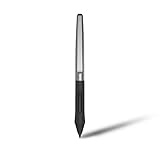
- Battery-free Stylus - Only COMPATIBLE to Huion Inspiroy H640P/H950P/H1060P/H610Pro V2/HS610/HS64/H420X/H580X/H610X; Never worry about pen-charging, and eco-friendly of use; Without operating battery, the pen is only 16g in weight, and its front end is made of wearable silicone for soothing feel.
- NOT COMPATIBLE with iPad, other Graphics Tablet or Huion Graphics Monitor GT Series; Huion provides one year warranty.
- Two Customizable Pen Buttons - Set the function to your reference like eraser, fasten your working efficiency; Palm rejection design of dual keys on both sides of the pen helps reduce touch frequency and realize most effective creation.
- Long-lasting Lifespan - First of Huion's products features battery-free stylus, say goodbye to charging cables; Don't need to worry about the potential battery leakage and run-out.
- 8192 Levels of Pen Pressure Sensitivity - Enjoy the accuracy and precision when drawing; Having 233 PPS report rate, 5080LPI resolution, you can paint or draw or sketch smoothly on your Huion Inspiroy series Tablets.
5. PhotoDemon: best lightweight portable Windows editor
PhotoDemon is an unusually capable choice for a Windows user who values a small download, portability, and offline operation over a large ecosystem. The current stable release listed by the project is PhotoDemon 2025.12, distributed as a ZIP of approximately 22 MB from the official download page.
PhotoDemon is portable: it does not require a conventional installation, administrator rights, or Internet access. The project describes more than 200 tools, layers, selection tools, digital painting, content-aware fill and resize, shadow and highlight recovery, perspective and lens correction, and support for PSD, PSP, and XCF files. It also includes macro recording, batch processing, customizable shortcuts, real-time previews, presets, and unlimited undo/redo. See the PhotoDemon home page for the project’s feature and licensing information.
Who should use it?
- Windows users with older or lower-spec machines.
- People who want to carry an editor on a USB drive.
- Photographers who need practical editing, RAW support, and batch processing.
- Users who cannot or do not want to install a large application.
- People who need a local editor that works without Internet access.
PSD compatibility is useful, not absolute
PhotoDemon supports PSD, but its developer documents limitations involving layer masks, layer styles, and editable Photoshop text layers. Unsupported Photoshop features may be retained internally without becoming active, while some structures may be translated into PhotoDemon equivalents. The project’s PSD support notes are worth reading before relying on it for a round-trip workflow.
Recommended working path
- Download the stable ZIP, not a nightly build.
- Extract it to a local folder or USB drive.
- Run the application executable.
- Open a copy of the PSD or RAW file.
- Save a native project copy before exporting.
- Keep a flattened PNG, TIFF, or JPEG as a visual backup when exchanging work.
Verdict: Choose PhotoDemon if you want a surprisingly powerful, portable Windows photo editor with PSD, RAW, batch, and offline support.
Which one should you choose?
| Your priority | Pick | Reason |
|---|---|---|
| I want the closest professional Photoshop replacement | Affinity | The broadest combination of photo, vector, layout, RAW, compositing, and non-destructive tools in a native desktop app. |
| I want open-source software with no account | GIMP | Deep raster editing, masks, scripting, plugins, and local project files. |
| I need to edit PSDs without installing anything | Photopea | PSD-centered workflow with familiar layers, masks, adjustment layers, smart objects, and browser access. |
| I draw with a tablet | Krita | Brush engines, stabilizers, tablet support, animation, and painting-focused tools. |
| I need a tiny portable Windows editor | PhotoDemon | Small ZIP, no installation, offline use, batch tools, RAW support, and practical photo features. |
| I only annotate screenshots or make simple edits | Paint.NET | A comparatively easy Windows workflow, although its native project format is PDN and it is not a native PSD or RAW solution. |
PSD compatibility: the test that prevents unpleasant surprises
PSD is best understood as an exchange format between applications. A program may be able to open a PSD, keep its layers separate, and save another PSD while still changing important details. Common failure points include:
- Blend modes: different applications may render or map them differently.
- Fonts and text: missing fonts, different text engines, paragraph settings, warping, and layer effects can rasterize or alter text.
- Smart objects: they may be flattened, converted, or lose their original embedded editing behavior.
- Masks and clipping: a mask may be merged into alpha, translated into another type, or display differently.
- Layer styles: shadows, strokes, bevels, and other effects may not remain editable.
- Color: profiles, 16-bit or 32-bit data, HDR information, and CMYK conversions may change.
- Groups and adjustment layers: the appearance may remain close while the underlying editability changes.
For an ongoing project, save in the application’s native format: .af or the current Affinity project format for Affinity, .xcf for GIMP, .psd for Photopea, .kra for Krita, and PhotoDemon’s own project format where appropriate. Export PSD when collaboration requires it, not as the only backup.
Non-destructive editing: what the term really means
Undo history alone is not non-destructive editing. A stronger workflow combines editable layers, masks, adjustment layers, live filters, smart objects, or native project files that preserve those structures after the application closes.
Crashes, No Sound, or Screen Glitches?
Random freezes, missing sound and display glitches usually trace back to one bad driver. Find and replace yours safely.Free scan · under a minutePC Slower Than It Used to Be?
A free scan shows the junk files, broken settings and background clutter dragging Windows down - then fixes them in one click.Free scan · Windows 10 & 11| Editor | Non-destructive strengths | Practical caution |
|---|---|---|
| Affinity | Non-destructive RAW development, live filters, masks, compositing, and smart selections. | Exported formats, especially PSD, may not preserve every editable Affinity or Photoshop structure. |
| GIMP | Layer masks, non-destructive layer effects, non-destructive filters, vector layers, and link layers in the 3.x series. | Use XCF; PNG, JPEG, and other exports discard project information. |
| Photopea | Adjustment layers, masks, smart objects, smart filters, and layered PSD projects. | Save locally and frequently because the browser session is not a backup. |
| Krita | Vector, filter, group, and file layers plus masks and a native .kra project format. | Its non-destructive strengths are designed around painting and illustration rather than a Photoshop photography workflow. |
| PhotoDemon | Layers, editable text layers, real-time previews, macros, batch processing, and unlimited undo/redo. | Confirm which operations remain editable in the native project and which are permanently applied. |
RAW photography: development is not the same as cataloging
RAW support can mean several different things: native camera-RAW development, opening a file through an external decoder, supporting only DNG, or editing an already converted TIFF or JPEG.
- Affinity: offers non-destructive RAW development as part of its photo workflow.
- GIMP: can participate in RAW workflows; supported camera formats and the installed decoder should be checked for a particular camera.
- PhotoDemon: is a candidate for RAW editing and practical photography work, but camera-specific support should be verified.
- Krita: can open RAW files in some workflows, but painting remains its core purpose.
- Photopea: supports DNG RAW files and converts them into a regular image inside a PSD document rather than functioning as a full RAW catalog and developer.
Independent 2025 testing by Tom’s Hardware found PSD and RAW support in GIMP, Krita, and PhotoDemon, but not in Pinta or Paint.NET. Treat that as useful comparative evidence, not a substitute for checking current project documentation and your camera’s files.
Offline use, privacy, and account requirements
| Editor | Account required? | Offline and file-handling model |
|---|---|---|
| Affinity | Yes, a free Canva account is required for activation | Native desktop editing. Canva says work is stored locally unless the user chooses to export or upload it; optional Canva integrations and AI features are separate considerations. |
| GIMP | No | Local native desktop application; suitable for offline work. |
| Krita | No | Local native desktop application or portable ZIP; suitable for offline work. |
| PhotoDemon | No | Portable local application that the project says does not require Internet access. |
| Photopea | No for basic use | Files opened locally are processed on the device. It can continue offline after loading, but browser caching is required. Optional cloud integrations require user authorization. |
Photopea’s privacy policy says locally opened files do not leave the device. That does not mean every possible cloud workflow is local: if you connect cloud storage, the service can access the files you authorize. It also does not protect unsaved work from a closed tab or cleared browser session.
Affinity is the one choice in this list that combines local desktop editing with a mandatory vendor account. Canva says Affinity work remains locally stored unless the user chooses otherwise and says it does not use Affinity content to train or develop AI features. Users who want no account at all should choose GIMP, Krita, or PhotoDemon.
Do these 3 things before closing this tab:
1Repair Windows errors before they cause bigger problems2Scan for outdated or missing drivers - takes under a minute3Clear out junk files and repair common Windows errorsWindows requirements and release choices
GIMP
- Current stable Windows release listed: 3.2.4, released April 17, 2026.
- Windows x86_64 and ARM64 builds are available.
- The MSIX package lists Windows 10.0.20348.0 or newer.
- GIMP 3.2.2 and later do not provide 32-bit Windows builds.
Use the official downloads page for the installer and current package options.
Rank #4

- Exclusive for Ugee's S640/S640W/S1060/S1060W/M708 V3 digital drawing tablets: The Ugee stylus is specifically designed to work with these devices, giving you precise and intuitive control over your artwork
- Not compatible with iPads or other graphics displays: This pen is specifically designed for digital drawing boards, so your customers won't have to worry about accidentally contaminating their devices with other pens or devices
- EMR technology: The Ugee stylus uses an EMR,which means it doesn't require a battery or charging socket. Simply place the stylus on the graphics drawing tablet and it's ready to go
- Two quick-access buttons: The Ugee stylus features two built-in buttons, allowing you to quickly switch between your pen stroke and eraser without ever having to take your hand off the tablet
- 8192 pressure sensitivity and ±60°tilt: The Ugee stylus features high-resolution pressure sensitivity and precise side peaks, allowing you to create detailed and expressive artwork
Krita
- Recommended stable Windows release: 5.3.2.1, released June 2, 2026.
- Windows 8.1 or newer.
- At least 4 GB of RAM; 16 GB recommended.
- OpenGL 3.0 or higher or Direct3D 11.
- Installer and portable 64-bit ZIP are available.
- 6.0.2.1 is available as a more experimental branch; use 5.3.2.1 for ordinary production work.
See Krita’s release page and download and requirements page.
PhotoDemon
PhotoDemon is Windows-only and portable. The project says it supports Windows versions from XP through current Windows 11 Insider builds. That is a project claim rather than an independent compatibility test, so older Windows users should test the current ZIP on a non-production machine first. The current stable download is approximately 22 MB.
Paint.NET
Paint.NET remains a useful honorable mention for simple Windows editing. Its current documentation requires 64-bit Windows 10 or 11, with Windows 10 version 21H2 or newer listed, plus a 64-bit x64 or ARM64 CPU and a Direct3D 11-capable GPU. The project recommends an SSD and no longer supports HDDs under its current testing policy. Its overview and system requirements explain the details.
Common failure modes and fixes
A PSD opens, but it looks different
Do not overwrite the original. Compare the file against a flattened reference export and inspect blend modes, fonts, text, masks, smart objects, layer styles, adjustment layers, color profiles, and bit depth. If the appearance is critical, keep the Photoshop-generated flattened PNG or TIFF as the visual authority and use the converted layered file only after testing.
A free app requires a login
Separate four questions: Is the application free? Is an account required? Is cloud storage optional? Are AI features paid? Affinity is free to use but requires a Canva account for activation. GIMP, Krita, PhotoDemon, and basic Photopea use do not require an account.
Photopea stops working in the browser
- Use a normal browser window rather than a heavily restricted private session.
- Disable extensions that block scripts, canvas operations, or advertisements if they interfere with the editor.
- Allow Photopea to finish loading before disconnecting from the Internet.
- Save the document locally before closing the tab.
- Use a desktop application for very large files or long sessions.
- Do not rely on browser history as a backup.
A large image becomes slow
- Close unused documents and applications.
- Reduce preview quality where the editor provides that option.
- Use an SSD and keep sufficient RAM available.
- Avoid unnecessary duplicate layers and oversized embedded objects.
- Save a native project rather than repeatedly reopening flattened exports.
- Move very large compositions from a browser editor to a native desktop application.
Paint.NET’s documentation specifically notes that it uses disk space for temporary editing history, which is one reason its current support policy recommends SSD storage.
You need CMYK or professional print output
None of these editors should be treated as automatically suitable for every print-production workflow. RGB web graphics, soft-proofing, CMYK conversion, spot colors, PDF/X output, ICC profiles, and printer-specific requirements are different needs.
GIMP 3.2 added total-ink-coverage information to its CMYK color selector and supports color management, but you should still follow the printer’s specifications and validate the exported PDF or TIFF. Affinity may be the stronger all-purpose design choice, but the print provider’s required color profile and PDF standard remain decisive.
You need Photoshop plugins
None of these five is a drop-in replacement for every Photoshop plugin. GIMP has a substantial plugin and scripting ecosystem; Krita offers Python scripting and resource packs; Photopea supports some Photoshop actions; Affinity and PhotoDemon have their own automation or extension models. Test each required plugin or action individually rather than assuming compatibility from the application’s name.
Honorable mentions
Paint.NET
Paint.NET is one of the easiest Windows editors for annotations, screenshot cleanup, resizing, simple layer work, and everyday image edits. Its native working format is PDN, however, and it does not provide native Photoshop or RAW compatibility in the way the main five do. It is an excellent simple editor, but not the best answer for a Photoshop user who depends on layered PSD exchange.
Pixlr
Pixlr can be useful for quick browser-based and AI-assisted edits, but its free tier, advertising, and feature availability can change. Check what the current free plan can save and export before using it for a layered project.
Recommended Free Tools
Pinta
Pinta is lightweight and approachable, but it is not a strong choice for PSD or RAW workflows.
Inkscape
Inkscape is a better choice for vector illustration than Photoshop-style raster editing. It complements a photo editor rather than replacing one for pixel-based compositing.
Best Value
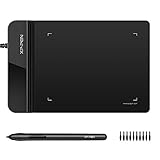
- Ultra thin tablet: Active Area 4 x 3 inches. Fully utilizing our 8192 levels of pen pressure sensitivity―Providing you with groundbreaking control and fluidity to expand your creative output. Please note: The 4 x 3 inches is very small, please confirm that it will meet your needs before you purchase it
- OSU game: Designed for OSU! gameplay, drawing, painting, sketching, E-signatures etc. No need to install drivers for OSU! It's also designed for both right and left hand users
- Accurate Pen Performance: StarG430S computer graphics tablet is the perfect replacement for a traditional mouse! The XPPen advanced Battery-free PN01 stylus does not require charging, allowing for constant uninterrupted Draw and Play, making lines flow quicker and smoother, enhancing overall performance
- Compact and Portable: The G430S art tablet is only 2 mm thick, it’s as slim as all primary level graphic tablets,Ultra-thin and portable, allowing you hold it in one hand and carry it on the go. This graphic drawing tablet supports Mac. However, since the product interface is micro USB to USB-A, if your computer is a Mac and does not have a USB-A port, you will need to purchase an OTG transfer adapter to ensure compatibility with your Mac. So please confirm your computer port before you purchase it
- PLEASE NOTE: The XPPen StarG 430 is compatible with the Windows system 11/10/8/7(32/64 bit), and the Mac OS X version 10.10 or later, but it is incompatible with iOS and iPad OS. If your computer is a Mac, you need to grant permission to the Mac preferences first. Please go to our official website, and according to the guide: XPPen>Support>FAQ, find out the Star G430 and click, then click the question according to your Mac system. There are detailed guidelines for installing the driver so your tablet will work correctly. It's possible incompatible with the customer's own EMR system or other signature system. Please feel free to contact us to confirm the compatibility before your purchase
darktable
darktable is better suited to RAW development and cataloging than to general compositing, painting, or Photoshop-style layer work. It can be a useful companion to GIMP or Affinity for photographers.
PhotoScape X
PhotoScape X can be useful for simpler photo tasks, but check its current free-tier restrictions and feature split before treating it as a full Photoshop alternative.
The Tool Desk
Outbyte PC Repair FREEClear out junk files and repair common Windows errorsFree Scan →Outbyte Driver Updater FREEScan for outdated or missing drivers - takes under a minuteDriver Scan →Bottom line by workflow
For most Windows users who want one capable replacement, start with Affinity. It is the broadest professional desktop option and the major reason older lists of free Photoshop alternatives are now out of date.
Choose GIMP when open-source licensing, no account, deep raster editing, and extensibility matter more than a familiar interface. Choose Photopea when PSD exchange and a Photoshop-like browser workflow matter most. Choose Krita when the work is painting, illustration, comics, animation, or tablet-driven art. Choose PhotoDemon when portability, a small download, offline use, and practical Windows photo tools matter more than ecosystem size.
Whichever editor you choose, keep its native project format, test representative PSD files, and export a flattened backup. That habit matters more than any compatibility checkbox.
Frequently Asked Questions
Which free Photoshop alternative is best for Windows overall?
Affinity is the best overall professional choice as of August 10, 2026. Canva says the current Affinity app is free, runs natively on Windows, and combines photo editing, vector design, and page layout. It requires a free Canva account for activation, and complex PSD files should still be tested before handoff.
Which alternative is best for PSD files?
Photopea has the most PSD-centered workflow because PSD is its primary project format and it supports layers, masks, adjustment layers, smart objects, and smart filters. Affinity is the stronger native desktop choice. Neither should be assumed to preserve every Photoshop-specific text layer, smart object, blend mode, or effect perfectly.
Which Photoshop alternative is best for digital painting?
Krita is the best choice for digital painting, illustration, comics, concept art, animation, and drawing tablets. Its brush engines, tablet support, animation tools, color management, HDR painting, and Python scripting are stronger for artists than the photography-first workflows of Affinity or GIMP.
Can these Photoshop alternatives work offline?
Affinity, GIMP, Krita, and PhotoDemon are native or portable local editors and can work offline, although Affinity requires account activation. Photopea can continue working offline after its web application has loaded, but that depends on browser caching. Save locally before disconnecting or closing the browser.
Is there a completely free Photoshop replacement with perfect PSD compatibility?
No. PSD is an interchange format, and cross-application conversion can change fonts, text editability, masks, layer styles, blend modes, smart objects, color profiles, or bit depth. Keep the original PSD, test a duplicate in the target editor, and create a flattened PNG or TIFF backup.
What’s actually slowing this PC down?
Pick the symptom - the matching free tool is one click away.
The Bottom Line
Best overall: Affinity. Best open source: GIMP. Best no-install PSD editor: Photopea. Best for digital painting: Krita. Best portable Windows editor: PhotoDemon.
Use the editor that matches your workflow, and treat PSD as an exchange format that must be tested—not as proof of perfect Photoshop compatibility.
Quick Recap

Product prices and availability are accurate as of the date/time indicated and are subject to change. Any price and availability information displayed on Amazon at the time of purchase will apply.




