Do these 3 things before closing this tab:
1Fix the driver behind crashes, sound loss and screen glitches2Clear out junk files and repair common Windows errors3Scan for outdated or missing drivers - takes under a minuteThatPainter is reader-supported. When you buy through links on our site, we may earn an affiliate commission. Learn More
Australia has a national design objective for more adaptable housing, but that does not mean the homes people already occupy are accessible. NCC 2022 introduced livable-housing provisions for certain new Class 1a work, while state and territory governments decide how and when those provisions operate. Existing dwellings are generally outside the code unless they are altered, extended or change use. The result is a real policy gap: new construction can be designed for changing mobility, yet the established housing stock is not automatically upgraded. There is no current, methodologically comparable national count proving exactly how many homes fail older residents’ needs.
As an Amazon Associate I earn from qualifying purchases.
Is Australia’s housing system failing an ageing population?
The fairest answer is that Australia has improved its rules for new housing but has not solved accessibility for the homes people already live in. The National Construction Code (NCC) is the country’s primary technical framework for building safety, health, amenity, accessibility and sustainability. It is not, by itself, a single permit issued by Canberra: each state and territory gives the code legal effect through its own legislation, adoption dates, variations and transition arrangements.
That distinction matters for an ageing population. A national objective can influence new designs, but it cannot retrofit a steep entry, narrow circulation route or bathroom that has no suitable fixing structure in an existing house. The evidence available does not support a precise current national percentage of inaccessible homes. A parliamentary report records that voluntary accessible features were taken up by about 5 per cent of the private building sector in the previous decade, but that historical figure is neither a current housing-stock estimate nor a measure of how many older people are inadequately housed. The report’s wording and date should travel with the statistic.
#1 Best Overall

- Matters need Attention: Only suitable for tiles measuring 4×4 inches or larger. For the safety of the seniors and elderly, please pay attention that the suction grab bars for shower ONLY sticks on smooth and non-porous AIRTIGHT walls which are NOT air-permeable like metal, glass, tile, marble, stainless steel and acrylic but does NOT apply on uneven tile, unfinished marble, wallpaper, dry wall, porous wall, painted wall, etc. Please don't put all the body weight on the shower grip
- Easy for Installation: Each suction cup shower handle equips 2 Strong suction cups with locking latches to provide stable protection. The bathtub hand rafully removable, reusable and causing no damage to your wall
- Safety to Users: Each shower bars safety is fabricated with an Anti-Slip Strip on top of the handrail, which creates strong friction to better keep your hands ON the grab bar. On the bottom of the grip covers the curved wave design which is suitable for fingers, giving you double protection to guarantee safety and security. The safety shower bars for elderly is able to support up to 240 LBS heavy duty EACH and also waterproof, staying sturdy and stable
- Multiple Applications: Many people in daily life need help keeping balance when standing up and walking. Yet we couldn't be there help them all the time. But this shower bar for bathroom can easily provide them safe, effective and convenient help! The grab bars for bathtub and shower is suitable to install in Bathroom, Bathtub, Shower, Toilet and Kitchen to offer assistance getting up for elderly & seniors, pregnant women, kids, injured, handicapped and the people who have trouble in mobility
- Warm-hearted Service: If any of the TAILI shower grip product did not meet your requirements, simply contact us and we will help to solve it. If problems when firstly installation, please wash the suction cup, dry it with hair dryer and test it on the smooth glass surface. If suction holds, that means initial wall might not applicable for using suction cup, please change installation location
Accessibility is also broader than ageing. The NCC expressly includes people with a mobility-related disability, and step-free, adaptable features can assist someone recovering from an injury, using a pram or hosting a visitor who cannot manage stairs.
What are Australia’s housing accessibility standards?
The NCC sets the national framework
The ABCB describes the NCC as a performance-based code. It states minimum requirements and allows a compliant outcome to be demonstrated through prescribed provisions or an approved performance solution. Whether a provision is enforceable on a particular project depends on the building class, the work being undertaken and the relevant jurisdiction’s law. The ABCB’s editions page and the local building regulator should therefore be checked together.
Part H8 puts livable housing into the code
NCC 2022 added Part H8, “Livable housing design,” for Class 1a buildings. Its objective is: “The Objective of this Part is to ensure that housing is designed to meet the needs of the community, including older people and those with a mobility-related disability.” The Part H8 provisions express a practical intent: a dwelling should be easy to enter, easy to navigate in and around, capable of easy and cost-effective adaptation, and responsive to changing occupant needs.
Recommended Free Tools
Rank #2

- DURABLE & SUPPORTIVE CONSTRUCTION: 24-inch long stainless steel grab bar with 1.25 inch diameter; supports up to 500 lbs when installed in a stud or when using SecureMounts (not included)
- EASY INSTALLATION: SecureMount design for easy, secure installation (sold separately) delivering safety and peace of mind
- STYLISH STAINLESS FINISH: Stainless finish delivers a lightly brushed warm gray metallic look and coordinates with other Moen bathroom accessories and hardware
- ADA COMPLIANT: Complies with Americans with Disabilities Act (ADA) specifications
- BUILT TO LAST: Corrosion-resistant, sturdy handicap grab bar backed by Moen’s Limited Lifetime Warranty
One central performance requirement is a continuous, step-free path to a dwelling entrance. Part H8 should be read with the ABCB’s Livable Housing Design Standard 2022 v1.3. These documents establish design obligations for covered work; they do not certify every older house as accessible.
What the rules cover—and what they leave out
| Approach | Mandatory or voluntary? | Where it applies | What it addresses |
|---|---|---|---|
| NCC 2022 Part H8 | Mandatory only where the applicable jurisdiction has adopted it for the relevant work | Class 1a buildings and projects within the adopted scope | Livable-housing outcomes, including a continuous step-free route to the entrance and capacity for adaptation |
| ABCB Livable Housing Design Standard, including its Gold-level description | The ABCB describes Gold as a voluntary higher level | Projects that choose to use the standard or where a jurisdiction references it | A higher livability benchmark than minimum code provisions |
| Existing dwelling with no building work | Generally not triggered by the NCC | Homes that are neither altered, extended nor changing use | No automatic retrofit of entry, circulation or bathroom features |
| Alteration, extension or change of use | Depends on the project and local legislation | Existing buildings affected by regulated work | Requirements determined by the adopted code, exemptions and transition rules |
The NCC’s general rule is that it applies to new buildings and usually does not apply retrospectively. The ABCB’s General NCC FAQ explains the important exception: existing buildings can come within the regulatory picture when they are altered, extended or have a change of use. A homeowner cannot assume that a renovation automatically requires every part of a dwelling to be rebuilt, either; the permit authority applies the jurisdiction’s rules to the particular scope of work.
Does the National Construction Code require accessible homes everywhere?
Not in one uniform national sense. The ABCB publishes the code, but states and territories decide adoption and commencement. They can set variations, concessions and transition periods. A building described as “NCC compliant” should therefore be tied to a jurisdiction, the relevant edition and the approval date, rather than treated as proof of universal accessibility.
Rank #3

- Enhance Bathroom Safety: Shower grab bars for seniors enhance bathroom safety. For the elderly and those suffering with mobility issues, a grab bar makes bathing a safer experience
- Non-slip Design: Bathroom grab bars have a unique non-slip knurled surface. It provides good traction especially when gripping is difficult, or when hands are wet
- Suitable for All: This shower bar is 1 inches in diameter and fits all hand sizes. It comes in 7 lengths (12", 16", 18", 20", 24", 32" and 36") for all needs
- Sturdy and Long-lasting: Made from stainless steel, this shower bar is incredibly robust and will not rust over time. Its high load-bearing capacity ensures a safe bathroom experience for your family
- Multipurpose: The hand rails wall mounted can not only be used as bathtubs and showers to protect your safety, but also put your towels, clothes, etc
Why an adoption table is not a current national map
The ABCB’s NCC 2022 state and territory adoption table is expressly correct as at 22 September 2023. It records uneven implementation, including “Not adopting” entries for Livable Housing Design in New South Wales and Western Australia at that snapshot, alongside different commencement dates elsewhere. It is useful evidence that rollout has not been simultaneous, but it should not be presented as the legal position in October 2026. Before describing a current obligation, check the state or territory building regulator for the project’s address and date.
Quick wins for a faster PC:
Repair Windows errors before they cause bigger problemsFix Now →Scan for outdated or missing drivers - takes under a minuteDriver Scan →What NCC 2025 changes about the question
NCC 2025 was released on 1 May 2026. A parliamentary discussion of the code notes that adoption remains subject to jurisdictional arrangements; the ABCB FAQ says jurisdictions may consider adoption from that date. Release by the ABCB is therefore not the same as commencement in every state and territory. The parliamentary report and the ABCB FAQ should be read with the local regulator’s notice before a contract, approval or compliance statement relies on NCC 2025.
What does livable housing look like in practice?
The code language is functional, so the design response must be worked out on the site. A step-free path is only useful if it is continuous from the accessible approach to the entrance and can be built within the lot, levels and drainage constraints. “Easy to navigate” requires attention to the relationship between rooms, doorways, thresholds, lighting and turning space rather than a single product.
Rank #4

- SUPERB MATERIAL: The shower grab bars for seniors is made of stainless steel which is waterproof, rustproof and Sturdy. Up to 500 pounds of pulling force, offer a stability and balance for people with trouble standing for long periods of time, and create a safe bathroom experience for your family.
- NON-SLIP AND RELIABLE: The bathroom grab bars considering that the smooth surface of stainless steel is not conducive to power assist, unique non-slip surface with a knurled surface, the anti-slip function works well even with wet hands or in a wet bathroom.
- EASY INSTALLATION: Grab bars for wall allows for easy, secure installation at any angle with our assembly instructions, concealed screw design to allows you to cover any unsightly screw holes to keep your bathtubs and showers clean and beauty.
- WIDE USAGE APPLICATIONS: The hand rails can not only be used for bathtubs and showers to protect your safety, but also can be used along stairways, or in the kitchen, living room, bedroom, laundry room for additional fall prevention. Especially for the handicap, elderly, pregnant women, and children.
- Full CUSTOMER SATISFACTION: If you have any questions about product quality, installation issues or other issues, please contact us as soon as possible. We will reply within 24 hours and provide you with a satisfactory solution or otherwise.
A Victorian Government explanation published on 30 April 2021, when Silver-level standards were being proposed, illustrates the kinds of elements policymakers were discussing: step-free entry, step-free showers, a ground-level accessible toilet, structural reinforcement for future grab-rail installation and transitional spaces that make movement easier. That statement is a historical example of design content, not proof of current Victorian law. Read the original explanation for its date and status.
Planning for a grab rail is different from attaching a retail bar after a fall. The wall substrate, fixing method, rail position, user’s strength and transfer technique all matter. An occupational therapist, building designer or qualified installer can assess those conditions. A product’s description alone cannot demonstrate NCC compliance or suitability for a particular person.
What’s actually slowing this PC down?
Pick the symptom - the matching free tool is one click away.
How to make an existing home more suitable for ageing in place
Because the NCC generally does not retrofit an untouched dwelling, owners need a separate modification plan. The following sequence keeps safety, approvals and future needs together.
Best Value
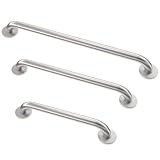
- Complete ADA Compliance Set: This 3-pack includes all essential grab bars for shower and restroom use (18”, 36”, 42”). Crafted from heavy-duty premium stainless steel with a reinforced 2MM flange, it surpasses standards, supports 600 lbs, and guarantees long-term safety for high-traffic commercial environments. ⚠️ CRITICAL: Please measure your wall space BEFORE ordering—42" bar requires approx. 44" of clear wall length.
- Maximum Durability & Lifetime Warranty: Engineered from heavy-duty premium stainless steel (1.5” OD, 18-gauge), these reliable grab bars are built for a lifetime of use. Backed by our limited lifetime warranty, they are a cost-effective investment that drastically reduces replacement needs in any setting
- Superior Support for Accessibility: Our handicap grab bars are engineered to exceed ADA and ANSI standards, offering secure 600-lb support. The versatile 12-hole mounting design ensures compliant and flexible installation on virtually any wall surface for public venues and stalls
- Professional, Hassle-Free Installation: Achieve a clean, modern look with concealed flanges and snap-on covers that hide all screws. The complete hardware kit allows for quick and easy installation of our grab bars for bathroom, making safety upgrades simple and aesthetically pleasing
- Critical Fall Prevention for Seniors: Provide dependable stability with our shower safety bars for seniors. The optimal 1.5” diameter and secure grip inspire confidence, effectively preventing slips and falls in wet bathroom conditions for aging adults and those with mobility needs
- Map the daily route. Start at the driveway, car space or footpath and record every step, threshold, narrow point and change of level needed to reach the entrance, bedroom, bathroom and kitchen. Include the route a visitor or emergency responder would use.
- Identify present and foreseeable needs. Note whether the occupant uses a walking frame, wheelchair, stick or furniture for support, and whether a temporary recovery period is likely. Do not design solely around an abstract dimension if the person cannot use the finished space safely.
- Obtain a professional assessment. An occupational therapist can assess transfers and reach; a building designer or certifier can test structural, drainage, fire-safety and planning constraints. Ask for written priorities so essential work is separated from desirable work.
- Check approval triggers. Contact the local building surveyor or council before removing walls, changing wet areas, constructing a ramp or altering an entrance. The authority can explain which edition, exemptions and permits apply to the address.
- Design for adaptation, not just today’s equipment. Reserve practical routes for future mobility aids, provide suitable wall structure where grab rails may be needed, and avoid creating a new step or tight turn while solving one problem.
- Stage the work safely. If a full renovation is unaffordable, prioritise the entrance route, bathroom transfers, lighting and trip hazards. Keep temporary works secure and arrange an alternative bathroom or entry during construction.
- Verify the finished result. Test the route with the actual user and equipment, check that rails and fixtures are firmly fixed, and retain plans, invoices and approval records for future owners or carers.
What designers, builders and buyers should ask
- Which NCC edition and state or territory instrument governs this application, and what is the commencement date?
- Is the project a new Class 1a building, an alteration, an extension or a change of use?
- How is the continuous step-free path shown on the drawings, including site levels and the entrance threshold?
- Where are future grab rails, bathroom changes or other adaptations supported structurally?
- Which features are mandatory, which are a voluntary higher standard and which are simply client preferences?
- What evidence will the certifier accept for a performance solution if a prescriptive detail cannot be used?
For a buyer, these questions are more useful than a generic “accessible” label. Ask to see the approved plans and the specific features included; marketing language does not establish compliance.
Why the private rental sector remains difficult
Renters often cannot alter an entrance, bathroom or wall without permission, and owners may face approval, cost and reinstatement concerns. The NCC’s treatment of new work does not create a general right for a tenant to retrofit an existing rental. A renter who needs a modification should document the functional problem, seek an occupational-therapy recommendation where appropriate, and discuss written consent, funding and responsibility with the landlord or agent. The applicable residential-tenancy and discrimination rules are state or territory matters, so obtain current advice locally rather than assuming the building code answers the tenancy question.
What is still unknown about Australia’s accessible housing supply?
There is no single current national dataset in the evidence cited here that counts homes failing older residents’ accessibility needs using a consistent method. Counts of older people or people with disability cannot be substituted for a count of unsuitable dwellings, and a projection of future ageing is not a survey of present housing conditions. The historical 5 per cent voluntary-uptake figure describes reported participation by the private building sector in the previous decade; it cannot be converted into the share of all Australian homes that are accessible.
The Tool Desk
Outbyte Driver Updater FREEScan for outdated or missing drivers - takes under a minuteDriver Scan →Outbyte PC Repair FREEClear out junk files and repair common Windows errorsFree Scan →A credible national measure would need to define accessibility features, distinguish new and existing dwellings, identify tenure and location, and report how homes were inspected or surveyed. Until such a dataset is available, the defensible conclusion is narrower: Australia has a national livable-housing direction for relevant new work, uneven jurisdictional implementation, and a large policy problem in adapting existing homes.
How to check a claim that a home is “age-friendly”
Use this short verification checklist before relying on a listing, plan or renovation promise:
- Confirm the property’s state or territory, approval date and building classification.
- Ask which NCC edition and adopted livable-housing provisions were applied.
- Trace the complete entrance route rather than inspecting only the front door.
- Check bathroom access, shower entry, toilet location and potential grab-rail fixing points with the intended user’s needs in mind.
- Request approval and certification documents, not just a brochure statement.
- Get independent advice when a mobility, transfer or structural issue is significant.
These checks separate a genuine adaptable design from a home that happens to contain one accessible-looking fixture. They also make clear why national standards are important but cannot, on their own, make Australia’s existing housing stock ready for ageing in place.
Quick Recap

Product prices and availability are accurate as of the date/time indicated and are subject to change. Any price and availability information displayed on Amazon at the time of purchase will apply.

