Outdated Drivers Are Slowing You Down
Quick wins for a faster PC:
Scan for outdated or missing drivers - takes under a minuteDriver Scan →Clear out junk files and repair common Windows errorsFree Scan →One free scan finds every outdated or missing driver and matches the right update for your exact hardware.
Scan My Drivers Free →Free scan · exact hardware match

As an Amazon Associate I earn from qualifying purchases.
ThatPainter is reader-supported. When you buy through links on our site, we may earn an affiliate commission. Learn More
Free tools Windows power users keep installed
One-click scans. No signup required.
Short answer: You cannot confirm asbestos in a wall by looking at it. Textured coatings, plaster and joint compounds, insulating board, cement sheets, and some insulation may contain asbestos, especially in homes built or refurbished before 2000. An intact, well-maintained material that is left undisturbed generally presents very low exposure risk; drilling, sanding, cutting, scraping, demolition, or careless cleanup can release inhalable fibers.
#1 Best Overall
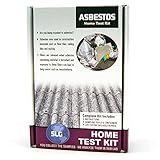
- SLGi Home Test Kits includes sampling tools, a prepaid return shipping label, instructions, and analysis.
- We perform Asbestos PLM analysis by EPA Method 600/R-93 for (1) sample.
- Your results will be ready within (5) business days of your kit arriving at our lab.
- Your sample takes 1–5 business days to reach our lab.
If a wall may contain asbestos, do not disturb it. Before rewiring, plumbing, decorating, opening a chase, or removing a wall, arrange a professional asbestos inspection and use contractors qualified for the required work in your jurisdiction.
Where asbestos can occur in a home wall
Asbestos was added to building products for heat resistance, strength, insulation, and fire protection. It may be present in a wall assembly even when the visible finish looks ordinary. The U.S. Environmental Protection Agency (EPA) identifies several products used on walls and ceilings; the UK Health and Safety Executive (HSE) also lists materials still encountered in domestic buildings, particularly those built or refurbished before 2000.
| Material or component | Where it may be found | Why visual inspection is inadequate |
|---|---|---|
| Textured decorative coating | Textured wall or ceiling finishes and sprayed decorative surfaces | Texture, color, and pattern are not reliable indicators of fiber content. |
| Plaster, skim, or joint compound | Plaster systems, patching compounds, and compounds used to finish drywall joints | Asbestos may be mixed into a thin layer or compound that looks like ordinary plaster. |
| Asbestos insulating board (AIB) | Partitions, linings, soffits, service enclosures, fire-rated panels, and other wall assemblies | AIB can resemble plasterboard but behaves differently when cut or broken. |
| Asbestos cement sheet | Interior or exterior panels, utility areas, and sheeting around heat-producing appliances | It may look like other fiber-cement products; only appropriate sampling can identify it. |
| Wall insulation containing vermiculite | Loose-fill insulation in wall cavities or other building voids | Insulation is hidden behind finishes, and vermiculite can be mistaken for harmless aggregate. |
| Asbestos paper or millboard | Fire-resistant layers, backing materials, and areas around wood-burning stoves | Thin paper or board may be concealed beneath a finish or behind an appliance. |
These examples are not a complete inventory. A wall can contain more than one suspect product, and a later refurbishment may have covered an earlier material. Conversely, a house of a certain age is not proof that asbestos is present. There is no current, home-specific prevalence percentage for asbestos in residential walls established by the official sources cited here, so an age-based guess is not a substitute for an inspection.
Do these 3 things before closing this tab:
1Repair Windows errors before they cause bigger problems2Scan for outdated or missing drivers - takes under a minute3Clear out junk files and repair common Windows errorsWhy an intact wall is usually a low-exposure situation
The hazard is not the word “asbestos” by itself; it is the release of respirable fibers into air and their inhalation. EPA states that “asbestos that is in good condition and left undisturbed is unlikely to present a health risk.” HSE describes exposure risk as extremely low when asbestos is in good condition and not disturbed. The Agency for Toxic Substances and Disease Registry (ATSDR) likewise explains that asbestos embedded in intact solid material poses little exposure risk while it remains intact and undisturbed.
Risk changes when the matrix is damaged or work breaks it apart. Drilling, sanding, scraping, sawing, cutting, chasing for cables or pipes, removing tiles or panels, retrofitting insulation, and demolition can turn a stable product into dust or debris. Water damage, impact, vibration, flaking, and crumbling can also make fibers airborne. A wall that looks sound from across a room may still contain asbestos, so appearance cannot establish safety for planned disturbance.
Inhaled asbestos fibers are associated with serious disease, including asbestos-related lung cancer, mesothelioma, and asbestosis. Official agencies do not provide a single percentage risk for an occupant standing next to an intact residential wall. The sensible conclusion is therefore specific rather than numerical: leave sound material alone, prevent damage, and control any work that could disturb it.
Rank #3

- Easy and Safe Testing: Utilize our asbestos testing kit to safely collect 2 samples for analysis. Simple to use with clear instructions, ideal for both home and office environments.
- Accurate and Dependable Results: Trust in our reliable asbestos air test kit, offering precise results analyzed by EPA-approved lab methods. Receive professional reports within 1 week.
- Sample Analysis: Our asbestos home test kit allows the collection of two samples, enhancing the thoroughness of your asbestos PLM analysis and ensuring comprehensive coverage.
- Required In-Depth Lab Analysis: Our Asbestos test kit gives you the flexibility to seek professional lab analysis. With an optional $20 lab fee per sample, receive a comprehensive evaluation from our AIHA-accredited lab, enhancing the accuracy of your home's Asbestos detection.
- Ideal for Various Applications: Whether checking for asbestos in popcorn ceilings or other household materials, our kit is suitable for a range of testing needs, delivering peace of mind.
What to do immediately if you suspect asbestos
- Stop disturbance. Do not drill test holes, hammer nails, sand paint, scrape texture, remove trim, or pull off damaged board to “check” what is underneath.
- Keep people away from damage. Restrict access to areas with crumbling, broken, or water-damaged material. Keep children and pets out and avoid activities that create air movement or dust.
- Do not clean suspect debris yourself. Do not sweep, brush, blow, or use a household vacuum on material that may contain asbestos. Those actions can spread fibers.
- Do not collect a casual sample. Breaking off a piece, filing an edge, or scraping a coating can create the very exposure you are trying to assess.
- Record the location without touching it. Note the room, wall, visible condition, and any planned work. A photograph taken from a safe distance can help an inspector, but do not move furniture or disturb finishes to obtain it.
- Tell everyone involved. Inform household members, builders, decorators, electricians, plumbers, and maintenance staff that asbestos is suspected before they start work.
If damage is actively shedding material or a large area has been disturbed, leave the space and obtain advice from a competent asbestos professional and the relevant local authority. Do not attempt an improvised cleanup.
The Tool Desk
Outbyte PC Repair FREERepair Windows errors before they cause bigger problemsFix Now →Outbyte Driver Updater FREEScan for outdated or missing drivers - takes under a minuteDriver Scan →How to test plaster, wallboard, or a coating before remodeling
Testing is a controlled inspection task, not a DIY home-improvement step. EPA homeowner guidance says that you generally cannot tell whether a material contains asbestos simply by looking at it unless it is labeled. Where disturbance is planned, arrange an inspection before finalizing the work method.
- Define the proposed work. Tell the inspector whether you plan to hang cabinets, drill for wiring, open a chase, replace a partition, remove a finish, install insulation, or demolish a wall. The scope determines which materials and hidden layers need consideration.
- Hire a trained or accredited asbestos inspector. Check the credentials required where the property is located. Ask how the inspector will identify homogeneous materials, document locations, and protect occupants during sampling.
- Let the inspector take representative samples. Sampling should use controlled methods and appropriate personal protection, containment, and cleanup. Do not pre-sample to save time or hand a contractor an unverified fragment.
- Use an appropriately qualified laboratory. The inspector should submit samples through a documented process to a laboratory recognized under the applicable rules. A verbal opinion based only on appearance is not an asbestos determination.
- Obtain a written report and site plan. The record should identify sampled materials, locations, results, limitations, and areas not accessed. Keep it with renovation drawings and property maintenance records.
- Convert the result into a work plan. A positive result, an inaccessible area, or uncertainty about a similar material should be addressed in the contractor’s method statement before work begins. Do not assume that a negative result for one layer clears every layer in the wall.
Sampling is especially important before any task that will penetrate, abrade, remove, or expose a wall system. If no work is planned and the material is sound, management in place may avoid the disturbance created by unnecessary sampling.
Rank #4
- SLGi Home Test Kits includes sampling tools, a return shipping label, instructions, and analysis.
- We perform Asbestos PLM analysis by EPA Method 600/R-93 for (1) sample.
- Your results will be ready within (3) bus. days of your kit arriving at our lab.
- Your sample takes 1–5 bus. days to reach our lab.
Choose a management approach based on the wall and the project
The architectural decision is usually between leaving material in place under a management plan, controlling it with enclosure or encapsulation, repairing a limited area, or removing it. The right option depends on the material’s condition and friability, its location, whether planned work will disturb it, the ability to isolate it, contractor competence, disposal and notification rules, and the maintenance burden over time.
| Approach | When it may fit | Fiber-release and maintenance considerations |
|---|---|---|
| Manage in place | Material is sound, stable, accessible for monitoring, and no work will disturb it. | Usually the lowest immediate disturbance option. Mark the location, prevent impacts, and record it for future owners and trades. |
| Enclosure | A durable barrier can isolate the suspect material from occupants and planned activities. | The barrier must remain intact and serviceable. Future drilling, access panels, or repairs must account for the concealed material. |
| Encapsulation | A compatible coating or treatment can bind or seal the surface without damaging the substrate. | Only a qualified professional can determine whether the material and condition are suitable. The coating becomes part of a long-term inspection and repair plan. |
| Localized repair | Limited damage can be stabilized without removing a larger assembly. | Work still may release fibers and should be designed, contained, and completed by qualified personnel under applicable rules. |
| Removal | Material is badly damaged, obstructs essential work, cannot be reliably enclosed, or a project requires its removal. | Removal is the most disruptive option. It requires trained, appropriately licensed contractors, controlled work practices, transport, and disposal compliant with local requirements. |
“Leave it alone” does not mean forget it. A management plan should identify the material, its condition, the people who must be informed, and the circumstances that trigger reassessment. Enclosure or encapsulation can reduce disturbance in a suitable case, but neither erases the need to disclose the material or control future penetrations.
What’s actually slowing this PC down?
Pick the symptom - the matching free tool is one click away.
Planning a renovation around a suspect wall
Before drawings are finalized
Flag suspect wall materials on renovation drawings and site plans before designing cable routes, plumbing penetrations, recessed lighting, new doors, structural openings, or demolition. Ask the designer and contractor to show how the material will be isolated, protected, or removed. A visually intact wall can still require a controlled method if the design cuts into it.
Best Value
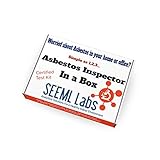
- DIY Asbestos Sample Test Kit
- Free Consultation and Lab Fees Included. No additional lab fees required
- Fast Turnaround: Results within 2–3 business days after samples are received.
- NVLAP 201031-0 Accredited Laboratory
- Professional and Detailed Report Included in Price
Before the first worker arrives
- Give the inspection report and marked-up plans to every trade, including short-term maintenance workers.
- Confirm who is responsible for notifications, permits, air monitoring, waste packaging, and final clearance where those are required.
- Use a contractor with the training and license appropriate to the material and task; a general painting or remodeling credential is not automatically an asbestos qualification.
- Agree on boundaries, signage, access control, and how occupants will remain outside the work area.
During and after the work
Workers should follow the written control plan rather than improvising. Do not permit dry sanding, uncontrolled cutting, ordinary sweeping, or household vacuuming of suspect debris. Waste handling, transport, and disposal are regulated activities in many jurisdictions. Keep completion records, laboratory results, contractor documentation, and any clearance or waste paperwork with the property file.
If someone has already drilled or damaged the wall
Stop the activity and keep people out of the immediate area. Do not sweep or vacuum dust, and do not try to patch, paint, or wipe the surface before receiving professional advice. Tell the asbestos inspector exactly what happened, which tools were used, how long the work lasted, and where dust or debris may have traveled. The professional can determine whether a controlled assessment, specialized cleaning, repair, or removal is needed under local requirements.
A brief accidental disturbance does not establish that disease will occur, and no official source supplies a reliable home-occupant percentage for such an event. It does establish a reason to prevent additional disturbance and obtain competent advice, especially when material is friable, visibly crumbling, or spread beyond the original work area.
Recommended Free Tools
Quick Recap
What homeowners should remember
- Asbestos can be hidden in textured coatings, plaster and joint compounds, insulating board, cement sheets, insulation, and fire-resistant layers.
- Age and appearance can raise suspicion but cannot confirm or rule out asbestos.
- Good-condition material left undisturbed generally presents very low exposure risk; fiber release is the critical change.
- Do not drill, sand, scrape, saw, sweep, vacuum, or DIY-sample suspect material.
- Use a trained or accredited inspector before renovation and qualified contractors for repair, enclosure, encapsulation, removal, and disposal.
- Because requirements differ by jurisdiction, confirm local licensing, notification, work-practice, and waste rules before the project starts.

Product prices and availability are accurate as of the date/time indicated and are subject to change. Any price and availability information displayed on Amazon at the time of purchase will apply.

