The Tool Desk
Outbyte Driver Updater FREEFix the driver behind crashes, sound loss and screen glitchesFind Drivers →Outbyte PC Repair FREEClear out junk files and repair common Windows errorsFree Scan →
ThatPainter is reader-supported. When you buy through links on our site, we may earn an affiliate commission. Learn More
Automated window shading systems are powered blinds or shades governed by occupants, schedules, sensors, or building controls. The best result is not simply a shade that moves on command: it is a coordinated façade and lighting strategy that limits glare, manages solar gain, preserves useful daylight and view, and still gives people an appropriate level of control. Performance depends on the window, orientation, glazing, shade geometry, wiring, sensors, control sequence, and commissioning.
What an automated window shading system does
An automated system combines three elements: a window attachment such as a roller shade or louvered blind, a motor and power arrangement, and a control strategy. The strategy may use wall controls, a supervisory building-automation system, room modes, time schedules, daylight sensors, solar-radiation sensors, or several of these together.
As an Amazon Associate I earn from qualifying purchases.
Automation matters because the conditions at a window change continuously. A manually positioned shade can be correct at 9 a.m. and wrong an hour later as the sun moves, clouds pass, or a meeting begins. Automatic movement can respond consistently, but only when the sequence is designed around the project’s actual objective. A setting that reduces glare may also reduce view or daylight; a setting that admits daylight may increase screen reflections or cooling load.
The WELL Standard v5 Feature 60 links shade automation with glare prevention and daylight use. Its institutional guidance states: “Design features such as adjustable window shades and lights with dimmers must be actively managed to be effective.” Treat that as a design principle, not as a universal sequence. Project applicability and certification requirements should be checked against the current WELL edition.
#1 Best Overall

- EASY INSTALL BLINDS: The remote blinds have a simple and practical no-drill mechanism(suitable for inside mount). Attach the adhesive extension block to the groove of the upper rail (it is forbidden to put more than one block), and then push it into the window frame. There is a battery compartment at the top to supply power for the shades. If the batteries are low, just take them out and replace. A stylish valance is included to block the light from the gap between fabric and the top rail
- EXCELLENT SHADING EFFECT: The fabric is made of a three-layer blackout textured fabric, which is safe and durable. It is a great combination of UV and privacy protection,suitable for bedrooms, living rooms, kitchens and office areas, etc
- SMART IMPLEMENTATION: The AX290 motor requires a smart bridge for APP control/voice control, which requires a hub at home, and you may try our hub. All models of Alexa and Google Assistant can be used to control motorized window shades, and can set timers and other scenes
- CONVENIENT LIFESTYLE: Motorized blinds allow you to achieve a smart home at minimal cost. In the morning, when you are still asleep, the shades in the bedroom open automatically on time, and the warm sunlight spread into the room lightly to wake you up for a new day, and in the evening, when the sun sets, the shades fall on time, creating a private space for the family
- SERVICE: We focus on products and service, if the fabric or components are damaged in any way when you receive the items, please take a photo and send it to us within 60 days, we will replace. Hapadif provides 2-year warranty for motors and controllers
Set the governing objective before selecting hardware
Write the intended behavior for each operating mode before choosing a motor or shade fabric. Siemens room-control guidance distinguishes anti-glare and energy-efficiency strategies, and identifies a solar-radiation sensor as a requirement for its energy-efficiency strategy. That distinction prevents a vague “smart shade” specification from hiding conflicting priorities.
Anti-glare mode
Anti-glare control aims to keep direct sun and excessive window luminance from interfering with screens, reading, or visual comfort. A light sensor can indicate conditions associated with potential glare, but the threshold and response must reflect the workplane, glazing, orientation, and shade openness. A fully lowered opaque shade may solve glare while unnecessarily removing view and daylight, so the sequence may instead close louvers, lower a shade to a defined position, or use separate upper and lower zones.
Quick wins for a faster PC:
Repair Windows errors before they cause bigger problemsFix Now →Scan for outdated or missing drivers - takes under a minuteDriver Scan →Clear out junk files and repair common Windows errorsFree Scan →Solar-gain or energy mode
Solar-management control responds to incident solar radiation and the building’s thermal strategy. It may deploy shades during cooling periods, retract them when solar heat is beneficial, or coordinate with room modes and HVAC operation. A solar sensor is not interchangeable with a generic interior illuminance sensor: the former measures the façade’s solar condition, while the latter describes light at a sensing point inside the room.
Daylight-use mode
Daylight control tries to admit useful natural light while electric lighting dims in response. WELL Feature 60 describes shade control and responsive light control as related measures: shades engage when sensed sunlight could create glare, and lighting dims as daylight becomes available. The exact sequence must define which system has priority when glare and daylight availability occur at the same time.
Occupant-preference mode
Occupants may need to override an automatic position for presentations, privacy, cleaning, or personal comfort. Specify whether an override is temporary, persists until the next schedule, or holds until a sensor condition changes. An override that is too easy to cancel can frustrate users; one that cannot be released can leave a room dark or overheated.
Rank #2

- No Tools, No-Drill, Easy Install: Quick and easy to set up, these no drill blinds operate smoothly and preserve your window's clean look. Since you don't need to drill holes into your window frame or wall, these are a great option for renters or people who want to avoid causing damage to their living space.
- Solar Panel & Eco-Friendly: Each electric blinds comes with a dedicated solar panel that keeps your shades continuously powered. No more climbing ladders to replace batteries—ensuring safety and convenience while reducing waste.
- Smart Life: Each motorized blind includes a remote control to operate one shade. For whole-room convenience, upgrade to our 15-channel remote (Not included) to control up to 15 shades at once. Pair with the smart hub (Not included), open and close your roller shades from your smartphone or completely automate when they open and close with voice commands. Enjoy more easy living!
- Blackout Roller Shade: Constructed with four layers of premium fabric, these electric blinds completely block external light, creating an ideal dark sleep environment for bedrooms and ensuring enhanced privacy and better rest.
- Trusted After-sales Assistance: MUSCLEAREA indoor motorized automatic blinds are engineered to suit your smart home needs, and come with a 2-year After-sales Assistance! If you encounter any product issues, please don't hesitate to contact us—our dedicated after-sales team is prepared to provide prompt and effective solutions.
Choose sensors and control inputs for the façade
There is no single “smart” input that works for every room. Define what each input measures, where it is located, and how it changes the shade position.
| Input or condition | What it contributes | Design questions |
|---|---|---|
| Occupant switch, keypad, or software command | Immediate user adjustment and override | Who can operate it, and when does automatic control resume? |
| Interior light sensor | Indication of illuminance and potential glare at a sensing location | Is the sensor positioned to represent the occupied workplane rather than a bright patch or shaded corner? |
| Solar-radiation sensor | Measurement of incident solar conditions for energy-oriented control | Does the sensor represent the relevant façade orientation, and what radiation level triggers movement? |
| Schedule or astronomical clock | Predictable opening, closing, privacy, and after-hours behavior | How are weekends, holidays, daylight-saving changes, and seasonal sun angles handled? |
| Room operating mode | Different sequences for occupied, unoccupied, presentation, cleaning, or security states | Which mode has priority when a sensor and a user command conflict? |
| Building-automation data | Coordination with lighting, HVAC, occupancy, and supervisory alarms | What network protocol, points list, fail position, and fault indication are required? |
Sensor placement is as important as sensor type. A light sensor shaded by a mullion, a nearby luminaire, or an overhang may report a condition that does not represent the occupants’ view. A solar sensor aimed at the wrong orientation can trigger too early or too late. Document the field of view, mounting height, calibration method, and control deadband in the design.
Compare shade forms by optical behavior and use
Appearance is only one selection criterion. Compare how each attachment changes glare, daylight distribution, view, heat transfer, maintenance access, and control resolution.
| Configuration | Typical strength | Trade-off to resolve | Control implication |
|---|---|---|---|
| Motorized roller shade | Continuous height control and a wide range of openness and fabric choices | A low shade position can reduce view and daylight; fabric openness alone may not prevent direct-sun glare | Specify upper and lower limits, intermediate positions, and whether the motor can reverse without hunting |
| Motorized louvered blind | Adjustable slat angle can redirect or limit sunlight while retaining some view | Slat angle, glare, and daylight behavior vary with sun position and room geometry | Define angle positions, transition rates, cleaning access, and synchronization across adjacent windows |
| Dual-zone arrangement | Separate treatment of upper daylight and lower glare or heat-transfer conditions | More motors, wiring, commissioning points, and user decisions | Give each zone a clear purpose and prevent one zone’s sequence from defeating the other |
| Other window attachment | Can address privacy, blackout, acoustics, or a specialized façade condition | Compatibility, weight, mounting, and control interfaces vary widely | Confirm motor torque, power method, travel limits, and integration requirements with the manufacturer |
The U.S. General Services Administration describes a concrete dual-zone interior example: an upper louvered blind for daylight harvesting paired with a lower roller shade for glare and heat-transfer management. It is a useful pattern for separating objectives, not a universal recommendation. A room with a low sill, a high clerestory, or a strong view requirement may need a different split.
Coordinate shades with electric lighting and building controls
Shade movement and lighting dimming should be designed as one sequence when daylight is an objective. If shades close fully whenever light rises above a threshold, the electric-lighting system may lose the daylight it was meant to use. Conversely, if lighting dims while direct sun remains on a screen, occupants may lower the shade manually and defeat the intended energy sequence.
What’s actually slowing this PC down?
Pick the symptom - the matching free tool is one click away.
Rank #3
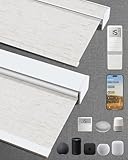
- Excellent Blackout Effect: Our motorized blinds achieve full blackout with 4-layer fabric that blocks light, noise, provides privacy control, insulation and UV protection; Motorized roller shades perfect for bedrooms, living rooms, offices, and more
- Smart Home Integration: Kincmo motorized blinds with remote feature a nearly silent operation, compatible with Apple HomeKit, Alexa, Google Home; Control your roller shades via voice commands or APP: timing, percentage, scene, offsite control, etc.
- Safe, Wireless & Advanced Tech: Powered by the latest Matter and Thread technology, our motorized blackout blinds ensure ultra-quiet, stable and efficient operation; The cordless blackout roller shades prioritizes safety for kids and pets
- Extensive Customization Options: Create your dream motorized window blinds, simply click the “Customize Now” button to design your perfect motorized shades for indoor windows by choosing motor type, appearance, solar panels, among other options
- Hassle-free Setup & Customer-focused: We will pair the smart electric blinds with the remote; You can easily locate the corresponding motorized blinds for installation and use the remote directly; Installation is very easy and takes only 1-3 minutes
Create a written priority order. For example, a project might give life-safety and security states first priority, then a user’s temporary override, then anti-glare protection, then solar-energy optimization, and finally daylight harvesting. Another project may reverse the middle priorities. The important point is that the order is explicit, testable, and visible in the controls narrative.
For commercial projects, document the shade system’s architecture, power supplies, communication bus or gateway, addressing, supervisory points, alarm states, and interface with lighting and HVAC controls. A commercial platform such as Lutron Athena can provide system-architecture resources, but the existence of a platform does not establish compatibility with every motor, sensor, or building-automation network. Require a points list and an integration submittal rather than relying on a product name.
Plan power, wiring, and mounting before the window is finalized
The U.S. Department of Energy Building America Solution Center recommends considering pre-wiring for potential motorized automated shading during construction. Window attachments can be integrated in new construction or retrofit, but the guide does not establish one universal retrofit method.
New construction checklist
- Reserve pathways, junction boxes, and power capacity for every motor location.
- Coordinate shade pockets, headrails, mullions, sill conditions, and access panels with the window manufacturer.
- Separate low-voltage control wiring from power wiring as required by the electrical design and local code.
- Leave access for motor replacement, commissioning, and future fabric or slat maintenance.
- Show sensor locations, orientation, cable routes, and control zones on coordinated drawings.
- Include the control sequence, fail position, override behavior, and acceptance tests in the specification.
Retrofit checklist
- Verify that the existing window, head, jamb, and sill can carry the attachment and motor loads.
- Identify a code-compliant route to power; battery operation may change maintenance and control assumptions.
- Confirm that the existing shade or blind can accept a motor without changing travel limits or clearances.
- Check access for drilling, brackets, service, and sensor installation while protecting finishes.
- Test the proposed control interface with the existing lighting or building-automation system before purchasing a large quantity.
- Document conditions that cannot be verified until a survey or opening-up inspection is complete.
Use a step-by-step design and control workflow
- Map the façade. Record orientation, glazing type, window dimensions, sill and head conditions, exterior obstructions, adjacent buildings, and the occupied workplane.
- Define the room outcomes. State whether each zone prioritizes glare prevention, daylight, view, solar gain, privacy, blackout, or a ranked combination.
- Divide the windows into control zones. Avoid grouping windows that receive materially different sun exposure or serve different work areas.
- Select the attachment form. Compare roller, louvered, dual-zone, and other options for optical behavior, maintenance, motor load, and view.
- Select inputs. Decide where occupant controls, light sensors, solar-radiation sensors, schedules, occupancy states, and room modes are needed.
- Write the sequence. Specify trigger values, delays, deadbands, movement limits, priorities, overrides, restart behavior after a power failure, and the return to automatic control.
- Coordinate lighting. Define how shade position affects daylight dimming, glare protection, and the electric-lighting control zones.
- Coordinate infrastructure. Confirm power, wiring, gateways, network points, mounting, access, and fire or life-safety interfaces.
- Prototype a representative zone. Test a window with the actual glazing, shade fabric or slat, sensor position, luminaire layout, and control logic before repeating the detail across the project.
- Write acceptance tests. List the sensor conditions, commanded positions, occupant overrides, fault responses, and measured outcomes that must pass before handover.
Commission performance before occupancy
Commissioning verifies behavior, not merely communication. A motor can respond to a command and still fail the design intent because a sensor is mislocated, a zone is reversed, or a transition causes unacceptable glare.
Windows Errors? Fix Them Before They Spread
Repair common Windows errors and clear accumulated junk for a smoother, more stable PC - no reinstall needed.Free scan · no reinstallOutdated Drivers Are Slowing You Down
One free scan finds every outdated or missing driver and matches the right update for your exact hardware.Free scan · exact hardware matchA Lawrence Berkeley National Laboratory guide from May 2007 describes pre-occupancy verification of the automated roller-shade system at The New York Times Headquarters. The stated intent was to control direct sun and window glare while admitting daylight and permitting view out. The procedure used a high-dynamic-range luminance measurement tool to assess average window luminance and included spreadsheet and visualization tools.
Rank #4
- No Tools, No-Drill, Easy Install: Quick and easy to set up, these no drill blinds operate smoothly and preserve your window's clean look. Since you don't need to drill holes into your window frame or wall, these are a great option for renters or people who want to avoid causing damage to their living space.
- Solar Panel & Eco-Friendly: Each electric blinds comes with a dedicated solar panel that keeps your shades continuously powered. No more climbing ladders to replace batteries—ensuring safety and convenience while reducing waste.
- Smart Life: Each motorized blind includes a remote control to operate one shade. For whole-room convenience, upgrade to our 15-channel remote (Not included) to control up to 15 shades at once. Pair with the smart hub (Not included), open and close your roller shades from your smartphone or completely automate when they open and close with voice commands. Enjoy more easy living!
- Blackout Roller Shade: Constructed with four layers of premium fabric, these electric blinds completely block external light, creating an ideal dark sleep environment for bedrooms and ensuring enhanced privacy and better rest.
- Trusted After-sales Assistance: MUSCLEAREA indoor motorized automatic blinds are engineered to suit your smart home needs, and come with a 2-year After-sales Assistance! If you encounter any product issues, please don't hesitate to contact us—our dedicated after-sales team is prepared to provide prompt and effective solutions.
That precedent does not mean every project requires the same instrument or threshold. It shows the level of verification that may be appropriate for a high-performance installation: observe representative sun conditions, measure the relevant visual environment, compare actual positions with the sequence, and correct the logic before occupants move in.
Minimum functional tests
- Command every zone locally and through the supervisory interface.
- Confirm open, close, intermediate, and louver-angle limits without collision or excessive noise.
- Simulate or observe sensor conditions that trigger anti-glare and energy modes.
- Verify that adjacent zones do not move together when they should operate independently.
- Test temporary and persistent occupant overrides, including automatic resumption.
- Remove and restore power to verify the specified restart and fail position.
- Check lighting-dimming coordination at low, medium, and high daylight conditions.
- Record sensor calibration, firmware or configuration versions, measured results, unresolved defects, and the person responsible for correction.
What the documented energy evidence actually shows
A U.S. Department of Energy Better Buildings case-study PDF reports annual lighting-energy savings of up to 30% for controlled zones compared with a baseline using the same lighting system but no daylight dimming and manual Venetian blinds. The extract does not provide a reliable publication year. The figure therefore belongs to that study’s defined zones and comparison, not to automated shades in general.
Actual savings depend on glazing, climate, orientation, lighting power, dimming range, occupancy, sensor placement, shade schedules, and whether occupants override the system. Use the case-study figure as contextual evidence when developing a project model, then calculate the expected result from the proposed façade and lighting design.
Recommended Free Tools
Prevent common failures
The shade moves too often
Rapid movement usually indicates thresholds that are too close together, no deadband, or a sensor exposed to unstable light. Add time delays and hysteresis, verify sensor placement, and define a minimum time between movements.
The room is still glaring with the shade down
Check whether the glare source is an uncovered zone, a side window, a reflective interior surface, or a lower shade edge. Revisit zone boundaries, fabric openness, louver angle, and the measured workplane rather than simply lowering every shade.
Best Value

- EASY INSTALL BLINDS: The remote blinds have a simple and practical no-drill mechanism(suitable for inside mount). Attach the adhesive extension block to the groove of the upper rail (it is forbidden to put more than one block), and then push it into the window frame. There is a battery compartment at the top to supply power for the shades. If the batteries are low, just take them out and replace. A stylish valance is included to block the light from the gap between fabric and the top rail
- EXCELLENT SHADING EFFECT: The fabric is made of a three-layer blackout textured fabric, which is safe and durable. It is a great combination of UV and privacy protection,suitable for bedrooms, living rooms, kitchens and office areas, etc
- SMART IMPLEMENTATION: The AX290 motor requires a smart bridge for APP control/voice control, which requires a hub at home, and you may try our hub. All models of Alexa and Google Assistant can be used to control motorized window shades, and can set timers and other scenes
- CONVENIENT LIFESTYLE: Motorized blinds allow you to achieve a smart home at minimal cost. In the morning, when you are still asleep, the shades in the bedroom open automatically on time, and the warm sunlight spread into the room lightly to wake you up for a new day, and in the evening, when the sun sets, the shades fall on time, creating a private space for the family
- SERVICE: We focus on products and service, if the fabric or components are damaged in any way when you receive the items, please take a photo and send it to us within 60 days, we will replace. Hapadif provides 2-year warranty for motors and controllers
Daylight harvesting produces little benefit
Look for shades that remain closed, luminaires outside the daylight zone, sensors that do not represent the workplane, or a dimming range that is too narrow. Confirm that the lighting sequence recognizes the shade state.
Occupants defeat the automation
Persistent discomfort is a design signal. Review the objective, override duration, privacy needs, and the relationship between view and glare. Provide understandable local controls and explain what the automatic mode will do next.
Retrofit installation cannot be serviced
Document the access problem before finalizing the order. A motor that cannot be reached, a power supply hidden behind finished construction, or a sensor blocked by a mullion turns a working concept into an unreliable installation.
Specify and procure with evidence
For a residential or small commercial search, “motorized roller shades” is a defensible category phrase, but a retail listing does not establish fit. Match shade dimensions, motor torque, power arrangement, control protocol, sensor support, mounting conditions, and service access to the project.
For every bid or purchase package, request a control narrative, wiring diagram, motor and power data, communication requirements, sample fabric or slat data, travel-limit procedure, override behavior, warranty terms, replacement access, and commissioning support. Installation cost, code requirements, and product compatibility are jurisdiction- and project-specific; no universal figure is established here.
Quick Recap

Product prices and availability are accurate as of the date/time indicated and are subject to change. Any price and availability information displayed on Amazon at the time of purchase will apply.

