Quick wins for a faster PC:
Do these 3 things before closing this tab:
1Fix the driver behind crashes, sound loss and screen glitches2Repair Windows errors before they cause bigger problems3Scan for outdated or missing drivers - takes under a minuteScan for outdated or missing drivers - takes under a minuteDriver Scan →Clear out junk files and repair common Windows errorsFree Scan →Fix the driver behind crashes, sound loss and screen glitchesFind Drivers →
ThatPainter is reader-supported. When you buy through links on our site, we may earn an affiliate commission. Learn More
The right saw is determined by the cut you need, the material you are cutting, and the finish and accuracy you expect—not by a single “best” saw. Use a handsaw for simple wood cuts, a jigsaw for curves, a circular or track saw for portable straight cuts, a miter saw for repeatable angles, a table saw for guided ripping, and specialized tools for metal, masonry, trees, joinery, or demolition.
This guide explains 12 useful saw types and shows how to match each one to cut geometry, workpiece size, blade, portability, and risk. It follows the practical categories in Bob Vila’s guide, updated January 20, 2026, while recognizing that other guides also include band, scroll, tile, plunge, and chop saws. The list is therefore a useful DIY selection, not a claim that only 12 saw designs exist.
As an Amazon Associate I earn from qualifying purchases.
Free tools Windows power users keep installed
One-click scans. No signup required.
Choose a saw by the cut, not by the name
Start by describing the cut in plain language. Is it along the grain, across the grain, angled, curved, flush with a surface, a long guided cut in sheet goods, or a rough opening for demolition? Then check the material, thickness, desired edge quality, available support, and blade compatibility.
| Cut or task | Usually suitable | What determines the result |
|---|---|---|
| Simple wood cut, no power available | Handsaw or back saw | Tooth pattern, your line-following, and workpiece support |
| Curves and interior cutouts | Jigsaw or coping saw | Blade width, tooth pattern, shoe contact, and turning radius |
| Long, straight sheet cut | Track saw, circular saw, or table saw | Guide accuracy, blade runout, support, and thickness capacity |
| Repeatable crosscuts or angles | Miter saw | Fence alignment, bevel/compound settings, and stock width |
| Lengthwise ripping | Table saw or circular saw with a guide | Fence or guide stability and safe feeding technique |
| Metal pipe, conduit, or sheet | Hacksaw or reciprocating saw with a metal blade | Blade tooth count, clamping, and heat control |
| Concrete, brick, pavers, or stone | Concrete saw | Correct abrasive or diamond blade and dust-control method |
| Branches, logs, or firewood | Chainsaw | Bar length, chain condition, kickback awareness, and training |
| Rough access or demolition | Reciprocating saw | Appropriate blade, clearance, and control of binding |
Lowe’s notes that many power saws can cut more than one material when fitted with the correct blade, but the saw and blade must both be rated for the project. Hilti’s power-saw overview and Toolstation’s buying guide make the same basic distinction between saws by application rather than by a universal ranking. See Lowe’s power-saw guide, Hilti’s saw buying guide, and Toolstation’s saw buying guide.
#1 Best Overall

- Powerful 15-amp motor delivers 5 300-RPM for greater speed and faster cuts
- 7-1 4-inch carbide-tipped blade included. Spindle lock for easy blade changes.
- 51° bevel capacity with a positive stop at 45° for a wide variety of cuts
- Dust blower keeps line-of-cut free of sawdust for improved visibility
- Safety lock/guarded trigger and power-on indicator minimize accidental starts
The 12 useful saw types and what each one does
1. Handsaw: the simplest choice for manual wood cutting
A handsaw is a straight, human-powered blade for cutting boards, studs, trim, and other wood without a motor or battery. It is inexpensive, portable, quiet, and easy to reach into a place where a power tool will not fit. The trade-off is that speed and accuracy depend heavily on your technique and on keeping the stock firmly supported.
Tooth geometry should match the cut. A rip saw cuts along the grain; Bob Vila’s guide uses about 5 teeth per inch (TPI) as an example. A crosscut saw is intended to cut across the grain and is shown there at roughly 10–12 TPI. Hybrid patterns, around 6–8 TPI in that guide, compromise between the two. These are example ranges, not universal specifications. A coarse tooth removes material quickly but leaves a rougher edge; finer teeth cut more slowly and can produce a cleaner finish.
2. Hacksaw: controlled cuts in metal and plastic
A hacksaw has a rigid frame and a narrow, replaceable blade. It is the dependable hand tool for metal pipe, conduit, sheet metal, threaded rod, bolts, and many PVC cuts. Blades commonly fall in the 14–32 TPI range: coarse blades clear soft material quickly, while finer blades support thin-wall tubing and sheet stock.
Clamp the work so it cannot vibrate, keep the blade square to your mark, and use long, even strokes. Select a blade whose teeth engage the workpiece; a blade that is too coarse for thin material can snag, while one that is too fine can load with debris. A hacksaw is slower than a powered metal-cutting tool but gives excellent control for one-off cuts and locations without electricity.
3. Coping saw: tight inside curves and trim joints
A coping saw uses a light U-shaped frame and a very narrow blade. Its strength is turning through tight curves and removing waste from the back of a molding profile. Trim carpenters use it for coped inside corners, including crown molding, where one piece follows the shaped face of another.
Because the blade is thin, it can wander if you force it. Tension the blade correctly, keep the frame moving rather than twisting the blade, and leave a little waste for final fitting. It is a precision hand tool for short, detailed cuts—not a fast way to break down large boards.
The Tool Desk
Outbyte PC Repair FREEClear out junk files and repair common Windows errorsFree Scan →Outbyte Driver Updater FREEFix the driver behind crashes, sound loss and screen glitchesFind Drivers →Rank #2
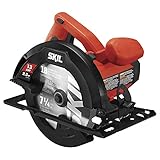
- 13 Amp motor for more power and performance than the SKIL 5380
- 15% weight reduction vs. SKIL 5380, reduces user fatigue
- 51-Degree bevel with positive stops for great cut capacity
- Spindle lock for easy blade changes
- Improved dust blower keeps line of cut free of sawdust
4. Jigsaw: curves, openings, and pattern cuts
A jigsaw drives a narrow blade up and down and is the most accessible powered saw for curves, sink openings, floor-register holes, and irregular shapes in wood. With the right blade it can also cut certain plastics or thin metals. Blade choice controls the edge: coarse blades remove material quickly, fine blades reduce splintering, and specialized blades are made for metal or laminate.
Keep the shoe (base plate) flat against the workpiece and advance at a rate that lets the teeth cut rather than flex. A jigsaw can make a straight cut, but it is not automatically a precision straight-line tool; use a clamped guide, a suitable blade, and a steady feed if the edge must be accurate. Start a hole with a drill when an interior cutout does not have an open edge, and verify that the blade length exceeds the material thickness.
5. Circular saw: portable straight cuts in lumber and sheet goods
A circular saw spins a round blade and is the workhorse for framing lumber, plywood, OSB, and other sheet material. It travels to the work instead of requiring a permanent station. The Bob Vila guide identifies 7¼ inches as the most common blade diameter for construction tasks; that is a common size, not a universal requirement. Smaller and larger saws have different depth capacities.
Use a blade designed for the material and the finish you want. A framing blade favors speed, while a higher-tooth-count finish blade leaves a cleaner edge. Support the panel on sacrificial stock so the offcut cannot pinch the blade, mark the cut line clearly, and keep the saw’s base fully supported. A straightedge or guide rail improves repeatability. Circular saws can cut angles by tilting the shoe, but confirm the resulting depth and maintain control through the entire cut.
6. Miter saw: accurate crosscuts and repeatable angles
A miter saw is stationary during the cut: you lower the blade onto the stock against a fence. It excels at crosscutting trim, framing members, flooring, and similar pieces to a consistent length. Set the table for miter angles; set the blade tilt for bevels; use both for compound cuts such as sloped crown molding.
Sliding models move the blade through a wider board than a basic non-sliding saw. Capacity depends on blade diameter, slide travel, and the manufacturer’s specification, so check the manual rather than assuming a nominal size. Support long stock at the same height as the saw table, keep hands outside the marked danger zone, and wait for the blade to stop before raising it.
Rank #3

- GRIPZONE OVERMOLD: The handles of this power tool are lined with a rubber mold. This increases friction between your hands and the tool, improving handling in most conditions
- TRANSPARENT LOWER GUARD: The polyurethane blade guard is clear, so you can get maximum visibility on your work while you make your cuts
- ADJUSTABLE BEVEL: You can adjust the foot of this cordless circular saw up to 50 degrees to cut at a variety of angles for different applications
- EXTRA SIDE HANDLE gives you improved control. Its location on the left side of the tool gives you greater visibility over your cuts while you work
- ONE+ COMPATIBLE: The circular saw works with Ryobi’s 18 Volt batteries. These battery models include the P100, P102, P103, P104, P105, P107, and P108 (Batteries not included)
7. Chainsaw: limbs, logs, and firewood
A chainsaw uses a continuously moving chain around a guide bar. It is intended for outdoor tasks such as pruning suitable limbs, cutting logs, and processing firewood; felling trees is a higher-risk operation that requires training, planning, and adequate escape routes.
Kickback occurs when the upper nose area of the bar catches and drives the saw toward the operator. Read the owner’s manual before use, understand the chain brake and other safety features, keep the chain correctly tensioned and sharp, and wear the protection specified for the work. A chainsaw is not a substitute for a handsaw on small interior projects, and it should never be used casually because the cut looks simple.
Crashes, No Sound, or Screen Glitches?
Random freezes, missing sound and display glitches usually trace back to one bad driver. Find and replace yours safely.Free scan · under a minutePC Slower Than It Used to Be?
A free scan shows the junk files, broken settings and background clutter dragging Windows down - then fixes them in one click.Free scan · Windows 10 & 118. Track saw: guided cuts in large panels
A track saw is a circular saw that runs along a dedicated guide track. The track establishes a long, straight path for plywood, countertop panels, doors, and other sheet goods that are awkward to support on a table saw. Clamps or the track’s grip surface keep the guide from shifting.
Align the track to the finished side of the cut, account for the saw’s offset from the track edge, and support the panel continuously so the kerf does not close on the blade. A track saw is easier to bring to a large panel than a table saw, while a table saw is often faster for repeated narrow rips once it is set up.
9. Table saw: guided ripping and repeatable dimensions
A table saw mounts a circular blade beneath a flat table; the workpiece is guided past the exposed portion of the blade. It is particularly effective for ripping boards lengthwise, cutting repeated widths, and making certain bevels or crosscuts with the proper accessories.
Fence alignment, a stable outfeed area, and adequate support matter as much as the blade. Keep loose clothing, jewelry, cords, and other dangling items away from the blade and follow the model’s instructions for guards, riving knives, push devices, and stands. A table saw can produce excellent accuracy, but a workpiece that twists or pinches can cause a serious kickback. Treat the manufacturer’s manual and safe-work practices as mandatory, not optional add-ons.
Quick wins for a faster PC:
Fix the driver behind crashes, sound loss and screen glitchesFind Drivers →Clear out junk files and repair common Windows errorsFree Scan →Rank #4
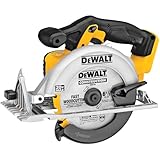
- 5150 RPM motor delivers power and speed to make the most demanding cuts with ease
- High strength and lightweight magnesium shoe provides jobsite durability for long-term cut accuracy
- Optimized rubber over molded comfort grip delivers optimal balance and control
- 0-50° bevel capacity allows for aggressive bevel cuts for a multitude of applications
10. Concrete saw: masonry, pavers, and stone
A concrete saw is built around an abrasive or diamond blade suitable for concrete, brick, pavers, or stone. Blade choice is material-specific: a blade intended for masonry is not automatically suitable for every aggregate or stone product. Check the blade label and the saw’s limits before cutting.
Some models accept a water connection. Water can cool the blade and help control dust, while other setups rely on a suitable vacuum or wet-cutting arrangement. Lowe’s advises using appropriate dust-control methods; never improvise a water supply or electrical setup that the saw is not designed to accept. Masonry cutting creates noise, slurry or dust, and flying particles, so isolate the work area and use the protection and ventilation required by the tool instructions.
11. Back saw: stiff, controlled joinery cuts
A back saw has a reinforced spine that keeps the blade rigid. That stiffness makes it easier to guide a straight, shallow cut for dovetails, tenons, shoulders, and other joinery. Different tooth layouts and blade sizes suit different joinery tasks, but the defining advantage is control rather than deep cutting capacity.
Use a marked knife line or a fine pencil line, start with light strokes, and let the saw’s weight establish the kerf. A bench hook or vise keeps small stock secure. A back saw is slower than a powered saw for breaking down boards, yet it can leave a cleaner shoulder with less tear-out when the cut is carefully laid out.
Do these 3 things before closing this tab:
1Repair Windows errors before they cause bigger problems2Scan for outdated or missing drivers - takes under a minute3Clear out junk files and repair common Windows errors12. Reciprocating saw: demolition and rough access
A reciprocating saw drives a long blade back and forth and is designed for speed in awkward locations. With wood, metal, or PVC blades, it can cut framing, pipe, nails, and other material during remodeling or demolition. Short blades help control tight work; longer blades reach through thicker assemblies.
This is a rough-cut tool, not a finish saw. Support the shoe against the work, keep the blade clear of hidden fasteners or services, and let the tool’s stroke do the work instead of forcing it. If the blade binds, the saw can kick or lurch. Select a blade rated for the material, inspect the area for electrical, plumbing, and structural hazards, and use slower speed when starting a delicate cut.
Best Value

- Power corded circular saw:The corded circular saw is equipped with 4.8 Amps motor delivering a no load speed up to 4000 RPM.Compared with general mini circular saws,it has a 20% increase in cutting efficiency, which is suitable for home renovation, furniture making, and handmade projects, etc
- More precise cutting: Designs with laser guide settings and guide rails for better precision,it can help you make straighter and more precise cutting.Dust hose and adapter fits most vacuums, reducing flying wood and keeping a cleaner workspace for improved visibility
- Not just for wood: Unlike standard circular saws limited to wood, the compact circular saw has 3 blades (4½"), including TCT, HSS and diamond blades. It can cut for wood, soft metal, tile, plastic, achieving multi-material versatility and making multi-material projects simpler, safer, and more efficient. Skip the hassle of buying extra blades for unlimited projects, suitable for diy and home tasks. Good choice for DIYers who refuse to be limited by their tools
- Adjustable depth and bevel:Adjustable depth (1-11/16" at 90°) and 0-45° bevel capacity for angled cuts, you can freely adjust the cutting according to your needs. The maximum cutting depth at 90 degrees is 1-11/16", and the bevel cutting capacity at 45 degrees is 1-1/8"
- Safety and lightweight: Double switches control operation for your safety. Both the power switch and safety lock must be simultaneously pressed to start the machine. Compact circular saw weighs about 50% less than conventional 7-1/4” saws to one hand operation. The device is easy for the man, women and elderly to use
A practical selection process for your next project
- Define the geometry. Write down whether the cut is rip, crosscut, miter, bevel, curve, long guided cut, flush cut, or demolition. This usually narrows the choices faster than starting with a tool category.
- Identify every material. Wood, metal, PVC, masonry, and composite panels require different teeth, abrasives, or diamond segments. If a cut crosses materials—for example, wood containing nails—choose a blade specifically rated for that combination.
- Measure thickness and width. Check maximum cutting depth at the angle you will use, the blade’s exposed length, and the saw’s stated capacity. Sliding miter saw capacity, circular-saw depth, and track length are not interchangeable specifications.
- Set the finish requirement. A rough demolition opening can tolerate a reciprocating saw; a visible trim joint may call for a fine handsaw, back saw, coping saw, or accurately set miter saw. More teeth are not automatically better if they clog in thick or soft material.
- Choose portability and setup. A handsaw or circular saw travels easily. A track saw needs a flat surface and track clamps. A miter or table saw needs a stable station, clearance, and support for long stock.
- Verify the blade and accessories. Confirm diameter, arbor or mounting pattern, tooth count, kerf, material rating, and maximum speed. For circular-saw work, guides, clamps, sawhorses, and replacement blades can matter as much as the saw itself.
- Plan support and the exit side. Unsupported offcuts can pinch a blade or tear out at the end of a cut. Support both sides where appropriate, keep the finished face oriented to minimize splintering, and leave room for the tool and your body to move safely.
- Read the specific manual. General advice cannot replace instructions for the exact model, blade guard, dust collection, water connection, battery, or adjustment procedure.
Safety and compatibility checks before cutting
Lowe’s general power-saw guidance is concise: “Keep safety top of mind when operating any type of saw and follow the manufacturer’s use and safety instructions.” The statement appears in its guide, updated January 24, 2024, and should be treated as general guidance rather than complete training.
- Inspect the saw, cord or battery, guard, shoe, fence, track, and blade before use. Do not operate a damaged tool.
- Install only a blade that matches the saw’s mounting system, speed rating, diameter, and the material being cut.
- Wear task-appropriate eye and hearing protection; add respiratory protection, gloves, footwear, or other equipment when the manual and work environment require it.
- Clamp or otherwise support the workpiece so it cannot shift, sag, or close the kerf. Binding is a common path to kickback.
- Keep both hands in the positions specified by the manual and keep the blade path clear of fingers, cords, clamps, and loose clothing.
- Disconnect mains power or remove the battery before changing a blade, clearing a jam, or making an adjustment.
- For concrete and masonry, use the dust-control method the saw and blade manufacturer permits; do not assume dry cutting is acceptable indoors.
- For chainsaws, learn the kickback zone, chain-brake operation, and starting and carrying procedures before cutting.
How to avoid common mismatches
Using a jigsaw when a guide is needed
A jigsaw can follow a line, but its blade may flex and the cut can wander. For a long, visibly straight panel edge, use a track saw or a circular saw with a securely clamped guide instead.
Using a fine blade in thick material
Fine teeth can clog or overheat when the material is thick. Match tooth spacing and blade type to the stock, and let the saw cut at its intended feed rate rather than forcing it.
Assuming a larger blade always cuts better
Blade diameter changes depth and capacity, not automatically accuracy. The correct diameter, arbor, tooth pattern, and speed rating must all match the saw and the work.
Ignoring support at the end of a cut
When an offcut drops, it can pinch the blade or tear the surface. Arrange supports before starting, especially with sheet goods, long trim, and table-saw rips.
Bottom line: match the saw to the job
For occasional woodwork, start with a handsaw and a jigsaw, then add a circular saw when portable straight cuts become frequent. Choose a miter saw for repeatable trim angles, a track saw for large panels, or a table saw for regular ripping and dimensioning. Use a hacksaw for controlled hand cuts in metal, a coping or back saw for joinery, a reciprocating saw for demolition, and dedicated chainsaws or concrete saws only when the task, blade, training, and safety controls justify them. The most reliable choice is the one whose geometry, capacity, blade, and setup all fit the exact cut you need.
Quick Recap

Product prices and availability are accurate as of the date/time indicated and are subject to change. Any price and availability information displayed on Amazon at the time of purchase will apply.

