The Tool Desk
Outbyte PC Repair FREERepair Windows errors before they cause bigger problemsFix Now →Outbyte Driver Updater FREEScan for outdated or missing drivers - takes under a minuteDriver Scan →
ThatPainter is reader-supported. When you buy through links on our site, we may earn an affiliate commission. Learn More
The responsible way to dispose of leftover household paint is to read its label, keep it in the original container, and ask your local environmental, health, or solid-waste agency which option accepts that specific product. Depending on the paint and your community, the approved route may be donation or reuse, a paint-recycling program, a permanent household-hazardous-waste (HHW) drop-off, or a scheduled collection event.
Do not pour paint into a sink, storm drain, septic system, onto soil, or into a waterway. Do not assume that a can belongs in ordinary trash or that one drying method is legal everywhere. Federal and state requirements differ, and facility policies are local.
As an Amazon Associate I earn from qualifying purchases.
Free tools Windows power users keep installed
One-click scans. No signup required.
Start with the label and your local agency
Paint is a product category, not a single waste stream. Ingredients, hazard statements, container condition, quantity, and local regulations determine how it must be handled. The U.S. Environmental Protection Agency (EPA) advises households to read the product label and check with the local environmental, health, or solid-waste agency for HHW-management options: EPA’s Household Hazardous Waste guidance.
That local call is not a formality. A county may accept a particular paint at a permanent facility while a neighboring county accepts it only during an event. A reuse group may take usable paint but reject opened cans, unlabeled containers, or partially cured material. Ask before you load the cans into a vehicle.
#1 Best Overall

- PATENTED TECHNOLOGY – Introducing our Paint Storage Containers for leftover paint - the ultimate solution to your paint storage woes. This revolutionary product boasts patented technology that has been featured on the acclaimed show, Shark Tank.
- THREE 13-OZ CONTAINERS – Say goodbye to bulky paint cans and hello to compact 13 oz. paint containers with lids that are perfect for all your touch-up needs. Store just the right amount of paint without sacrificing precious storage space.
- CLEAR WITH LABELS – Designed for simplicity and convenience, you get three clear paint storage containers with lids that make it easy to identify paint colors, and you can label them with the date and room for added organization.
- NO RUSTING OR CLUMPING – What's more, the painting container features an innovative plastic design that includes a mixing ball, preventing the paint from rusting or clumping. ensuring that your paint will remain fresh for up to 10 years if stored correctly.
- SHARK TANK SEAL OF APPROVAL – The Touch Up Cup paint storage case replaces traditional paint cans and bottles, reducing waste and providing a simple grab-and-go solution for any touch-up project.
Build a quick inventory before you call
Gather the cans in one place without opening them unnecessarily. Record the brand and complete product name, paint type stated on the label, approximate amount remaining, number of cans, and container size. Note whether each can is sealed, opened, dried, leaking, badly corroded, swollen, or missing its label. A photograph of a fading label can help you describe the product accurately when you call or email.
Also note whether the paint came from a household project. A large quantity from a contractor or other business may be governed by different requirements than household material. Telling the agency where the paint came from, how much you have, and whether you can transport it helps staff direct you to the correct program the first time.
Recommended Free Tools
A practical decision path
- Read and record the label. Note the product name, stated ingredients or paint type, hazard warnings, and any disposal language. Photograph the label if it is fading.
- Check the container. Confirm that the lid is secure and the can is not leaking, badly rusted, swollen, or otherwise unsafe to move.
- Decide whether the paint is still usable. If it is in usable condition, ask local schools, faith organizations, charities, community groups, or nonprofits whether they accept donations. Never assume acceptance.
- For paint that cannot be donated, contact the local agency or facility. Ask about paint recycling, permanent HHW drop-off, or the next collection event.
- Follow the facility’s instructions exactly. Confirm the paint type, accepted container condition, quantity limits, hours, appointment rules, fees, and any preparation or transport requirements.
Why local rules matter
Household paint can meet the definition of household hazardous waste when its ingredients or hazards require special management. The same product may be handled through different community programs, and state requirements are not necessarily identical to federal treatment. EPA explains this federal-and-state variation and the role of local collection programs in Household Hazardous Waste and Demolition.
Because programs change, an internet search result or an old instruction from a friend is not proof that a site currently accepts your can. Use the agency’s current phone number or website, describe the exact product, and obtain instructions before transport. Search your city, county, or state government site for “household hazardous waste,” “paint recycling,” or “solid waste”; the responsible office may be called environmental services, public works, a health department, or solid-waste management.
Option 1: Donate or reuse paint that is still usable
What “usable” means for a donation inquiry
Usability is decided by the receiving organization, not by a general rule. Tell the organization the brand and product name on the label, approximate amount remaining, color, age if known, and whether the can has been opened. The recipient may require a readable label, an intact lid, and paint that has not separated, hardened, or developed an unusual odor.
Do not deliver a questionable can and expect the recipient to dispose of it. Ask whether the organization wants a full or partial can, whether it has a minimum amount, and how it wants accepted paint delivered. If the answer is no, close the can and move to the recycling or HHW route; never leave it on a doorstep or beside an unstaffed donation bin.
Who to ask
Local schools, theater or arts groups, faith organizations, neighborhood projects, charities, and other nonprofits may have a legitimate reuse need. Contact them first; do not leave paint on a doorstep or at an unstaffed donation bin. If no organization confirms acceptance, use the recycling or HHW route directed by your local agency.
Why reuse can be preferable
Reuse keeps a serviceable product in circulation and may avoid treatment as waste. EPA recommends asking local organizations about paint donations in its recycling guidance: How Do I Recycle Common Recyclables? That page is general guidance, not a directory of organizations, so availability must be verified in your area.
Rank #2

- STAY ORGANIZED: Say goodbye to bulky, half-empty paint cans; Paint Hero keeps leftover paint compactly stored and organized for future jobs and touch ups; Includes 8 bags (4 quart + 4 gallon); Great for homeowners, painters, contractors, schools, and more
- KEEPS PAINT FRESH: Bag design allows you to remove air before sealing to preserve paint; Unlike paint cans with lids, our airtight cap helps prevent drying & skinning so you can save on paint
- MESS-FREE STORAGE: Includes a twist-on funnel for easy filling and the large spout ensures spill-proof transfer; A refillable, neat, and drip-free paint storage solution
- EASY TO LABEL & IDENTIFY: Made from clear plastic with a customizable label for important details like color, finish, room, and date; Effortlessly see paint color and quantity at a glance
- RELIABLE & DURABLE: Keeps paint shelf-stable and preserves quality for easy mixing; Built tough to keep your paint secure at any jobsite or in garages, sheds, and more
Option 2: Use a local paint-recycling program
Some communities or stewardship programs collect paint for processing and reuse of materials. Acceptance can depend on the paint category, container size, condition, and whether the program serves households or businesses. Ask whether the site accepts your exact product rather than asking only whether it “takes paint.”
Confirm whether the program is a permanent drop-off or operates on scheduled collection days. Ask if there is a per-visit quantity limit, whether containers must remain closed and labeled, and whether the program charges a fee. These details are set by the local operator and are not universal. A program that accepts usable paint for reuse may have different rules from one that accepts paint only for processing, so state clearly which service you need.
Option 3: Household-hazardous-waste drop-off or collection event
If the paint is not accepted for reuse or recycling, your local HHW facility or event may be the approved disposal route. A year-round facility may require an appointment, while another community may offer only a few designated collection days each year. If no permanent site exists, ask the agency about the next locally approved event or alternative instructions.
When you call, provide the information in this checklist:
- Exact product name and paint type shown on the label
- Whether the container is full, partly full, or empty
- Number and approximate size of cans
- Whether any can is leaking, badly corroded, swollen, or unlabeled
- Your household location and whether the material came from a home project
- Your preferred drop-off date and any transportation limitations
Ask the facility to confirm accepted types, container requirements, quantity limits, hours, appointment needs, preparation, and fees. Write down the answer and the facility address before leaving home. If you are referred to another agency, repeat the product description and quantity to the new contact rather than assuming the referral guarantees acceptance.
How to prepare paint before taking it anywhere
Keep the original container and label
EPA advises keeping hazardous products in their original containers and not removing labels where possible. The label gives staff the information needed to identify the material and apply the correct handling procedure. If a label is damaged, tell the facility before transport and ask whether it will accept the can.
Do not mix products
Keep each paint product in its own container. Never combine different paints, cleaners, solvents, or other household chemicals to reduce the number of cans. Mixing can create an unidentified material and may produce dangerous reactions.
Do not improvise a drying or solidifying method
There is no single preparation method established for every paint and every jurisdiction. Some local programs may give specific instructions; others may require the wet product at an HHW site. Do not automatically add absorbent, pour paint onto cardboard, leave a lid open, or place a can in trash unless the responsible local program expressly tells you to do so. Follow the product label and the facility’s current instructions.
Rank #3

- PACKAGE INCLUDED: You will receive 3 paint containers with aluminum screw on lids. Each containers with a capacity of about 500 ml (17 oz) and a colourful writable adhesive label inside. Our paint storage containers are small in size, you can easily hold them
- TRANSPARENT AND INTUITIVE: The bottle body is made of PET material, which is sturdy and durable. The transparent bottle enables you to easily see how much paint is left and what colour it is
- AIRTIGHT AND LEAK PROOF: Our paint container has an aluminium screw-on lid with a leak-proof gasket to prevent leaks and improve the shelf life of paint. The aluminium lid also can prevent the paint from rusting
- WRITABLE ADHESIVE LABELS: These labels make it simple to mark storage times and projects. You can stick the labels in the appropriate position on the bottle body. NOTE: Labels have strong adhesion and are difficult to remove once applied
- WIDE APPLICATION: Can be used to store paints, primers, cleaners and more. These paint storage containers are perfect for storing leftover paint, you also can use them for decoration and storage, but please note that those cannot be used for storing food
Handle damaged containers as a special case
A leaking, severely corroded, or swollen can can be unsafe to move. Do not transfer its contents to another container unless the responsible agency directs you to do so. EPA advises contacting local hazardous-materials officials or the fire department for corroding containers. Tell the agency about the damage when you call and follow its transport instructions.
Transporting paint safely
- Use the original, closed containers whenever the facility has approved them.
- Place cans upright in a sturdy box so they cannot tip over. Keep each container separated enough to prevent metal-on-metal damage.
- Secure the box so it cannot slide during braking or turns.
- Keep paint away from passengers, food, heat sources, and direct sunlight; follow any facility instruction about vehicle type or quantity.
- Go directly to the confirmed site during its stated hours. Do not leave cans unattended outside a closed facility.
- If a container leaks during loading or travel, stop handling it and call the local agency or emergency service for instructions.
These are general handling precautions, not a substitute for the facility’s rules. Some programs may specify limits or refuse certain transport conditions. If the facility requires an appointment, do not arrive outside the appointment window and do not assume another site can accept the load.
What’s actually slowing this PC down?
Pick the symptom - the matching free tool is one click away.
What not to do
- Do not pour paint down a drain. A sink, floor drain, storm sewer, septic system, or toilet can carry contaminants into treatment systems or waterways.
- Do not dump paint on soil or pavement. Spreading it outdoors is not disposal and can contaminate soil and runoff.
- Do not put wet or unidentified paint in ordinary trash. Collection workers and disposal facilities may not be equipped for it, and local rules may prohibit it.
- Do not burn paint or use it as fuel. Heating coatings can release hazardous fumes and is not an approved household disposal method.
- Do not remove the label or pour the contents into an unmarked jar. Staff need to identify the product, and an unlabeled container creates a handling hazard.
- Do not assume “latex,” “water-based,” “old,” or “dry” automatically determines the correct route. The label and local requirements control.
EPA’s HHW guidance specifically warns against pouring household hazardous waste down drains, onto the ground, or into storm sewers: Household Hazardous Waste (HHW).
Compare the local options before choosing one
| Route | Best fit | Questions to confirm | Availability |
|---|---|---|---|
| Donation or reuse | Paint that a receiving organization confirms it can use | Does it accept this product, color, amount, container condition, and opened can? | Varies by organization; confirmation is required |
| Paint recycling | Paint accepted by a local recycling or stewardship program | Which paint types and container sizes are accepted? Is there a quantity limit or fee? | Permanent or scheduled; varies by community |
| Permanent HHW drop-off | Paint directed to a year-round hazardous-waste facility | Are appointments, identification, quantity limits, or preparation required? | Only some communities have one |
| Scheduled HHW collection | Residents in areas without a permanent site | When is the next event, and what products and quantities does it accept? | Dates and rules are local and change |
There is no nationally fixed price for these routes. A reuse organization may accept paint at no charge, while a recycling or HHW operator may charge a fee or impose quantity limits. Ask about all costs when you confirm acceptance; do not infer that a free event in one county is free in another.
Special situations
You do not know what is in the can
Do not guess based on color, smell, or the age of the paint. Keep the container closed, preserve any readable label, and tell the agency that the contents are unknown. The facility may provide a separate instruction for unidentified material.
The can is empty
“Empty” is not a universal legal category. Some programs distinguish a fully emptied, residue-free container from a can containing liquid or sludge; others have separate container rules. Ask the local agency how it wants an empty can handled before placing it in recycling or trash.
Quick wins for a faster PC:
Scan for outdated or missing drivers - takes under a minuteDriver Scan →Repair Windows errors before they cause bigger problemsFix Now →Fix the driver behind crashes, sound loss and screen glitchesFind Drivers →You have many cans after a renovation
Report the number and approximate size of cans when you call. Quantity limits often apply, and a household event may not accept a large load. Do not split a large amount among several trips or locations unless the agency tells you that is allowed.
You are moving or selling a home
Do not leave leftover paint for the next occupant without agreement. Give usable paint directly to someone who confirms acceptance, or arrange the approved local route before the property changes hands.
Rank #4
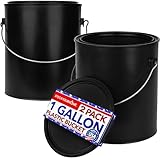
- Proudly Made in the USA: Our polypropylene bucket is lightweight and leak-resistant. Unlike metal paint tins, our all-plastic bucket won’t rust. Perfect for water based and latex paints *Not suitable for oil based paint.
- Triple Lock Seal: The press fit of our lid provides an airtight seal - when you hear an audible “click” you’ll know it’s secured. This reduces paint skinning and locks in odors. Store primers, coatings, adhesives, mastics, cleaners, and epoxy resin.
- Durability You Can Depend On: Our containers are dent resistant, damage resistant, and chemical resistant. They can even be used for hot fill applications of up to 165°F, like autoclaving. *Not recommended for cold or sub-freezing temperatures.
- Sustainable: A great alternative to metal and tin cans. Molded entirely from recycled materials, our container is 100% recyclable. This helps to keep plastic, metal, and other harmful materials out of landfills.
- Great Value Pack: Includes 2 1-gallon (128 fl oz) buckets with ears, snap-on lids, and bail handles for easy maneuvering and portability. Dimensions (approx.) 6.785" Diameter x 7.806" Height (7.9" Height with the lid on).
The paint came from a business or contractor
This guide addresses household paint. Commercial generators can face different waste rules and should contact the applicable state or local environmental authority rather than assuming a household event is available.
Independent reader supportYour contribution helps us test, update, and keep practical guides available for everyone.How to find the right contact
Search your city, county, or state government site for “household hazardous waste,” “paint recycling,” or “solid waste.” The responsible office may be called environmental services, public works, health department, or solid-waste management. If the first office does not handle paint, ask which agency does.
Do these 3 things before closing this tab:
1Scan for outdated or missing drivers - takes under a minute2Repair Windows errors before they cause bigger problems3Fix the driver behind crashes, sound loss and screen glitchesEducational examples can explain how specialized handling works, but they are not current service directories. For example, EPA’s Recycle City drop-off page is an educational example, not proof that a similarly named facility operates near you. Likewise, EPA’s archived Paint Products Stewardship Initiative page provides historical context and does not verify a current collection program.
A short call script
You can say: “I have household paint in the original can. The label says [product name and paint type], there are [number] cans of about [size], and they are [sealed/opened]. Does your program accept this product? Do you take it for reuse, recycling, or HHW disposal? What are your quantity, container, preparation, appointment, fee, and transport requirements?”
Wait for a clear answer before preparing the cans. If the agency refers you elsewhere, record the new contact and repeat the product details so the receiving facility can confirm acceptance.
The responsible outcome
There is no single nationwide instruction that makes every leftover paint can safe for the trash. Identify the product, keep it labeled and separate, and use the local route that explicitly accepts it: reuse when a recipient confirms acceptance, recycling when a program confirms the paint, or HHW collection when the agency directs you there. That approach protects drains, soil, waterways, collection workers, and your household while respecting the rules that apply where you live.
Outdated Drivers Are Slowing You Down
One free scan finds every outdated or missing driver and matches the right update for your exact hardware.Free scan · exact hardware matchPC Slower Than It Used to Be?
A free scan shows the junk files, broken settings and background clutter dragging Windows down - then fixes them in one click.Free scan · Windows 10 & 11Frequently Asked Questions
Can I throw leftover paint in the trash?
Do not assume that you can. Ask your local environmental, health, or solid-waste agency whether the specific product and container are accepted in ordinary trash. Wet, unidentified, or hazardous paint may require recycling or HHW handling, and local rules vary.
How do I find paint recycling near me?
Search your city, county, or state government site for paint recycling or household hazardous waste, then call the listed agency. Confirm that the facility accepts your exact paint type, container size, quantity, and condition before traveling.
Best Value
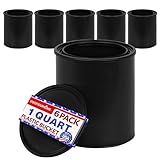
- Proudly Made in the USA: Our polypropylene can is lightweight and leak-resistant. Unlike metal paint tins, our small all-plastic buckets won’t rust. Perfect for water based and latex paints *Not suitable for oil based paint.
- Triple Lock Seal: The press fit of our lid provides an airtight seal - when you hear an audible “click” you’ll know it’s secured. This reduces paint skinning and locks in odors. Store primers, coatings, adhesives, mastics, cleaners, and epoxy resin.
- Durability You Can Depend On: Our containers are dent resistant, damage resistant, and chemical resistant. They can even be used for hot fill applications of up to 165°F, like autoclaving. *Not recommended for cold or sub-freezing temperatures.
- Sustainable: A great alternative to metal and tin cans. Molded entirely from recycled materials, our container is 100% recyclable. This helps to keep plastic, metal, and other harmful materials out of landfills.
- Great Value Pack: Includes 6 1-quart (32 fl oz) cans with snap-on lids. Dimensions (approx.) 4.25" Diameter x 4.933" Height (5" Height with the lid on). Our cans are earless and do *not* include handles.
Is latex or water-based paint always safe to discard?
No universal label such as “latex” or “water-based” determines the disposal route everywhere. Read the product label and follow the current instructions from your local program.
Should I dry paint before disposal?
Do not use a universal drying or solidifying method. Some programs may give specific preparation instructions, while others require wet paint at an HHW site. Ask the responsible local facility before adding anything, opening the lid, or placing a can in trash.
Can I mix several cans together?
No. Keep each product in its original labeled container. Mixing paints or combining paint with cleaners, solvents, or other chemicals can create an unidentified material and may cause a dangerous reaction.
Can I donate an opened can of paint?
Possibly, but only if a local school, faith organization, charity, community group, or nonprofit confirms acceptance. Tell the organization the product, color, amount, age, and whether it is opened; do not leave an unrequested can at a donation site.
Does an empty paint can go in recycling?
“Empty” has no single nationwide meaning. Some programs distinguish a residue-free container from one containing liquid or sludge. Ask your local agency how it wants an empty can handled before recycling or discarding it.
What if the can is rusty, leaking, or swollen?
Do not transfer the contents or move an unsafe container without instructions. Tell the local agency about the damage; EPA advises contacting local hazardous-materials officials or the fire department for corroding containers.
Will paint disposal cost money?
Fees are set locally. A program may be free, charge a fee, or impose quantity limits, so ask about cost when you confirm acceptance and appointment requirements.
Can a household HHW event take paint from a contractor?
Not necessarily. This guidance is for household paint. Businesses and contractors can face different requirements and should contact the applicable state or local environmental authority.
The Bottom Line
Keep paint labeled, closed, separate, and in its original container. Confirm the local route—reuse, recycling, permanent HHW drop-off, or a scheduled event—before preparing or transporting it.
Quick Recap

Product prices and availability are accurate as of the date/time indicated and are subject to change. Any price and availability information displayed on Amazon at the time of purchase will apply.
The Tool Desk
Outbyte Driver Updater FREEFix the driver behind crashes, sound loss and screen glitchesFind Drivers →Outbyte PC Repair FREEClear out junk files and repair common Windows errorsFree Scan →
