Crashes, No Sound, or Screen Glitches?
Random freezes, missing sound and display glitches usually trace back to one bad driver. Find and replace yours safely.Free scan · under a minute
Windows Errors? Fix Them Before They Spread
Repair common Windows errors and clear accumulated junk for a smoother, more stable PC - no reinstall needed.Free scan · no reinstall
ThatPainter is reader-supported. When you buy through links on our site, we may earn an affiliate commission. Learn More
A “DIY dehumidifier” is not a dependable homemade appliance. The reliable low-cost approach is to stop water entering, exhaust moisture where it is created, limit moisture-producing habits, improve air movement, keep cold surfaces warmer, and measure relative humidity (RH). These steps often solve mild dampness; persistent high RH, leaks, or recurring condensation require a properly sized dehumidifier or professional investigation.
What a DIY dehumidifier can—and cannot—do
Salt, charcoal, baking soda, and other containers sometimes marketed as homemade dehumidifiers may absorb a small amount of water, but they cannot remove moisture from an entire room at a useful rate. Treat “DIY dehumidifier” as a moisture-control plan rather than a substitute for refrigeration-based equipment.
Quick wins for a faster PC:
Fix the driver behind crashes, sound loss and screen glitchesFind Drivers →Clear out junk files and repair common Windows errorsFree Scan →Scan for outdated or missing drivers - takes under a minuteDriver Scan →As an Amazon Associate I earn from qualifying purchases.
The correct order is important: find the water source first, then control moisture made indoors, move humid air outdoors when outdoor conditions permit, improve circulation and surface temperatures, and measure the result. A powered unit is a fallback when those controls do not keep humidity in range. The U.S. Environmental Protection Agency’s moisture-control guidance notes that climate, construction, and the source of water determine which combination works.
Six practical ways to reduce moisture without starting with an appliance
1. Repair leaks and stop water entering
A dehumidifier cannot keep up with an active plumbing leak, foundation seepage, or rainwater entering through the building shell. Inspect under sinks, around toilets and tubs, near water heaters, at washing-machine connections, and along basement walls. Look outside as well: clean gutters, extend downspouts so roof water is discharged away from the foundation, and make sure soil slopes away from the house rather than toward it.
#1 Best Overall

- Semiconductor dehumidifiers use thermoelectric cooling to remove moisture from the air. They create a drier, more comfortable environment by reducing humidity and improving air quality.
- Our home dehumidifier features intelligent auto-shutoff, automatically powering down when the water tank is full. Set it and forget it, knowing your dehumidifier is working efficiently and safely, giving you true peace of mind.
- Our dehumidifier features a captivating 7-color ambient light, allowing you to bathe your room in a spectrum of soothing hues. Choose from a calming blue, energizing green, romantic red, and more – easily select the perfect color to create your desired atmosphere and enhance your living space. Dehumidify in style and set the perfect mood, every time.
- Sleep Mode creates the perfect sleep sanctuary. The dehumidifier's atmosphere lights automatically turn off, and noise fades to a whisper. Experience truly undisturbed dehumidification for a night of perfect rest.
- Elevate your home's comfort and style with our sleek and compact dehumidifier. Designed to seamlessly blend into any space, from the living room and bedroom to the bathroom, basement, and even your RV. Its modern aesthetics and space-saving footprint make it the perfect dehumidification solution for every corner of your home.
- Shut off a leaking fixture and arrange a plumbing repair.
- Dry standing water and wet materials immediately after the source is stopped.
- Check the same location again after rain or after the plumbing system is used.
- For recurring seepage, obtain a building-envelope, drainage, or waterproofing assessment instead of relying on a room appliance.
Water that remains in drywall, flooring, insulation, or furnishings can support mold. EPA says that when wet or damp materials are dried within 24–48 hours after a leak or spill, mold will, in most cases, not grow. That is a drying target, not a guarantee; porous materials that remain wet or visibly contaminated may need removal.
Do these 3 things before closing this tab:
1Clear out junk files and repair common Windows errors2Fix the driver behind crashes, sound loss and screen glitches3Repair Windows errors before they cause bigger problems2. Exhaust moisture at its source
Bathroom showers, cooking, dishwashing, and clothes drying add water vapor directly to indoor air. Run bathroom and kitchen exhaust fans so they discharge outdoors, never into an attic or another enclosed building cavity. Vent a clothes dryer outdoors using the manufacturer’s approved ducting.
- Turn on the bathroom fan before or at the start of a shower and leave it running afterward long enough to clear the room.
- Use the kitchen exhaust fan while boiling, simmering, or running the dishwasher; opening a nearby window can help when outdoor air is actually drier.
- Check that fan grilles are clean and that airflow reaches an exterior termination rather than stopping in the attic.
- Inspect the dryer duct for crushed sections, lint buildup, or a disconnected joint, then clean it safely.
Do not terminate a fan or dryer in an attic. That simply transfers warm, wet air to a colder space, where it can condense on roof framing and insulation.
3. Reduce moisture made by everyday routines
Wet laundry is a large, easy-to-miss indoor moisture source. If there is no clothes dryer, ENERGY STAR recommends drying clothes outdoors when practical. If laundry must be dried indoors, use a room with effective exhaust, leave space around the rack, and avoid placing it against a cold exterior wall.
- Use lids on pots when practical to limit steam escaping into the room.
- Wipe water from shower walls and floors after use so it does not evaporate later.
- Keep bathroom doors closed while shower steam is being exhausted, then open the door after the air has cleared.
- Do not store wet shoes, towels, or sports equipment in an unventilated closet.
These habits reduce the moisture load; they do not correct a leak, groundwater problem, or failing exterior drainage.
Rank #2

- 【80 Pint Capacity for Up to 5,000 Sq.Ft Spaces】Quickly removes excess moisture from basements, bathrooms, bedrooms, RVs, and other large living areas, delivering 80 pints per day (95°F, 90% RH).conditions. Designed as a powerful dehumidifier for basement, home, and large spaces, it helps eliminate damp air, condensation—and pet-related odors caused by excess humidity. Even during humid seasons, it works continuously to maintain a dry, comfortable, and healthier indoor environment.
- 【90° Auto Swing Airflow for Even Coverage】Distributes dry air evenly across the room, helping cover every corner and reduce uneven humidity levels. The 90° auto swing function enhances air circulation and drying efficiency, bringing a level of airflow distribution typically not available in standard models. It delivers balanced airflow without direct drafts, creating a more comfortable indoor environment.
- 【30%–80% Smart Humidity Control for Flexibility】 Unlike many standard dehumidifiers limited to a minimum of 40% RH, this unit can reach as low as 30%, offering a wider and more flexible control range. Engineered with advanced technology, it adapts to real-world conditions and maintains a stable, comfortable humidity level across different environments—including basements, bathrooms, bedrooms, closets, RVs, and other high-humidity areas.
- 【Energy Star Certified for Efficient Operation】Engineered for consistent, real-world performance, this ENERGY STAR certified dehumidifier delivers reliable results across everyday conditions—not just controlled test settings. It helps minimize unnecessary energy use while maintaining strong dehumidification efficiency, supporting lower operating costs over time.
- 【AI-Smart Protection System for Reliable Performance】Equipped with intelligent sensing technology, this dehumidifier detects frost buildup and abnormal operation in real time. It automatically activates auto defrost and overload protection to maintain stable performance and help prevent potential damage. With AI-assisted monitoring, it optimizes operation to reduce unnecessary energy use while ensuring reliable performance in low-temperature and extended-use environments.
4. Improve circulation and ventilate selectively
Still air lets damp pockets collect behind furniture and in corners. Open interior doors between rooms, use a circulating fan, and leave a gap between large furniture and exterior walls. Better mixing helps a hygrometer represent the room more accurately and reduces localized condensation.
Opening windows is conditional, not an automatic humidity cure. Outdoor air dries a room only when its moisture content is lower than the indoor air. On a muggy summer day, an open window may raise indoor RH; on a cool, dry day, it may lower it. Compare indoor and outdoor conditions before ventilating, and close windows if indoor RH rises.
In a tightly sealed home, uncontrolled air leakage can also carry moisture into wall or attic assemblies. If humidity remains high despite source control, an HVAC professional can evaluate ventilation, pressure, and air-sealing needs.
5. Reduce condensation on cold surfaces
Condensation forms when humid air contacts a surface at or below its dew point. Windows, uninsulated water pipes, exterior-wall corners, and poorly insulated areas are common locations. Lowering RH helps, but warming the surface and moving air across it also matter.
- Insulate cold-water pipes to prevent sweating and dripping.
- Keep furniture from touching cold exterior corners so air can circulate.
- Use suitable insulation or storm windows to raise interior surface temperatures.
- Wipe recurring window water and investigate why the surface is so cold.
EPA’s mold guide says interior storm windows generally perform better than exterior storm windows for reducing interior condensation. Persistent water on glass, walls, or trim is a symptom to investigate, not something to conceal with paint or a fragrance product.
Rank #3
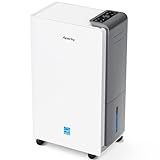
- 【ENERGY STAR 25 ≠ ENERGY STAR Most Efficient 2025】Don't fall for competitors' word games. With only 2.6% of ENERGY STAR models earning "Most Efficient 2025" title, these options are exceptionally rare on the market. RHEA-001 is one of the few to truly hold this top-tier certification. Many brands use misleading phrases like "Energy Star Efficient 25" or "Energy Star 25" to imply a standard they haven't met. Choosing them is a risk.With AEOCKY, you get verified performance and the peace of mind of authentic, top-tier efficiency.
- 【True ENERGY STAR Most Efficient 2025 Compressor Dehumidifier for homes (5500 sq.ft)】80 pint/day in the humid Mid-summer (95℉, 95%RH); 56 pint/day in the warm, damp basement (86℉, 80%RH)! Among all ENERGY STAR dehumidifiers, only an elite 2.6% earn the ENERGY STAR "Most Efficient 2025" certification. It is this top-tier capability that allows the RHEA-001 to completely outperform its competitors in both performance and energy efficiency.(Dehumidification capacity≠Water Tank Volume)
- 【Top-Rated Efficiency - Save More Energy】Breaking industry barriers, one of the first brands to achieve ENERGY STAR Most Efficient 2025. Compared to non-Energy Star inefficient products,RHEA-001 efficiency is increased by ≤50%, saving ≤1000 on electricity bills annually (running 24/7 year-round). Energy efficiency is the domain of absolute dominance for our RHEA-001. This relentless pursuit of technological innovation in efficiency is the ironclad moat that has established AEOCKY as the leading dehumidifier brand.
- 【Powered by Exceptional Core Components】AEOCKY utilizes Cutting-Edge High-Efficiency Rotor Compressor Pro+ to RHEA-001, whose core components evaporator and condenser adopt“3+2”structure with one more row than others. Never use aluminum tubes, we unswervingly use 7mm diameter high-tooth internal thread pure copper pipes.We also equipped with advanced blue hydrophilic aluminum foil, achieving breakthrough heat exchange efficiency meeting the most rigorous energy efficiency standards in history.
- 【Cutting-Edge Smart Humidity Control for Unprecedented Precision】Newly designed architecture breaks industry's decade-long lack of innovation, enabling it have high-performance chip. Millisecond-level dynamic detection keep humidity within ideal range,with full-stack proprietary humidity compensation algorithm ensuring RHEA-001 exceeds industry standard for humidity accuracy.Exclusive power-off memory function can be used with smart socket, automatically resuming function after power restoration, suitable for smart home or special area like RV.
6. Measure RH, then add powered dehumidification if necessary
A small indoor hygrometer turns “the room feels damp” into a measurable decision. Place it away from a supply vent, window, exterior door, radiator, or direct sunlight; check readings at different times because showers, cooking, weather, and heating change RH.
EPA’s general goal is indoor RH below 60%, ideally 30–50%. ENERGY STAR also describes 30–50% as generally optimal and gives 30–40% for the cold-climate heating season, when lower RH can reduce window condensation. These are guidance ranges, not guarantees for every building or climate. The EPA indoor-air guidance provides the general target, while its moisture-control page explains that outdoor temperature, climate, and construction can change the appropriate limit.
If source controls leave RH persistently high, a portable dehumidifier is the practical next step. Choose capacity by room area and wetness conditions, and verify that the model is designed for the room’s operating temperature. ENERGY STAR warns that a room consistently below 65°F may require low-temperature operation because frost can impair performance. Its current specification, effective October 1, 2025, states that certified dehumidifiers are 20% more efficient than non-certified models.
What’s actually slowing this PC down?
Pick the symptom - the matching free tool is one click away.
Humidity targets by situation
| Situation | Useful RH guidance | Why it matters |
|---|---|---|
| General indoor target | Below 60% if possible; ideally 30–50% | Limits conditions that encourage condensation and mold. |
| Cold-climate heating season | About 30–40% | Lower humidity helps reduce condensation on cold windows and walls. |
| After a leak or spill | Dry wet materials within 24–48 hours | EPA says mold will, in most cases, not grow when materials are dried in that period. |
| Room below 65°F | Use a unit rated for low-temperature operation if dehumidification is needed | Frost can impair a conventional portable unit. |
Do not force RH to an unnecessarily low level. Excessively dry winter air can irritate skin and airways and may damage some wood products. Use the lowest setting that prevents condensation and keeps the space comfortable.
Independent reader supportYour contribution helps us test, update, and keep practical guides available for everyone.Source control, passive measures, or a powered unit?
Use this decision framework rather than buying equipment first.
Rank #4

- Compact Moisture Control – This Wi-Fi enabled dehumidifier removes up to 8 pints per day at 80°F, 60%RH (24 pints MAX at 95°F, 90%RH), keeping spaces up to 1,800 sq ft comfortably dry.
- Space-Saving & Ultra-Quiet – Designed for small spaces, this 38dB whisper-quiet dehumidifier keeps humidity under control without disruption, ideal for bedrooms, nurseries, and home offices.
- Hassle-Free Drainage – Includes a 3.3ft drain hose for continuous drainage, so you never have to empty the tank manually. Perfect for long-term use in basements, laundry rooms, and storage areas.
- Energy-Efficient & Smart Control – Energy-saving design reduces electricity costs. Wi-Fi-enabled for remote control via app or voice assistants. Set humidity levels, timer, and auto mode with ease.
- Safe & Easy to Maintain – Features auto shut-off to prevent overflow, a removable water tank, and washable filters for long-lasting performance. Portable handle for easy movement.
| Approach | Best fit | Limitations and checks |
|---|---|---|
| Source control | Leaks, seepage, poor drainage, shower or cooking exhaust, indoor laundry | Must address the actual water source; no appliance can compensate for active intrusion. |
| Passive circulation and condensation management | Stuffy rooms, damp corners, cold windows, localized pipe sweating | Depends on moving air, warmer surfaces, and outdoor air that is drier than indoors. |
| Portable dehumidifier | RH remains high after source controls, especially in one room or a basement | Capacity depends on area and wetness; low-temperature rating, drainage, energy use, and maintenance matter. |
| Whole-home system | High humidity throughout a relatively well-sealed home in a humid climate, often with central air conditioning | Requires professional sizing, duct or drain planning, and installation. |
For a portable unit, close doors and windows while it operates so humid outdoor air is not continuously replacing the treated air. Follow the unit’s instructions for clearance and discharge airflow. Use a grounded outlet, and keep the tank, hose, cord, and electrical connections away from water. A long drain hose that crosses a walkway creates a trip hazard; route it safely or use a suitable nearby drain.
ENERGY STAR uses integrated energy factor (IEF), measured in liters of water removed per kilowatt-hour, to compare efficiency; a higher IEF generally indicates better efficiency. Empty the tank or install a continuous drain as directed, clean filters, and maintain the unit so it does not become a source of biological pollutants.
Free tools Windows power users keep installed
One-click scans. No signup required.
What to do when condensation or dampness persists
Condensation appears mainly on windows
Measure RH, reduce it toward the seasonal range, run bathroom and kitchen exhaust, and improve air circulation at the glass. If condensation continues at moderate RH, inspect for failed seals, inadequate insulation, or a particularly cold window surface.
A basement smells musty or feels damp
Check gutters, downspouts, grading, plumbing, foundation walls, and floor drains before selecting a larger appliance. A dehumidifier can manage residual humidity after water entry is corrected, but it cannot waterproof a foundation.
RH rises again after the dehumidifier shuts off
Look for a continuing source: wet building materials, an unvented dryer, shower steam, groundwater, or humid outdoor air entering through leaks. Check the hygrometer in more than one location and confirm that the appliance is sized for the room and operating temperature.
Visible mold or extensive water damage is present
Do not treat mold as a simple dehumidifier problem. Stop the water source, isolate the affected area where practical, and arrange an experienced remediation or building professional for substantial damage or suspected hidden growth. EPA says visible mold sampling is usually unnecessary, and no federal mold-concentration limits exist against which sampling can establish compliance. Cleaning or removing contaminated materials without correcting moisture invites recurrence.
A simple one-day moisture-control checklist
- Record RH and room temperature in the affected room and a nearby dry room.
- Inspect plumbing, ceilings, floors, windows, exterior walls, gutters, downspouts, and grading for water entry.
- Stop or arrange repair of every active leak before relying on humidity equipment.
- Run bathroom and kitchen exhaust outdoors; verify the dryer vents outdoors.
- Move indoor laundry outdoors or to a properly exhausted area, and reduce steam from cooking and bathing.
- Open interior doors, reposition furniture from cold corners, and use a fan for circulation.
- Insulate sweating pipes and consider appropriate window or wall insulation where condensation is recurring.
- Recheck RH after normal cooking, bathing, and weather changes. If it remains above the target, select a correctly sized, low-temperature-capable portable unit or obtain professional whole-home advice.
Moisture control is most successful when the water source, ventilation, surfaces, and measured RH are considered together. EPA summarizes the principle plainly: “Moisture Control is the Key to Mold Control.”
Quick Recap

Product prices and availability are accurate as of the date/time indicated and are subject to change. Any price and availability information displayed on Amazon at the time of purchase will apply.

