Quick wins for a faster PC:
Recommended Free Tools
Scan for outdated or missing drivers - takes under a minuteDriver Scan →Clear out junk files and repair common Windows errorsFree Scan →
ThatPainter is reader-supported. When you buy through links on our site, we may earn an affiliate commission. Learn More
The simplest way to make a hanging planter is to start with a container that either already drains or can be modified to drain. Choose a lined wire basket for a classic planted basket, adapt a sturdy repurposed container, turn a metal colander into a ready-perforated basket, or build an outdoor gutter planter. The winning design balances drainage, moisture retention, wet weight, suspension and the light and weather at the display site.
Use a well-drained soilless mix, secure the completed planter to support suited to its watered weight, and place it where runoff will not damage floors, walls, furniture or people.
As an Amazon Associate I earn from qualifying purchases.
Choose the hanging-planter build that fits your space
These four approaches solve the same problem in different ways. A porous liner drains freely but dries from its sides; a solid container holds moisture longer but needs deliberate drainage holes. The container, liner and suspension all become heavier after watering, so evaluate the finished planter rather than the empty vessel.
| Build | Drainage approach | Moisture behavior | Build effort | Best use |
|---|---|---|---|---|
| Lined wire basket | Coir or moss liner lets excess water pass through the wire frame. | Porous sides lose moisture more quickly; a plastic barrier can reduce loss if drainage openings remain. | Fit or pack a liner, then add suspension. | Traditional indoor or outdoor basket where frequent checking is practical. |
| Repurposed container | Use a vessel with drainage or make holes so excess water can escape. | Solid plastic retains moisture longer than porous liners; behavior varies with the container material. | Inspect, modify for drainage and devise a secure hanger. | Custom shapes such as plastic pots, wooden boxes or dried gourds. |
| Metal colander basket | Existing perforations provide a drainage path; add a coconut-fiber liner. | The liner contains mix while exposed sides can dry quickly. | Cut and fit the liner, tie rope or wire and add an S-hook. | Small-space displays and quick projects. |
| Gutter planter | Drill small holes in the bottom as needed. | Depends on the gutter material and any liner used. | Cut or prepare gutter sections, drill, then secure hooks to a support. | Outdoor, multi-row displays. |
The drainage and material differences summarized above are described by Iowa State University Extension, Purdue Extension and University of Illinois Extension.
#1 Best Overall

- 【Self-Watering Hanging Flower Pots with Removable Saucer】The innovative recessed design under each hanging indoor planter maintains optimal water levels for your plants and serves as a reservoir for consistent watering. This feature eliminates the hassle of watering plants while you're away on business trips or traveling, thanks to our hanging plant pot.
- 【10 inch Hanging Plant Pots with Thicken Material 】Our plant hanging basket is made from sturdy plastic, designed to endure harsh weather conditions without fading and cracking, even with extended outdoor use. These 10 inch hanging planters are lightweight and versatile, featuring a self-watering wall planter design. Each set of 10 inch hanging pots for plants indoor comes with two S-shaped hooks for installation.
- 【Ventilation & Drainage】The 10 inch hanging pots feature an aperture between the pot and its tray, allowing for effective drainage and ventilation. This, combined with the mesh-like structure at the base of the 10 inch self-watering hanging pots, ensures optimal aeration. Suitable for plastic hanging baskets for plants, this design promotes well plant respiration.
- 【Flexible Plant Hanger Choices】Customize your indoor decor with our hanging pots for plants indoor 10 inch by choosing between a sturdy metal hook or a chic, modern bohemian-style hanger. The metal hooks are suitable for outdoor use, providing resilience to wind, rain, and sun exposuree. For indoor settings, the bohemian style plant hangers add a stylish touch to your space. Ideal for showcasing your plants with an outdoor hanging planter or indoor plant hangers.
- 【2 Set 10-Inch Hanging Flower Basket】Transform your plant displays with our 10-inch self-watering large hanging planter. Suitable for a diverse range of plants, from bright flowers to thriving ferns and succulents, these 10" hanging pots offer generous space for your greenery. Good for creating eye-catching botanical arrangements, our hanging plant holder is suitable for both indoor and outdoor settings.
Make the five decisions before you assemble anything
1. Select the container and liner
Match the container size to the plant and the display location. A wire frame needs a fitted coir liner or a moss liner packed into the frame. Preformed coir liners are available; moss can be wetted and pressed into the wire. A solid plastic pot, wooden box or dried gourd can work as a repurposed planter only after you confirm that its structure and attachment points can carry the watered load.
2. Create a real drainage path
Drainage holes, perforations or an open porous liner must let surplus water leave. Do not rely on a layer of gravel to compensate for a container with no outlet. For a plastic container, make or confirm holes in the base; for a colander, use its existing perforations; for a gutter, drill small bottom holes where the project instructions call for them. Keep any moisture barrier from sealing those openings.
Free tools Windows power users keep installed
One-click scans. No signup required.
Rank #2

- 【7-14 Days Watering-Free】13 inch extra large self watering hanging planters (2 Pack) allow your plants to thrive for 7–14 days without frequent watering, making plant care effortless even during short trips or busy schedules. Perfect for hanging pots for plants indoor and outdoor, these planters support all house hanging plants and flowers, including pothos, spider Plants, Baby's tears, herbs, Boston fern, string of pearls, ivy, and Baby Breath, offering convenience and healthy growth.
3. Use an appropriate growing medium
Fill hanging baskets with a well-drained soilless container mix. Purdue Extension discusses adding aerating materials to improve drainage, while Iowa State recommends a well-drained soilless mix. A dense garden soil can stay wet and add unnecessary weight, so use a commercial container medium formulated for drainage and air space.
4. Design the suspension around wet weight
Water retained by the mix and plant makes the planter substantially heavier than it was during assembly. Chain, rope or wire must be tied or attached to the container and to a support that is appropriate for the completed load. Neither extension guidance nor the project examples establishes one universal safe load, hook, ceiling, beam, branch or rail; inspect your actual support and use hardware rated for that installation.
Rank #3
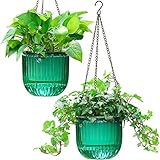
- Self Watering Pot: Cotton rope in the tall self watering planter for indoor plants absorb water from bottom and keep the soil moist. Plant wick pots store water can feed plants for two weeks or more. It makes your travel or business trip an big ease! Plants Not Included!
- Visible Water Level: Our hanging pots for plants outdoor, made of premium PET Superior Transparent material, making you observe water level easily conveniently from our hanging basket for plants indoor planter and not forget filling water into pot.
- Inner Pot With Drainage Holes: Double-layers design, inner pot with 12 drainage holes which drain excess water to the bottom of outer pot and give plant roots air flow. The stored water is absorbed by the wick rope to feed the plants in return. Hanging planter with drainage! Hanging window planter!
- Versatile: Hanging plant basket outdoor with removable detachable hanging chain, either be hanging outdoor like patio, garden, balcony, covered porch, or indoor like in kitchen, living room, dining room, bedroom, windowsill. Flat bottom make it can sit without chains on desktop. African violet pot planter hanging self watering lightweight is ideal for succulent, cacti, orchid, ivy, kitchen herb, flower, tomato, fern, begonias, impatiens, petunias, pothos and other cascading plant or houseplant.
- Good for Outdoor Use: Thick plating hanging chain help avoid iron rust, Triple hooks increase stability, High-strength-tenacity PET material make our planters lightweight but sturdy to withstand hanging in intense sun, harsh winter. Not fade, crack and peel damage.
5. Choose the display location first
Identify the light level and exposure the plant will receive, then account for wind, reflected heat and the path of dripping water. Outdoors, wind and hot reflected surfaces can accelerate drying. Indoors, keep the drainage path away from floors, furnishings and electronics. A location that is convenient to check and water is easier to maintain than one that looks attractive but cannot be reached safely.
Build 1: a lined wire hanging basket
This is the most adaptable option when you want plants to spill over a classic open frame.
Rank #4

- 【Self-Watering Hanging Flower Pots with Removable Saucer】the appearance and structural design of the Hanging Pot prevents overwatering and acts as a water reservoir to promote Plant growth. It is suitable for a variety of Hanging Pot Plants, such as ivy, Herbs, Ferns, Philodendrons, Succulents, Flowers or other Plants
- 【12 Inch thick Material Hanging Planter】Plant hanging baskets are made from strong, recyclable plastic, which can withstand harsh weather conditions without fading and cracking even when used outdoors for a long time
- 【Ventilation & Drainage】12-Inch self-watering hanging planter has multiple drainage holes between the planter and the tray, which can effectively drain and ventilate the plant. It can drain excess water and prevent overwatering, which is beneficial to promote the respiration of plants
- 【Minimalist Modern Design】Trendy Colors and a Modern look allow this decorative Pot to fit into any Indoor and Outdoor setting. these 12" Hanging Pots offer generous space for your greenery. Good for creating eye-catching botanical arrangements
- 【Package Content】12 Inch Self-Watering Plastic Flower Pots x 2,Chain rack x 2,these Planters are easy to install and suitable for Hanging in various locations such as Balconies, Windows and Gardens
- Gather the frame and liner. Use a wire or metal basket, a coir or moss liner, a well-drained soilless mix, plants and a chain, rope or wire suspension.
- Fit the liner. Place a preformed coir liner into the basket. If using moss, wet it first and pack it evenly into the wire so the frame is covered and the growing medium will not fall through. Illinois Extension describes this wet-and-pack method for moss-lined wire baskets.
- Decide whether to add a moisture barrier. A plastic liner inside the coir or moss can slow water loss through the sides. Leave deliberate drainage openings; a completely sealed barrier defeats the basket’s drainage.
- Check the base. Verify that water can leave at the lowest point. Repair gaps in the liner that would allow mix to wash out, but do not block the outlet.
- Add the mix. Fill with the well-drained soilless medium, settling it lightly rather than compacting it. Leave enough room to water without immediately washing mix over the rim.
- Plant and water to settle. Arrange plants for the light and exposure of the final site, fill around their roots and water until the medium is evenly moistened and excess drains.
- Attach and test the suspension. Connect the chain, rope or wire at balanced points, then hang only from the support selected for the watered planter. Watch for tilting, stretched ties or a liner pulling away before you leave it in place.
Because the liner’s sides are porous, this style can dry faster than a solid plastic container. Iowa State and Illinois Extension both emphasize checking hanging baskets as conditions change, particularly during hot weather.
Build 2: adapt a repurposed container
Repurposing lets you coordinate a planter with your room, porch or garden, but the container is not automatically safe just because it can hold soil. Purdue Extension lists plastic pots, wooden boxes and dried gourds as examples that have been used for hanging planters.
Best Value

- 3 COMPLETE HANGING PLANTER SETS: Create a boho-chic vibe with this elegant macrame hanging plant set, which includes 3pcs macrame plant hangers (34", 27", 21"), 3pcs self-watering plant pots (7", 6" , 5.5"), 3pcs hooks. Showcase your plants and elevate any space in living rooms, patios, and kitchens
- SELF-WATERING RESERVOIRS: Absorbent wicks draw moisture from the detachable lower reservoirs into the soil, helping maintain more consistent moisture between regular waterings. The side watering lips make refilling easier and help reduce spills
- SUPERIOR DRAINAGE & ROOT HEALTH: Our planters are designed with precise drainage holes that prevent overwatering. Water flows into the built-in reservoir for easy absorption, ensuring your plants' roots stay properly aerated and free from rot. Suitable for gardeners of all levels
- COMPACT 7/6/5.5 INCH POT COLLECTION: Three graduated pot sizes for small-to-medium houseplants, herbs, succulents, pothos and young trailing plants. A space-saving choice for apartments, kitchens, bedrooms and bright window areas
- CREATE A LIGHT, LAYERED DISPLAY: The three different pot and hanger sizes create natural height variation without visually overwhelming smaller rooms. Suitable for customers starting an indoor plant collection or decorating limited spaces
- Inspect the vessel. Reject containers with cracks, soft wood, brittle walls or weak rims. The attachment must transfer the load without tearing the material.
- Plan the water outlet. Mark the lowest point and make drainage holes appropriate to the material. Iowa State specifically calls for holes in plastic containers. Remove sharp burrs that could cut a liner or suspension cord.
- Protect the interior without sealing it. If the material is porous or has large openings, use a liner that contains the mix while preserving the drainage route. A liner is not a substitute for a hole.
- Choose a proportional plant. Keep the plant and mature root mass in scale with the container. An oversized plant increases both water demand and the eventual load.
- Install the hanger. Use attachment points that spread the load rather than concentrating it in one thin edge. Tie or fasten the suspension before filling so you can check its balance while the container is still light.
- Fill, plant and test. Add well-drained soilless mix, plant, water thoroughly and recheck every connection under the wet load before placing the planter over a walkway or valuable surface.
Build 3: turn a metal colander into a basket
A colander is convenient because its holes already provide a drainage route. The Royal Horticultural Society’s small-space project uses a metal colander, coconut-fiber liner, scissors, twine or garden wire, an S-hook, compost and plants. Its construction method transfers readily to other regions; use a container mix suited to your plants and local practice.
- Cut the liner. Set the coconut-fiber liner into the colander and trim it so it follows the bowl without covering all of the perforations.
- Prepare the suspension. Cut equal lengths of twine or garden wire. The RHS method ties the ends securely and places an S-hook at the knot. Use a knot and material appropriate to the colander’s weight and the chosen support.
- Check the balance. Lift the empty colander by the suspension. Adjust the tie points if the rim tips sharply to one side.
- Add medium and plants. Fill with a well-drained soilless mix, arrange the plants and water slowly so the liner settles without carrying mix through the holes.
- Hang and monitor. Place the S-hook only on a support suited to the fully watered load. Exposed metal and a porous fiber liner can dry quickly in sun or wind, so check the medium rather than following a fixed calendar.
Build 4: make an outdoor hanging gutter planter
The Home Depot’s project guide describes a three-row hanging planter made from gutter material. This is an outdoor-focused approach that creates a long display rather than a single basket.
- Plan the rows and support. Choose a location where the rows receive suitable light and where runoff will not hit people or property. Identify the support before cutting or drilling.
- Prepare the gutter sections. Follow the project dimensions and cutting directions for your chosen gutter material. Wear appropriate safety gear when cutting or drilling.
- Provide drainage. Drill small holes in the bottom as needed so excess water can escape. Keep holes clear after adding the growing medium.
- Secure the hooks. Install hooks into a support capable of carrying the completed, watered rows. Do not assume a decorative rail or thin trim has the required capacity.
- Fill and plant. Add a well-drained container mix, plant according to the available light and water until excess exits the holes.
- Inspect after watering. Recheck the hooks, gutter alignment and drip path when the planter is heaviest.
Drainage, mix and watering: keep the planter healthy
Small hanging containers hold less medium than ground beds, so their moisture level can change quickly. Porous wire baskets lose water through their sides as well as from the surface. Iowa State advises checking established, densely rooted baskets daily for water needs, especially in summer; that is a check, not a command to water every basket every day.
- Check the medium, not the date. Feel below the surface where possible and consider recent rain, wind, heat, plant size and root density.
- Water thoroughly when needed. Apply water slowly until the medium is evenly wet and excess can leave through the drainage path. A brief sprinkle may wet only the surface.
- Account for the liner. Coir and moss can dry at the sides while the center remains moist. A plastic barrier changes that balance, so inspect before watering again.
- Keep outlets open. Roots, settled mix or debris can obstruct holes. Persistent saturation means the outlet, liner or mix needs correction.
- Plan for access. If the basket is too high to inspect safely, lower it or use a watering method that lets you see runoff and reach the root zone.
Illinois Extension notes that hanging containers generally need more frequent watering planning and that drip and safety issues deserve attention. Read its guidance on container material choices alongside the plant’s actual requirements.
Indoor and outdoor placement checks
For indoor displays
- Keep the drip path over a tray, waterproof surface or other protected area that can handle runoff.
- Leave enough clearance to inspect the medium, remove the planter and clean beneath it.
- Match the plant to the available indoor light rather than assuming an outdoor plant will adapt.
- Use a support and attachment that are appropriate for the watered weight; a ceiling or beam is not automatically suitable.
For outdoor displays
- Account for wind, which can swing a basket, stress ties and increase drying.
- Watch reflected heat from walls and paving, which can raise water demand.
- Direct runoff away from doors, seating, walkways and belongings.
- Inspect suspension after severe weather and whenever the planter has been moved.
Troubleshoot the common failure modes
| What you see | Likely reason | Corrective action |
|---|---|---|
| Water runs straight through and mix escapes. | A liner gap or oversized opening is not containing the medium. | Refit or reinforce the liner while keeping a clear outlet for excess water. |
| The basket dries unusually fast. | Porous coir or moss sides, wind, heat or a small root-filled volume. | Check moisture more often, consider a plastic barrier with drainage openings, and move the planter away from drying exposure when appropriate. |
| Water remains pooled or the mix stays soggy. | Blocked or missing drainage, a sealed liner or a mix without enough air space. | Clear or add holes, reopen the liner’s drainage path and replace compacted medium with a well-drained soilless mix. |
| The planter tilts or the hanger stretches after watering. | Uneven attachment or a support not suited to the wet load. | Empty or lower the planter safely, rebalance the attachment and reassess the support and hardware before rehanging. |
| Runoff lands on a floor, wall or walkway. | The display location does not account for the drip path. | Move the planter, add a suitable catchment arrangement or change the watering position so excess water is directed safely. |
A simple final inspection before you hang it
- Confirm that the container, liner and suspension are intact.
- Trace a continuous drainage path from the mix to an outlet.
- Fill and water the planter before its first permanent installation so you can assess the wet weight and runoff.
- Check that the support, hooks, knots and attachment points remain stable under that load.
- Verify the plant’s light, temperature and moisture needs at the actual indoor or outdoor location.
- Set a reminder to inspect the medium and suspension more often during hot, windy or rapidly changing weather.
With those checks complete, the choice is mainly aesthetic: a lined wire frame for a traditional basket, a characterful repurposed vessel, a perforated colander for a quick small-space project or a gutter system for an outdoor row. Each can work when drainage, wet weight and placement are designed first.
Quick Recap

Product prices and availability are accurate as of the date/time indicated and are subject to change. Any price and availability information displayed on Amazon at the time of purchase will apply.

