PC Slower Than It Used to Be?
The Tool Desk
Outbyte Driver Updater FREEScan for outdated or missing drivers - takes under a minuteDriver Scan →Outbyte PC Repair FREERepair Windows errors before they cause bigger problemsFix Now →Outbyte PC Repair · freeA free scan shows the junk files, broken settings and background clutter dragging Windows down - then fixes them in one click.
Run a Free PC Scan →ThatPainter is reader-supported. When you buy through links on our site, we may earn an affiliate commission. Learn More
DIY solar is not one system. A grid-connected array can reduce purchased electricity, a battery-backed system can keep selected loads running during an outage, and an off-grid installation can operate without utility lines. The right choice depends on your loads, roof or land, local rules, sunlight, and what you mean by “independence.” Solar panels by themselves do not provide normal backup power when the grid fails.
Choose the solar outcome before choosing equipment
Start with the job the system must perform. Three residential architectures cover most DIY discussions:
As an Amazon Associate I earn from qualifying purchases.
Quick wins for a faster PC:
Fix the driver behind crashes, sound loss and screen glitchesFind Drivers →Repair Windows errors before they cause bigger problemsFix Now →Scan for outdated or missing drivers - takes under a minuteDriver Scan →| Configuration | What it does | Decisions that matter | Important limitation |
|---|---|---|---|
| Grid-connected PV without storage | Generates electricity for household use and may send surplus to the utility under the applicable export arrangement. | Annual and seasonal consumption, roof production, utility rates, export credit, interconnection requirements, and project cost. | Ordinary grid-dependent systems shut down during an outage. |
| Grid-connected PV with battery backup | Stores solar energy and can supply selected circuits during an outage when paired with suitable controls and an inverter. | Which loads need backup, how long they must run, battery capacity, equipment compatibility, cost, and utility rules. | A battery does not automatically power every circuit in the house. |
| Off-grid or standalone PV | Operates independently of utility lines and stores energy for periods without sunlight. | Load discipline, seasonal sunlight, storage, backup generation, maintenance, and the cost of building for the worst conditions. | It is a different electrical architecture, not simply a grid system with export disabled. |
Bill reduction
If your priority is lowering utility purchases, grid-connected PV without a battery is usually the simplest architecture to evaluate. Your daytime loads can use solar production, while surplus may be exported if your utility offers an arrangement that credits it. The value of that exported energy is a local policy question, not a universal solar feature.
Outage resilience
If you want refrigeration, communications, lighting, a well pump, or other selected equipment during an outage, plan a battery-backed system from the beginning. The inverter, transfer or islanding controls, battery, and load panel must be designed to work together. A conventional grid-tied inverter turns off when utility power disappears so it cannot energize lines being repaired.
#1 Best Overall

- Portable Generator with 60W Solar Panel Included: with a big battery pack, ZeroKor 300W solar powered generator are powerful enough to charge smartphones,tablets,laptops,headphones or other outdoor small camping supplies(Tips:Using electrical appliances over 300W may damage the portable solar generator, especially some devices that are prone to heat or built-in air compressor such as coffee maker,Hair dryer, water pump etc )
- Multiple Charging outlets for camping gear with SOS Flashlight: with 2* 300W Max wall AC outlets, 1* DC port (9V-12.6V/10A max ), 3* 5V/3A Max USB ports, 1*quick charge USB port (5V/3A 9V/2A Max), Flashlight with reading mode and SOS mode for your outdoor Adventures, our portable solar power station offers a versatile charging solution,allowing you to charge your outdoor smart devices directly from a wall AC outlet
- Multiple Charging Optional, Solar Panel Charger 60W Included: ZeroKor portable power bank generator can be recharged by Home AC outlet, DC5521 13V-23V Solar Panel (Portable Power Station built-in MPPT), 12V Carport. Take the portable solar power bank generator with you on-the-go and never worry about power shortage,the portable AC outlet design makes it more suitable for Tent camping OFF-Grid
- Built in BMS(Battery Management System) : ZeroKor portable power station features short circuit protection, over-current protection, over-voltage protection, overload protection and overheating protection. The built-in cooling fan system will automatically start and stop according to the portable battery pack internal temperature during use. Acting as a portable solar power bank, it accommodates multiple devices simultaneously, making it perfect for indoor and outdoor use
- HIGH CONVERSION EFFICIENCY: ZeroKor solar panels 60W monocrystalline solar cell have a high conversion efficiency of 20.5%, and its performance is better than that of polycrystalline solar panels under the condition of insufficient light
Independence from utility lines
An off-grid system must balance production, storage, and consumption every day and across seasons. It may require stricter load management and a backup energy source than a grid-connected system. Treat a small “off-grid solar panel kit” as a system component or starting point, not as proof that it can run a home.
How a residential solar system works
Photovoltaic modules produce direct-current (DC) electricity. An inverter converts that electricity to alternating-current (AC) used by ordinary household circuits. Batteries store energy for later use, and disconnects, meters, junction boxes, protection devices, and—where applicable—a charge controller provide the control and safety functions around those main blocks.
What’s actually slowing this PC down?
Pick the symptom - the matching free tool is one click away.
Central or string inverter
A central inverter serves multiple modules. The U.S. Department of Energy describes this approach as generally less expensive and easier to cool and service. Panel-level conditions can affect the output of a string, so the roof layout and shade pattern matter.
Microinverters
A microinverter attaches to an individual module, allowing panels to operate more independently. That can be useful where some modules receive shade at different times. It also changes the equipment count, service approach, and cost; the best choice depends on the roof and design rather than a blanket rule.
Rank #2
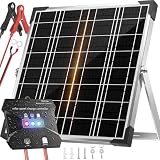
- High-Efficiency MPPT Solar Charger - Advanced tracking technology delivers 20-30% faster charging for 12V batteries. A+ monocrystalline panels maximize power conversion. Perfect 20W solar trickle charger for cars, RVs, boats, and trailers. More sun captured, less time waiting.
- Advanced Multi-Layer Protection - Built-in safeguards prevent overcharge, over-discharge, short circuit, and reverse polarity damage. Smart controller stops draining power at night. Keeps your 12V battery healthy and extends lifespan. Worry-free operation for long-term use.
- Universal 12V Battery Compatibility - Works with LiFePO4, AGM, Gel, Flooded, and Lithium Ion batteries. Ideal as RV solar battery charger, trailer solar battery charger, or marine solar battery charger. One versatile solution for all your 12V charging needs.
- IP67 Waterproof & Weather-Resistant - Marine-grade construction withstands -40°F to 185°F. Built for harsh outdoor conditions - rain, snow, or extreme heat. 25+ year lifespan with corrosion-resistant materials. Perfect for boats, RVs, off-grid solar systems, and trailers.
- Plug-and-Play Installation - Pre-drilled mounting holes enable 30-second setup - no tools required. Auto-stop charging when battery is full, auto-resume when voltage drops. LED indicators display real-time status (25%-100%). Perfect for camper, gate opener, and dump trailer use.
Battery and controls
A battery does not create energy; it shifts energy from one time to another. In a grid-connected backup design, the inverter and controls must detect a grid failure, isolate the home from the utility, and serve the circuits included in the backup design. In an off-grid design, storage must cover periods when production is low, including seasonal differences. The older consumer descriptions of panels, inverter, battery bank, charge controller, meter, junction box, and disconnects are useful for understanding system blocks, but they are not a wiring plan or a complete modern bill of materials.
Can you install solar yourself?
You can perform some planning and, in some jurisdictions, portions of physical installation yourself. Whether you may legally complete a grid-connected rooftop installation depends on local building and electrical rules, utility procedures, inspection requirements, and sometimes the authority having jurisdiction’s rules about who may do the work. A grid-connected project must be approved and inspected before it is placed into normal utility operation.
Do not treat a packaged kit, online diagram, or generic video as a site-specific electrical design. Roof loading, conductor sizing, overcurrent protection, grounding, rapid-shutdown requirements, battery clearances, and interconnection settings depend on the actual equipment and location. A qualified designer or electrician should review any work that affects life safety or the utility connection.
Plan a DIY project in the right order
- Document current and future electricity use. Review a full year of bills, including seasonal peaks. Note major loads and likely changes such as an electric vehicle, heat pump, workshop equipment, new appliances, or a change in occupancy. A system sized only to today’s average can miss the loads you add next year.
- Inspect the site. Check roof age and condition, shape, slope, orientation, usable area, and shading throughout the day and year. Panels can work in all climates, but heavy shade or an unsuitable roof can make rooftop solar a poor choice. If you do not own the roof, or the roof is not suitable, community solar may provide a way to receive solar benefits, although it is not a DIY installation.
- Estimate production at the actual address. Use an address-specific estimator such as NREL’s PVWatts for an initial estimate. Enter the proposed array characteristics and compare expected production with your measured consumption. Treat the result as an estimate, then obtain a detailed site evaluation before committing to an installation.
- Decide whether backup is truly required. List the circuits that must operate during an outage and their starting or running demands. “Whole home” and “critical loads only” are different designs. If you only need bill savings, adding a battery may not improve the financial result enough to justify its cost; if resilience is essential, the value may be measured in avoided disruption rather than export credits.
- Check permitting and interconnection before buying hardware. Ask the local building department about permits, plan review, inspection, and any structural or electrical submissions. Ask the utility about an interconnection application, export limits, required equipment, meter changes, fees, and permission to operate. Processing times and rules differ by jurisdiction.
- Build an economic case from local inputs. Use your electricity rate, expected production, export compensation, project cost, financing or ownership terms, roof work, maintenance, and any battery replacement assumptions. Without those inputs, a generic payback period would be misleading.
- Have the completed work inspected and commissioned. Confirm that labels, disconnects, monitoring, shutdown functions, and utility settings match the approved design. Do not energize a grid-connected system before the required approvals and permission to operate.
How much power can a home solar array generate?
There is no universal answer because production depends on location, array size, orientation, tilt, shade, weather, equipment, and losses. The National Renewable Energy Laboratory uses an average system size of 7.15 kW DC in its analyses, with a stated range of 3–11 kW. That figure describes an analytical average, not a recommendation for every household.
Rank #3

- UL9540 | UL1973 | CEC LISTED - Completed comprehensive testing by Intertek and has officially earned two key North American safety certifications.And has met the standards set by the California Energy Commission.The outstanding performance in design, electrical safety, and thermal runaway management,providing users with greater quality assurance
- Whole-Home Off-Grid Power: The 6-pack 51.2V 100Ah system delivers up to 30.72kWh of capacity, enough to cover an entire household’s daily electricity needs. It helps reduce reliance on rising electricity costs and serves as a reliable solution for achieving true off-grid living and energy independence.This package only includes 6 batteries and one RSD button. The rack is not included.
- Closed-Loop Communication Battery: ECO-WORTHY 48V (51.2V) server rack battery features integrated CAN/RS485 interfaces and multiple communication protocols, enabling communication with leading integrated solar inverters for more intelligent system operation. Built-in Bluetooth and WiFi functionality allow you to easily monitor battery status via ECO-WORTHY APP.
- Powerful Expansion Capability: Designed for server rack compatibility with vertical mounting support, this 48V 100Ah battery maximizes space efficiency. It allows paralleling of up to 32 units (up to 163.8kWh), enabling flexible capacity expansion to meet a wide range of needs. Built with Grade A LiFePO₄ cells, it delivers reliable power output, exceptional cycle life, and stable safety performance.
- Complete Plug-and-Play Kit: We include every accessory you need: parallel cables, communication cables, grounding wires, protective terminal covers, screws, and a user manual. Unbox, install, and start enjoying clean power—it's that easy.
Compare estimated annual and monthly production with your own bills rather than asking whether a nominal panel count will “cover” a home. A roof may have enough area for a large array but insufficient sunlight, or a household may use little electricity during the hours the array produces most. Seasonal production and consumption can diverge substantially, which is why a battery, utility exports, or changed usage patterns may matter.
Net metering and exported solar electricity
Net metering is a utility billing arrangement in which exported electricity is credited according to the applicable tariff. The credit may not equal the retail price of electricity, and some utilities use different structures, limits, or time-based values. The relevant question is not simply whether net metering exists, but how the policy treats your system’s exports, annual reconciliation, fixed charges, and any battery operation.
Windows Errors? Fix Them Before They Spread
Repair common Windows errors and clear accumulated junk for a smoother, more stable PC - no reinstall needed.Free scan · no reinstallOutdated Drivers Are Slowing You Down
One free scan finds every outdated or missing driver and matches the right update for your exact hardware.Free scan · exact hardware matchBefore signing a contract or buying equipment, obtain the current tariff and interconnection rules from your utility. A policy change can alter the value of daytime exports and therefore the value of oversizing an array. Savings also depend on how much of your generation you use directly, your consumption pattern, and the rate you would otherwise pay.
Solar-plus-storage: what it can and cannot do
What storage adds
Storage can move midday solar into evening hours, reduce reliance on utility purchases at selected times, and support designated loads when the grid is unavailable. It can be especially useful when export credits are low or when outage protection is a high priority.
Rank #4
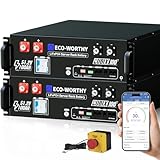
- UL9540 | UL1973 | CEC LISTED - Completed comprehensive testing by Intertek and has officially earned three key North American safety certifications.And has met the standards set by the California Energy Commission.The outstanding performance in design, electrical safety, and thermal runaway management,providing users with greater quality assurance.
- Home Energy Storage System: Built with high-quality Grade A LiFePO4 cells for reliable power, exceptional cycle life, and consistent safety. Designed for multiple uses: emergency backup during outages, daily home backup, and with solar panels, continuous power for off-grid cabins.
- Closed-Loop Communication Battery: ECO-WORTHY 48V (51.2V) server rack battery features integrated CAN/RS485 interfaces and multiple communication protocols, enabling communication with leading integrated solar inverters for more intelligent system operation. Built-in Bluetooth and WiFi functionality allow you to easily monitor battery status via ECO-WORTHY APP.
- Space-Saving Rack Design: This 48V 100AH lithium battery is perfectly compatible with server racks and supports vertical mounting for maximum space efficiency. By paralleling up to 32 units (up to 163.8kWh), you can expand power capacity to meet any need.
- Tip: Our batteries enjoy 10-year limited warranty, we will help with any issues within 24h. Return or replacement is applicable if there's any verified tech issue within 30 days, even though Amazon marks this item as non-returnable. Feel free to contact us should you have any questions.
What storage does not guarantee
Battery capacity is not the same as backup power for the entire home. The system may be limited by inverter output, the circuits connected to the backup panel, battery state of charge, and the duration of the outage. Large motors, heating equipment, electric vehicle charging, and other high-demand loads can consume stored energy quickly. Ask for a written list of backed-up circuits and an estimated runtime under stated loads.
Independent reader supportYour contribution helps us test, update, and keep practical guides available for everyone.Off-grid design requires a different mindset
Without utility support, every load competes for finite stored energy. You must account for low-sun periods, not just a sunny-day production estimate. That makes conservation, scheduling, storage, and a backup strategy central design decisions. An off-grid home may need a larger array and battery bank than a similarly sized grid-connected home because it cannot draw supplemental energy when weather reduces production.
Plan for maintenance access, monitoring, safe battery placement, replacement of aging components, and a method to handle extended poor-weather periods. A small standalone system can be appropriate for a shed, remote communications equipment, or a modest cabin, but its loads must be defined before selecting a kit or components.
Federal tax-credit timing in the United States
Current Internal Revenue Service guidance says the residential clean energy credit under section 25D is not allowed for expenditures made after December 31, 2025. For the cases described by the IRS, an expenditure is treated as made when original installation is completed; paying earlier does not preserve eligibility if installation finishes after the termination date.
Best Value

- 🌍Solar Power Bank Generator with Panel Included: ZeroKor solar generator kit includes a 100W portable camping lithium-ion battery pack and a 40W foldable solar panel. As an outdoor AC power bank, it is an ideal necessity for outdoor activities, hurricanes and home emergency power outage, so you will never worry about sudden power failure to delay your activities, about 3.3lbs(Size:7.6" L x 3.7" W x 6.1" H) easy to carry. (Tips:Using electrical appliances over 100W may damage the portable battery generator, especially some devices that are prone to heat or built-in air compressor such as coffee maker,Hair dryer, water pump etc )
- 🌍Multiple Charging Outputs, AC Pass-Through Charging: with 2*100W MAX AC Outlets, 1* DC (9V~12.6V/10A MAX), USB1+USB2 5V/3.1A Max, 1*QC USB (5V/3A 9V/2A MAX), 1* USB-C (5V/3A 9V/2A MAX), ZeroKor portable power station can power your smartphone, tablet, laptop, camera, drones and more (POWER<100W). Flashlight with SOS mode for emergency,the portable AC outlet design makes it more suitable for camping OFF-Grid (NOTE:If your devices need Air compressor to work, we recommend that you purchase more powerful power station)
- 🌍Multiple Charging Ways, Solar Panel 40W Included: ZeroKor portable laptop power bank can be recharged by wall outlet, DC5521 Solar Panel (Portable Power Station built-in MPPT), 12V Carport. Take the portable power station with you on-the-go and never worry about power shortage(NOTE:it is not recommended that the portable battery pack be used only as an emergency power supply, please recharge it at least once every half a month if not use,keep the battery capacity at 60%-80%)
- 🌍 Built in BMS(Battery Management System): ZeroKor portable power station features short circuit protection, over-current protection, over-voltage protection, overload protection and overheating protection. The low-noise and gasless design makes the portable laptop charger more environmentally friendly
- 🌍HIGH CONVERSION EFFICIENCY: ZeroKor portable solar panels 40W monocrystalline solar cell have a high conversion efficiency of 22.8%, and its performance is better than that of polycrystalline solar panels under the condition of insufficient light.The built-in smart chip intelligently identifies your devices and maximizes its charging speed, with 10*DC Connectors, this solar panel kit is compatible with most portable solar generators on the market
The 2025 Form 5695 instructions state a 30% credit rate for qualifying residential clean energy property placed in service during 2022 through 2025, subject to the law and the taxpayer’s eligibility. This is federal tax information, not a determination that a particular project or taxpayer qualifies. State and local incentives, utility rebates, and future legislative changes require separate verification. Older homeowner guides that discuss a future credit expiration should not override the IRS’s updated timing.
Common DIY mistakes and safer fixes
- Expecting panels to work in a blackout: Use a properly configured inverter and storage system if outage operation is required.
- Sizing from panel wattage alone: Start with measured consumption, seasonal use, site shade, and address-specific production.
- Buying before checking approvals: Confirm permitting, inspection, and utility interconnection requirements first.
- Assuming a battery powers every circuit: Specify backed-up loads, inverter limits, battery capacity, and expected runtime.
- Using a generic payback claim: Calculate with local rates, export compensation, production, ownership terms, and project costs.
- Ignoring the roof: Assess roof condition and remaining life before mounting equipment; replacing a roof later can complicate the array.
- Treating a kit as a complete design: Verify compatibility, protection, mounting, shutdown, and local code requirements with qualified help.
What information to collect before requesting quotes
- At least 12 months of electricity bills and the current utility tariff.
- Roof age, construction, usable dimensions, orientation, slope, and known shade.
- Ownership status and any planned roof replacement.
- Major present and future loads, including heating, cooling, pumps, workshops, and vehicle charging.
- Whether the goal is bill offset, selected-load backup, whole-home backup, or complete off-grid operation.
- Local permit, inspection, interconnection, export, and meter requirements.
- A production estimate for the actual address and a written equipment and warranty scope.
Frequently Asked Questions
Will solar panels keep my house running during a utility outage?
Not by themselves. Typical grid-dependent systems shut down when the grid fails. Outage operation requires a properly configured inverter, storage, and a design that identifies which circuits receive power.
Is a 7.15 kW solar system right for my home?
The 7.15 kW DC figure is an NREL analytical average, with a stated 3–11 kW range, not a universal recommendation. Your array should be based on measured consumption, site production, roof conditions, and future loads.
Can I claim the U.S. residential clean energy credit for a project installed after 2025?
IRS guidance says section 25D credits are not allowed for expenditures made after December 31, 2025. The 2025 Form 5695 instructions describe a 30% rate for qualifying property placed in service during 2022–2025, subject to eligibility.
Quick Recap

Product prices and availability are accurate as of the date/time indicated and are subject to change. Any price and availability information displayed on Amazon at the time of purchase will apply.

