Windows Errors? Fix Them Before They Spread
Recommended Free Tools
Repair common Windows errors and clear accumulated junk for a smoother, more stable PC - no reinstall needed.
Fix My PC Now →Free scan · no reinstall
ThatPainter is reader-supported. When you buy through links on our site, we may earn an affiliate commission. Learn More
As an Amazon Associate I earn from qualifying purchases.
For planning purposes, published guidance puts many electrical-panel projects in the low-thousands, but there is no single national price that applies to every house. The U.S. Department of Energy’s Residential Electric-Ready technical brief lists $1,000–$5,000 for a panel-capacity renovation upgrade, while NYSERDA gives $3,000–$5,000 for electrical-panel upgrades in its New York homeowner guidance. Those figures are planning references, not guaranteed installed prices.
Quick wins for a faster PC:
Repair Windows errors before they cause bigger problemsFix Now →Fix the driver behind crashes, sound loss and screen glitchesFind Drivers →Clear out junk files and repair common Windows errorsFree Scan →The first budgeting decision is to identify the scope. Replacing a panel at its existing service capacity is different from increasing the home’s service capacity. A capacity increase can involve larger service conductors, a new meter, utility coordination, permits, inspections and finish repairs in addition to the panel and breakers. Ask for a written, itemized proposal that states exactly which scope you are buying.
#1 Best Overall
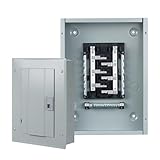
- HIGH PERFORMANCE 125A LOAD CENTER - Low voltage load center supports up to 125 amps, providing efficient and reliable power distribution to a variety of electrical equipment, ideal for residential and light commercial use
- NEMA 1 STEEL ENCLOSURE—Constructed of high-quality steel, this main lug load center enclosure meets NEMA 1 standards and is designed for indoor use. Its rugged construction ensures durable protection against dust and other contaminants, making it suitable for use in indoor spaces such as homes, offices, and light commercial applications, providing reliable protection for power distribution systems.
- EXCELLENT SAFETY AND PROTECTION - The main lug circuit breaker panel has 12 spaces that can accommodate up to 12 1-pole plug-in circuit breakers. Can provide excellent circuit protection. This makes the main load center a reliable choice for strengthening safety measures in the distribution system.
- RELIABLE&EASY TO INSTALL - This circuit breaker distribution box is designed for a simple installation process, supports single-phase, 120/240V AC systems, and adopts a three wire configuration. Its intuitive design make it an excellent choice for professionals and DIY enthusiasts, providing reliability and convenience for all users.
- COMPATIBILITY - The load center is compatible with QP Q225, Q230, Q130, Q120, THQL and other series circuit breakers, and is not suitable for 1/2 inch, 3/4 inch and other plug-in circuit breakers
Panel replacement and service upgrade are different projects
Homeowners often use “replace,” “upgrade” and “200-amp panel” as if they mean the same thing. They do not. The existing enclosure may be replaced while the home remains on the same service capacity, or the electrician may determine that the service itself must be enlarged. A project can also include both a new panel and upstream work at the meter or service entrance.
| Scope | What changes | Budget implication |
|---|---|---|
| Same-capacity panel replacement | Panelboard, breakers and connections are replaced while the service rating remains the same. | Usually narrower than a capacity increase, but circuit condition, code corrections, access and permit requirements still affect the quote. |
| Service-capacity increase | The service rating is increased after a load calculation; larger conductors, a different panel and possibly meter or utility work may be required. | More components and coordination create a broader price range than a panel-only replacement. |
| Panel plus electrification work | The panel project is coordinated with a Level 2 EV charger, heat pump or other dedicated load. | The new equipment can change the calculated demand, available breaker spaces and service-capacity decision. |
NYSERDA specifically warns that replacing the electric meter and service wire alongside the panel can increase the project cost. Treat any proposal that says only “install a 200-amp panel” as incomplete until it explains the service conductors, meter and utility responsibilities.
What the published cost ranges actually mean
Use the following figures as starting points for a conversation with an electrician, not as a quote for your address.
Do these 3 things before closing this tab:
1Scan for outdated or missing drivers - takes under a minute2Repair Windows errors before they cause bigger problems3Fix the driver behind crashes, sound loss and screen glitches| Published figure | Source and scope | How to use it |
|---|---|---|
| $1,000–$5,000 | The U.S. Department of Energy Building Energy Codes Program’s Residential Electric-Ready: Technical Brief lists this range for a panel-capacity renovation upgrade. | A federal planning range; it is not a nationwide installed-price survey and does not describe every service, meter or utility condition. |
| $3,000–$5,000 | NYSERDA’s All About Home Electrical Panels gives this range for electrical-panel upgrades in New York guidance. | A New York-specific planning reference. The guidance says a full upgrade may also replace the meter and service wire, which can raise the total. |
| A few hundred dollars | The DOE brief says the difference between installing a 100-amp and 200-amp panel during construction can be a few hundred dollars. | This comparison concerns construction-stage installation, not retrofitting an occupied existing home. |
| $2,500–$4,000 | ENERGY STAR shows this as an example smart-panel cost on its electric-ready page. | A dated illustrative figure. Confirm current equipment and installation pricing; it is not a required cost or a recommendation for every house. |
Labor rates, local permit fees, utility procedures, access and the condition of existing wiring can move an actual proposal outside these planning ranges. A low total may simply omit work that another electrician has included.
How an electrician decides whether capacity must increase
A panel rating is not selected by square footage alone. The DOE states: “Electrical panel size is dependent on several factors, including the home’s floor area, the electrical load of installed appliances, and the number of dedicated branch circuits.” Read the complete technical brief for the context and terminology.
Load calculation
The electrician totals the home’s existing demand and the proposed loads, then applies the electrical-code method required in the jurisdiction. Cooking equipment, water heating, heating and cooling, dryers, pumps, EV charging and other large loads can matter more than the number of rooms. Ask for the calculation or a plain-language explanation of the assumptions rather than accepting a capacity number without support.
Rank #2

- EXPANDED CAPACITY FOR RESIDENTIAL POWER DISTRIBUTION – Whether you're expanding your home or upgrading an older system, this PowerMark Gold panel delivers with 20 spaces and 20 circuits — all neatly housed in a compact, indoor-ready load center.
- INCLUDES MAIN BREAKER AND CONTRACTOR KIT – No need to shop around for compatible breakers. This value pack comes factory-equipped with a 100 Amp main breaker plus three 20A single-pole and one 30A double-pole breakers to get you started right away.
- BUILT FOR LONGEVITY – The NEMA 1 rated galvanized steel enclosure resists rust, while the tin-plated copper bus bar maximizes conductivity for stable, long-lasting power distribution. A self-adjusting dead front adds another layer of user safety.
- FLEXIBLE, FAST & CODE-COMPLIANT – With full-length neutral bars, split neutral holes rated for 14–4 wire, and compatibility with THQP, GFCI, AFCI, and Dual Function breakers, this panel is designed to meet modern wiring needs and install quickly.
- RELIABLE SHORT-CIRCUIT PROTECTION – With a 22 kAIC interrupt rating, this 120/240V, single-phase, 3-wire load center offers dependable protection against high fault currents, providing peace of mind for households with growing electrical demands.
Breaker spaces versus total service capacity
A panel can have enough total ampacity but no open spaces for new breakers, or it can have spare spaces while the service is already heavily loaded. Those are different problems. A load-center replacement may solve space, obsolete equipment or reliability concerns without increasing the service rating; a capacity upgrade addresses the calculated service demand and may require work ahead of the panel.
Recommended Free Tools
Existing equipment and wiring
The electrician must verify conductor sizes, grounding and bonding, disconnect arrangement, panel location and the condition of branch-circuit terminations. A quote should state whether moving circuits, replacing damaged wiring or correcting code issues is included. Do not assume that every old circuit will be reused unchanged simply because the new enclosure has enough breakers.
Why the panel is only one part of the installed cost
Panel, breakers and circuit work
The enclosure and breakers are visible, but labor includes identifying and labeling circuits, disconnecting conductors, installing the new equipment, torqueing terminations and testing. If circuits are too short to reach a relocated panel, the electrician may need to extend or reroute them. Ask whether arc-fault or ground-fault protection changes, replacement breakers and circuit labeling are included.
Meter, service conductors and service entrance
An increase in service capacity may require larger conductors between the utility connection, meter and main disconnect. NYSERDA notes that replacing the meter and service wire with the panel can increase cost. Confirm whether the proposal includes the meter socket, service entrance conductors, weatherhead or other exterior components, and which tasks remain with the utility.
Utility coordination
Some utilities must disconnect and reconnect service, approve equipment or schedule a meter change. The electrician may handle the paperwork, or the homeowner may be responsible for a portion of the coordination. Put the responsible party and any utility-side exclusions in writing; a panel price that excludes a required utility appointment is not comparable with one that includes it.
Permits, inspections and corrections
Permit and inspection obligations are local. They can add fees and scheduling time, and an inspector may require corrections before the service is approved. The proposal should identify who obtains the permit, who schedules the service and final inspections, and who pays for reinspection if work must be corrected.
Rank #3

- HIGH PERFORMANCE 125A LOAD CENTER - Low voltage load center supports up to 125 amps, providing efficient and reliable power distribution to a variety of electrical equipment, ideal for residential and light commercial use
- NEMA 1 STEEL ENCLOSURE—Constructed of high-quality steel, this main lug load center enclosure meets NEMA 1 standards and is designed for indoor use. Its rugged construction ensures durable protection against dust and other contaminants, making it suitable for use in indoor spaces such as homes, offices, and light commercial applications, providing reliable protection for power distribution systems.
- EXCELLENT SAFETY AND PROTECTION - The main lug circuit breaker panel has 8 spaces that can accommodate up to 8 1-pole plug-in circuit breakers. Can provide excellent circuit protection. This makes the main load center a reliable choice for strengthening safety measures in the distribution system.
- RELIABLE&EASY TO INSTALL - This circuit breaker distribution box is designed for a simple installation process, supports single-phase, 120/240V AC systems, and adopts a three wire configuration. Its intuitive design make it an excellent choice for professionals and DIY enthusiasts, providing reliability and convenience for all users.
- COMPATIBILITY - The load center is compatible with QP Q225, Q230, Q130, Q120, THQL and other series circuit breakers, and is not suitable for 1/2 inch, 3/4 inch and other plug-in circuit breakers
Wall, siding and finish repairs
A differently sized or relocated panel can leave an opening in drywall, siding or trim. Repairs around the enclosure may be necessary even when the electrical work is correct. Ask the electrician to state whether patching, painting or exterior finish work is included, excluded or assigned to another contractor. This is especially important when a panel is moved to meet clearance or working-space requirements.
EV chargers and heat pumps can change the decision
Level 2 EV charging
ENERGY STAR advises homeowners to check the existing panel before installing wiring for a Level 2 charger. A full panel or no blank breaker spaces may prompt an upgrade, but that is not an automatic requirement for every home. The electrician must evaluate the charger’s continuous load, the rest of the household demand, feeder capacity and local rules. See ENERGY STAR’s electric-ready guidance for the homeowner checklist.
Heat pumps and other electrification
A heat pump, electric water heater, induction range or resistance backup heater can add substantial dedicated loads. Whether a 200-amp service is needed depends on the complete load calculation, equipment ratings and the existing service—not on the appliance category alone. Have the electrician calculate the proposed equipment before ordering a panel or signing a capacity-upgrade contract.
Outdated Drivers Are Slowing You Down
One free scan finds every outdated or missing driver and matches the right update for your exact hardware.Free scan · exact hardware matchWindows Errors? Fix Them Before They Spread
Repair common Windows errors and clear accumulated junk for a smoother, more stable PC - no reinstall needed.Free scan · no reinstallLoad management as an alternative
ENERGY STAR describes smart load management as one option that can coordinate high-demand equipment and sometimes avoid increasing total service capacity. It does not eliminate the need for a code-compliant installation or prove that every existing service can support the equipment. The electrician should document the controlled loads, operating limits, required hardware and what happens if the management device fails.
Build a realistic project budget before requesting quotes
Instead of asking for a single “panel price,” create a scope worksheet and require every bidder to complete it.
- Record the existing service. Photograph the panel label, main rating, meter and service entrance without opening covers. Note the number of breaker spaces, known large appliances and any planned EV charger or heat pump.
- Define the desired outcome. State whether you want a same-capacity replacement, additional breaker spaces, a larger service or a combination. Include the equipment you expect to add within the next few years.
- Request a load calculation. Ask the electrician to show how existing and planned loads support the proposed capacity and breaker arrangement.
- Separate electrical and non-electrical work. Identify panel and breaker installation, conductor changes, meter work, utility coordination, permits, inspections and wall or siding repairs as separate line items.
- State exclusions. Require the proposal to list work that is not included and the price basis for changes discovered during inspection or utility review.
Line items to require in writing
- Panel manufacturer, model or equipment specification, service rating and breaker count.
- Whether existing branch circuits are reused, extended, replaced or relabeled.
- Service entrance conductors, meter socket, disconnect and grounding or bonding work.
- EV-charger, heat-pump or other dedicated-circuit wiring, if part of the project.
- Permit fees, utility fees, inspection scheduling and reinspection responsibility.
- Drywall, siding, trim or paint repair around the panel location.
- Testing, labeling, cleanup, documentation and warranty terms.
- Price-change procedure if an inspector or utility requires additional work.
Permits and inspections: use local examples, not national assumptions
Electrical permitting is governed by the authority where the property is located. Portland, Oregon, lists residential service-panel replacement among work requiring a residential electrical permit and describes service and final inspection steps. Its page also explains that electrical contractors need the applicable Oregon licenses. Review the city’s current requirements at Portland Residential Electrical Permits; Portland’s process is an example, not a rule for every jurisdiction.
Rank #4
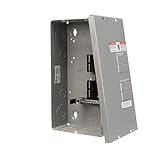
- The product is good to use
- The product is of high quality
- Manufactured in China
Washington, DC’s Building Permit Fee Schedule separately lists panel-board replacement and feeder-conductor replacement. That illustrates why permit fees and descriptions can differ even between nearby projects. Contact your local building department before work starts and put permit responsibility in the contract.
Free tools Windows power users keep installed
One-click scans. No signup required.
Questions for the building department
- Does replacing the panel at the same rating require an electrical permit?
- Does increasing service capacity require utility approval or a separate application?
- Who is allowed to pull the permit: the homeowner, a licensed contractor or either?
- Which inspections are required, and must power remain off until approval?
- Are there local requirements for smoke alarms, grounding, exterior equipment or panel location that could affect the scope?
Step-by-step: from assessment to final inspection
- Schedule an on-site assessment. Use a fully licensed and insured electrician. ENERGY STAR’s guidance says the electrician should be licensed and insured and either obtain a permit or follow electrical-code requirements. Read its consumer guidance before the visit.
- Describe future loads. Tell the electrician about planned chargers, heat pumps, electric water heating, ranges, solar or outbuildings. A project that is adequate today may be undersized for equipment you plan to add next year.
- Review the load calculation and scope. Confirm whether the recommendation is same-capacity replacement, service increase or both, and ask what evidence supports the proposed rating.
- Obtain comparable written proposals. Give each bidder the same appliance list and ask for the same line items, exclusions and permit assumptions.
- Confirm utility and permit scheduling. Before ordering equipment, identify who will arrange shutoff, meter work, permit issuance and inspections.
- Plan the outage and access. Protect food, medical equipment and security systems that depend on power. Keep the panel and service entrance accessible on installation day.
- Inspect the completed work. Verify circuit labels, breaker operation, panel cover installation and cleanup. Retain the permit, inspection approval, load calculation and equipment documentation.
How to compare two electrician proposals
Compare scope before comparing totals. Use this rubric for each written estimate.
| Comparison point | What to verify |
|---|---|
| Capacity | Same service rating or a documented increase supported by a load calculation. |
| Panel and breakers | Equipment specification, breaker spaces, compatibility and included circuit protection. |
| Conductors and meter | Whether service conductors, meter socket, disconnect and utility-side coordination are included. |
| Branch circuits | Which circuits are reused, extended, replaced, labeled or excluded. |
| Permits and inspections | Who pulls the permit, pays fees, schedules inspections and handles corrections. |
| Finish work | Whether wall, siding, trim or paint repair is included after a panel move. |
| Change orders | How newly discovered conditions alter the price and who must approve extra work. |
A lower bid is not necessarily cheaper if it excludes meter work, permit fees, circuit extensions or finish repair. Ask bidders to revise omissions before you choose, rather than comparing an all-in proposal with a panel-only number.
When symptoms justify an electrical assessment
NYSERDA lists flickering lights and frequently tripped breakers among signs that an electrical system may not be meeting demand. Its guidance also recommends an inspection for a panel approaching its stated 25-to-40-year useful-life range or for a panel under 100 amps. New appliances, EV chargers and heat pumps can exceed available capacity in some homes. These are reasons to obtain an electrician’s assessment, not automatic proof that the panel must be replaced.
- Lights flicker or dim when a large appliance starts.
- Breakers trip repeatedly after the circuit has been reset and the appliance load is understood.
- The panel is crowded, has no open spaces or shows heat, corrosion or damaged components.
- The service is under 100 amps and you are planning several new electric loads.
- The panel is near or beyond the 25-to-40-year useful-life range cited by NYSERDA.
- You are adding a Level 2 charger, heat pump or other dedicated high-demand equipment.
Stop using equipment that is hot, smoking, sparking or visibly damaged and seek urgent professional help. Do not remove the panel cover or attempt to install breakers yourself.
What’s actually slowing this PC down?
Pick the symptom - the matching free tool is one click away.
Common budgeting mistakes and how to avoid them
Assuming every new appliance requires 200 amps
One appliance does not establish the required service rating. The existing load, proposed equipment, breaker spaces, conductor capacity and local code all matter. Have the electrician perform the calculation before selecting a service size.
Best Value

- Single-phase, 125 Amp, 120/240-Volt
- Aluminum bus bar
- Galvanized carbon steel construction for corrosion resistance
- NEMA type-1 enclosure designed for use in indoor installations
- Main Lug - breaker not included
Confusing an empty breaker space with spare capacity
Spaces solve a physical breaker-placement problem; they do not prove that the service can carry additional demand. Ask for both a space assessment and a load calculation.
Comparing equipment prices instead of installed scope
The panel is only one component. Meter, service-wire, utility, permit, inspection, circuit and finish work can determine the total. Use itemized proposals with identical assumptions.
Leaving permit responsibility vague
Unpermitted work can create inspection, insurance and resale complications. Confirm the local rule with the building department and name the responsible party in the contract.
Treating an online example as a current quote
The $2,500–$4,000 smart-panel figure shown by ENERGY STAR is illustrative, and the DOE and NYSERDA ranges are planning references. Equipment availability, labor and local requirements change; verify the current price for your home.
A practical decision framework
Choose a same-capacity replacement when
The load calculation supports the existing service, the main issue is obsolete or damaged equipment, and you need safer equipment or more reliable connections. Confirm that the replacement panel accepts the existing service conductors and breakers or that the proposal includes any required changes.
Consider a service-capacity increase when
The calculated existing demand plus planned equipment exceeds the current service, the service conductors are undersized for the proposed rating, or the utility requires a larger service for the project. Budget for meter, conductor, utility, permit and inspection work rather than only a new enclosure.
Discuss load management when
The service is in good condition but simultaneous operation of several controllable loads creates a capacity challenge. Ask whether a code-compliant management system can meet your equipment needs, what loads it controls and what service limitations remain.
The Tool Desk
Outbyte PC Repair FREERepair Windows errors before they cause bigger problemsFix Now →Outbyte Driver Updater FREEFix the driver behind crashes, sound loss and screen glitchesFind Drivers →Bottom line for homeowners
Start with the scope, not a number. Published planning references span $1,000–$5,000 for a DOE-described renovation capacity upgrade and $3,000–$5,000 in NYSERDA’s New York guidance, while an illustrative smart-panel figure is $2,500–$4,000. Your installed cost depends on the load calculation, breaker and circuit work, service conductors, meter and utility requirements, permits, inspections and any wall or siding repair. Get at least two itemized proposals, verify local permitting and require the electrician to explain why the proposed capacity fits both the house you have and the equipment you plan to add.
Quick Recap

Product prices and availability are accurate as of the date/time indicated and are subject to change. Any price and availability information displayed on Amazon at the time of purchase will apply.

