The Tool Desk
Outbyte PC Repair FREERepair Windows errors before they cause bigger problemsFix Now →Outbyte Driver Updater FREEScan for outdated or missing drivers - takes under a minuteDriver Scan →
ThatPainter is reader-supported. When you buy through links on our site, we may earn an affiliate commission. Learn More
An electrical panel is the metal enclosure that receives electricity from the service equipment and routes it through protected branch circuits to your home’s lights, receptacles and appliances. Fuses or circuit breakers open the circuit when current exceeds the level the wiring is designed to carry. That interruption helps prevent overheated conductors, shocks and fires.
This U.S.-focused guide explains the parts you can identify safely, what a trip means, which warning signs require immediate help, and what to know before arranging panel work. It does not replace a licensed electrician, your utility’s instructions or the requirements of your local building department.
As an Amazon Associate I earn from qualifying purchases.
What’s actually slowing this PC down?
Pick the symptom - the matching free tool is one click away.
What an electrical panel does
Electricity enters a residence through service equipment near the point where the utility supply enters the building. From there, conductors feed the panel, where overcurrent protection devices divide power among branch circuits. A branch circuit may serve a group of receptacle outlets, lighting, a furnace, a water heater, a range or another appliance.
The U.S. Consumer Product Safety Commission (CPSC) summarizes the path plainly: “Electrical power enters the home through the electrical panel.” In a multifamily building, power can pass from a building-level panel to one or more panels serving individual dwelling units.
#1 Best Overall
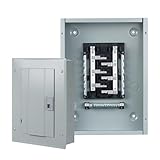
- HIGH PERFORMANCE 125A LOAD CENTER - Low voltage load center supports up to 125 amps, providing efficient and reliable power distribution to a variety of electrical equipment, ideal for residential and light commercial use
- NEMA 1 STEEL ENCLOSURE—Constructed of high-quality steel, this main lug load center enclosure meets NEMA 1 standards and is designed for indoor use. Its rugged construction ensures durable protection against dust and other contaminants, making it suitable for use in indoor spaces such as homes, offices, and light commercial applications, providing reliable protection for power distribution systems.
- EXCELLENT SAFETY AND PROTECTION - The main lug circuit breaker panel has 12 spaces that can accommodate up to 12 1-pole plug-in circuit breakers. Can provide excellent circuit protection. This makes the main load center a reliable choice for strengthening safety measures in the distribution system.
- RELIABLE&EASY TO INSTALL - This circuit breaker distribution box is designed for a simple installation process, supports single-phase, 120/240V AC systems, and adopts a three wire configuration. Its intuitive design make it an excellent choice for professionals and DIY enthusiasts, providing reliability and convenience for all users.
- COMPATIBILITY - The load center is compatible with QP Q225, Q230, Q130, Q120, THQL and other series circuit breakers, and is not suitable for 1/2 inch, 3/4 inch and other plug-in circuit breakers
HUD’s NSPIRE electrical standard defines a service panel as “An enclosure, cabinet, box, or panelboard containing overcurrent protection devices for the control of light, heat, appliances and power circuits.” The enclosure, door and dead-front cover keep people from accidentally contacting energized parts. Internal connections behind that cover are not a homeowner inspection area.
Parts you can identify from the outside
Enclosure and door
The enclosure is the cabinet mounted in a wall, utility room, garage or other approved location. Some panels have an outer door that swings open to expose the breaker handles; others have a cover that must be removed to reach the handles. A door or cover should close as designed and should not be blocked by stored items, shelving or equipment.
Quick wins for a faster PC:
Scan for outdated or missing drivers - takes under a minuteDriver Scan →Clear out junk files and repair common Windows errorsFree Scan →Dead-front cover
The dead front is the protective interior cover behind the outer door. It shields energized bus bars and terminals while allowing the breaker handles to protrude. Never remove it to look for a loose wire, test a conductor or replace a breaker. Even with the main breaker off, parts of some panels can remain energized.
Main disconnect
A main breaker or other disconnect can shut off power to the whole dwelling or to a defined group of circuits. In some installations the service disconnect is outside or in a separate enclosure. Its location and labeling vary by property, so do not assume the largest handle is the only point that can be energized.
Branch-circuit breakers and fuses
Each protective device is matched to a circuit’s permitted ampacity and the equipment it serves. Labels identify intended loads, but labels can be incomplete or wrong in older homes; a label is not proof that a circuit was wired correctly.
Rank #2

- EXPANDED CAPACITY FOR RESIDENTIAL POWER DISTRIBUTION – Whether you're expanding your home or upgrading an older system, this PowerMark Gold panel delivers with 20 spaces and 20 circuits — all neatly housed in a compact, indoor-ready load center.
- INCLUDES MAIN BREAKER AND CONTRACTOR KIT – No need to shop around for compatible breakers. This value pack comes factory-equipped with a 100 Amp main breaker plus three 20A single-pole and one 30A double-pole breakers to get you started right away.
- BUILT FOR LONGEVITY – The NEMA 1 rated galvanized steel enclosure resists rust, while the tin-plated copper bus bar maximizes conductivity for stable, long-lasting power distribution. A self-adjusting dead front adds another layer of user safety.
- FLEXIBLE, FAST & CODE-COMPLIANT – With full-length neutral bars, split neutral holes rated for 14–4 wire, and compatibility with THQP, GFCI, AFCI, and Dual Function breakers, this panel is designed to meet modern wiring needs and install quickly.
- RELIABLE SHORT-CIRCUIT PROTECTION – With a 22 kAIC interrupt rating, this 120/240V, single-phase, 3-wire load center offers dependable protection against high fault currents, providing peace of mind for households with growing electrical demands.
How overcurrent protection works
Wires are designed to carry a limited amount of current without dangerous heating. An overcurrent device opens the circuit when current rises above its safe rating, such as during a short circuit or a sustained overload. Opening the circuit is a protective action, not evidence that the device itself has repaired the underlying problem.
Fuses
A fuse contains a link that melts when excessive current flows. It operates once and must be replaced with a fuse of the exact type and rating specified for that circuit. Installing a larger fuse defeats the intended protection and can allow wiring to overheat.
Circuit breakers
A breaker trips to an open position when its sensing mechanism detects an overcurrent. After the cause has been addressed, the handle can generally be reset. A reset does not make a damaged appliance, wet receptacle or overloaded circuit safe; repeated trips are a signal to stop and investigate with qualified help.
| Characteristic | Fuse | Circuit breaker |
|---|---|---|
| Response to excessive current | Melts its internal link and opens the circuit | Trips open through a mechanical mechanism |
| After operation | Single-use; replace with the correct listed type and rating | May be reset after the cause is corrected |
| Safe homeowner rule | Never substitute a higher rating or an improvised object | Never hold, tape or wedge the handle in position |
| Correct rating | Must match the circuit, wiring and equipment requirements; a qualified professional should resolve uncertainty | |
What a tripped breaker usually means
A trip can result from too many loads operating on one circuit, a motor starting, a failed appliance, damaged wiring or a short circuit. A single trip with no other symptom may be resolved by unplugging or switching off some loads and resetting once. If the breaker trips immediately, trips again later, or a particular appliance causes the trip, leave that equipment disconnected and arrange an evaluation.
- Turn off or unplug the equipment on the affected circuit only if you can do so without touching anything hot, wet, sparking or damaged.
- Stand on a dry surface and keep hands away from exposed conductors. Operate only the breaker handle through the intended opening; do not remove covers.
- Move the tripped handle fully to the off position, then to on, if the panel and surrounding area are dry, cool and undamaged.
- Monitor the circuit. A repeat trip, burning smell, buzzing, heat or abnormal appliance behavior means stop resetting and call a qualified electrician.
If smoke, flames or active arcing are present, leave the area and call emergency services. For arcing or sparking at service equipment, CPSC advises not touching or correcting the equipment and calling the electric power company immediately.
Free tools Windows power users keep installed
One-click scans. No signup required.
Rank #3

- HIGH PERFORMANCE 125A LOAD CENTER - Low voltage load center supports up to 125 amps, providing efficient and reliable power distribution to a variety of electrical equipment, ideal for residential and light commercial use
- NEMA 1 STEEL ENCLOSURE—Constructed of high-quality steel, this main lug load center enclosure meets NEMA 1 standards and is designed for indoor use. Its rugged construction ensures durable protection against dust and other contaminants, making it suitable for use in indoor spaces such as homes, offices, and light commercial applications, providing reliable protection for power distribution systems.
- EXCELLENT SAFETY AND PROTECTION - The main lug circuit breaker panel has 8 spaces that can accommodate up to 8 1-pole plug-in circuit breakers. Can provide excellent circuit protection. This makes the main load center a reliable choice for strengthening safety measures in the distribution system.
- RELIABLE&EASY TO INSTALL - This circuit breaker distribution box is designed for a simple installation process, supports single-phase, 120/240V AC systems, and adopts a three wire configuration. Its intuitive design make it an excellent choice for professionals and DIY enthusiasts, providing reliability and convenience for all users.
- COMPATIBILITY - The load center is compatible with QP Q225, Q230, Q130, Q120, THQL and other series circuit breakers, and is not suitable for 1/2 inch, 3/4 inch and other plug-in circuit breakers
Warning signs that should not be ignored
CPSC’s Guide to Home Wiring Hazards identifies the following panel warning words: “Sizzles/Buzzes, Overheating, Odors, Power Outages.” Treat any of them as a reason for qualified evaluation, especially when the symptom is new, worsening or localized to the panel.
- Sizzling, buzzing or crackling: sound can indicate arcing, a failing device or a loose connection.
- Overheating: a hot door, discolored metal, melted plastic or a burning sensation is abnormal.
- Odors: acrid, fishy or burnt-plastic smells warrant immediate attention.
- Unexpected outages: frequent trips, flickering or portions of the home losing power can indicate a circuit or service problem.
- Visible damage: burns, smoke marks, melted material, broken handles or missing filler plates compromise the enclosure.
- Water, rust or corrosion: contamination can create shock and fire hazards and requires professional assessment.
- Blocked access: a panel should be reachable and openable without moving heavy objects, dismantling structures or taking a risky action.
Do not spray cleaner, insert tools, tighten terminals or remove the dead front in response to any of these conditions.
A safe, visible inspection checklist
Homeowners and renters can check conditions that are visible without opening the panel. Do this only when the area is dry and there is no heat, smoke, odor, buzzing or sparking. Stop immediately if any danger sign appears.
- Confirm that the panel door and exterior are intact and close normally.
- Keep a clear working area in front of the panel; do not use it as a storage shelf.
- Look for water stains, rust, corrosion, soot, melted plastic or discoloration on accessible surfaces.
- Check that breaker handles are not taped, wedged or physically damaged.
- Keep labels legible, but treat them as information to verify rather than proof of circuit condition.
- Note which appliances or rooms lose power when a breaker trips, without repeatedly cycling the device.
HUD’s NSPIRE standard is written for its defined housing-inspection program. It lists the enclosure, internal cover, external cover or door where designed, dead front, breakers and fuses as common components, while excluding connections behind the dead front from the accessible inspection scope. Local housing or electrical requirements may differ.
When to call an electrician, utility or emergency services
Call emergency services
Call emergency services for fire, smoke that is spreading, an electrical shock injury or an immediate threat to people. Evacuate rather than attempting to reach the panel through smoke or flames.
Rank #4
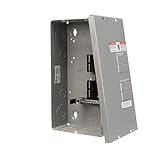
- The product is good to use
- The product is of high quality
- Manufactured in China
Call the electric utility
For arcing or sparking at service equipment, stay clear and contact the electric power company immediately, as CPSC recommends. Utility equipment may be on the supply side of the customer’s disconnect and is not a homeowner repair.
Call a qualified electrician
Arrange professional service for recurring trips, unexplained outages, heat, odor, buzzing, damaged breakers or fuses, water or corrosion, missing covers, suspected overloaded circuits, or any work inside the enclosure. A qualified electrician can de-energize equipment correctly, diagnose the cause and verify repairs.
Tell a landlord or property manager
Renters should report symptoms in writing and follow emergency procedures in the lease or building. Do not remove a cover or attempt a replacement yourself. In multifamily buildings, the affected equipment may be a dwelling-unit panel, a shared building panel or utility-owned service equipment.
Recommended Free Tools
Why a higher-rated breaker is dangerous
Replacing a tripping breaker with a larger one, or fitting a larger fuse, does not create more capacity. The wiring and devices downstream may still be rated for the original circuit. The higher device can allow current that overheats conductors before protection operates. CPSC’s consumer guidance says to seek qualified help for recurring problems rather than changing the rating.
The same caution applies to repeatedly resetting a breaker, using extension cords as permanent wiring, or adding power strips to compensate for inadequate circuits. The correct remedy may be load redistribution, appliance repair, wiring repair, a new circuit or a service upgrade; only an inspection can determine which.
Best Value

- Single-phase, 125 Amp, 120/240-Volt
- Aluminum bus bar
- Galvanized carbon steel construction for corrosion resistance
- NEMA type-1 enclosure designed for use in indoor installations
- Main Lug - breaker not included
Planning panel replacement or an upgrade
A panel should not be selected by appearance or breaker count alone. A professional evaluates the service capacity, the calculated load, existing conductors, grounding and bonding, available circuit spaces, enclosure location and environmental rating, and compatibility with listed protective devices.
| Decision area | Questions to resolve before work |
|---|---|
| Service capacity | What is the existing service rating, and does a load calculation support present and planned equipment? |
| Circuit spaces | Are additional circuits needed for heating, cooking, electric vehicles, workshops or other major loads? |
| Breaker compatibility | Are replacement breakers listed for that specific panelboard, rather than merely fitting physically? |
| Location and enclosure | Is the panel exposed to moisture, corrosion, impact or restricted access, and is the enclosure suitable? |
| Protective features | Which ground-fault, arc-fault, surge or other protections are required by the locally adopted code for this project? |
| Permits and inspection | Does the authority having jurisdiction require a permit, inspection, utility coordination or a service shutdown? |
Ask for a written scope identifying what is being replaced, which circuits are included, how power will be interrupted, and what inspection or utility steps apply. Do not energize a newly installed panel until the installer has completed required testing and approvals.
Do these 3 things before closing this tab:
1Clear out junk files and repair common Windows errors2Fix the driver behind crashes, sound loss and screen glitches3Repair Windows errors before they cause bigger problemsCode, standards and local jurisdiction
NFPA 70, commonly called the National Electrical Code, is a model installation code. NFPA lists a 2026 edition, but publication of that edition does not mean every U.S. state, county or city has adopted it. Jurisdictions may use an earlier edition or amend requirements. The local building department or authority having jurisdiction can tell you which code edition, permits and inspections apply to your address.
OSHA definitions distinguish service equipment—the equipment near the point of entry intended as the main control and cutoff—from branch-circuit equipment. OSHA’s workplace rules are not a DIY homeowner procedure. A codebook is a technical reference, not authorization to work on energized equipment.
Readers who need the primary technical reference can consult the 2026 National Electrical Code edition. The publisher listed the softbound edition at USD $169 and the spiral-bound edition at USD $179 when accessed October 13, 2026; prices and stock can change. Local adoption still controls what is enforceable at a property.
Electrical-panel fire statistics: how to read the historic figure
The CPSC published an estimate of more than 28,000 fires attributed to home electrical distribution systems as an annual average for 1999–2003 on its National Electrical Code page on October 30, 2008. That is a historical measurement period, not a current annual count. It illustrates why correctly rated overcurrent protection and sound wiring matter, but it should not be presented as a modern fire total.
Questions to prepare for a professional visit
- Which breaker or fuse operates, and how often?
- What was running when the event occurred?
- Did you notice heat, odor, buzzing, flicker, water or visible damage?
- Is the symptom limited to one room, one appliance or the whole dwelling?
- Has any breaker, fuse, panel or appliance been replaced recently?
- Are you planning new high-load equipment or remodeling that will change demand?
Photograph only the closed, safe exterior if useful; never photograph by opening the dead front or reaching into the cabinet. Give the electrician the property’s age, prior repair records and any utility notifications you have.
Quick Recap

Product prices and availability are accurate as of the date/time indicated and are subject to change. Any price and availability information displayed on Amazon at the time of purchase will apply.

