Recommended Free Tools
PC Slower Than It Used to Be?
Free scan · Windows 10 & 11
Outdated Drivers Are Slowing You Down
What’s actually slowing this PC down?
Pick the symptom - the matching free tool is one click away.
Free scan · exact hardware match
Windows Errors? Fix Them Before They Spread
Free scan · no reinstall
ThatPainter is reader-supported. When you buy through links on our site, we may earn an affiliate commission. Learn More
Door hardware is becoming a coordinated building system rather than a collection of hinges, closers and locks. In homes, mobile credentials and phone-wallet ecosystems are expanding. In commercial projects, automatic entrances are being designed around accessibility, diagnostics, energy performance, weather resilience and maintainability as well as appearance.
As an Amazon Associate I earn from qualifying purchases.
The Tool Desk
Outbyte PC Repair FREEClear out junk files and repair common Windows errorsFree Scan →Outbyte Driver Updater FREEFix the driver behind crashes, sound loss and screen glitchesFind Drivers →The practical implication for architects and designers is straightforward: specify the complete door assembly and its operating service, not a technology label. Confirm the exact lock or operator, credential method, code requirements, power and network needs, emergency operation, documentation and long-term support before approving a product.
What the latest door hardware trends actually mean
“Emerging” covers two related but distinct markets. Residential smart locks connect an individual door to a phone, wallet, app or home platform. Commercial entrance systems connect operators, sensors, access control, monitoring and maintenance workflows to a building. A feature that is useful in a house may be unsuitable for a hospital, school, apartment lobby or data center.
#1 Best Overall
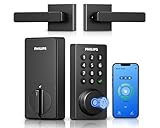
- Connect to 2.4GHz WiFi, No Hub Needed:Connect your Philips 4200 Series Wifi Door Lock Deadbolt directly to your home WiFi network—no extra hub or bridge required. Manage your door anytime, anywhere through your smartphone. 𝙉𝙊𝙏𝙀: Please keep the smart lock within 33 ft (10 m) of your Wi-Fi router. Minimize obstacles such as walls, metal objects, and interference sources for a stronger connection.
- App Control with Real-Time Access:Control smart lock remotely via the Philips Home Access App: lock/unlock, manage user codes/fingerprints, check your door lock status, and monitor access history in real time, etc, whether you’re at work or on vacation.
- Voice Assistant Compatible:Hands full? No problem. Use voice commands with Alexa or Google Assistant to lock or check the status of your front door lock set effortlessly.
- Versatile Passcode Options: This Keypad deadbolt supports permanent, one-time, periodic, and recurring PIN codes—perfect for family, guests, housekeepers, or Airbnb use. Easily manage and share access through the app for ultimate convenience and control.
- 0.3S Fingerprint Fast Access:With this fingerprint keyless entry door lock, unlock your door in 0.3 seconds with fast, secure biometric access. Store multiple fingerprints for family and trusted visitors.
Manufacturers are actively promoting these directions, but the available evidence does not establish a market-wide adoption ranking. Treat the trends below as design and product-development signals, then verify each requirement for the project.
| Context | Capabilities being emphasized | Questions that determine suitability |
|---|---|---|
| Residential smart access | Phone credentials, wallet keys, app control, Matter-based setup and multiple wireless methods | Does the exact lock support the resident’s phone, wallet, region, backup entry and existing door preparation? |
| Commercial automatic entrances | Accessibility, modular components, remote diagnostics, monitoring, assisted opening, sealing and climate resilience | Can the complete opening meet code, egress, safety, energy, maintenance and integration requirements? |
Connected credentials and the move toward interoperability
Mobile wallets are becoming another key
On March 2, 2026, Samsung announced Wallet Digital Home Key, built on the Aliro framework. After a compatible lock is set up in SmartThings using Matter, a supported phone may unlock through an NFC tap, UWB proximity or the app. Which method is available depends on the phone, lock and software capabilities. Samsung named Aqara, Nuki, Schlage and Xthings as participating brands and said rollout began in select regions in March 2026.
Free tools Windows power users keep installed
One-click scans. No signup required.
That announcement demonstrates a direction, not universal compatibility. A specification should identify the exact lock model, phone operating-system support, wallet enrollment process, geographic availability and whether a credential works when the phone battery is low or the network is unavailable. Ask how an owner or facility manager issues, suspends and revokes keys, and how a resident enters if the phone, app or cloud service fails.
Standards help, but do not certify every product
IEEE 2811-2024 is an active standard. The IEEE record, published April 4, 2025, describes a smart-lock architecture that includes a lock, master and visitor functions, cloud server and gateway, along with interfaces, security, privacy and processing considerations.
Rank #2

- 𝐅𝐥𝐞𝐱𝐢𝐛𝐥𝐞 𝐖𝐚𝐲𝐬 𝐭𝐨 𝐔𝐧𝐥𝐨𝐜𝐤: Unlock the way you want: app, passcode, fingerprint, physical key, or voice via Alexa/Google Assistant. Everyone in the family can choose what works best — convenience meets flexibility. Batteries are not included.
- 𝐔𝐧𝐥𝐨𝐜𝐤 𝐅𝐫𝐨𝐦 𝐀𝐧𝐲𝐰𝐡𝐞𝐫𝐞: Built-in Wi-Fi lets you lock and unlock your door remotely anytime, anywhere from your smartphone — no extra hub needed. Stay connected and in control, even when you’re at work or on vacation. Only support 2.4Ghz network. Keep the router and lock with 65ft for better remote control.
- 𝗩𝗼𝗶𝗰𝗲 𝗖𝗼𝗻𝘁𝗿𝗼𝗹 𝗥𝗲𝗮𝗱𝘆: Pair with Alexa or Google Assistant to unlock or lock with your voice. Great for when your hands are full or you're relaxing at home and still welcome who’s at the door. Note: Please log in to your own Google or Alexa account first before use Voice Control and make sure your network connection is stable.
- 𝗬𝗼𝘂𝗿 𝗙𝗶𝗻𝗴𝗲𝗿𝘀 𝗶𝘀 𝗬𝗼𝘂𝗿 𝗞𝗲𝘆: Just one touch unlocks the door instantly. No need to search for keys — Your fingers is your keys, perfect for busy mornings. Philips wifi lock store multiple prints for easy family access.
- 𝐂𝐨𝐝𝐞 𝐀𝐜𝐜𝐞𝐬𝐬 𝐌𝐚𝐝𝐞 𝐒𝐢𝐦𝐩𝐥𝐞: Create up to 100 custom passcodes for family, friends, or renters. Easily share unlimited one-time or scheduled codes to guests, cleaners, or deliveries— no need to be home to open the door.
A standard’s existence does not prove that a particular lock implements it, has been certified to it or will interoperate with another vendor’s platform. Require a manufacturer’s current conformity or certification statement for the exact model, plus an integration document showing supported APIs, gateways, credential formats and failure behavior. If a project depends on a standard, write that dependency into the schedule and acceptance tests rather than relying on a logo or a general product-family claim.
Automatic entrances are being treated as building systems
Accessibility, service and operations are part of the specification
An ASSA ABLOY article dated December 16, 2025, groups commercial entrance trends around accessibility, modular components, digital diagnostics and remote monitoring, customized finishes, efficient sealing and climate resilience. These are manufacturer-reported priorities, but they describe why an automatic entrance affects more than circulation: it influences user effort, service calls, energy exchange, appearance and the operator’s ability to diagnose faults.
Quick wins for a faster PC:
Scan for outdated or missing drivers - takes under a minuteDriver Scan →Clear out junk files and repair common Windows errorsFree Scan →Fix the driver behind crashes, sound loss and screen glitchesFind Drivers →Design the opening as an assembly that includes the door leaf, frame, operator, sensors, controls, access reader, safety devices, power supply and any connection to a building-management or security system. Confirm which components can be replaced independently and whether a failed sensor leaves the door safe, locked, unlocked or manually operable.
Remote credentials and specialist openings broaden the use cases
dormakaba’s 2025/26 annual report gives examples of remote credential management and audit trails for off-grid infrastructure, integration of data-center rack locks with perimeter access systems, intelligent sliding doors and assisted opening. These examples show that “door hardware” now includes infrastructure and specialist commercial openings, not only a standard office entrance.
Rank #3

- 6 Ways to Unlock: Unlock with a touch for less than 1s with fingerprint lock. You can also open your front door lock via the eufy Security app, using the keypad or physical key, from Apple Watch, or use your voice with Alexa/Google Voice Assistant.
- 8 Months Battery Life: With 8 AA batteries, Smart Lock C220 runs around 8 months. Experience ultimate convenience and peace of mind with our long-lasting power solution. *May vary depending on the frequency of the lock being used.
- Self-learning AI: Fingerprint door lock recognition gets more precise with every touch, so you don't have to try agian and again to get in. Never be awkward or upset at unlocking the door.
- Control from Anywhere with Built-in Wi-Fi: No bridge required, you can control your wifi smart lock from anywhere via the eufy Security app. Easy setup.
- Integrated eufy ecosystem: If you have a eufy doorbell, you can add your wifi door lock to your routines and control devices together for keyless entry within the eufy Security app.
For a remote site, document how credentials are cached, synchronized and revoked without a continuous connection. For a data center, define whether rack access events must correlate with perimeter events and how long records are retained. For an assisted-opening door, coordinate activation, opening speed, obstruction detection, closing and manual use with the users and traffic patterns the building actually has.
Accessibility requirements that affect every hardware decision
Place and shape operable hardware correctly
The U.S. Access Board’s ADA Standards generally place operable door and gate hardware at least 34 inches and no more than 48 inches above the finished floor or ground. The advisory material notes that hardware operable with a closed fist or a loose grip accommodates the broadest range of users; hardware requiring simultaneous hand and finger movements is not recommended.
Outdated Drivers Are Slowing You Down
One free scan finds every outdated or missing driver and matches the right update for your exact hardware.Free scan · exact hardware matchWindows Errors? Fix Them Before They Spread
Repair common Windows errors and clear accumulated junk for a smoother, more stable PC - no reinstall needed.Free scan · no reinstallUse those dimensions as a coordination starting point, then verify the full applicable standard, exceptions and jurisdiction. Check the pull side and push side, approach clearances, maneuvering space, opening width, thresholds, door force, vision panels and the relationship between a reader, handle and other controls. A handle can be at the correct height and still be unusable if a wall, furniture or a security turnstile blocks the required floor space.
Verify closing and automatic-opening behavior
In the applicable ADA context, the standards state a five-second minimum for a door closer to move from 90 degrees open to 12 degrees from the latch. That timing is one requirement within a larger set of conditions; it is not a universal setting for every door type or jurisdiction.
Rank #4
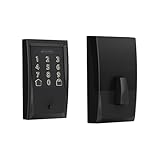
- ANYWHERE ACCESS: With built-in WiFi compatibility, you can easily and securely connect your Schlage Encode Deadbolt to your home WiFi network to control and monitor your home from anywhere with the Schlage Home app
- PEACE OF MIND: Lock and unlock from anywhere, manage up to 100 access codes for keyless entry, view lock history, receive customizable notifications and easily manage multiple locks at once - all when paired to the Schlage Home app and connected to a secure WiFi network
- VOICE CONTROL: Works with Alexa and Google Home for optional, hands-free convenience when paired with the Schlage Home app and a voice enabled device
- ADVANCED SECURITY: Secure, encrypted connection; built-in, customizable alarm for door movement and forced entry attempts; fingerprint-resistant touchscreen; certified highest residential Security, Durability and Finish rating by BHMA industry experts
- EASY INSTALL: Install in minutes with just a screwdriver, no hardwiring required; Snap ‘n Stay design helps keep the lock on the door so both hands are free; fits standard doors with 1-3/8 in to 1-3/4 in door thickness and 2-3/8 in or 2-3/4 in backset
Automatic opening can reduce physical effort, but it does not by itself establish compliance. Coordinate activation zones, detection of slow-moving users, door speed, hold-open behavior, closing force, emergency release, fire-rated assemblies and egress rules. Have the authority having jurisdiction review the final combination of hardware and controls.
Energy efficiency, weather resilience and documentation
Specify tested assembly performance
ASSA ABLOY describes tight-sealing frames, insulation and efficient operation as priorities for commercial entrances and highlights impact-rated systems for storm-prone areas. These are company-described priorities and examples. Actual performance depends on the tested door-and-frame assembly, installation quality, operating cycle, exposure and local code.
Ask for the test standard, assembly configuration, pressure or impact conditions, allowable leakage and installation limitations. Do not infer whole-building energy savings from a single weather seal, low-power operator or control feature. A door that opens too often, remains open too long or is installed out of alignment can defeat the intended performance.
Use product-level environmental declarations
dormakaba reports sustainability-related declarations for more than 281 products in its 2025/26 annual report. The company describes environmental product declarations (EPDs) as lifecycle-impact documents that can support green-building certifications. The figure is a company-reported product count, not an industry total.
Best Value

- Passcode Entry: This keypad lock offers 20 access codes for family use and a temporary code for single-use guest entry
- One-Time Code: A one-time PIN code can be set for door opening and will automatically be deleted after use
- Smart Locking: Features an automatic door lock that can be set to lock in 10-99 seconds (off by default) and one-touch auto-lock by pressing and holding any key on the keypad for 2 seconds
- Long Battery Life & Low Battery Indicator: Powered by 4 AA batteries (not included), lasts up to 365 days. A red light indicator alerts you when battery level drops below 15%
- Security Deadbolt: Provides reliable home protection with its sturdy aluminum alloy construction, weather resistance (IP54), durability, anti-peeping user code protection, low battery indicator, and solid lock cylinder
Request the EPD or other environmental documentation for the exact product and declared unit. Check the manufacturing scope, service-life assumptions, replacement parts, end-of-life treatment and whether the document covers the complete assembly or only one component. A declaration supports transparent comparison; it does not automatically prove that one opening has a lower whole-building impact.
Independent reader supportYour contribution helps us test, update, and keep practical guides available for everyone.A specification workflow for emerging hardware
- Define the opening and users. Record building type, occupancy, traffic volume, user abilities, operating hours, climate exposure, security zones and whether the door is on an egress path.
- Choose the operating concept. Decide whether the opening is manually operated, power-assisted, fully automatic, locked, access-controlled or a combination. State what must happen during power, network, fire-alarm and equipment failures.
- Map credentials and permissions. For smart access, identify phone and wallet support, NFC or UWB needs, app enrollment, visitor credentials, offline operation, audit records and revocation authority.
- Check interoperability. List existing access-control, property-management, visitor-management, security and building-management systems. Require written interface support for the exact model; do not assume that Matter, Aliro or another protocol guarantees every integration.
- Coordinate accessibility and code. Verify hardware height, operability, maneuvering clearance, opening width, force, closer timing, activation, safety sensors, fire rating and egress with the applicable jurisdiction.
- Plan power and connectivity. Show circuits, standby power, network paths, gateways, battery replacement, surge protection and a mechanical or staffed backup-entry method.
- Specify environmental evidence. Request tested air, water, thermal, impact or durability data appropriate to the exposure, plus EPDs or other product-level declarations where sustainability reporting is required.
- Write commissioning and maintenance requirements. Require installation settings, credential tests, sensor and safety tests, event-log verification, user training, spare parts, software-support terms and a documented response when remote services are unavailable.
How to compare complete systems
Compare exact assemblies and models, not broad labels such as “smart lock” or “automatic door.” The following matrix keeps residential and commercial decisions on the same disciplined footing while allowing their requirements to differ.
| Comparison axis | Residential question | Commercial question |
|---|---|---|
| User and building type | Who lives there, and who needs temporary access? | What traffic, occupancy, security zones and staff procedures apply? |
| Credential method | Phone wallet, app, keypad, key or combination? | Card, mobile credential, biometric reader, remote approval or mixed methods? |
| Interoperability | Will the exact lock work with the chosen phone, home platform and region? | Will it exchange commands and events with access control and building systems? |
| Security and privacy | How are keys issued, revoked and recovered after phone loss? | What are the audit, retention, role-based access and incident-response procedures? |
| Accessibility and code | Can every intended user operate the hardware and reach it safely? | Does the assembly meet accessibility, fire, egress and safety requirements? |
| Installation and backup | Does the existing door, bore, power and wireless signal support it? | What wiring, network, standby power, gateways and fallback entry are required? |
| Maintenance lifecycle | Who replaces batteries and obtains support after a platform change? | Are parts, firmware, diagnostics, training and service response available for the planned life? |
| Energy and weather | Is the lock exposed to rain, cold or heat that affects batteries and seals? | What tested sealing, insulation, impact and operating data apply to the assembly? |
| Finish and integration | Does the lock suit the door style without weakening it? | Do operators, readers, sensors and finishes coordinate with the architectural design? |
Common failure modes and practical fixes
- Assuming a protocol means plug-and-play. Fix it by obtaining model-specific compatibility and certification documents, then testing enrollment, unlock, event reporting and revocation before handover.
- Designing for a phone without a fallback. Provide a documented mechanical, keypad, staffed or other approved backup method, and test it during power and network outages.
- Treating automatic opening as automatic compliance. Recheck clear floor space, force, opening width, sensor coverage, closing behavior, fire protection and egress with the authority having jurisdiction.
- Using a vendor performance claim as a building guarantee. Separate tested assembly data from marketing claims and model the opening’s cycle, exposure and installation conditions.
- Ignoring service access. Ensure authorized staff can reach batteries, controllers, sensors and mechanical overrides without creating a security gap.
- Leaving credentials active after a change of occupant or staff member. Assign an owner for the credential register, define revocation deadlines and verify audit trails at turnover.
- Specifying a finish before checking the environment. Confirm the finish, seal and hardware materials are suitable for the project’s moisture, pollutants, cleaning regime and weather exposure.
What to require in submittals and handover documents
A useful submittal package identifies the exact model and revision, compatible phones and regions, supported credential methods, network and power diagrams, emergency and offline behavior, accessibility data, fire and egress listings, environmental test results, maintenance intervals, spare-part availability and software-support terms. Include installation tolerances and commissioning settings so the installer cannot substitute a visually similar but functionally different component.
At handover, require an administrator account transfer, credential-enrollment instructions, revocation procedure, event-log export, backup-entry instructions, battery and sensor replacement method, warranty contacts and a record of tested failure scenarios. For commercial openings, add a preventive-maintenance schedule and a decision tree for manual operation, safe shutdown and emergency release.
What is established—and what remains project-specific
Mobile credentials, connected access, automated operation, diagnostics, inclusive hardware, efficient sealing and environmental documentation are all active directions in door hardware. The Samsung announcement and IEEE standard show movement toward ecosystem and architecture-level coordination; manufacturer publications show how commercial suppliers are packaging automation as an operational service.
There is no independent market-wide adoption statistic in the cited material, so do not present any one trend as dominant. The reliable design approach is to test the exact assembly against the building’s users, code obligations, integration stack, climate, maintenance capacity and emergency plan.
Recommended Free Tools
Quick Recap

Product prices and availability are accurate as of the date/time indicated and are subject to change. Any price and availability information displayed on Amazon at the time of purchase will apply.

