Outdated Drivers Are Slowing You Down
Free tools Windows power users keep installed
One-click scans. No signup required.
Outbyte Driver Updater · freeOne free scan finds every outdated or missing driver and matches the right update for your exact hardware.
Scan My Drivers Free →ThatPainter is reader-supported. When you buy through links on our site, we may earn an affiliate commission. Learn More
EPS and XPS are both rigid polystyrene insulation boards, but they are not interchangeable by default. EPS (expanded polystyrene) is made by molding expanded beads, while XPS (extruded polystyrene) is formed by extruding molten polystyrene through a die. That difference produces different cell structures and typical behavior. A general Building Science Corporation guide places EPS at approximately R-4 per inch and XPS at approximately R-5 per inch, but those are reference values rather than guarantees for every product. The correct choice depends on the board’s rated properties, thickness, moisture exposure, loads, climate, fire requirements and the way the entire wall, roof, slab or foundation assembly is designed.
For a reliable specification, identify the exact product type and ASTM classification, then compare its tested thermal resistance, compressive strength, water absorption and vapor permeance at the thickness and temperature relevant to the project.
As an Amazon Associate I earn from qualifying purchases.
PC Slower Than It Used to Be?
A free scan shows the junk files, broken settings and background clutter dragging Windows down - then fixes them in one click.Free scan · Windows 10 & 11Crashes, No Sound, or Screen Glitches?
Random freezes, missing sound and display glitches usually trace back to one bad driver. Find and replace yours safely.Free scan · under a minuteWhat is the basic difference between EPS and XPS?
EPS is molded from expanded beads
Expanded polystyrene starts as small plastic beads containing a blowing agent. Steam expands the beads, and the expanded beads are placed in a mold and fused into a board. The result is a cellular material whose density, bead structure and performance depend strongly on the EPS type and grade.
XPS is extruded from molten polystyrene
Extruded polystyrene is made by melting polystyrene, mixing it with a blowing agent and forcing the mixture through a die. It cools into a continuous board with a relatively regular closed-cell structure. The manufacturing route is why XPS is commonly described as having more uniform moisture resistance and a somewhat higher nominal R-value per inch than general-purpose EPS.
#1 Best Overall

- Dual-Layer Insulation Design: Double-layer foam panels help reduce gaps around window vent openings and support airflow through the vent kit.
- Helps Limit Heat, Light and Noise: The 2-layer foam can help reduce heat transfer, reduce light entry, and lower outside noise.
- Adjustable Length up to 50 in: Includes 3 foam panels that can be combined up to 50 in, suitable for many sliding window vent panels
- Easy to Cut and Install: Trim the foam panels to match your window sealing plates; install using the included double-sided tape.
- Wide Compatibility: Works with many portable AC window vent kits, dryer vent kits, and other window ventilation systems for sealing around vent openings.
Neither manufacturing description tells you enough to select a board by itself. EPS products are available in multiple densities and ASTM types, and XPS products also have different ratings, facings and thicknesses. Treat “EPS” and “XPS” as material families, not as single universal specifications.
EPS and XPS compared at a glance
| Property | EPS | XPS | What the difference means |
|---|---|---|---|
| Manufacturing | Polystyrene beads expanded and fused in a mold | Molten polystyrene and blowing agent extruded through a die | Different cell structures lead to different typical moisture and thermal behavior. |
| Approximate R-value per inch | About R-4 in a general Building Science Corporation guide | About R-5 in the same guide | Use current product data tested at the same mean temperature; these are not universal ratings. |
| Water behavior | Transmission varies with density, type and grade | Generally described as more water-resistant because of its regular cell structure | Neither description makes a board automatically waterproof; detailing and exposure still control performance. |
| Vapor permeance | Varies with product, density, thickness and facing | Also varies with thickness; one cited example changes from 1.1 perms at 1 inch to 0.55 perms at 2 inches | Permeance can affect where an assembly can dry and whether a vapor-retarder classification applies. |
| Compressive strength | Varies by ASTM type and product | Varies by ASTM type and product | Check the tested value for slabs, foundations, roofs or any location exposed to loads or impact. |
The approximate R-values and the example permeance figures come from Building Science Corporation’s Guide to Insulating Sheathing. They are useful for understanding the usual distinction, not for substituting for a manufacturer’s current declared value.
Which provides more insulation per inch?
For a quick comparison, the cited guide gives approximately R-4 per inch for EPS and approximately R-5 per inch for XPS. A one-inch difference in a board specification can therefore matter when framing depth, trim alignment or a retrofit detail is tight. However, the numbers are approximate and come from a general guide published around 2007. Current products can differ by density, blowing-agent formulation, facing, test method and mean test temperature.
Compare products only on a like-for-like basis:
- Use the manufacturer’s published R-value for the exact board, not a generic value for the material family.
- Check the mean temperature used for the test. R-value changes with temperature, so values tested under different conditions are not directly equivalent.
- Compare the installed thickness and account for joints, fasteners, thermal bridges and framing rather than treating the board as the entire assembly.
- Confirm whether the published number is a long-term or design value where the manufacturer provides more than one figure.
Higher nominal R-value does not automatically make XPS the better choice. If an EPS board meets the required thermal resistance at the available thickness and has the necessary moisture and strength ratings, it may be the more appropriate specification.
How do EPS and XPS handle water and humidity?
Why XPS is often selected for wet exposure
The more regular closed-cell structure of XPS is generally associated with greater resistance to water transmission than many EPS products. That characteristic can be useful in locations such as below-grade walls, protected foundation insulation or other details where incidental wetting is credible. It does not eliminate the need for drainage, flashing, a capillary break, sealed joints and a water-control layer.
Why EPS performance must be tied to density and grade
EPS is not one material with one absorption rate. Density, bead structure, thickness and the specified ASTM type all influence water transmission. A Building Science Corporation property table lists 3% water absorption for one-inch Type II EPS and 0.10% for an example XPS entry. Those are specific table entries, not universal limits for every EPS or XPS board, and the test methods and product constructions must be checked before using them in a design.
Do not write a specification that simply says “waterproof EPS” or “waterproof XPS.” Instead, state the required water-absorption result, exposure, drainage strategy and protection from construction damage. If a board can remain wet, determine how that condition affects its thermal design value and whether the assembly has a path to dry.
Rank #2

- Perfect design: The window air conditioner insulated foam panels board is designed with aluminum foil, which can reflect the sun and heat well, maintain the indoor temperature, and play a waterproof role at the same time.
- Quality materials: Window foam for air conditioner for window units made High quality EVA foam, It features great insulation and is dust-proof, environmentally friendly, and durable.
- Save energy noise reduction: Window air conditioner insulation keep cool air summer and keep warm air winter, help reduce noise, and eliminates cold drafts and light. improve comfort and energy efficiency.
- EASY install: Suitable for window air conditioner units from 5000 to 22000 btu.Measure the area you want to seal, cut the foam block according the size you need for better sealing.
- Satisfaction Guarantee: If you have any questions after receiving our products, please feel free to contact our customer service support, and we will give you a satisfactory solution.
What does vapor permeance change?
Water absorption describes liquid-water behavior; vapor permeance describes how readily water vapor passes through a material. The two properties are related to moisture design but are not interchangeable. Thickness, density, facings and the particular product all affect permeance.
For XPS, the cited Building Science guide gives an example of 1.1 perms at one inch and 0.55 perms at two inches. Doubling thickness in that example changes the vapor-retarder classification used in the guide. That is why a designer should evaluate the installed thickness rather than copy a permeance value from a thinner board.
Vapor control belongs to the whole assembly. A board may be placed on the exterior, interior or below grade, and each position changes the temperature and drying direction of the other layers. Before selecting a facer or thickness, check:
Outdated Drivers Are Slowing You Down
One free scan finds every outdated or missing driver and matches the right update for your exact hardware.Free scan · exact hardware matchPC Slower Than It Used to Be?
A free scan shows the junk files, broken settings and background clutter dragging Windows down - then fixes them in one click.Free scan · Windows 10 & 11- the climate and seasonal vapor drive;
- the location of the board relative to the air barrier and water-control layer;
- the vapor permeance of sheathing, membranes, coatings and interior finishes;
- whether the assembly needs drying toward the interior, exterior or both directions; and
- the project’s code classification for vapor retarders.
A lower-perm board can be useful when the design calls for vapor control, but it can also limit drying if it is placed on the wrong side of a wall. Have the assembly analyzed as a system rather than choosing solely by the lowest perm number.
When does compressive strength control the choice?
Insulation under a slab, foundation wall, plaza deck or protected roof can be exposed to sustained loads, construction traffic and point loads. Compressive strength is therefore a design input, not a marketing adjective. EPS and XPS each include products with different strength ratings; the material name alone cannot establish suitability.
Specify the exact ASTM type or manufacturer product and compare its tested compressive resistance with the calculated load. Consider:
- dead load from concrete, pavers, soil, roofing or finishes;
- live and concentrated loads from occupants, vehicles, storage or equipment;
- long-term creep under sustained compression;
- edge conditions and uneven support; and
- damage from placement, backfilling and temporary construction loads.
For below-grade work, also verify dimensional stability, water absorption and resistance to the site’s soil and drainage conditions. A board that has adequate R-value but insufficient compressive strength is the wrong product.
What’s actually slowing this PC down?
Pick the symptom - the matching free tool is one click away.
Rank #3
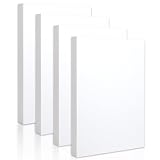
- High-Quality Material and Construction: The high-density white XPS foam is made of white pure polystyrene particles, free of impurities and pigments, non-toxic, peace lf mind to use,can be safely used for various applications.33kg/m3 density provides lightweight construction with excellent structural integrity, making it resistant to damage and easy to operate. Widely used in handicraft production, building insulation, plant cultivation, package applications and other fields
- Superior Rigidity and Durability: Our foam sheets feature excellent rigidity and thickness with pressure resistance up to 300kpa. Suitable for school DIY art projects, party decoration, cosplay props, building models, poster board, sculptures, pin board, and more to achieve your creative vision. This foam board is durable and does not deform, and unlike EPS foam, it will not produce particles that are easily broken and flying everywhere
- Waterproof and Thermal Insulation Properties: The foam board is waterproof closed cell foam with superior 034 level thermal insulation performance and can reduce certain noise effect. Very suitable for wall insulation and sound insulation, floor heating and attic. It can also be used as a moisture-proof backboard, leveling and height increasing, and for plant cultivation. You may also use it to make outdoor cabins and provide warm shelter for animals
- Easy to Customize and Paint: White polystyrene foam board with smooth surface can easily be painted in various colors. Free adhesion of various materials allows you to create your own designs, beautify your family spaces, and enhance party decorations to showcase your vision
- Simple Cutting and Shaping: You can easily cut the foam board with an art knife or a hot melt machine for your projects. Please pay attention to safety when working with cutting tools
What does ASTM C578-23 cover?
ASTM C578-23 is the active ASTM specification for rigid, cellular polystyrene thermal insulation boards made by molding EPS or extruding XPS. It addresses types, physical properties and dimensions, including thermal resistance, compressive resistance, flexural strength, water-vapor permeance, water absorption, dimensional stability and oxygen index.
The standard describes a general use-temperature range of −65°F to +165°F. Separate annex requirements address certain pipe, tank and equipment applications at lower temperatures. That scope does not mean every board is approved for every temperature or exposure; the product’s listed limitations and the project specification still govern.
ASTM also notes that fire-performance codes can regulate use and that some end uses require attention to moisture and wind-pressure resistance. Check the adopted local building and fire codes, tested assembly listings and required protection before covering foam with finishes or placing it in an occupied space.
Independent reader supportYour contribution helps us test, update, and keep practical guides available for everyone.How should you choose EPS or XPS for a project?
Step 1: Define the location and exposure
Record whether the board is in an exterior wall, roof, foundation, under-slab, cavity, interior partition or temporary form. Identify contact with soil, bulk water, wind, sunlight, freeze-thaw cycles, traffic and impact. Exposure often eliminates products before R-value becomes the deciding factor.
Free tools Windows power users keep installed
One-click scans. No signup required.
Step 2: Set the thermal target
Determine the assembly’s required total R-value and available thickness. Use the current data sheet for the candidate board and include thermal bridges, joints and framing. Do not add nominal R-values from unrelated products without checking their test conditions.
Step 3: Set moisture and drying requirements
Obtain water-absorption and vapor-permeance values for the exact thickness. Map the water-control, air-control and vapor-control layers, then verify that the assembly can dry in the intended direction. For below-grade applications, provide drainage and protection rather than relying on foam alone.
Step 4: Check structural and physical ratings
Match compressive resistance, flexural strength, dimensional stability and surface durability to the loads and handling conditions. If the board will support a slab, pavers or equipment, have the designer verify the load path and long-term performance.
Rank #4

- Reflective Window Insulation: Our rv window insulation is well-made, which is weight of 200 g / 10.76 sqft. It is of good material and long-lasting
- Aluminum foil roll: Foil insulation roll is the ideal solution for you to beat the heat, reflective insulation roll can stay cool in summer heat and keep your house warm in winter, making you feel comfortable, available in multiple sizes to meet your all need
- Good Material: Reflective insulation roll is made of reflective double aluminum foil and bubble type material, its reflective surface helps to block out the sunshine effectively keep the heat out from the windows, insulation summer,not easily scratched, which can be used for a long time
- Good Performance: Window insulation kit for summer heat not only blocks the sun but it avoid heat loss window insulation summer,and keeps the room cool. This reflective insulation also acts as a barrier insulation summer heat and protects your privacy with its opaque foil surface
- Wide Application: Our insulation roll can be used for a variety of spaces, you can use aluminum insulation roll in windows insulation, garage insulation, rv window insulation,house insulation,roof insulation, window heat blocker, garage door and etc
Step 5: Confirm fire, temperature and code compliance
Review the applicable fire classification, thermal barriers, ignition barriers, clearances and tested assemblies. Confirm that the intended temperature range is within the product listing and ASTM requirements.
Recommended Free Tools
Step 6: Specify the complete product, not just the acronym
A useful specification identifies the manufacturer and product line or an equivalent performance standard, board thickness, ASTM type, thermal resistance, compressive strength, water absorption, vapor permeance, dimensions, facer, edge profile and installation limitations. “Rigid foam insulation” by itself leaves too many performance variables unresolved.
Installation details that affect real performance
Protect the board from damage and water pathways
Keep boards flat, dry and supported during storage. Fit joints tightly, stagger multiple layers where appropriate and detail penetrations so they do not become air or water leaks. Use the project’s specified tapes, membranes, sealants and flashings to maintain continuity; an unsealed joint can undermine the intended assembly performance.
Use compatible adhesives and coatings
Thermoplastic foams can be degraded by incompatible solvents. The Building Science guide advises using manufacturer-approved materials with thermoplastic foams. Read the adhesive, primer, coating and sealant technical data before application, and perform a small compatibility test when the product combination is not explicitly listed. Never assume that a solvent-based construction product is safe because it is labeled for “foam” in a different application.
Plan for finish and paint systems
If the board will receive a render, coating, decorative panel or painted surface, verify the complete finish system rather than selecting paint independently. Confirm whether the substrate needs a reinforcing mesh, base coat, mechanical attachment, primer or a specified vapor permeance. Protect exposed foam from sunlight, impact and fire until the approved covering is installed.
Common selection mistakes and their fixes
- Choosing by R-value alone: Add moisture, strength, fire and drying requirements to the selection checklist.
- Treating every EPS board as Type II: Identify the actual density, ASTM type and tested properties.
- Calling XPS waterproof: Provide drainage and water-control layers, and use the product’s tested absorption value.
- Copying a one-inch permeance value to a thicker board: Check the value at the installed thickness; the cited XPS example changes from 1.1 perms at one inch to 0.55 perms at two inches.
- Ignoring construction loads: Verify compressive resistance for wet concrete placement, backfill, vehicles and stored materials.
- Using an unapproved solvent or adhesive: Follow the foam and accessory manufacturers’ compatibility instructions.
- Assuming the standard replaces code review: Use ASTM C578-23 as a product-performance framework, then verify local fire and building-code requirements.
EPS or XPS: a practical decision framework
Choose EPS when a specific EPS grade meets the required thermal resistance, moisture exposure, compressive strength and vapor strategy at the available thickness. Its performance can be appropriate when the design values density and grade explicitly rather than using a generic label.
Choose XPS when the selected product’s tested properties suit a detail that needs comparatively high nominal R-value per inch or greater resistance to water transmission, provided the assembly’s vapor and drying design remains sound. XPS is not automatically the right answer for every wet or below-grade condition; drainage, protection, load rating and code compliance still decide whether the installation works.
The governing principle is application: as Building Science Corporation puts it, “There are very few if any bad building materials, from a building science perspective; bad applications, however, abound.” The quote appears in its Building Materials Property Table. Select the board by verified properties and design the surrounding layers so those properties remain true in service.
Quick Recap

Product prices and availability are accurate as of the date/time indicated and are subject to change. Any price and availability information displayed on Amazon at the time of purchase will apply.
The Tool Desk
Outbyte Driver Updater FREEScan for outdated or missing drivers - takes under a minuteDriver Scan →Outbyte PC Repair FREERepair Windows errors before they cause bigger problemsFix Now →
