Free tools Windows power users keep installed
One-click scans. No signup required.
ThatPainter is reader-supported. When you buy through links on our site, we may earn an affiliate commission. Learn More
Light-filled rooms, useful views of greenery and carefully chosen natural elements can make hospitals and other restorative settings feel calmer, more welcoming and easier to use. That is the practical promise of biophilic design: shaping the built environment around human contact with daylight, living systems, natural materials and views of nature.
As an Amazon Associate I earn from qualifying purchases.
It is not a treatment, a guarantee of faster recovery or a substitute for clinical care. A 2026 rapid review found promising associations with stress recovery, pain, emotional well-being, sleep quality and satisfaction, but said long-term clinical outcomes remain uncertain and methods vary widely. The strongest design is therefore both nature-oriented and clinically disciplined: it gives patients, visitors and staff useful daylight and nature contact without sacrificing privacy, quiet, security, infection control or task-appropriate lighting.
PC Slower Than It Used to Be?
A free scan shows the junk files, broken settings and background clutter dragging Windows down - then fixes them in one click.Free scan · Windows 10 & 11Crashes, No Sound, or Screen Glitches?
Random freezes, missing sound and display glitches usually trace back to one bad driver. Find and replace yours safely.Free scan · under a minuteWhat biophilic design means in a healthcare setting
Biophilic design applies evidence-informed principles of connection with nature to buildings and interiors. In a hospital, that connection can be direct—looking into a planted courtyard—or indirect, such as seeing trees through a window, handling natural-looking materials or viewing an image of a landscape. The U.S. General Services Administration lists plants, views and images of nature, and daylight or circadian-effective light among biophilic strategies. A 2019 technical bulletin from the NIH Office of Research Facilities likewise presents biophilic design as a way to integrate natural qualities into occupied environments.
#1 Best Overall

- Bright Light Therapy: HappyLight Lumi Plus delivers up to 10,000 Lux of UV-Free, LED, full-spectrum light for effective, safe, and natural light therapy that’s free from glares, flickering, and hotspots
- A Daily Dose of Sunshine: Bright light therapy improves sleep, boosts mood, increases energy, and enhances focus so you feel revitalized throughout the day
- Personalized Settings: Customize your experience with 3 brightness levels and a convenient countdown timer that is programmable up to 1 hour, in 15 minute increments
- Portable & Practical: The ultra-thin tablet design with detachable stand and wall mount makes HappyLight Lumi Plus portable enough for use at home or on the go. It’s great for combating sunlight deprivation for shift workers, office employees, seniors, or anyone in need of more sunshine.
- Life in a Better Light: As the leader in healthy lighting for more than 65 years, and as the creator of the original HappyLight, Verilux is here for you with live support from our U.S.-based team and an industry-leading 3-year warranty
The distinction between a genuine view and a simulation matters. A patient who can see a garden, feel changing daylight and orient to the outdoors is receiving a different sensory experience from someone looking at a printed forest image. Both may be useful, but they should not be described as equivalent.
Common nature-oriented elements
- Windows positioned to provide a useful view of trees, planted courtyards, sky or other non-technical scenery.
- Healing gardens, terraces, atriums and planted outdoor routes that patients, visitors or staff can actually access.
- Indoor plants or maintained planted displays where facility policy permits them.
- Natural materials and textures, used with surfaces that meet cleaning, durability and fire-safety requirements.
- Nature imagery, video or sound where direct outdoor access is impossible.
- Daylight supported by controllable electric lighting, including systems designed to provide an appropriate day–evening rhythm.
What the evidence supports—and what it does not
Du, Xie and Zou’s rapid review, published in Frontiers in Public Health on March 3, 2026, reports convergent evidence that nature-integrated interventions may support stress recovery, reduce pain, improve emotional well-being and sleep quality, and increase satisfaction with care. The wording matters: these are promising areas of benefit, not universal causal effects for every patient or project.
The same review reports stronger effects for direct exposure to real nature and moderately strong effects for simulated nature. It also identifies substantial limitations, including heterogeneous methods and limited evidence for long-term clinical outcomes. Different studies use different interventions, populations, outcome measures and exposure periods, so their results cannot be combined into a single recovery formula.
An earlier Cochrane review, Sensory environment on health-related outcomes of hospital patients (2012), found no eligible studies for several interventions at the time it searched, including access to nature through gardens, atriums, flowers and plants, and the provision of windows. That finding describes the evidence available to that review; it does not demonstrate that gardens or windows have no effect. It is a reason to avoid overconfident promises and to evaluate projects carefully.
In practice, describe likely benefits as improvements in experience or well-being—such as a less stressful wait, better perceived comfort or greater satisfaction—rather than claiming that a particular plant, view or lamp heals an illness.
Rank #2

- One-Button Light Therapy: The easiest light therapy lamp you’ll ever use! Just press the on/off button and you’re ready to kickstart your morning. HappyLight Lucent delivers up to 10,000 lux of UV-free, LED, full-spectrum light for effective, safe, and natural light therapy that’s free from glares, flickering, and hotspots
- A Daily Dose of Sunshine: Bright light therapy improves sleep, boosts mood, increases energy, and enhances focus so you feel revitalized throughout the day
- Portable & Practical: The ultra-thin tablet design and detachable stand makes HappyLight Lucent portable enough for use at home or on-the-go. It great for combating seasonal blues, insomnia, and sunlight deprivation for shift workers, office employees, seniors, or anyone in need of more sunshine
- Customizable Stand: Turn the lamp vertical or horizontal by using the bidirectional stand that helps you find the optimal position for your light therapy. Take the stand off to bring your lamp with you from your bedroom to your office or pack it in your bag while traveling
- Life in a Better Light: As the leader in healthy lighting for more than 65 years, and as the creator of the original HappyLight, Verilux is here for you with live support from our U.S.-based team and an industry-leading 3-Year Manufacturer's Warranty.
Why daylight and views are design inputs
Daylight and views should be planned at the beginning of a project, not added as decoration after rooms and equipment have been fixed. The International WELL Building Institute’s Light concept addresses window performance and design, light output, lighting controls and illumination suited to the task. Its overview notes that people spend more than 90 percent of their time in buildings, and defines the standard this way: “WELL is a performance-based system for measuring, certifying, and monitoring features of the built environment that impact human health and well-being.”
A window can fail as a biophilic feature if blinds remain closed because of glare, a neighboring building fills the view, the sill is too high for a seated patient, or the room becomes overheated. Conversely, a modest window can be valuable when it gives a resting patient a clear view of sky or planting and can be shaded without losing all visual contact.
Do these 3 things before closing this tab:
1Clear out junk files and repair common Windows errors2Scan for outdated or missing drivers - takes under a minute3Repair Windows errors before they cause bigger problemsAssess the existing site first
- Record orientation, seasonal sun angles, likely glare and heat gain.
- Stand or sit where patients, visitors and staff will be located; note what each person can actually see, not just what appears on a plan.
- Check whether nearby buildings, service yards, parking areas or security infrastructure dominate the view.
- Identify opportunities for courtyards, roof gardens, planted screens or borrowed views where a direct landscape is not possible.
- Plan shading, privacy controls and maintenance access at the same time as glazing and planting.
The American Institute of Architects’ Framework for Design Excellence also calls attention to effects on neighboring daylight and views. Improving one building’s outlook should not unnecessarily block another building’s usable light or create avoidable privacy problems.
Real nature versus simulated nature
Choose the approach according to clinical setting, site constraints and the people who use the room. The table summarizes the practical distinction without treating one option as universally best.
| Approach | Examples | Evidence profile | Design checks |
|---|---|---|---|
| Direct exposure to real nature | Accessible healing garden, planted courtyard, terrace, window onto trees or sky | The 2026 rapid review reports the strongest effects for direct nature exposure, while noting overall evidence limitations. | Route accessibility, weather protection, infection-control policy, maintenance, security, privacy and whether the view is available from a bed or chair. |
| Indoor living elements | Approved plants, planted walls or natural materials | Included among biophilic strategies; effects depend on quality, upkeep and the user’s ability to perceive or interact with the element. | Allergen, soil, water, pest, cleaning, fire and durability requirements; avoid implying that a species has a proven healing effect. |
| Simulated nature | Landscape photographs, digital scenes, videos or nature-themed media | The review reports moderately strong effects for simulated nature, but less than for direct exposure in its synthesis. | Image quality, cultural fit, screen glare, quiet operation, content control and whether the substitute is clearly described as such. |
| Daylight or circadian-effective electric light | Well-shaded windows paired with dimmable, controllable fixtures | WELL and GSA identify lighting quality and controls as relevant design considerations; a lamp is not equivalent to an outdoor view. | Task illumination, examination accuracy, night-time disturbance, controls patients can use and compatibility with clinical equipment. |
A step-by-step process for designing a supportive space
1. Define users and moments of use
List patients, families, clinicians, cleaners and other staff, then map what each person needs. A patient may value a calm view and control over glare; a nurse may need uniform, shadow-free light for documentation and observation; a family member may need orientation and a quiet place to sit. The clinical-environment systematic review indexed as PubMed record 35996349 identifies daylight, views, comfort, welcome, security, privacy and quiet as recurring priorities across users. Treat those priorities as a set, not as a competition in which a view automatically wins.
Rank #3

- 【10000 Lux SunLamp】This sun lamp mimics the full spectrum of light found in daylight, providing the recommended 10,000lux of brightness to help you increase energy, boost mood, improve sleep and enhance focus.
- 【Adjustable 5 Brightness & 4 Color Temperatures】LASTAR sun lamp by using sun-shaped button to dim and brighten (5%-10%-40%-70%-100%) and 4 color temperature(1600K/3000K/4500K/6500K). You can customize it, moving between a fast-acting, high-energy dosage or a less intense anti-glare setting.
- 【4 Timer & Memory Function】The sun lamp with 15-30-45-60min timer that lets you set the sun lamp to stay on for 15 minutes increments up to an hour, and when the timer is done, the sun lamp shuts off automatically.
- 【60 Evenly Distributed LEDs】Sun lamp deliver full brightness at only 12W with glare-free LED. No UV light or other polluting radiation.
- 【Ultra Compact and Portable】The LASTAR sunlight lamp measures only 5.3 x 4.7 x 2.0 inches. Takes up very little space, making it easy to store and transport. It can be set up on a desk, kitchen counter, or vanity.
2. Map sightlines from real positions
Use bed, recliner, wheelchair, examination and standing positions. Measure sill heights and identify whether curtains, monitors or storage will block the view. A garden that looks excellent from a corridor may be invisible to someone lying flat. Mark the positions where a person can see greenery, sky or daylight without turning their head or compromising privacy.
Windows Errors? Fix Them Before They Spread
Repair common Windows errors and clear accumulated junk for a smoother, more stable PC - no reinstall needed.Free scan · no reinstallCrashes, No Sound, or Screen Glitches?
Random freezes, missing sound and display glitches usually trace back to one bad driver. Find and replace yours safely.Free scan · under a minute3. Select a nature connection that the site can sustain
Prioritize a real garden, planted area or green view when it is feasible and safe. If a room has no exterior exposure, combine durable natural materials, approved plants or nature imagery rather than presenting a substitute as a window. Specify who will water, prune, clean, replace or remove each element. Unmaintained planting quickly becomes a source of disorder rather than restoration.
4. Coordinate daylight, glare control and electric light
Pair windows with external shading, interior blinds or electrochromic controls where appropriate. Provide dimming and scene controls so staff can meet examination and documentation requirements while patients can reduce glare. Electric light should cover night-time care and tasks; it should not be marketed as recreating a view or the full experience of daylight. WELL specifically treats lighting controls and task-appropriate illumination as part of the design problem.
5. Protect privacy, quiet and security
Use planting, fritted glazing, adjustable screens or carefully placed openings to preserve dignity. Check that a garden does not expose patient rooms to public paths and that a digital nature display does not add unwanted sound. Security lighting, clear staff sightlines and safe walking surfaces remain essential. A visually beautiful space that makes a patient feel watched or unsafe is not supportive.
6. Check neighbors and the wider site
Model how new trees, canopies, screens and roof structures affect neighboring daylight and views. The AIA framework’s emphasis on these external effects is a reminder that biophilic improvements should not simply transfer a problem to the next building.
Rank #4

- Optimal 10,000 LUX Light Therapy at 12 Inches: Experience the recommended 10,000 LUX of glare-free white light with the Carex Day-Light Classic Plus Sunlight Therapy Lamp. This LED therapy light features a safe, glare-free screen and a flexible angle stand for personalized light therapy sessions.
- Expert-Recommended LED Therapy Light: Embrace natural light therapy with confidence. Our lamp, inspired by Mayo Clinic recommendations, blocks 99.3% of rays and projects light downward for maximum effectiveness, ensuring a safe and comfortable experience.
- Full Spectrum Light for Enhanced Well-being: Benefit from superior light therapy with our large sunlight lamp. Designed based on models used by global researchers, this light therapy box offers two light settings for effective light box therapy.
- Clinical Strength and Industry-Leading Quality: Elevate your mood, improve sleep, combat jet lag, and boost energy levels with our mood light therapy lamp. Ideal for energizing your day and enhancing concentration. Backed by a 5-year warranty for peace of mind.
- Broad Illumination Range for Maximum Effectiveness: Enjoy the convenience of our LED BrightZone Technology, delivering 10,000 LUX at 12 inches. Unlike competing brands, you can maximize effectiveness without sitting too close to the sunlight lamp.
7. Confirm policy, code and maintenance requirements
Before construction, verify local healthcare building codes and the facility’s infection-control, plant, fire, accessibility and cleaning policies. Requirements vary by jurisdiction and by clinical department. General guidance cannot establish a safe plant list, a permitted soil system or a project’s required illuminance.
8. Evaluate experience without overclaiming
After occupancy, measure outcomes that the intervention can plausibly influence: perceived stress, comfort, sleep quality, satisfaction, reported glare, time spent in a garden and staff usability. Record seasonal and operational factors. Do not label a change in readmission, length of stay or disease outcome as a design effect unless an appropriately designed clinical evaluation supports that conclusion.
Independent reader supportYour contribution helps us test, update, and keep practical guides available for everyone.Applying the principles to common hospital spaces
Patient bedrooms
Give the bed a controllable view toward sky, trees or a planted court where possible. Place reading and examination light separately from the window so staff do not have to flood the room with glare. Curtains should allow privacy without forcing a permanently closed room. Keep controls reachable from the bed and provide a night setting that limits disturbance.
Waiting and reception areas
Use daylight, visible planting and clear orientation to reduce the sense of enclosure. Break up long waits with seating choices: some people want a view and activity, while others need a quiet, shielded position. Avoid placing screens directly in front of the best window or using glossy finishes that reflect the sky into people’s eyes.
Quick wins for a faster PC:
Repair Windows errors before they cause bigger problemsFix Now →Scan for outdated or missing drivers - takes under a minuteDriver Scan →Clear out junk files and repair common Windows errorsFree Scan →Corridors and transition spaces
Borrow views from courtyards or gardens at intersections, rather than treating every wall as a gallery of unrelated images. Consistent materials, a legible route and even lighting support wayfinding. Nature imagery can help where windows are impossible, but it should not compete with signs, handrails or emergency equipment.
Best Value
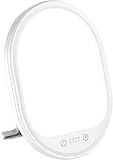
- Set & Customize Your timer-【Revitalizing Light Therapy Lamp】Upgrade your daily routine with our new and innovative Light Therapy Lamp. Its sleek and modern design includes a convenient 4 timer function that lets you choose the perfect therapy time for you (15 / 30 / 45 / 60 minutes), starting from a minimum of 15 minutes and gradually increasing to your preferred time for maximum convenience and energy saving.
- Stylish & Functional Design【Compact Size Lights Therapy Lamp】Our Light Therapy Lamp features an ultra-thin design and is lightweight, making it easy to carry around and perfect for use at home, in the office, or while traveling. Its tablet-like shape provides a larger, more efficient therapy area with uniform illuminance for better results.
- Safe & Effective Light Therapy【UV-Free Safe Light Therapy】This UV-Free Light Therapy Lamp emits 10,000 lux (light level) intensity natural sunlight, which provides a non-invasive and safe way to combat winter blues, jet lag, shift work or seasonal changes, and boost energy. Its signals help your body feel energized, focused, and revitalized, providing you with the much-needed support to keep you going all day long.
- Customizable & Convenient【Touch Control Therapy Lamp】Our Touch Control Therapy Lamp offers 3 brightness levels that you can easily customize for maximum comfort. With the smooth dimming function, you can adjust the brightness levels from 30% to 100% with a simple touch of a button. This way, you can customize the most suitable light depending on your environment, ensuring a pleasant and personalized experience.
- Flexible & Rotatable 【90 Rotation Standing Bracket】Our light therapy desk lamp includes a 90-degree rotation standing bracket, allowing you to adjust the opening angle to position the light best as needed. You can place it next to your laptop, on the kitchen counter, or cubicle desk, matching any type of decoration. Enjoy the benefits of our light therapy lamp any time, anywhere.
Treatment, imaging and procedure rooms
Clinical accuracy and infection-control requirements come first. A high window, clerestory, screened view or carefully selected image may provide nature contact without compromising equipment placement or sterility. Coordinate any changeable lighting scene with the procedure team; decorative color effects are not a substitute for task light.
Staff work and recovery areas
Staff also need daylight, views, quiet and a sense of welcome. Provide a genuinely usable break area rather than a plant placed beside a workstation. Adjustable light, acoustic separation and a short route to an outdoor space can make a nature connection available during real breaks, not only during tours.
Designing a small interior with limited daylight
When architecture cannot provide a window or garden, start with the constraints. Keep the room visually calm, choose a high-quality nature image or display that can be switched off, and add only plants that the facility has approved and can maintain. Use supplemental lighting with dimming and a warm evening setting if appropriate, while keeping task illumination separate. A consumer lamp may improve visibility or ambience, but it does not recreate daylight’s changing spectrum, an outdoor view or access to fresh air.
What’s actually slowing this PC down?
Pick the symptom - the matching free tool is one click away.
Natural-looking finishes can add texture without introducing soil or watering. Select cleanable, low-glare surfaces and avoid busy patterns that make clinical observation harder. Most importantly, preserve a clear route, comfortable seating, privacy and quiet; these conditions may matter more to the person using the room than the number of biophilic objects present.
Common mistakes and how to correct them
- Promising faster healing: Reframe the claim around reported stress, comfort, well-being or satisfaction, and state that long-term clinical benefits are not established.
- Counting objects instead of access: A plant on a high shelf is not equivalent to a view from a bed. Test sightlines from actual user positions.
- Ignoring glare and heat: Add shading and controls before occupancy, then commission the system in sunny and overcast conditions.
- Treating images as windows: Describe simulated nature accurately and provide a different evidence expectation from direct outdoor exposure.
- Forgetting operations: Assign watering, cleaning, replacement and fault response in the facilities plan.
- Overlooking vulnerable users: Check allergies, mobility, sensory sensitivity, infection risks, privacy and security with the relevant clinical teams.
- Blocking neighbors’ light: Review tree canopies, screens and roof additions for off-site effects, not only the project’s own view.
- Using decorative light for clinical work: Keep examination and documentation illumination task-appropriate and independently controllable.
A measured standard for a nature-oriented healing space
The best project is not the one with the most greenery or the largest windows. It is the one that gives the right users a usable connection to nature at the moments they need it, while maintaining clinical performance, privacy, quiet, safety and maintainability. Evidence to date supports taking daylight and nature seriously as design inputs, especially where real nature is feasible, but it does not justify promising a particular medical outcome.
Use the 2026 review’s findings as a reason to design and evaluate thoughtfully, the WELL framework as a reminder to coordinate windows and lighting controls, the AIA guidance as a check on neighborhood impacts, and facility policy and local code as the final authority for implementation.
Quick Recap

Product prices and availability are accurate as of the date/time indicated and are subject to change. Any price and availability information displayed on Amazon at the time of purchase will apply.

