Recommended Free Tools
Outdated Drivers Are Slowing You Down
Free scan · exact hardware match
Windows Errors? Fix Them Before They Spread
Free scan · no reinstall
Crashes, No Sound, or Screen Glitches?
Free scan · under a minute
ThatPainter is reader-supported. When you buy through links on our site, we may earn an affiliate commission. Learn More
Cities make room for water by treating rainfall as a resource to retain, absorb, slow and safely route—not merely something to push through pipes as fast as possible. A workable “sponge city” is a portfolio: floodable public spaces, wetlands and parks, restored water bodies, permeable streets, rainwater capture, water-sensitive buildings and conventional drainage designed to work together.
As an Amazon Associate I earn from qualifying purchases.
The right mix depends on local soils, topography, rainfall, groundwater, sewer capacity, contamination risk, land ownership and maintenance budgets. A plaza that temporarily stores a cloudburst can reduce pressure on a drainage network, but it does not replace flood-warning systems, river management, pumps or properly sized pipes.
What “making room for water” means
Conventional urbanization covers soil with roofs, asphalt and concrete. Rain that once infiltrated gradually becomes fast runoff, reaches low points sooner and can overwhelm inlets, sewers, channels and rivers. Making room for water changes the question from “How do we remove this water immediately?” to “Where can this water safely stay, slow down or soak in at each stage of the storm?”
#1 Best Overall

- 50-Gallon Capacity: Provides ample storage for harvested rainwater, ideal for watering gardens, lawns, and plants.
- Durable Construction: Made from UV-resistant polyethylene for long-lasting durability and protection from the elements. Made of 100% Recycled plastic.
- Overflow Valve: Built-in overflow valve for managing excess water and the option to connect multiple barrels for increased storage.
- Convenient Spigot: Easy-to-use plastic spigot for quick and efficient water retrieval.
- Low Maintenance: Easy to install and maintain, offering a simple, sustainable solution for homeowners.
The sponge-city idea links landscape, buildings, streets, parks, ponds, wetlands and engineered networks. Vegetation and soil can intercept and infiltrate rainfall; designed basins can store a temporary volume; channels and pipes can convey water when storage is full. Water may be reused for irrigation or other non-potable purposes where regulations and treatment allow it.
Chinese scholar Yu Kongjian is quoted by the Observer Research Foundation in 2025 describing the older approach this way: “Conventional flood water management involves building pipes or drains to carry away water as swiftly as possible, or reinforcing river banks with concrete to ensure that they do not overflow.” The sponge-city alternative is not to abandon drainage, but to distribute the job across many places and times.
What’s actually slowing this PC down?
Pick the symptom - the matching free tool is one click away.
The building blocks of a water-sensitive city
| Intervention | What it does during rain | What it can do when dry | Critical design question |
|---|---|---|---|
| Floodable plazas and parks | Hold runoff in shallow or deep basins, then release or infiltrate it gradually | Provide seating, sport, markets, play or events | Can people reach safe, dry routes while the storage area is occupied? |
| Wetlands, rain gardens and planted swales | Intercept, filter and slow runoff before it enters a pipe or water body | Support habitat and shade | Are soils, groundwater and contaminants suitable for infiltration? |
| Permeable paving and streets | Let water pass into a gravel or soil layer and reduce surface flow | Carry pedestrians, cyclists or low-speed traffic | Will sediment clog the surface, and can it be cleaned? |
| Restored streams, ponds and floodplains | Provide conveyance and temporary storage along a natural drainage path | Offer habitat, cooling and public access where safe | What happens in a larger event than the restored feature was designed for? |
| Rainwater harvesting and sponge buildings | Capture roof water in tanks, planted roofs or courtyards | Supply non-potable uses or create cooler, greener buildings | How will overflow, mosquito control, structural loads and water quality be managed? |
| Conventional drains, pipes, pumps and barriers | Move or protect against water when distributed measures are full | Provide dependable service in ordinary conditions | Are assets accessible for inspection, cleaning, power backup and repair? |
No single feature handles every storm. A site may need a green roof for small events, a courtyard or street basin for moderate rainfall and a defined overland route to a river or pump station during an extreme event.
Design strategies that retain or slow runoff
Floodable public spaces
A floodable square is shaped so water can occupy designated low areas without damaging essential structures or trapping people. Edges, ramps, steps, planting beds and durable finishes make the change in water level legible. Inlets should be designed to prevent dangerous velocities and to keep debris from blocking the basin. Everyday circulation, accessible routes and emergency access must remain available when the lowest area is wet.
Rank #2

- 50-Gallon Capacity: Provides ample storage for harvested rainwater, ideal for watering gardens, lawns, and plants.
- Durable Construction: Made from UV-resistant polyethylene to withstand outdoor elements and ensure long-lasting durability.
- Overflow Valve: Built-in overflow valve for managing excess water and the option to connect multiple barrels for increased storage.
- Premium Brass Spigot: Features a high-quality brass spigot for easy, secure, and leak-free water retrieval.
- Low Maintenance: Easy to install and maintain, offering a simple, sustainable solution for homeowners.
Rotterdam’s water square, described by the Observer Research Foundation in 2025, uses basins at different levels. Ordinary rain enters shallow basins; heavier downpours reach a deeper basin. When dry, the space serves recreational purposes. The example illustrates a civic space with a second hydraulic function, not a universal construction template or a measured citywide flood-reduction result.
Parks, wetlands and rain gardens
Parks can be graded to accept runoff from nearby streets, while wetlands and rain gardens use plants, engineered soil and temporary ponding to slow and filter water. Designers need an overflow route for storms that exceed the planting area’s capacity. Infiltration should be avoided or carefully controlled where polluted soil, a high water table or contaminated groundwater could make downward movement unsafe.
Free tools Windows power users keep installed
One-click scans. No signup required.
Plant selection should account for alternating inundation and drought, salt from winter maintenance, shade, root space and long-term care. A wetland that fills with trash or becomes inaccessible is not performing as intended, even if its initial hydraulic drawings were sound.
Permeable streets and surfaces
Permeable concrete, porous asphalt, permeable blocks and reinforced grass systems can route water into a stone reservoir beneath the surface. They work best where sediment loads are manageable and subgrade soils can accept storage or connect to a controlled underdrain. Sweeping, vacuuming, replacing damaged units and protecting construction areas from sediment are part of the design, not optional aftercare.
Rank #3

- 【Leak-Proof Design】Unlike typical rain barrels, our product features an integrated design with a straightforward screw-in faucet, eliminating the hassle of assembling multiple parts. This thoughtful construction guarantees a leak-proof system and simple installation
- 【Durable and Sturdy】Our collapsible rainwater collection system is made from premium three-layer PVC material, providing exceptional strength to endure even the toughest conditions. To enhance stability, the rain barrel includes circular footpads, effectively preventing any wobbling or tipping
- 【Easy to Store and Transport】 In contrast to bulky traditional wooden barrels, our rain barrel is foldable, making it easy to carry and store. Say goodbye to heavy, cumbersome containers and embrace convenience. Order our collapsible rain barrel today for effortless water conservation!
- 【Filtering Design】The top of our water storage container is equipped with a mesh design that prevents overflow and keeps leaves and debris out of your clean water. Rainwater collected through the faucet or overflow kit is clearer and can be reused for gardening, farm irrigation, car washing, and more—ideal for eco-conscious individuals
- 【Simple Installation and Exceptional Service】If you encounter any missing or damaged parts during installation, please contact us. We are dedicated to providing prompt replacements to ensure a worry-free experience for our customers
Permeability does not mean “no drainage.” A blocked surface, frozen ground or saturated subgrade still needs a safe overflow path. Pedestrian comfort, wheelchair access, utility cuts and loading requirements also determine whether a particular surface is appropriate.
Restoring water bodies and floodplains
Removing hard edges, reconnecting a stream to a floodplain or restoring a pond can create room along the route water already wants to take. The intervention must account for erosion, bank stability, water quality, mosquito management, public safety and land ownership. In dense districts, a linear park or widened channel may combine conveyance with paths and habitat, while critical infrastructure remains set back or elevated.
What’s actually slowing this PC down?
Pick the symptom - the matching free tool is one click away.
Rainwater capture and sponge buildings
Roofs can direct water to cisterns, planted roofs, tree pits or courtyard storage. Captured water may support irrigation or toilet flushing where local codes permit and treatment is adequate. Tanks need a first-flush or filtration strategy where roof debris affects quality, a secure overflow connection, structural checks for stored-water weight and a maintenance plan.
Buildings can also slow water with green roofs, stepped terraces, raised entrances and flood-resistant ground-floor materials. These measures protect a structure only when entrances, electrical equipment, elevators, ventilation and emergency egress are coordinated with the expected flood depth and duration.
Rank #4
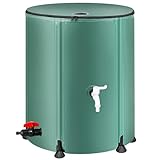
- 【Leak-Proof Design】Unlike typical rain barrels, our product features an integrated design with a straightforward screw-in faucet, eliminating the hassle of assembling multiple parts. This thoughtful construction guarantees a leak-proof system and simple installation
- 【Durable and Sturdy】Our collapsible rainwater collection system is made from premium three-layer PVC material, providing exceptional strength to endure even the toughest conditions. To enhance stability, the rain barrel includes circular footpads, effectively preventing any wobbling or tipping
- 【Easy to Store and Transport】 In contrast to bulky traditional wooden barrels, our rain barrel is foldable, making it easy to carry and store. Say goodbye to heavy, cumbersome containers and embrace convenience. Order our collapsible rain barrel today for effortless water conservation!
- 【Filtering Design】The top of our water storage container is equipped with a mesh design that prevents overflow and keeps leaves and debris out of your clean water. Rainwater collected through the faucet or overflow kit is clearer and can be reused for gardening, farm irrigation, car washing, and more—ideal for eco-conscious individuals
- 【Simple Installation and Exceptional Service】If you encounter any missing or damaged parts during installation, please contact us. We are dedicated to providing prompt replacements to ensure a worry-free experience for our customers
Examples that show the range of approaches
| Place and source | Documented design or program | How to interpret the evidence |
|---|---|---|
| Rotterdam water square (Observer Research Foundation, 2025) | Basins at different levels receive ordinary and heavy rainfall; the square is recreational when dry | A described public-space model; the account does not provide a common performance comparison with other projects |
| Montreal water square (Observer Research Foundation, 2025) | A 1,000-square-metre site on a former gas-station property, developed after a participatory process, manages runoff from the site and neighboring areas; reported as completed in 2024 | A project description, not a verified citywide impact assessment |
| Wuhan Sponge City Programme (C40 Cities, 2016) | A 15-year program; the first phase, 2015–2017, was planned to include 389 projects across parks, roads, residential communities and public and commercial buildings | Historical program details from 2016, not a current implementation update |
| Gowanus Sponge Park, New York City (Department of Environmental Protection, 2013) | An announced 1,800-square-foot park intended to capture and retain stormwater flowing down a street before it reached the canal | A municipal design intention and announcement, not a present-day status report or measured flood-reduction result |
The variety matters. A water square, a wetland, a building retrofit and a district program operate at different scales and solve different parts of the runoff problem.
How to plan a “make room for water” portfolio
- Map the water’s path. Combine topography, drainage areas, sewer and inlet locations, groundwater, soil permeability, flood history, contaminated sites and critical facilities. Identify where water collects, where it can safely spread and where it must not enter.
- Set performance and safety objectives. Define the design storms, allowable ponding duration, maximum depth and velocity, acceptable overflow route, water-quality targets and protection level for buildings and transport. State which assumptions apply to ordinary rain and which apply to extreme events.
- Reserve a hierarchy of spaces. Assign small storage to roofs and tree pits, moderate storage to courtyards, streets and parks, and larger conveyance or detention to wetlands, channels, ponds and engineered facilities. Connect each layer so failure or saturation in one does not strand water.
- Design the dry-day use. Specify who uses the space, how accessible routes work, where furniture and play equipment go, and how quickly the area can reopen after a storm. Dry-weather value improves public support and makes maintenance visible.
- Check interfaces with gray infrastructure. Size inlets, underdrains, pipes, pumps and overflow structures for the water that green measures cannot retain. Coordinate with utilities, roads, emergency services and downstream owners.
- Assign operations before construction. Name the agency or owner responsible for inspections, sediment removal, vegetation care, inlet clearing, tank cleaning, surface sweeping, safety closures and post-storm checks. Include funding and access routes in the plan.
- Monitor and adapt. Measure rainfall, water levels, drain-down time, infiltration, water quality, maintenance calls, accessibility and user experience. Use the results to adjust planting, controls, cleaning schedules and future projects.
Evaluate public experience as well as hydraulics
A basin can meet a storage target and still fail as public infrastructure if it is difficult to reach, feels unsafe, lacks shade or requires services no agency can provide. A 2025 post-occupancy evaluation of Quyuan Park in Changde reported generally positive responses across many survey indicators, but water-management and service-management indicators scored relatively lower. Participants also requested more commercial facilities and children’s play areas.
That finding applies as an evaluation principle, not as a universal scorecard: inspect how people actually use the space, whether closures are understood, whether maintenance is timely and whether amenities match local needs. Pair surveys and observations with measured water levels and maintenance records.
How to compare two proposed designs
A useful comparison asks the same questions of every option:
Best Value

- Environmental Conservation and Plants Love:Rainwater Barrels help reduce energy usage and water bills.Plants love rainwater which has no chemicals added and is rich in trace elements.
- Rugged and large capacity:constructed with durable, UV-resistant and Anti-freeze high quality PP to ensure long-lasting use,large capacity of 50 gallons can meet the needs of daily plants.Multiple rain barrels can also be connected through the connection holes on the side to increase the capacity.
- Sophisticated design: the mesh on the top not only prevents debris from entering, but also prevents mosquitoes from laying eggs; the flat back can sit closely to the side of your house for an attractive appearance.
- Easy to assemble: We provide all the parts needed for assembly (including auxiliary tool and drill bit), you only need to carry an electric drill to complete the assembly within 15 minutes.
- Capture location: roof, parcel, street, park, water body or district network?
- Hydraulic action: infiltration, detention, evaporation, reuse, controlled release or conveyance?
- Dry-weather purpose: play, sport, ecology, mobility, shade, markets or simply protected infrastructure?
- Site fit: local rainfall pattern, soil, slope, groundwater, contamination, heat and available land?
- Failure behavior: where does water go when the feature is full, clogged, frozen or without power?
- Responsibility: which owner inspects and pays for upkeep, and can crews reach every component?
- Evidence: are claims based on measured performance at this site, a modeled scenario, a project plan or a perception survey?
A 2020 study of ten Shanghai pilot projects classified multiple project types and design methods rather than identifying one standard form. A 2024 review in Frontiers in Water likewise presents blue-green infrastructure as integrated with drainage and adapted locally. Those findings support comparison by context, not a universal kit of parts.
Maintenance is part of the flood design
Every retention feature loses capacity when inlets clog, sediment fills a forebay, plants die, pavement seals or controls fail. Operations plans should include inspection after major storms, routine removal of litter and sediment, vegetation replacement, mosquito and vector checks where standing water persists, and safe procedures for confined spaces and electrical equipment.
The Tool Desk
Outbyte Driver Updater FREEFix the driver behind crashes, sound loss and screen glitchesFind Drivers →Outbyte PC Repair FREEClear out junk files and repair common Windows errorsFree Scan →Maintenance responsibilities often cross public-works, parks, transportation, housing and private-property boundaries. A district plan should define inspection intervals, access rights, reporting channels and escalation triggers. If no organization has authority and budget to perform those tasks, the feature’s nominal storage volume is not a dependable resource.
What the evidence can—and cannot—say about flood reduction
The cited case material does not establish one comparable flood-reduction percentage for sponge-city projects. The Rotterdam and Montreal accounts describe layouts and uses; the Wuhan account records a historical program plan; the Gowanus announcement records design intent; and the Quyuan Park study evaluates user perceptions at one park. None supports a general citywide effect size.
Performance claims should therefore identify the location, rainfall event or design storm, model or measurement method, baseline condition, time period and outcome being measured. “Stores runoff on site,” “reduces peak flow in a modeled event” and “prevented flooding in observed storms” are different statements and should not be substituted for one another.
A household-scale note: rain barrels
A rain barrel can keep a small amount of roof runoff out of the drain during a storm and provide water for permitted outdoor uses. Install an overflow that directs water away from foundations, secure the container, use a screened lid and follow local rules for mosquito prevention and non-potable water. A barrel is a useful household measure, but it is not a substitute for city-scale drainage, flood planning, safe overland routes or professionally designed infrastructure.
Quick wins for a faster PC:
Repair Windows errors before they cause bigger problemsFix Now →Fix the driver behind crashes, sound loss and screen glitchesFind Drivers →Clear out junk files and repair common Windows errorsFree Scan →Quick Recap

Product prices and availability are accurate as of the date/time indicated and are subject to change. Any price and availability information displayed on Amazon at the time of purchase will apply.

