Windows Errors? Fix Them Before They Spread
Repair common Windows errors and clear accumulated junk for a smoother, more stable PC - no reinstall needed.Free scan · no reinstall
Outdated Drivers Are Slowing You Down
One free scan finds every outdated or missing driver and matches the right update for your exact hardware.Free scan · exact hardware match
ThatPainter is reader-supported. When you buy through links on our site, we may earn an affiliate commission. Learn More
A paved terrace-house backyard can feel hard and boxed in when walls and pavers dominate the view. The makeover described by Better Homes and Gardens Australia (9 June 2021) used three distinct planting heights—tall, middle and low—to soften that geometry. Upright palms and cordylines draw the eye upward, broad structural foliage fills the middle, and bromeliads and a spilling groundcover finish the edges. The result is a more inviting tropical composition, although the feature reports a visual transformation rather than measured changes: it gives no garden dimensions, budget, plant counts or quantified before-and-after result.
This guide explains how to translate that composition into a small garden without treating every plant as if it has identical requirements. Use the plant palette as a design starting point, then confirm local climate, available light, drainage and nursery availability before buying.
Quick wins for a faster PC:
Repair Windows errors before they cause bigger problemsFix Now →Scan for outdated or missing drivers - takes under a minuteDriver Scan →As an Amazon Associate I earn from qualifying purchases.
The makeover in one idea: arrange foliage at three heights
The terrace garden was not changed by adding a lawn or expanding the footprint. Its visual character changed because foliage was arranged in layers. The tallest plants interrupt a wall-level view and provide a vertical frame. Mid-height plants occupy the large, often empty band between eye level and the paving. Low plants soften the junctions between pots, beds and hard surfaces.
That arrangement matters in a narrow backyard. A single row of plants at one height can read as a flat border, while varied heights create depth without requiring more floor area. Colour also helps: the feature describes bold foliage pulling attention away from the walls and pavers. The effect is compositional, not a measured increase in privacy, shade or property value.
#1 Best Overall
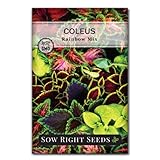
- Beautiful - Large premium packet of Coleus Rainbow Mix (Plectranthus scutellarioides) seeds. This tender perennial mix produces green leaves that mature into a stunning array of yellow, white, green, pink, red, and deep maroon shades. This shade-tolerant tropical plant can be grown outdoors or indoors. The vivid hues and unique leaf patterns will brighten up any space! Minimum of 250 mg per packet (about 800 seeds).
- Productive - Rainbow Mix Coleus germinates in 10-14 days when soil temps are 70-75°F. Plant 1/16” deep and space 10-12” apart in an area with partial shade. This variety grows 18-30” tall with a spread of 8-12”. Plants will mature in 85-95 days, plant in USDA zones 3-13.
- Colorful & Fun - With its vibrant, ruffled foliage and unique felt-like leaves, coleus is such a fun variety to grow! Enjoy the flexibility of growing them in containers, flower beds or as indoor potted plants.
- Easy to Grow - Instructions included on each packet. Plus, we are available to answer all your questions. If these seeds don’t germinate, we will happily make it right for you.
- Safe and Sustainable - Our operation is fully solar powered, and Sow Right Seeds has taken the Safe Seed Pledge to sell only fresh Non-GMO heirloom seeds for you and your family.
The three-layer plant palette
| Layer | Plants named in the feature | Design job in the composition | Specific growing or format note |
|---|---|---|---|
| Tall | Golden cane palm (Chrysalidocarpus lutescens); Cordyline fruticosa ‘Kiwi’; Alcantarea imperialis ‘Silver Plum’ | Raise the eye, add arching or upright silhouettes, and establish the backdrop. | ‘Silver Plum’ is described as a giant bromeliad for full sun; stronger sun encourages more red colouring. |
| Middle | Philodendron ‘Xanadu’; Codiaeum variegatum ‘Excellent’ and ‘Mammy’; Agave attenuata; jade plant (Crassula ovata) | Fill the central visual band with rounded, fingered, colourful or rosette forms. | Jade can grow in a pot or a sunny garden bed, provided drainage is excellent. |
| Lower | Guzmania lingulata ‘Hilda’; Moses in the cradle (Rhoeo discolor compacta); Sedum ‘Goldilocks’ | Finish the foreground, add colour near paving, and let one plant spill outward. | Guzmania lingulata suits pots, hanging baskets and garden beds. |
What the tall layer contributes
Golden cane palm supplies height through arching fronds, giving a small yard a softer overhead and vertical rhythm. Cordyline fruticosa ‘Kiwi’ provides a more upright outline and broad leaves with variation in colour. Together, those silhouettes prevent the back edge from reading as a single hard line.
Recommended Free Tools
Alcantarea imperialis ‘Silver Plum’ is the tall layer’s dramatic focal form. The feature calls it a giant bromeliad that likes full sun and notes that stronger sun brings out more red colouring. That is a placement decision as well as a colour decision: put it where the available light can support the appearance you want, rather than assuming a shaded corner will produce the same tones.
What the middle layer contributes
Philodendron ‘Xanadu’ adds a rounded, structural mass with fingered leaves. It can sit between a narrow upright plant and a lower rosette, creating a transition instead of an abrupt change in scale.
The two named crotons—Codiaeum variegatum ‘Excellent’ and ‘Mammy’—are the colour engines of the middle band. Their bold leaves can be positioned where the eye lands first, such as beside a doorway or at the end of a short path. Agave attenuata introduces a large rosette outline, contrasting with the finer divisions of ‘Xanadu’.
Jade plant (Crassula ovata) gives the layer a compact, substantial form. The source specifically allows either a container or a sunny garden bed, but only where drainage is excellent. Treat that drainage requirement as a design constraint: a decorative pot without a free-draining setup is not equivalent to a well-drained bed.
Recommended Free Tools
Rank #2

- GENEROUS QUANTITY: Package includes 200 hibiscus flower seeds in mixed colors, providing ample supply for creating a vibrant tropical garden display
- TROPICAL ORNAMENTAL BEAUTY: These hibiscus seeds produce stunning flowering plants with large, colorful blooms that add exotic appeal to gardens, borders, and landscapes
- MIXED COLOR VARIETY: Seeds yield beautiful hibiscus flowers in assorted colors, creating a diverse and eye-catching floral arrangement in your outdoor space
- IDEAL FOR PLANTING: Perfect for home gardeners looking to grow tropical flowering plants that thrive in warm climates and sunny locations
- ORNAMENTAL GARDEN PLANTS: Hibiscus flowers make excellent decorative additions to gardens, patios, and yards, attracting pollinators while providing long-lasting seasonal blooms
What the lower layer contributes
Guzmania lingulata ‘Hilda’ brings golden bracts close to the ground and can be used in a pot, a hanging basket or a garden bed. Those formats let you add a lower layer even when the terrace has little open soil. A hanging basket also uses vertical space without consuming another patch of paving.
Moses in the cradle (Rhoeo discolor compacta) contributes a different colour relationship, with purple undersides that reveal themselves as leaves move or are viewed from below. Sedum ‘Goldilocks’ is the palette’s spiller: allow it to run over a pot edge or soften a hard border rather than burying it inside a dense cluster.
How to plan the arrangement before buying plants
- Map the hard surfaces. Sketch the walls, doors, steps, drains and areas that must remain clear. In a terrace garden, circulation is part of the planting plan; do not let a mature-looking arrangement narrow the only route.
- Observe the light. Check the space at different times of day and note where direct sun reaches the floor, walls and potential plant positions. Mark the brightest locations for plants whose appearance depends on strong light, especially ‘Silver Plum’ and the jade plant’s sunny, well-drained position.
- Choose the tall framework first. Place the golden cane palm, Cordyline ‘Kiwi’ and any ‘Silver Plum’ focal point so their eventual outlines frame rather than block doors, windows or sightlines. Use fewer, well-positioned tall specimens instead of filling every corner.
- Insert the middle forms. Add ‘Xanadu’, the crotons, Agave attenuata and jade where their shapes bridge the tall plants and paving. Alternate leaf textures and outlines; avoid lining up identical rosettes shoulder to shoulder.
- Finish at ground level. Tuck ‘Hilda’, Moses in the cradle and ‘Goldilocks’ into the remaining gaps. Place the sedum where a spill will be visible and use a basket or elevated pot for Guzmania if floor space is tight.
- Test the composition temporarily. Set plants in their nursery containers and view the arrangement from the house, the entrance and the far end of the terrace. Shift pots before planting; a small move can restore a doorway or reveal a focal plant.
- Confirm each plant’s conditions. Before purchase, ask the nursery about local suitability, mature size, light tolerance, watering and winter performance. The feature names the plants and a few specific conditions, but it does not provide a universal climate or hardiness schedule.
Light, drainage and container decisions
Do not apply one care rule to the whole palette. The source gives two especially clear distinctions. First, Alcantarea imperialis ‘Silver Plum’ is associated with full sun, with stronger sun encouraging redder colouring. Second, jade is suitable for a pot or sunny bed only with excellent drainage. Those details should control where you spend your best-lit, best-drained positions.
Containers are useful in a paved yard because they make the layers movable and avoid unnecessary excavation. Use a pot with a drainage opening, place it where excess water can escape, and select a size that will not tip when a tall plant catches wind. A saucer can protect paving, but it should not leave the root zone standing in water. Recheck the weight and stability of tall containers after watering.
Guzmania lingulata’s stated suitability for pots, hanging baskets and beds gives you several ways to create the lower layer. A hanging basket can occupy a blank wall zone, while a floor pot can anchor a corner. Whichever format you choose, confirm the plant’s light and watering needs with a local grower; the feature does not claim that every Guzmania placement works in every climate.
Rank #3

- Caladiums are celebrated for their brilliantly colored leaves, making them an ideal choice to brighten shaded gardens, patio corners, or porch pots. Their foliage characteristics create a striking visual focal point in areas lacking full sun, suitable for landscape beautification or container viewing.
- It is recommended to start seeds indoors 6-8 weeks before the last expected frost. Sow seeds shallowly in a moist, well-draining seed starting mix. Keep the medium consistently damp and provide a warm environment for germination (around 70-75°F / 21-24°C).
- In addition to outdoor gardens, Caladiums are also well-suited for container planting to decorate balconies, patios, or bright indoor spaces. Their colorful foliage can add a touch of tropical flair to various indoor and outdoor living areas.
- Transplant seedlings to a shaded spot in the garden or into containers once they are sturdy and outdoor temperatures are consistently warm. Choose a location with full to partial shade and ensure the soil remains moist but well-drained. Water regularly during the growing season, avoiding letting the soil dry out completely.
Making a small terrace look deeper
Use height to redirect the eye
Place the highest silhouettes toward the rear or corners, then step down toward the main viewing area. The eye follows that gradual descent, so the garden reads as a sequence rather than a wall of foliage. Keep enough open space around the tallest plants to see their outlines.
Repeat colour without making a stripe
Bold croton foliage, the red potential of ‘Silver Plum’, golden ‘Hilda’ bracts and purple leaf undersides can be repeated in separate points. Scatter related colours rather than creating a continuous band at one height. The aim is visual connection across the terrace, not a rigid hedge.
Contrast leaf shapes
Arching palm fronds, broad cordyline leaves, fingered ‘Xanadu’, large rosettes and low spillers each create a different edge. Alternating those edges makes a compact planting feel layered. If every plant has the same outline, the three heights will be harder to read.
What’s actually slowing this PC down?
Pick the symptom - the matching free tool is one click away.
Keep the hardscape legible
The feature’s success comes from softening walls and pavers, not hiding every hard surface. Leave deliberate strips of paving for movement and maintenance. A visible path also gives the foliage a clean frame, making the planting look intentional rather than crowded.
Installation and establishment checklist
- Confirm the final positions of drains, irrigation points, outdoor electrical equipment and access panels before digging or placing heavy pots.
- Use a growing medium and drainage setup appropriate to each plant, following local nursery guidance rather than one mix for the entire collection.
- Water newly planted specimens according to their immediate conditions and monitor moisture at the root zone; container plants can dry differently from bed plants.
- Secure tall pots and check that fronds or broad leaves do not scrape walls, obstruct doors or become a trip hazard.
- Label cultivars during installation. ‘Excellent’, ‘Mammy’, ‘Kiwi’, ‘Hilda’ and ‘Silver Plum’ are named selections, and labels prevent accidental substitutions when replacing a plant later.
- Inspect the arrangement after several weeks and move a container if it shades a plant that needs brighter light or if runoff reaches a paved walking area.
Maintenance without losing the layered effect
Maintenance is mainly about preserving the height relationships. Remove damaged foliage so the tall framework remains clear, thin crowded middle growth when one plant hides another, and keep the lower spillers from covering drainage points or the walking route. Because the source does not provide a maintenance calendar, use plant-specific instructions from a local nursery for fertilising, watering, pruning and protection from unusual weather.
Rank #4
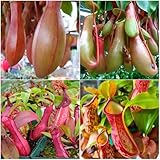
- Distinctive Pitcher Structure:These Nepenthes seeds grow into plants with tubular pitchers in green, maroon, or purple hues. Lid edges feature unique formations, blending visual appeal with insect-trapping functionality.
- Seasonal Delicate Inflorescences:Slender stems bear umbel or raceme flowers in late spring to summer, with yellow-green or deep red petals curling at the edges for subtle seasonal interest.
- Versatile Placement Options:Thrive in hanging pots on balconies, as desktop plants, or in garden corners. Adapt to sunny or partially shaded spots, adding tropical flair to any space.
- Basic Moisture Care:Keep soil slightly moist and avoid drought. Brighter light enhances pitcher color, but they grow well in lower light too—minimal fertilizing needed for beginner-friendly care.
- Straightforward Carnivorous Gardening:Reliable germination for easy sowing—enjoy the fun of growing from seed to mature plants, a perfect introduction to carnivorous plant care.
Recheck the composition as plants grow. A palm or cordyline that was correctly placed at installation may eventually block the view of a bromeliad. Rather than adding more plants to fill every gap, first consider rotating containers, lifting a lower specimen onto a safe stand, or relocating an overgrown plant. This preserves the three-layer logic with fewer purchases.
Independent reader supportYour contribution helps us test, update, and keep practical guides available for everyone.Common mistakes and practical fixes
Putting every plant in the brightest spot
Bright light is not a blanket recommendation for the entire list. Reserve the strongest exposure for the plants for which the feature specifies it, and verify the tolerance of the others locally. If foliage bleaches, scorches or loses its intended colour, ask a nursery whether the plant needs filtered light or a different position.
Free tools Windows power users keep installed
One-click scans. No signup required.
Ignoring drainage because the garden is paved
Paving can make runoff look obvious while hiding water trapped in a pot or planting pocket. Jade’s explicit requirement for excellent drainage is a warning to check the root zone, not merely the surface. Elevate containers slightly, keep outlets clear and avoid leaving pots in standing water.
Choosing plants by colour alone
A bright leaf may look right in a nursery and still fail to provide the required height or texture at home. Select each specimen for its role—backdrop, bridge, rosette, accent or spiller—then use colour to refine the group.
Overfilling a narrow route
Small gardens need negative space. If a pot forces people to turn sideways, move it even if the colour combination is attractive. The makeover’s lesson is better composition, not maximum plant density.
Best Value

- [Fragrant Tropical Blooms] Produces clusters of highly fragrant flowers in a range of colors, blooming from spring through fall. Each flower lasts several days, with continuous new blooms appearing throughout the warm season.
- [Fast-Growing Flowering Tree] Grows 15-25 feet tall in warm climates, with a vase-shaped form and thick, succulent branches. Can be maintained as a smaller container plant in cooler zones.
- [Drought and Heat Tolerant] Thrives in hot, dry conditions with minimal water once established. Succulent stems store moisture, allowing plants to tolerate neglect. Perfect for low-water and xeriscape gardens in zones 10-11.
- [Sun and Seed Needs] Requires full sun with well-drained, sandy or loamy soil. Seeds have high germination rate when fresh—plant with winged end up, 1/2 inch deep. Maintain 70-80°F; germination 14-21 days. Keep soil moist but not waterlogged.
- [For Home Gardeners] Suitable for gardeners in warm climates or those willing to overwinter indoors. Ideal as a specimen tree, patio container plant, or tropical accent.
Assuming the feature supplies a budget or recipe
The Better Homes and Gardens Australia account is qualitative. It does not report dimensions, costs, quantities, installation time or measured before-and-after performance. Treat the named palette as inspiration and price plants, pots, soil and delivery locally.
What is established—and what still requires local judgment
The documented outcome is visual: three foliage layers made a paved, enclosed-feeling terrace garden appear softer and more inviting, with colourful leaves drawing attention away from walls and pavers. The named plants and the specific notes about ‘Silver Plum’, jade and Guzmania provide a concrete starting palette.
There is no reported garden size, plant spacing, budget, climate zone, irrigation design or survival rate. Consequently, no single shopping list or spacing diagram can be presented as the original project’s exact specification. Your local light, rainfall, frost exposure, wind, drainage and supplier availability determine whether a given plant belongs in the same position. Confirm those variables with a qualified local nursery or garden professional before committing to a permanent bed.
The Bottom Line
For a small terrace-house garden, the most transferable idea is the three-level composition: use tall palms, cordylines or a focal bromeliad to frame the space; fill the middle with structural, colourful and rosette forms; then finish with low bromeliads, Moses in the cradle and a spilling sedum. Place each plant according to its actual light and drainage needs, especially the full-sun preference of ‘Silver Plum’ and the excellent-drainage requirement of jade.
Quick Recap

Product prices and availability are accurate as of the date/time indicated and are subject to change. Any price and availability information displayed on Amazon at the time of purchase will apply.
The Tool Desk
Outbyte PC Repair FREEClear out junk files and repair common Windows errorsFree Scan →Outbyte Driver Updater FREEScan for outdated or missing drivers - takes under a minuteDriver Scan →
