ThatPainter is reader-supported. When you buy through links on our site, we may earn an affiliate commission. Learn More
Air sealing and ventilation are complementary, not competing, measures. Sealing cracks and bypasses stops uncontrolled outdoor-air leakage and the heating or cooling losses that come with it. A deliberate whole-building ventilation system then supplies the outdoor air occupants need and removes or dilutes moisture, odors and other contaminants. The efficient solution is to control where air enters and leaves, recover energy when conditions justify it, and operate fans and dampers only as much as the building and local code require.
As an Amazon Associate I earn from qualifying purchases.
The right arrangement depends on climate, humidity, occupancy, contaminants, envelope airtightness, existing HVAC equipment, maintenance capability and jurisdictional requirements. There is no universally most-efficient ventilation type or a project design that can be selected without those facts.
Crashes, No Sound, or Screen Glitches?
Random freezes, missing sound and display glitches usually trace back to one bad driver. Find and replace yours safely.Free scan · under a minutePC Slower Than It Used to Be?
A free scan shows the junk files, broken settings and background clutter dragging Windows down - then fixes them in one click.Free scan · Windows 10 & 11Why an airtight building still needs mechanical ventilation
Air leakage and ventilation perform different jobs. Leakage moves air through cracks, construction joints, penetrations and pressure differences that occupants cannot control. In winter it can draw in cold, dry air; in summer it can bring in hot, humid air. The HVAC system must condition that unintended airflow, and the paths may bypass filters or bring pollutants from garages, crawlspaces or wall cavities.
#1 Best Overall
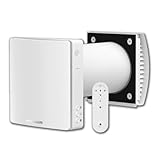
- Ultra High Efficiency ECOasis ERV-rm Series Ductless Energy Recovery Ventilation System with 97% Heat Recovery| Minimal Energy Consumption with an Average Power draw of only 8W | Wall-Mounted with Variable Length Air Channel Duct to Suit Different Wall Thicknesses| Large Volume Air Output with Up to 35 CFM of Treated Airflow| Washable Re-usable Integrated Prefilters along with F7 (MERV13) Filter| Wi-Fi Controlled via Free Smartphone App (along with Standard Controller)| Rainproof Design with Hooded and Angled Outdoor Cover| Super-Silent Operation with a Maximum Sound Output of 32.7 dB(A)| Remove Room Air Pollutants: Filtration of air impurities such as MVOCs (Microbial Volatile Organic Compounds) along with removal of dust and other contaminants that commonly cause coughing fatigue and allergy aggravation| Freshen and Renew Breathing Air: Extraction of stale and stuffy room air while simultaneously introducing fresh outdoor air into the room to improve oxygen levels and overall quality of life| Minimize Strain on the Home Heating or Cooling System: By cooling the incoming hot outside air in summertime and heating the incoming cold outside air in wintertime the system intelligently prevents a change in indoor air temperature by using that outgoing stale indoor air to preheat or precool the incoming outdoor air depending on the season (Recommended to install two 50 Series ERVs to take advantage of this benefit)| Continuously Monitor Air Quality: A built-in CO2 sensor allows automated management of oxygen CO2 levels inside the room to maximize breathability| Power Supply: 110 ~ 240 VAC (50~60 Hz) with Plug-In Power Cord| Dimensions (WDH): 9-3/8" x 19-5/8" x 10-1/8"| Airflow w/ F7 Filter (Lo/Med/Hi/Max): 11.8 / 23.5 / 29.4 / 35.3 CFM | In-Wall Channel Span: 11" ~ 18-1/2"| Method of Control: Onboard Interface Handheld Remote Smartphone App| Product Weight: 11 lbs| Input Power (Lo/Med/Hi): 6 / 7 / 8 W| Water-Resistance Rating: IPX4| Diameter of Air Duct: 6-1/4"|User's Manual
Ventilation is intentional airflow. Fans and ducts exhaust stale air, supply outdoor air, or do both in a controlled pattern. The U.S. Department of Energy (DOE) states that “Whether new or existing, all energy-efficient homes require whole-house mechanical ventilation to maintain good indoor air quality.” Its overview describes exhaust, supply, balanced and energy-recovery approaches: DOE Building Science Education: HVAC Whole-House Ventilation.
After air sealing, natural leakage may no longer provide dependable dilution. Cooking, bathing, cleaning products, furnishings, combustion appliances, radon and occupant-generated moisture can still add contaminants. A tighter envelope therefore increases the importance of a designed ventilation path; it does not make ventilation optional.
Four basic whole-house ventilation arrangements
The airflow configuration determines where outdoor air enters, where exhaust leaves, and what the HVAC system must handle. The table compares the concepts; actual performance depends on design, controls, ductwork and commissioning.
The Tool Desk
Outbyte Driver Updater FREEScan for outdated or missing drivers - takes under a minuteDriver Scan →Outbyte PC Repair FREERepair Windows errors before they cause bigger problemsFix Now →| Arrangement | Airflow pattern | Potential advantages | Design trade-offs |
|---|---|---|---|
| Exhaust | Fans remove indoor air; replacement air enters through intentional inlets or leakage paths. | Simple equipment and ducting; useful where exhaust points are easy to serve. | Replacement air is not necessarily filtered or tempered. In humid or cold weather, uncontrolled inlets can increase heating or dehumidification loads and may draw air from undesirable locations. |
| Supply | A fan brings outdoor air indoors, usually through a filter; indoor air leaves through leaks or designated exhaust. | Outdoor air can be filtered and introduced where it is needed; positive pressure can limit some infiltration paths. | Requires a reliable relief or exhaust path. In humid climates, unconditioned supply air can add moisture; in cold climates, drafts or condensation can occur if distribution is poor. |
| Balanced | Dedicated supply and exhaust fans move roughly coordinated airflows. | Better control of intake and exhaust locations and building pressure; suitable for tightly constructed buildings when ducts are planned well. | Two air streams mean more equipment, controls, fan energy, filters and maintenance than a simple exhaust system. |
| Energy recovery | A balanced ventilator transfers energy between outgoing exhaust and incoming outdoor air. | Reduces the heating or cooling energy needed to condition outdoor air while maintaining deliberate ventilation. | Heat exchangers add cost, size, pressure resistance and service requirements. The unit still needs correctly sized ducts, filters, controls and condensate or frost management where applicable. |
DOE’s whole-house guidance explains the categories and their airflow differences. Selection should follow the building’s pressure needs, contaminant sources, climate and code rather than a generic ranking.
Rank #2

- SmartFlow ECM Motors: Dual brushless motors automatically adjust speed for optimal airflow and quiet operation under varying pressure conditions
- Customizable Airflow (30–110 CFM): Multi-speed selector supports balanced, positive, or negative pressure setups
- Energy Recovery & Protection: Hygroscopic transfer core balances heat and moisture for improved comfort and efficiency
- Dual MERV 13 Filters Included: High-efficiency filters clean incoming and outgoing air; optional washable MERV 6 filters available
- Flexible Installation & Controls: Ceiling, wall, or floor mountable with plug-in or hardwired options; compatible with Wi-Fi module, touch screen wall control, and low-voltage timer switch
HRV, ERV and the meaning of energy recovery
Heat-recovery ventilators (HRVs)
An HRV transfers sensible heat only. In a cold season, warm exhaust air preheats incoming outdoor air; in a warm season, cooler exhaust can precool the intake. Moisture is not intentionally transferred, so indoor humidity remains more independent of the outgoing stream. That can suit buildings where preserving indoor dryness is important, but the designer must still address winter humidification or summer dehumidification separately.
Energy-recovery ventilators (ERVs)
An ERV transfers sensible heat and a portion of moisture between the two airstreams. In a heating season it can return some moisture to very dry indoor air; in a cooling season it can reduce the latent load from humid outdoor air. Transfer effectiveness varies by core, airflow and operating conditions, so an ERV is not automatically preferable in every climate or occupancy pattern.
DOE describes both technologies in its HVAC retrofit guidance: DOE HVAC Retrofit. The choice between HRV and ERV should be made with seasonal humidity targets, mold risk, building use, frost conditions, filtration and local practice in view. Neither device eliminates the need for proper outdoor-air quantity, distribution or maintenance.
Quick wins for a faster PC:
Scan for outdated or missing drivers - takes under a minuteDriver Scan →Clear out junk files and repair common Windows errorsFree Scan →Fix the driver behind crashes, sound loss and screen glitchesFind Drivers →Account for fan energy and pressure drop
A heat exchanger creates resistance that fans must overcome. A recovery unit can reduce the HVAC energy used to heat or cool outdoor air while increasing electrical energy for fans. Duct length, bends, filters, grilles and dirty cores add pressure drop. Compare the complete operating balance—recovered heating and cooling energy, fan power, defrost operation, controls and maintenance—not just the exchanger’s advertised recovery percentage. Commissioned airflow at the design pressure matters more than a nominal rating disconnected from the installation.
Rank #3

- Heat Recovery Ventilator (HRV) for Single Room Ventilation: Equipped with a high-efficiency ceramic heat exchanger that recovers up to 90% of heat energy from exhaust air, improving indoor air quality and reducing heating energy consumption
- Smart WiFi & Remote Control: Control your ventilation system anytime via the Tuya App or included remote. Adjust fan speed, humidity and mode for smarter air management
- 3 Airflow Modes: Choose between Fresh Air, Exhaust, and Recirculation modes to create a comfortable and healthy indoor environment
- Energy-Efficient EC Motor: Features an 8.5W EC motor with PWM control, providing powerful airflow, ultra-quiet operation under 30dB, and low energy consumption for continuous, efficient ventilation
- Versatile Wall-Mounted Ventilation System: Weiworld 150 mm (6 Inch) heat recovery ventilation system suitable for apartments, offices, barns, sheds, tiny homes, and garages—bringing clean, fresh air wherever you need it
Controls that reduce unnecessary conditioning
Demand-control ventilation
Demand-control ventilation varies outdoor-airflow based on occupancy indicators such as people counters or carbon-dioxide (CO2) sensors. During low occupancy, the system may reduce airflow and the energy required to condition it; during busy periods, it increases ventilation toward the design requirement. DOE identifies occupancy and CO2 sensors as possible control inputs.
CO2 is an indicator of occupancy-related ventilation demand, not a universal pollutant detector. A sensor will not identify every volatile organic compound, particle, combustion product, moisture problem or pollutant entering from a garage. Do not use a CO2 strategy to bypass code-required minimum outdoor air, source-control exhaust or contaminant-specific monitoring. Setpoints, sensor placement, calibration and minimum-flow limits should be documented and tested.
Economizers
An economizer uses favorable outdoor conditions for cooling instead of relying entirely on mechanical refrigeration. When outdoor temperature and humidity are suitable, dampers open to increase outdoor-air cooling; when conditions are hot or humid, they return toward minimum ventilation positions. DOE notes that controls and maintenance are essential: a stuck-open damper can waste energy by bringing in excessive outdoor air, while a stuck-closed damper can defeat the intended cooling strategy. Verify actuator travel, sensors, linkages, seals and changeover logic during seasonal service.
PC Slower Than It Used to Be?
A free scan shows the junk files, broken settings and background clutter dragging Windows down - then fixes them in one click.Free scan · Windows 10 & 11Outdated Drivers Are Slowing You Down
One free scan finds every outdated or missing driver and matches the right update for your exact hardware.Free scan · exact hardware matchMatch the strategy to climate, building and occupants
Climate changes the value and risk of each airflow arrangement. Cold climates emphasize heat loss, frost control, combustion safety and condensation at ducts or grilles. Hot-humid climates emphasize latent-load control, vapor management and preventing outdoor moisture from entering unconditioned spaces. Mixed climates may require seasonal modes. Dry climates may benefit from retaining some indoor moisture, but only where moisture accumulation is controlled.
Rank #4

- 4-Inch Plug-in EC Wall Fan with Reversible Remote: Control dual airflow instantly via remote-exhaust stale air or intake fresh air. No wiring needed: Plug directly into any standard outlet
- Simple Wall-Mount Drilling Installation: Secure to walls with included screws (drill required). Cannot be hung-designed for stable wall-mounting in bedrooms
- Stainless Steel Slanted Rain Hood: Corrosion-resistant angled design deflects rain and humidity. Zero-maintenance outdoor durability
- Washable Ceramic Core with No Replacements: Rinse reusable filter every 3 months-traps fine particles for cleaner indoor air
- Plug-in Operation in Minutes: Includes power cord and plug. Drill wall, mount fan, and plug in. No electrician required
Building use is equally important:
- Homes and apartments: Kitchens, bathrooms, laundry areas, attached garages and bedrooms create different exhaust and distribution needs. A quiet, continuous system may be more effective than intermittent high-speed fans that occupants forget to run.
- Schools, offices and meeting spaces: Occupancy changes rapidly. Demand control can help, but classrooms, conference rooms and high-density areas still need minimum outdoor airflow and reliable sensor placement.
- Retail, kitchens, laboratories and workshops: Local exhaust and contaminant capture take priority. Recirculating air cannot substitute for source-control exhaust where processes release hazardous or irritating substances.
- Healthcare, senior housing and other sensitive settings: Pressure relationships, filtration, redundancy and infection-control requirements may exceed ordinary residential or commercial practice.
Local mechanical, energy, fire and health codes determine required ventilation rates, pressure relationships, duct protection, controls and commissioning. Confirm the applicable edition and authority having jurisdiction before selecting equipment or reducing airflow.
Independent reader supportYour contribution helps us test, update, and keep practical guides available for everyone.A step-by-step process for an energy-conscious ventilation project
1. Document the existing building
Start with an inventory rather than buying equipment. Record envelope leakage evidence, combustion appliances, exhaust fans, outdoor-air intakes, duct routes, filter sizes, controls, operating schedules, complaints and signs of moisture or condensation. Measure or otherwise verify actual airflow where practical. DOE’s Federal Energy Management Program published a Ventilation Assessment and Action Guide on September 26, 2025, covering evaluation, maintenance and improvement actions for facilities.
2. Identify contaminant sources and pressure risks
List activities and locations that generate moisture, particles, odors or combustion products. Check whether a garage, crawlspace, loading area or chemical storage space can be depressurized and drawn into occupied zones. Inspect combustion venting and pressure interactions before tightening the envelope. Test for radon or other locally relevant hazards when indicated; mechanical ventilation is not a substitute for source mitigation.
3. Establish the required outdoor-air and exhaust functions
Use the applicable code, standard and occupancy schedule to establish minimum outdoor air, local exhaust and pressure relationships. Separate continuous background ventilation from intermittent boost modes. Define which spaces must be exhausted directly and where replacement air will enter. A designer should document assumptions rather than rely on a single CO2 reading or a fan’s nameplate airflow.
Best Value

- A leading provider of ventilation and air-quality solutions for homes
4. Choose the airflow configuration
Compare exhaust, supply, balanced and recovery options against climate, envelope airtightness, available shafts, electrical capacity, noise limits, filtration, condensate or frost provisions and maintenance access. For a tight building with substantial heating or cooling loads, balanced recovery may reduce conditioning energy; for a small retrofit with limited duct space, a simpler arrangement may be more practical if pressure and moisture risks are controlled.
5. Design ducts, filters and distribution together
Locate intakes away from vehicle exhaust, plumbing vents, cooling-tower discharge and other contamination sources. Keep ducts inside the conditioned envelope where feasible, insulate and seal them where they pass through unconditioned spaces, and provide access to filters, cores, coils, drain pans and dampers. Select filtration that protects occupants and equipment without imposing excessive pressure drop. Balance supply and exhaust at the installed operating pressure, not only at free air.
6. Integrate with heating and cooling equipment
Determine whether ventilation air is tempered by the existing air handler, a dedicated outdoor-air unit or the recovery device itself. Confirm that coil capacity, condensate drainage, controls and low-temperature protection match the new airflow. Avoid connecting a high-resistance ventilator to an undersized fan. Verify that exhaust operation does not backdraft combustion appliances or cause doors to become difficult to open.
Recommended Free Tools
7. Configure and commission controls
Write the operating sequence: normal airflow, occupied and unoccupied modes, boost, demand-control limits, economizer changeover, frost protection, alarms and failure responses. Calibrate sensors, verify damper positions and measure terminal airflow. Test representative high- and low-occupancy conditions. Give operators a clear schedule for filter changes, core cleaning, sensor checks and seasonal economizer inspection.
8. Verify after air sealing or weatherization
Air sealing changes pressure paths and may alter existing exhaust performance. Recheck airflow, combustion safety, humidity, odors and pollutant levels after envelope work. The Environmental Protection Agency warns that weatherization without appropriate indoor-air-quality protections can allow contaminants to build up and recommends inspection and diagnostic testing: EPA: Energy, Weatherization and Indoor Air Quality.
Maintenance determines whether modeled savings survive
Ventilation efficiency is an operating outcome, not just an equipment specification. Use the manufacturer’s manual for model-specific intervals and dimensions; do not assume a generic replacement filter fits. At minimum, establish these checks:
- Replace or clean filters when loaded, and investigate unusually rapid loading.
- Inspect heat-exchanger cores, seals, condensate drains, pans and frost-control components.
- Confirm outdoor-air intakes and exhaust outlets are clear of snow, leaves, nests and stored materials.
- Measure fan airflow and pressure after filter changes or duct modifications.
- Calibrate CO2, temperature, humidity and outdoor-air sensors on the schedule required by the control system.
- Exercise economizer dampers and verify that actuators reach commanded positions and close tightly.
- Review alarms, bypasses and schedules so an override does not leave fans or dampers running continuously.
Troubleshooting common symptoms
| Symptom | Likely contributors | Checks and corrective direction |
|---|---|---|
| Persistent stuffiness or odors | Insufficient airflow, blocked intake, poor distribution, failed sensor or source contaminant. | Measure supply and exhaust at terminals, inspect filters and intakes, verify control minimums, and address the source rather than simply increasing whole-building airflow. |
| High humidity or window condensation | Humid outdoor air, inadequate latent control, ERV/HRV mismatch, blocked drain or excessive indoor moisture generation. | Check seasonal operating mode, drain and core condition, outdoor-air quantity and local exhaust; investigate leaks and moisture sources. |
| Cold drafts or dry air | Poorly located supply grilles, untempered outdoor air, excessive winter airflow or inadequate heat recovery. | Verify supply temperature, balancing and recovery operation; improve distribution and control limits before disabling ventilation. |
| Unexpectedly high energy use | Dirty filters, excessive fan pressure, stuck economizer damper, failed recovery bypass or schedules that ignore occupancy. | Inspect dampers and controls, compare measured airflow and fan power with design intent, and correct maintenance or programming faults. |
| Backdrafting or combustion odors | Negative building pressure from exhaust, leakage pathways or appliance interaction. | Stop unsafe operation, obtain qualified combustion-safety testing, and redesign pressure balance or make-up air as required by code. |
Common design mistakes to avoid
- Relying on leakage as ventilation: Leakage varies with wind and temperature, is difficult to filter, and may draw air from contaminated cavities.
- Sealing first and checking later: Weatherization can change pressure and combustion conditions. Coordinate envelope work with ventilation assessment and post-work testing.
- Choosing ERV or HRV by climate label alone: Humidity targets, occupancy, contaminants, frost exposure, equipment placement and operating schedules still determine suitability.
- Treating CO2 as an all-purpose IAQ monitor: It indicates occupancy-related demand but does not detect every pollutant or replace required exhaust.
- Ignoring fan power: Recovery savings can be offset by high pressure drop, restrictive filters, undersized ducts or poor balancing.
- Skipping commissioning: Installed airflow, sensor calibration and damper operation determine actual performance; nameplate ratings do not.
- Leaving maintenance undefined: A blocked filter or stuck damper can erase energy savings and degrade IAQ long before occupants notice.
A practical decision rule
Begin with the building’s required ventilation functions and contaminant controls, then reduce the energy penalty through airtightness, efficient fans, low-resistance distribution, appropriate heat or energy recovery, and occupancy-responsive controls. Recheck pressure, humidity and combustion safety after envelope changes. The final design should be documented, code-compliant, commissioned and maintainable by the people who will operate it.
Quick wins for a faster PC:
Fix the driver behind crashes, sound loss and screen glitchesFind Drivers →Clear out junk files and repair common Windows errorsFree Scan →Scan for outdated or missing drivers - takes under a minuteDriver Scan →Quick Recap

Product prices and availability are accurate as of the date/time indicated and are subject to change. Any price and availability information displayed on Amazon at the time of purchase will apply.

