Do these 3 things before closing this tab:
Crashes, No Sound, or Screen Glitches?
Random freezes, missing sound and display glitches usually trace back to one bad driver. Find and replace yours safely.Free scan · under a minuteWindows Errors? Fix Them Before They Spread
Repair common Windows errors and clear accumulated junk for a smoother, more stable PC - no reinstall needed.Free scan · no reinstall1Scan for outdated or missing drivers - takes under a minute2Repair Windows errors before they cause bigger problems3Fix the driver behind crashes, sound loss and screen glitches
ThatPainter is reader-supported. When you buy through links on our site, we may earn an affiliate commission. Learn More
Create the lighting plan around what people do in the room, where daylight falls, and what deserves attention—not around a single ceiling fixture. Map the room, assign ambient, task, and accent layers, then choose fixture positions, color qualities, and controls that can change with the activity.
Start with a room map, not a shopping list
A lighting scheme is a plan for the room’s visual jobs. The same fixture can be useful or frustrating depending on its aim, distance, and relationship to the work surface. Before selecting bulbs or fittings, document the room and the people who use it.
As an Amazon Associate I earn from qualifying purchases.
List every activity and its location
Write down what happens in the room and mark the place where each activity occurs. Reading may happen in one chair, homework at a desk, food preparation along a counter, and conversation around a sofa. A dining table, kitchen island, dressing mirror, laundry bench, or craft table each creates a different lighting requirement.
Note whether an activity is occasional or daily, whether it requires accurate color judgment, and whether people sit, stand, or move while doing it. A plan that serves a fixed reading chair can use a close lamp; a room used for several activities benefits from independently controlled zones.
#1 Best Overall

- 16 Million DIY Colors: Govee smart light bulbs own millions of color and 54 preset scene modes, you can explore your favored one or pick one suits your moods most, bringing yourself a real fantastic lighting experience(Working Voltage: AC 120V).
- Music Sync: Our smart light bulbs change color and brightness simultaneously when sounds are detected by the microphone on your phone. Note: only works when the microphone is not occupied. Download Govee Home App and enable microphone permissions.
- Smart Control: Govee color changing light bulbs make it possible to control your bulbs with simple voice commands. And you'd also feel free to turn your smart light bulbs on/off, adjust brightness, or change the colors, set scenes via Govee Home App. (Note: Doesn't support 5G)
- Group Control: Simplify daily setups by grouping smart bulbs & Govee devices. Create a scheme, add devices, and control them simultaneously. Ensure bulbs are on stable 2.4GHz WiFi for optimal experience. Please Note: This A19 smart bulb cannot be used with smart switches.
- Timer and Schedule: Applying the ceiling fan light bulbs to your daily routine now is easier than ever, with timer function and modes like Sunrise & Sunset, you can set your bulbs to brighten when you wake up, and gradually dim when you fall asleep.
Record daylight and the physical layout
Mark windows, the direction daylight enters, and the times of day when the room is naturally bright or shaded. Then add doors, tall cabinets, beams, fireplaces, large furniture, artwork, mirrors, and other architectural details. These can block, reflect, or compete with light.
Robert Hoshyla of Orsman Design describes the planning mindset this way: “Lighting is about using the home as a canvas, calling attention to the life that happens inside and accentuating the home’s most exciting features.” Treat the inventory as a design brief: it tells you what must be visible, what must be comfortable, and what should recede.
Mark focal points and visual problems
Circle features you want to emphasize, such as art, shelving, a textured wall, or a plant. Also mark likely trouble spots: a screen that could catch glare, a mirror that could reflect a bare lamp, a work surface where a person could cast a shadow, or a circulation path where a fitting could obstruct movement.
Build the three lighting layers
Most adaptable rooms combine three functions. Ambient light establishes general visibility, task light serves a particular activity, and accent light directs attention to a selected feature. They can overlap: a recessed fitting may be ambient when aimed broadly or accent when aimed at an object.
| Layer | Job | Examples from design guides | Placement decision |
|---|---|---|---|
| Ambient | Provides the room’s general illumination. | Daylight, wide-beam recessed downlights, indirect cove light. | Spread light broadly enough to move through the room without making every surface equally bright. |
| Task | Directs light to the surface or area used for a specific activity. | Table or floor lamp for reading, pendant over dining or crafting, under-cabinet light for a counter. | Place the source near the work and aim it to limit shadows and glare. |
| Accent | Draws attention to an object or architectural detail. | Narrow-beam light, track-mounted projector, recessed light aimed at an object, integrated millwork light, toe-kick light. | Use a focused beam and make the highlighted feature significantly brighter than its surroundings. |
Ambient: establish a usable base
Ambient light lets people enter, move, and see the room as a whole. Daylight can be part of this layer, but it changes with weather and time. Wide-beam recessed fittings and indirect cove light are examples of electric ambient sources. Distribute them so one bright point does not leave the rest of the room in deep contrast.
Rank #2

- SMART UPGRADE FOR CONVENIENCE AND ENERGY EFFICIENCY : Control your Amazon Basics smart light bulbs using your voice or via the Alexa app, no more turning on/off each individual light switch. Create custom routines to schedule your lights automatically at sunset and sunrise and save energy. You can change colors of your lights for a movie night with family or friends. Works Exclusively with Alexa. Not compatible with Google Assistant, Apple HomeKit, Smart Things.
- SIMPLE TO SET UP WITH ALEXA: Screw in the light bulb, open the Alexa app, and get started in minutes as you get notified “ First light bulb found”. Otherwise, you can add the smart bulb directly from Alexa app. No hubs or 3rd party apps or skills required. For zero touch set up experience, check “Link device to your Amazon account to simplify setup” during checkout and get started with your smart bulb in no time. Note: Amazon Basics smart light bulbs work exclusively with Alexa to be set up with 2.4GHz Wi-Fi only.
- TRANSFORM YOUR SPACE WITH BRILLIANT COLORS: Create your perfect mood by choosing from 16 preset color selections and brightness levels from 5% to 100%. Have best moments during holiday festivities or gaming with friends or movie nights with family with different colors. Just say “Alexa, set the hall lights to purple”. Note: bulbs are dimmable via Alexa app or voice control only (not compatible with a physical dimmer.)
- CONTROL FROM ANYWHERE: Control your smart lights with Alexa app even when you are not at home e.g. from your car, office, gym. Feel secure by making your house look occupied even when you are away by creating an Alexa routine to schedule lights to turn on and off automatically.
- GROUP CONTROL: Create groups in the Alexa app to combine lights together, allowing you to control lights by each room, or all of your home lights with a single voice command or via app. When it's time to sleep, just say “Alexa, turn off the bedroom” OR use the Alexa app to turn off the bedroom lights at once.
Task: light the work, not just the room
Task light belongs at the activity. Task lighting typically requires more lumens than ambient lighting, but no universal multiplier is established. Instead of applying one number to every room, judge whether the work surface is clear, whether hands or tools create shadows, and whether the user can adjust the light.
Accent: create emphasis and depth
Accent light is selective. A narrow beam aimed at art, a shelf, or a textured surface can make that feature read as a destination. Track-mounted projectors are useful when displays change. Integrated millwork and toe-kick lighting can add emphasis at cabinets or low architectural lines without turning the entire room brighter.
Cecilia Ramos, Senior Director at Lutron, explains the effect of relying on one layer: “If you were to paint a room with only one typology of light at a singular intensity, it would feel really flat,“ says Cecilia Ramos, Senior Director at Lutron. “You wouldn’t feel depth.”
Match fixture form and position to the activity
Reading and quiet seating
Use a table lamp or floor lamp positioned closer to the reader. This arrangement can reduce the shadows or glare that may occur when the only source is overhead. Place the lamp where the book or screen is illuminated without shining directly into the reader’s eyes. If a chair can move, choose a floor lamp with enough reach to follow it; if the chair is fixed, a nearby table lamp may be simpler.
Dining and crafting
A pendant over a dining or craft surface provides direct overhead light without using table space. Center it on the surface people actually use, rather than automatically centering it in the room. For a table that changes size or function, separate control or more than one pendant can keep the useful area illuminated as the layout changes.
The Tool Desk
Outbyte Driver Updater FREEScan for outdated or missing drivers - takes under a minuteDriver Scan →Outbyte PC Repair FREERepair Windows errors before they cause bigger problemsFix Now →Rank #3

- Voice Control: After being paired with the free SmartLife app via Wi-Fi, these smart bulbs work with Alexa and Google Assistant for hands-free voice control.
- 3× Faster Setup: With an upgraded 2nd-generation BLE + Wi-Fi dual-channel chip, setup is up to 3 times faster and more reliable.
- Flexible Configuration: Connect locally via BLE or Wi-Fi, and enjoy remote control via Wi-Fi when you're away. After setup, the bulb intelligently switches between BLE and Wi-Fi as needed. (Note: Wi-Fi setup requires both 2.4GHz Wi-Fi and BLE for initial pairing. BLE-only setup requires just BLE.)
- Always Connected: Still control your lights locally even if Wi-Fi goes down— with BLE backup when Wi-Fi is off.
- Automated Lighting: Automate your smart bulb using a schedule, timer, plan, and biorhythm functions in the SmartLife app. Control these E26 bulbs separately or in a group for a customized experience that works for you and your family. Turn the lights on/off, change colors, or dim the lights using the SmartLife app anytime and anywhere.
Kitchens, laundry rooms, bathrooms, and dressing areas
Under-cabinet lighting is a task-light example for kitchen work and can also serve laundry rooms, bathrooms, or dressing rooms. Position it to illuminate the counter or bench rather than the cabinet face. In a dressing area, consider where a person stands in relation to the mirror so the task light does not create a strong shadow across the face.
Art, shelving, and changing displays
Track-mounted projectors suit rooms where artwork or displays change. Aim each projector at the current feature and keep the accent beam distinct from the general ambient field. Recessed fittings aimed at an object and integrated millwork lighting are alternatives when a track would not suit the room’s appearance.
Choose color temperature as a design decision
Color temperature changes the atmosphere as well as the way surfaces appear. The D.Signers guide characterizes warm light as cozy, calm, and inviting, with bedrooms, living rooms, family rooms, and dining rooms as examples. It describes neutral or soft white as friendly and clean for kitchens, bathrooms, and workspaces, while cool or daylight light is presented as suitable for offices, hospitals, and other commercial settings.
Those are design suggestions, not a rule that assigns one Kelvin value to every room. Decide how the room should feel, how much daylight it receives, and whether adjacent spaces need to appear visually compatible. If a room serves several purposes, adjustable fixtures or scenes can let it shift from a warmer evening atmosphere to a clearer work setting.
Windows Errors? Fix Them Before They Spread
Repair common Windows errors and clear accumulated junk for a smoother, more stable PC - no reinstall needed.Free scan · no reinstallCrashes, No Sound, or Screen Glitches?
Random freezes, missing sound and display glitches usually trace back to one bad driver. Find and replace yours safely.Free scan · under a minuteUse CRI when color accuracy matters
Color rendering index (CRI) is a 0-to-100 scale describing how accurately a light source renders color. The D.Signers guide labels CRI 85 to 90 as “good” and CRI 90 or higher as “excellent,” particularly where people must distinguish colors accurately. Treat those thresholds as the guide’s categories rather than a universal lighting standard.
Rank #4

- 【Alexa & Google Home Voice Control: Hands-Free Convenience】As smart bulbs that work with Alexa & Google Home, it supports voice commands to turn on/off, adjust brightness, and switch colors—perfect for cooking, baby care, or remote work. No hub required: download the AiDot App, integrate with Alexa/Google Home, then link the LED light bulbs to alexa devices or google—3 simple setup steps. It connects to 2.4GHz WiFi, ensuring stable, lag-free voice response for effortless control from anywhere
- 【WiFi & Bluetooth Dual Connection: Uninterrupted Control】Linkind smart light bulbs feature dual WiFi + Bluetooth connectivity for Uninterrupted Control—2x faster than single-connection bulbs. Enjoy anytime, anywhere control: turn on lights remotely before arriving home, or manage them locally when at home. With Bluetooth Backup, you stay connected even when WiFi is off—solving connectivity gaps in bedrooms or hallways. Benefit from blazing speed: quick setup and instant responses, no lag or delays. 【Note】Initial setup requires 2.4GHz WiFi (not 5GHz) + Bluetooth.
- 【Music Sync: Dynamic Light for Immersive Experience】 Via AiDot App, Linkind WiFi light bulbs can sync with music rhythm detected by your phone's microphone, changing colors and brightness with beats—ideal for birthday parties and family gatherings. It offers 4 preset modes(Party/Dynamic/Calm/Auto Rhythm), allowing you to customize light effects based on music style. The sensitive rhythm detection ensures no lag between music and light, bringing immersive audio-visual enjoyment.
- 【DIY Fun: Creative Light Play】Unleash lighting creativity with AiDot App's unique features—add fun to daily life and parties. Light Show lets you DIY custom effects: create swing, loop, ripple, flow, fading, jumping, or other dynamic patterns to match your mood, no pro skills needed. Chat with Dotis AI directly: say“I need a party mood” or “give me calm vibe,” and it instantly generates tailored light scenes. Join the Light Lab Community to discover trending designs, share your creations, and innovate with fellow users. These exclusive DIY functions turn smart bulbs into a creative playground, making every lighting moment unique.
- 【Preset Scenes & Schedule: Smart Energy-Saving】Linkind e26 smart bulb provides 104 preset scenes(Festival/Reading/Sleep etc.)and timer/schedule functions. You can set it to auto-turn on at dawn(simulating sunrise)and off at night, reducing energy waste by up to 85% vs traditional bulbs. Group control function lets you manage multiple bulbs simultaneously, perfect for living rooms or entire homes. High-quality LED design ensures 25,000-hour lifespan, saving replacement costs.
The same guide illustrates 2700K light at CRI 97, 90, 80, and 70, showing why two sources with a similar apparent warmth can render colored materials differently. For a kitchen, art area, dressing space, or craft station, compare the stated CRI of candidate sources instead of judging color temperature alone.
Size brightness from the job, not a universal room number
Brightness depends on the room’s area, surfaces, daylight, fixture distribution, and activity. The D.Signers guide shows example lumen values of 450, 800, 1600, and 2600 as illustrations; they are not a prescription for a particular room or evidence from a population study.
Lutron’s professional planning guidance describes the Lumen Method, which takes square footage and footcandle levels into account. No universal target calculation is established for every room, so do not treat a single lumen-per-square-foot figure as universally correct. For a practical plan, first decide which surfaces need to be readable, then add task light where the work demands more than the ambient layer provides.
Quick wins for a faster PC:
Clear out junk files and repair common Windows errorsFree Scan →Fix the driver behind crashes, sound loss and screen glitchesFind Drivers →Make the scheme adjustable for real life
Separate the layers when the installation allows
Independent switches or dimmers let ambient, task, and accent light operate at different intensities. An indexed Natural Resources Canada guide excerpt recommends using dimmers or switches for each layer. Whether that is feasible depends on the existing wiring, the loads, the dimmer, and the bulbs or fixtures selected.
Use scenes for recurring activities
A centralized control system can adjust the lighting hierarchy and store presets for activities such as entertaining or relaxing. One Lutron example uses brighter light over a kitchen island, warmer and dimmer light elsewhere, and illumination on artwork. The value of a scene is not the brand of control; it is the ability to change several layers together without resetting each fixture manually.
Best Value
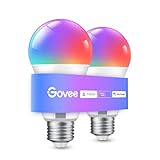
- Easy Voice Control: Our Alexa light bulbs are compatible with Alexa and Google Assistant for easy voice control. Adjust color, set timers, and automate lighting effortlessly. Note: This bulb only supports 2.4GHz WiFi.
- 16 Million DIY Colors: Govee smart light bulbs provide millions of colors and 54 preset scene modes. Style up your home decor with color accents, or set up fun light colors for your next party. Hub not required (Working Voltage: AC 120V).
- Music Sync: Our smart light bulbs change color and brightness when your phone's microphone detects sound. Note: This only works when the microphone is not occupied. Download Govee Home App and enable microphone permissions.
- Timer and Schedule: Applying these smart light bulbs to your daily routine is now easier than ever with timer functions and modes like Sunrise & Sunset. Stay energized in the morning or wind down after a long day. Note: Cannot be used with smart switches.
- Group Control: Have more than one Govee smart product? You can create a group to simultaneously control multiple smart bulbs from anywhere with a stable 2.4GHz Wi-Fi connection. Control these smart LED bulb with your family for added fun.
Check compatibility before buying
Dimmable LED bulbs can provide adjustable intensity, but the bulb, fixture, and control must be compatible. Verify the socket and fixture requirements, the control’s supported load, and whether the chosen source is designed for dimming. A bulb that is labeled dimmable is not automatically compatible with every dimmer. When wiring or load behavior is uncertain, have the installation checked by a qualified professional.
Example schemes by room use
Living room or family room
Use daylight and broadly distributed ambient light as the base. Add a table or floor lamp at the main reading seat for task light, then aim an accent source at art, shelving, or a textured feature. Warm light is a D.Signers example for these rooms, but the final choice should follow the room’s daylight and the atmosphere you want at different times.
What’s actually slowing this PC down?
Pick the symptom - the matching free tool is one click away.
Bedroom
Keep ambient light comfortable for moving around, then provide a close task source at each reading position rather than relying on a central ceiling fitting. Accent light can draw attention to a headboard wall or artwork. A scene with lower ambient intensity and limited accent output can support a calm evening setting without removing the ability to turn the room fully bright.
Kitchen
Start with even ambient coverage, then identify every preparation surface. Under-cabinet fixtures can serve the counters, while a pendant can provide direct light over an island used for dining, cooking, or crafting. A control scene can keep the island brighter while the rest of the room remains warmer and dimmer, as in Lutron’s example.
Bathroom or dressing area
Use a clean, workable ambient layer and place task light where grooming occurs. Under-cabinet or integrated lighting can support a counter or vanity. If accurate color decisions matter, give CRI more weight; the D.Signers guide describes CRI 90 or higher as excellent, while acknowledging that this is its own category.
Home office or craft workspace
Map the desk or workbench, screen position, and daylight direction first. Add task light close to the work without reflecting into a screen. Neutral or soft white is the D.Signers guide’s general example for workspaces; use a controllable source if the same room must shift to a more relaxed evening use.
Quick Recap
Compare a proposed scheme before installing it
| Question | What to examine |
|---|---|
| What activity does it support? | Identify the exact chair, counter, table, desk, or display that needs light. |
| Which layer is doing the work? | Label each source ambient, task, or accent; note when one fitting serves more than one function. |
| Where is the source and where does it aim? | Check distance from the user or work surface, beam spread, shadows, glare, and reflections. |
| What color quality is needed? | Choose atmosphere intentionally and check CRI when accurate color discrimination matters. |
| How independently can it be controlled? | Decide whether layers need separate switches, dimmers, or a centralized scene system. |
Common planning mistakes and how to correct them
- One ceiling fixture does everything. Add a task source at the activity and an accent source at the feature you want noticed.
- Fixtures are selected before furniture is placed. Mark the actual work surfaces and seating positions first, then aim or locate the sources around them.
- Every source has the same intensity. Use hierarchy: general ambient coverage, stronger task illumination where work occurs, and selective accent emphasis.
- Color temperature is treated as a universal rule. Use the warm, neutral/soft white, and cool/daylight descriptions as starting points, then adapt them to daylight, adjacent rooms, and personal preference.
- CRI is ignored in color-critical areas. Compare the stated CRI and use the D.Signers categories—85 to 90 as good and 90 or higher as excellent—as attributed guidance.
- Dimming is assumed to work automatically. Confirm compatibility among the bulb or fixture, dimmer, wiring, and control system before installation.
- Accent light is too weak to read as emphasis. Lutron’s description calls for a narrow beam that is significantly brighter than its surroundings; redirect, narrow, or separately control the accent rather than simply adding more general light.
A practical planning sequence
- Draw the room. Add windows, doors, major furniture, architectural features, and circulation paths.
- Mark activities. Label reading, cooking, dining, grooming, working, relaxing, and display areas where they actually occur.
- Note daylight changes. Record which areas are naturally bright or shaded and when that changes.
- Assign the ambient layer. Use daylight, broad-beam downlights, indirect cove light, or a combination to create general visibility.
- Add task sources. Place lamps, pendants, or under-cabinet fixtures close to the relevant work and check for shadows and glare.
- Choose accents. Select objects or details worth emphasizing, then aim narrow-beam, track, recessed, millwork, or toe-kick sources at them.
- Set color priorities. Choose the intended atmosphere and identify areas where CRI matters; do not assign one temperature to the entire house by default.
- Design the controls. Decide which layers need separate switches or dimmers and whether recurring activities justify centralized presets.
- Verify compatibility. Check fixture, bulb, dimmer, wiring, and load requirements before purchase or installation.
- Review the room as a whole. Confirm that the scheme supports the activities, preserves comfortable sightlines, and gives focal features enough emphasis without making the room uniformly bright.

Product prices and availability are accurate as of the date/time indicated and are subject to change. Any price and availability information displayed on Amazon at the time of purchase will apply.

