Crashes, No Sound, or Screen Glitches?
Random freezes, missing sound and display glitches usually trace back to one bad driver. Find and replace yours safely.Free scan · under a minute
Windows Errors? Fix Them Before They Spread
Repair common Windows errors and clear accumulated junk for a smoother, more stable PC - no reinstall needed.Free scan · no reinstall
ThatPainter is reader-supported. When you buy through links on our site, we may earn an affiliate commission. Learn More
The safest grill brush is the one that matches your grate and your grill maker’s cleaning instructions, while avoiding unnecessary loose-wire risk. The U.S. Consumer Product Safety Commission (CPSC) advises using aluminum foil or a nylon brush instead of a metal-wire brush because a detached strand can remain on the grate and be swallowed with food. No brush is risk-free, so inspect the cooking surface before grilling, check food for stray material, and verify that the model you buy is not subject to a current recall.
Why grill-brush choice matters
Metal bristles can detach during normal scrubbing. A strand may stay on the grate, transfer to a burger or vegetable, and then be swallowed. CPSC recall notices document this hazard and include reports of people who swallowed bristles and sought medical treatment. The risk is not limited to a particular cooking fuel or grate material.
Recommended Free Tools
As an Amazon Associate I earn from qualifying purchases.
That does not mean every metal brush will fail, nor does it prove that a nylon brush cannot wear or shed. It means you should treat loose-wire contamination as a preventable hazard and choose a tool and cleaning method that your grill manufacturer supports. CPSC’s general grill-safety guidance recommends a ball of aluminum foil or a nylon brush instead of a wire brush for this reason.
General grill use has other hazards as well. CPSC’s August 3, 2023 grill-safety page reported an average of 13 deaths per year and 5,400 emergency-room-treated injuries associated with grills in 2022. Those figures cover grills broadly, not grill-brush injuries, but they reinforce the value of following the appliance manual and checking the cooking area before each use.
#1 Best Overall

- 【Durable Nylon Bristles Protect Grates】Designed for safe and effective cleaning, this BBQ grill brush has durable, heatproof nylon bristles that won’t scratch your grill grates. A great choice for keeping your grill in pristine condition with regular upkeep
- 【Ergonomic Handle】 Designed for comfort and strength, this grill cleaner features a soft-yet-sturdy grip paired with a stainless steel hanging ring for easy storage. Engineered to endure, the unbreakable handle eliminates worries of snapping or cracking, ensuring reliable performance season after season. Built to last, this BBQ tool keeps cleanup effortless and guarantees years of dependable use—so you can focus on grilling, not scrubbing!
- 【5x Faster Cleaning 】 Three times more bristles than the traditional bbq grill brush, paired with razor-sharp durability and smart lateral flex. Effortlessly dominate stubborn buildup in hard-to-reach edges, corners, and grooves—all in one sweep. Engineered for speed and precision, this powerhouse cleaner gets the job done 5x faster than ordinary brushes, transforming grimy grates to spotless in seconds. Spend less time scrubbing, more time savoring grill season!
- 【Scraper for Tough Grime】Still battling stubborn residue clinging to your grill? No matter how hard you scrub, traditional brushes just won’t cut it? You’re using the wrong tool! This grill brush features a stainless steel razor-sharp scraper designed to power through even the toughest baked-on grime with minimal effort. Ditch the struggle, save time, and get back to grilling joy—effortless cleaning means more time for fun!
- 【Rust-Resistant & Durable】Crafted from premium stainless steel, this grill grate cleaner withstands intense heat without warping or cracking, ensuring lasting performance. Your satisfaction drives us—if any concerns arise, contact us for prompt support and solutions. We stand by our product and guarantee your peace of mind.
Identify the grate before buying a brush
Look at the cooking surface and confirm its material in the owner’s manual or the manufacturer’s support documentation. Appearance alone can mislead: a dark grate may be cast iron, porcelain-coated cast iron, or another metal with a coating. The correct brush for one finish can damage another.
Free tools Windows power users keep installed
One-click scans. No signup required.
Stainless steel grates
Napoleon says stainless or brass bristles work on stainless grates. Weber describes its own brushes as compatible with stainless steel. These are manufacturer-specific statements, not a universal approval of every metal brush. If your manual does not identify a brush type, contact the manufacturer or use the non-wire approach recommended by CPSC.
Porcelain-coated cast iron
Napoleon recommends brass bristles for porcelain-coated cast iron. Its guidance should not be generalized to every porcelain finish or every brass brush. Coatings can chip or scratch if a tool is used aggressively, so confirm the exact grill model’s instructions and use only the pressure needed to remove residue.
Cast iron without a porcelain coating
Weber lists cast iron among grate types compatible with its brushes. The available guidance does not establish one universal brush material for all cast-iron grates. Cast iron also requires attention to seasoning and drying, so follow the care section of your grill manual rather than relying on a generic brush label.
When you are unsure
- Find the grill’s model number and read the grate-cleaning section of the manual.
- Check whether the grate has a coating, removable finish, or special seasoning instructions.
- Choose a tool explicitly described for that surface; “all-purpose” wording is not a substitute for compatibility information.
- If avoiding wire is your priority, select a clearly labeled nylon brush or use aluminum foil, while still following the tool’s temperature limits.
Material guidance by grate and task
| Grate or task | What the available guidance says | How to apply it |
|---|---|---|
| Stainless steel cooking grate | Napoleon says stainless or brass bristles work; Weber describes its brushes as compatible with stainless steel. | Use the grill maker’s instructions and verify that the brush is intended for the specific grate. CPSC recommends nylon or foil instead of wire as a food-contamination precaution. |
| Porcelain-coated cast-iron grate | Napoleon recommends brass bristles. | Treat that as a Napoleon-specific recommendation. Confirm your grill’s exact instructions before using any metal bristle on a porcelain coating. |
| Cast-iron grate | Weber lists cast iron among grate types compatible with its brushes. | The sources do not establish one brush material for every cast-iron grate. Follow the model manual, including seasoning and drying directions. |
| Reader wants to avoid wire | CPSC advises nylon brushes or aluminum foil. A 2026 Weber recall remedy specifies a cold-cleaning nylon replacement for affected brushes. | Check the nylon brush’s temperature and use instructions; some are intended for a cooled grate rather than a hot one. |
| Burner or interior parts | Weber describes a two-sided brush for gas-grill burners. Napoleon distinguishes tools for grates, sear plates, burners, and porcelain parts. | Do not assume a grate brush is suitable for every component. Use the manual’s tool and cleaning procedure for each part. |
Nylon brushes and aluminum foil: non-wire options
Nylon brushes
Nylon is the principal non-wire brush option supported by the cited CPSC guidance. It can reduce the specific risk of a sharp metal strand entering food, but it is not a guarantee against shedding, melting, damage, or injury. Read the product instructions for the maximum temperature and whether the grate must be completely cool before brushing.
Rank #2

- NYLON BRISTLE GRILL BRUSH: Designed for cleaning cooled grill grates, the durable nylon bristles help scrub away residue after cooking, making this brush a practical tool for routine grill maintenance at home or outdoors.
- BUILT IN METAL SCRAPER: Includes an integrated scraper edge to help loosen stuck on food, grease, and buildup, giving you added cleaning support when brushing alone is not enough during post cook cleanup.
- COMFORT GRIP HANDLE: The rubber handle is shaped to provide a secure, comfortable grip, helping you maintain control while cleaning without slipping, even during longer grill cleaning sessions.
- SEVENTEEN INCH REACH: The extended handle length keeps your hands farther from the grill surface, offering better reach across grates while maintaining balance and control during cleaning.
- MADE FOR OUTDOOR GRILLING: Built to support regular grill care for backyard cooking, camping, tailgates, and cookouts, fitting naturally into standard BBQ tool sets and grill accessories.
The temperature issue is important. A nylon head designed for cold cleaning can soften or deform on a hot grate. If the instructions call for cold cleaning, turn off the grill, allow the surface to cool fully, and then scrub. Never infer heat resistance from the word “nylon” alone.
Aluminum foil
CPSC recommends a ball of aluminum foil as another alternative to wire. Use a fresh piece, keep your hand away from hot surfaces, and follow the grill manual for when and where foil may be used. Foil can remove residue without introducing brush bristles, but it does not replace inspection of the grate or food.
How to decide between them
- Choose nylon when you want a handled tool and the brush instructions match your grate and cleaning temperature.
- Choose foil when your manual permits it and you prefer a disposable, non-wire method.
- Use neither as a reason to skip cleaning or inspection; residue, coating damage, and foreign material still require attention.
Match the brush to the grill component
A cooking grate is only one part of a grill. Burner ports, heat tents, sear plates, flavorizer bars, and porcelain-coated interiors can have different cleaning requirements. Napoleon’s cleaning guidance separates grate, sear-plate, burner, and porcelain-part tools. Weber describes a two-sided brush for gas-grill burners. These distinctions matter because a tool that is acceptable on a grate can clog burner openings, scrape a coating, or leave debris in an area that should be cleaned another way.
Before cleaning
- Turn off the fuel and let the grill reach the temperature specified by the manual for cleaning, or let it cool completely if the brush requires cold cleaning.
- Remove food, grates, and removable plates only as directed. Do not remove a component that the manual says must remain in place.
- Inspect the brush head, handle, scraper, and attachment points. Do not use a tool with a loose head, bent wire, cracked plastic, or missing bristles.
During cleaning
- Use short, controlled strokes rather than forcing the brush into the grate.
- Keep the brush aligned with the surface so the head does not twist and shed material.
- Use a separate tool when the manual specifies one for burners, porcelain parts, or other components.
- Stop if the grate coating chips, the brush deforms, or any bristle or fragment comes loose.
After cleaning
- Wipe or rinse the grate using the method allowed by the manual.
- Examine every grate bar and gap under good light. Remove any visible strand or fragment before cooking.
- Inspect the brush again and replace it at the first sign of wear.
- Before serving, look over the cooked food, especially pieces that contacted the grate directly.
Current grill-brush recalls to check
Recall status can change, so compare the model number and product details with the live CPSC notice rather than relying on a brush brand or a photograph. If your brush is included, stop using it and follow the specified remedy.
What’s actually slowing this PC down?
Pick the symptom - the matching free tool is one click away.
Weber metal-wire-bristle brushes — CPSC, February 26, 2026
CPSC’s February 26, 2026 notice covers Weber metal-wire-bristle brush models 6277, 6278, 6463, 6464, 6493, and 6494. The notice reports about 3.2 million units and at least 38 reports or reviews of detached bristles, including four reports of consumers who swallowed bristles and sought medical treatment.
Rank #3

- Is Your Grill Brush Safe? - With all the concern about metal wire bristles, we decided to develop a safe grill brush that leaves your grill clean and free of metal wire bristles.
- Finally! A Top Quality Porcelain Grill Brush! - You bought a beautiful grill with porcelain grill grates. It works great and doesn’t rust, but there’s a problem. Your Steel BBQ Grill Brush will scratch the enamel and ruin your grill! Well not anymore. The Grillaholics Porcelain Safe Grill Brush will leave your beautiful porcelain grill grates as clean as ever without doing any damage.
- Grill Cleaning Has Never Been Easier - With the three-in-one brush head design, our porcelain safe nylon grill brush is able to clean your porcelain or chrome grill grates up to five times faster than a traditional single head grill brush.
- Grillaholics Knows Grill Brushes - With more grill brushes in our catalog than another grilling manufacturer, you can rest assured that you are getting the highest quality porcelain safe nylon grill brush on the market. Plus with the Grillaholics Promise, you don’t have to settle for a cheaper grill brush that will just need to be replaced after a few uses!
- THE GRILLAHOLICS PROMISE - Purchase risk-free with confidence knowing that you’ll get a product you love or we’ll do whatever it takes to make it right. Consider getting two for even more grilling possibilities!
Consumers should stop using the listed brushes and contact Weber for the remedy described in the notice: a cold-cleaning nylon replacement. Acting CPSC Chairman Peter A. Feldman urged consumers not to wait for grilling season, to discard metal-wire brushes covered by the recall, and to inspect the grill surface and food for detached bristles.
Cuisinart brushes — CPSC, July 2, 2026
CPSC’s July 2, 2026 notice lists models CCB-100, CCB-4125, CCB-5014, CCB-6450, CCB-8012, CCB-4114, CCB-W2, and CSBS-777. It reports about 1,719,995 units and at least 54 reports and reviews of detached bristles, including three reports of consumers who swallowed bristles and sought medical treatment.
Stop using a listed brush and contact Conair for the refund or credit described in the recall notice. Check the current notice for any changed instructions, eligibility details, or additional model information.
Crashes, No Sound, or Screen Glitches?
Random freezes, missing sound and display glitches usually trace back to one bad driver. Find and replace yours safely.Free scan · under a minuteWindows Errors? Fix Them Before They Spread
Repair common Windows errors and clear accumulated junk for a smoother, more stable PC - no reinstall needed.Free scan · no reinstallIf you find a bristle on the grate or in food
- Stop cooking and do not serve food that may be contaminated.
- Remove the visible strand with a tool that will not push it deeper into the grate.
- Inspect all grate surfaces, gaps, grease trays, and nearby food-contact areas.
- Replace the brush and check its model against current recall notices.
- If someone may have swallowed a bristle, seek medical advice promptly and mention the possibility of a grill-brush wire.
Buying checklist for a lower-risk brush
1. Confirm surface compatibility
The package or manufacturer documentation should identify the grate material or grill component it is designed for. If it lists only “universal” or “heavy duty” without naming surfaces, look for more specific instructions before buying.
2. Prefer a clearly described non-wire construction when appropriate
If your priority is avoiding metal strands, select a nylon brush or use foil as CPSC advises. Confirm whether the nylon head is for hot, warm, or cold cleaning. Do not treat “non-wire” as an independent safety certification.
Rank #4
- Multipurpose tool for grates, cookboxes, burners and more
- 2-in-1 design includes bristle brush & scraper
- Safe on all Weber grates, cookboxes, interior grill components
- Scratch-free
- Comfortable grip, no-flex handle
3. Check construction before each use
Look for a securely attached head, intact bristles, a scraper that is not loose, and a handle without cracks. A long handle can keep your hands farther from heat, but length does not make a brush safe if its head is damaged or incompatible with the grate.
4. Choose a manageable shape
The brush should let you keep controlled contact with the grate. A head that is too wide for the bars or corners can twist, require excessive force, and make inspection harder. For burners or narrow channels, use the component-specific tool called for by the manual.
5. Keep documentation
Save the model number, receipt, and instructions. Those details make it possible to check a recall and obtain the correct remedy. Product photos and brand names alone may not distinguish recalled and non-recalled versions.
Practical decision examples
You have a stainless grate and want to eliminate wire
Read the grill manual, then choose a nylon brush specifically described for stainless steel and for the temperature at which you plan to clean. Alternatively, use aluminum foil if the manual permits it. Inspect the grate and food before serving.
You have porcelain-coated cast iron
Start with the grill maker’s instructions. Napoleon recommends brass bristles for porcelain-coated cast iron, but that recommendation does not prove that every brass brush suits every coating. If your manual supports a nylon tool, it is the straightforward non-wire choice; otherwise, ask the manufacturer before selecting a metal brush.
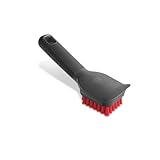
Best Value

- Durable nylon bristles easily and safely clean cold grill grates
- Angled front bristles and stainless steel scraper with cut-outs increase efficiency
- Soft-grip handle and angled neck help create a comfortable cleaning session
- Safe for use on all types of grill grates, including coated ceramic
- Replaceable nylon heads extend the life of the brush and minimize waste
You have an older brush with no model information
Do not assume it is unaffected. Stop using it until you can identify the model and compare it with current CPSC recall notices. Replace it with a tool whose material, surface compatibility, and cleaning-temperature instructions are clearly stated.
You need to clean burners as well as grates
Use separate tools or procedures if the manual distinguishes those parts. A grate brush may be unsuitable for burner ports or porcelain components, even when it works on the cooking grate.
What “safe” can and cannot mean
The available guidance supports risk reduction, not a risk-free product claim. A nylon brush can wear, a foil ball can leave residue, and any tool can damage a grate if used incorrectly. Manufacturer compatibility statements apply to the products and surfaces they describe; they are not independent testing of every brush on the market. There is also no evidence here of a product-specific safety certification or comparative performance test.
A sensible standard is therefore specific and verifiable: identify the grate, follow the grill maker’s directions, choose a brush whose construction and temperature limits are clear, inspect it and the grate before cooking, and act on any recall immediately. That process addresses the documented loose-wire hazard without pretending that any cleaning tool eliminates every risk.
Quick Recap

Product prices and availability are accurate as of the date/time indicated and are subject to change. Any price and availability information displayed on Amazon at the time of purchase will apply.
Do these 3 things before closing this tab:
1Fix the driver behind crashes, sound loss and screen glitches2Repair Windows errors before they cause bigger problems3Scan for outdated or missing drivers - takes under a minute
