Windows Errors? Fix Them Before They Spread
What’s actually slowing this PC down?
Pick the symptom - the matching free tool is one click away.
Repair common Windows errors and clear accumulated junk for a smoother, more stable PC - no reinstall needed.Free scan · no reinstall
Crashes, No Sound, or Screen Glitches?
Random freezes, missing sound and display glitches usually trace back to one bad driver. Find and replace yours safely.Free scan · under a minute
ThatPainter is reader-supported. When you buy through links on our site, we may earn an affiliate commission. Learn More
Choose sheen by balancing four things: how much light you want reflected, how imperfect the surface is, how often it will be touched or cleaned, and what the paint maker approves for that surface. Flat and matte finishes give walls the quietest appearance and hide more defects; eggshell and satin add modest reflection with easier routine cleaning; semi-gloss and gloss create definition on trim and architectural details but show preparation and application flaws more clearly. Names are not standardized across brands, so use the finish chart and technical guidance for the exact product you plan to buy.
What “finish” and “sheen” mean
Sheen is the amount of light a dried coating reflects. In most interior product lines, finishes move from least reflective to most reflective in roughly this order:
Free tools Windows power users keep installed
One-click scans. No signup required.
As an Amazon Associate I earn from qualifying purchases.
| Common label | Visual effect | Typical strengths | Typical cautions |
|---|---|---|---|
| Flat or matte | Very little shine; soft, even appearance | Minimizes emphasis on small dents, patches and texture changes | Can show dirt, burnish when scrubbed, or be harder to clean unless the specific formula is designed to be washable |
| Eggshell | Low, gentle reflection | Balances a subdued look with more practical cleaning than many flat paints | Still reveals uneven drywall or lap marks more than flat paint |
| Satin | Noticeable but restrained glow | Useful where walls or woodwork need regular wiping and a little visual definition | Reflection can highlight sanding scratches, ridges and uneven sheen |
| Semi-gloss | Clear shine and stronger contrast | Common on trim, doors and moldings; easier to wipe than low-sheen coatings in many formulations | Surface and brush marks are conspicuous if preparation is poor |
| Gloss | High reflection; crisp, polished appearance | Draws attention to architectural features and creates maximum visual separation | Shows every contour and application defect; may be too reflective for broad walls |
These labels are a useful starting language, not a universal standard. One manufacturer’s satin may look closer to another’s eggshell, and product lines may omit certain levels or use their own names. Sherwin-Williams’ sheen guide and Benjamin Moore’s finish guidance both emphasize checking the selected product’s range and intended uses.
The decision framework: four questions before you buy
1. How much reflection suits the room?
Low-sheen paint scatters more light and gives a calmer, less contrasty surface. Higher sheen reflects windows, lamps and ceiling fixtures, so it can make color appear brighter or more variable as the light changes. Decide whether you want the wall to recede or the painted feature to stand out before comparing color chips.
#1 Best Overall
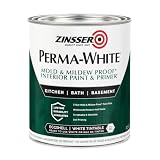
- Self-Priming formula - requires no sanding
- Mold & Mildew-Proof paint film - guaranteed for 5 years
- Resists dirt and moisture on film coating
- Finish is washable and scrubbable with soap and water
- Product contains a mildewcide to prevent the growth of mold and mildew on the paint film only
2. How forgiving must the coating be?
Every bump, drywall joint, patch, sanding scratch and roller ridge can become more visible as reflection increases. Flat or matte is usually the safer visual choice for walls with unavoidable irregularities. Satin, semi-gloss and gloss demand a smoother substrate and more consistent application because reflected highlights outline defects.
Do these 3 things before closing this tab:
1Fix the driver behind crashes, sound loss and screen glitches2Repair Windows errors before they cause bigger problems3Scan for outdated or missing drivers - takes under a minute3. How often will the surface be touched or cleaned?
Higher sheen is generally easier to wipe, but sheen alone does not determine durability. Resin chemistry, pigment, cure time and the manufacturer’s cleaning instructions matter. Some modern matte products are formulated for washing, while a conventional flat coating may trap dirt or develop shiny “burnished” spots after repeated scrubbing. Read the label and technical data for the exact paint.
4. What surface and product are you coating?
Interior walls, previously painted trim, bare wood, cabinets, doors and patched drywall have different preparation and compatibility needs. Confirm that the product is rated for the substrate, interior use and desired sheen. Follow the current label rather than assuming that a finish available in one line performs the same way in another.
Choosing a finish for walls
Flat or matte: best when appearance and defect masking lead
Start with flat or matte for ceilings, low-contact rooms and walls whose texture or repairs would be emphasized by reflected light. The low reflection produces the most uniform color across a broad wall and is often preferred for bedrooms, formal rooms and historic surfaces where a quiet look matters.
Rank #2

- Use for a variety of indoor and outdoor project surfaces including wood, metal, plaster, masonry or unglazed ceramic
- Water-based acrylic formula is low odor, resist chips and provides long-lasting protection
- Covers up to 120 sq ft and dries to touch in 30 minutes for quick project completion
- Semi-gloss finish minimizes surface imperfections, goes on smoothly and provides excellent hide
- Prior to application sand surfaces with 180/200 grit sandpaper, then wash with a degreaser, allow the surface to dry and apply paint
Do not treat every flat paint as non-washable. Some product lines specifically advertise washable matte performance. Conversely, a conventional flat coating can hold onto grime and show a polished patch when scrubbed. Sherwin-Williams explains this trade-off and notes product-line exceptions. Use the maker’s stated cleaning method, allow the coating to cure as directed, and test an inconspicuous area before vigorous cleaning.
Eggshell: a general-purpose wall compromise
Eggshell adds a small amount of reflection without the pronounced shine of satin. It is a practical starting point for living rooms, dining rooms, hallways and bedrooms when you want walls to tolerate occasional wiping but still look relatively soft. Because labels vary, compare an eggshell sample from the exact product line with your lighting and adjacent trim rather than relying on the word alone.
Satin: for more activity and a clearer visual edge
Satin can suit family rooms, corridors, stair walls and other areas that receive more contact. Its stronger film and reflection often make routine marks easier to remove, provided the product’s instructions support that use. It also creates a deliberate step up from matte walls when used selectively, but it will reveal more unevenness than eggshell.
When a washable matte is the better answer
If you need a low-reflection appearance but expect frequent cleaning, look for a matte product whose manufacturer specifically documents washability or scrubbability. This is a product-performance decision, not a promise that all matte coatings behave alike. Keep the product documentation so future touch-ups use the same formulation and sheen.
Rank #3

- Ready to use, pre-mixed door and trim paint offers a fresh new look on interior or exterior metal, wood and fiberglass
- Water-based paint formula emits less odor and withstands fading for a long lasting finish
- Dries to the touch in 45 minutes, up to 3X faster than traditional oil-based paints
- Durable, chip resistant coating provides ultimate protection with modern curb appeal
- Beautiful satin door paint is available in 6 pre-mix color options for the perfect look
Choosing a finish for woodwork, trim, doors and cabinets
Satin for a restrained, contemporary look
Satin gives baseboards, casings and doors a visible lift from low-sheen walls without the pronounced shine of semi-gloss. It can be a good choice when you want the woodwork to read as a separate element but not become the room’s focal point. Use it only after filling, sanding and priming have produced a surface smooth enough for the added reflection.
Semi-gloss for definition and frequent wiping
Semi-gloss is a common trim and molding choice because it provides clear contrast and a surface that is generally straightforward to wipe. Sherwin-Williams describes semi-gloss as useful for trim and moldings. It works well on doors, baseboards, window casings and other pieces that receive hands, shoes or cleaning tools, subject to the selected product’s substrate instructions.
Gloss when the architecture should shine
Gloss can emphasize paneling, turned details, built-ins and other architectural features. Its high reflection creates the strongest separation from matte or eggshell walls and can give properly prepared woodwork a furniture-like appearance. Because it magnifies defects, reserve it for surfaces you can make consistently smooth and for a look you genuinely want; it is not a substitute for preparation.
Do trim and walls have to use different sheens?
No. Matching sheen throughout a room can produce a quiet, enveloping effect, while a step up on trim creates traditional visual hierarchy. A difference of one level, such as eggshell walls with satin trim, is subtler than pairing flat walls with gloss. Sample both combinations under the room’s actual lighting before committing, and check that the specific products are compatible with each substrate.
Rank #4

- RUST-OLEUM PAINT WALL LINEN WHITE GA 380220
Room-by-room starting points
| Area | Reasonable starting options | What to verify |
|---|---|---|
| Ceilings | Flat or matte | Whether the product is approved for ceilings and whether the surface has stains or repairs requiring primer |
| Bedrooms and formal rooms | Flat, matte or eggshell | Desired softness versus the need to wipe fingerprints or marks |
| Living and dining rooms | Eggshell or satin; washable matte where documented | Traffic level, children or pets, and the product’s cleaning directions |
| Hallways and stair walls | Eggshell or satin | Frequent hand contact, scuffs and whether reflected light will expose wall repairs |
| Bathrooms and kitchens | Eggshell or satin products rated for the environment | Moisture exposure, ventilation and the manufacturer’s interior-use guidance; do not assume sheen alone makes a coating suitable for wet areas |
| Baseboards, casings and doors | Satin or semi-gloss | Required smoothness, washability claims and compatibility with existing coating |
| Decorative architectural details | Semi-gloss or gloss | Whether you want strong emphasis and whether preparation is good enough to withstand close inspection |
These are starting points, not universal specifications. Product availability and performance claims differ, so use them to narrow samples, then follow the chosen manufacturer’s directions.
Preparation matters more as sheen increases
A glossy finish reflects a miniature map of the surface beneath it. Before using satin, semi-gloss or gloss on woodwork, inspect in raking light and correct defects that a low-sheen coating might disguise.
- Clean and degrease. Remove dust, wax, hand oils and kitchen residue with a cleaner compatible with the substrate. Rinse if the cleaner requires it and let the surface dry.
- Repair. Fill nail holes, dents and open joints with suitable filler or caulk. Let repairs dry fully.
- Sand evenly. Feather repair edges and dull previously glossy paint. Vacuum and wipe away dust; avoid creating a patch that has a different texture from the surrounding surface.
- Prime where required. Use the primer specified for bare wood, stains, glossy existing coatings or difficult substrates. A uniform primer reduces flashing and improves adhesion.
- Control application marks. Use the roller nap or brush recommended for the product, keep a wet edge and avoid overworking paint as it begins to set. Maintain consistent film thickness across the entire section.
- Allow the full cure. Do not judge washability or stack freshly painted doors and trim until the label’s recoat and cure guidance has been met.
For walls, repair and prime patches so they do not absorb paint differently from the surrounding surface. If a wall is visibly wavy or heavily textured, a lower sheen remains the most forgiving choice even after good preparation.
Independent reader supportYour contribution helps us test, update, and keep practical guides available for everyone.Cleaning, burnishing and durability: what the sheen can—and cannot—tell you
Cleaning performance is a combination of sheen and formulation. Benjamin Moore notes that higher sheen is generally easier to clean and discusses the risk of burnishing—an unwanted shiny area created when a flat coating is rubbed or scrubbed—in high-traffic locations. See its wall-cleaning guidance and burnishing troubleshooting information.
Best Value

- WHAT'S IN THIS 10 PIECE PAINT KIT FOR WALLS: includes one plastic paint tray; one 9 inch roller frame; one 4 inch mini roller frame; two 9 inch microfiber roller covers (1/2 inch nap); two 4 inch microfiber roller covers (1/2 inch nap); one 1 inch flat brush; one 1.5 inch angle sash brush; one 2 inch angle sash brush
- Versatile Application: Perfect for any project, this set includes paint rollers 9 inch for large surfaces and smaller brushes for detail work
- All-in-One Kit: This paint brush set and paint tray combo ensures you have all the paint supplies needed for any home improvement task
- Professional Grade: Get a smooth, even finish with our high-quality paint roller set; ideal for applying interior paint gallon or smaller quantities
- Cost-Effective: This paint brush and roller set provides unbeatable value; includes paint pan and paint trays for easy cleanup and reuse
- Read the product’s cleaning label before the first wash; some coatings require a specified waiting period after application.
- Use the least aggressive method that removes the mark: soft cloth or sponge, mild cleaner if approved, and gentle pressure.
- Test in a hidden area. A clean spot that becomes shinier than the surrounding wall is burnishing, not improved cleanliness.
- For a heavily used wall, select a product with explicit washability or scrub-resistance claims rather than inferring performance from “satin” alone.
- Keep leftover paint labeled with the room, color, product line and sheen. Touch-up differences are especially visible when the replacement coating has a different sheen.
How to compare samples before painting the room
- Use the actual product. Get sample pots or draw-downs in the exact color and sheen; a paper color chip cannot show the finished reflection reliably.
- Place samples on the real surface. Test a wall and a piece of trim, or use large primed boards. Include repaired areas and existing texture.
- View at several times. Check daylight, evening lamplight and the angles from which people enter the room. Reflection changes with the light source and viewing position.
- Compare adjacent elements. Put the proposed wall sample beside the trim color and floor or countertop. The perceived contrast depends on both colors and both sheens.
- Clean the test after curing. If the room will be scrubbed, follow the label’s cure period and perform the same gentle cleaning you expect to use later.
- Record the decision. Write down manufacturer, product line, color, sheen and lot information before disposing of the sample packaging.
Common mistakes and how to correct them
Choosing by the label name alone
“Satin,” “eggshell” and similar terms are not precise industry-wide measurements. Correct the mistake by comparing the manufacturer’s finish chart and a cured sample from the exact line.
PC Slower Than It Used to Be?
A free scan shows the junk files, broken settings and background clutter dragging Windows down - then fixes them in one click.Free scan · Windows 10 & 11Outdated Drivers Are Slowing You Down
One free scan finds every outdated or missing driver and matches the right update for your exact hardware.Free scan · exact hardware matchUsing a glossy coating to hide a dirty or damaged surface
More shine does not conceal defects; it outlines them. Stop, clean, repair, sand and prime before continuing, or move to a lower sheen if the surface cannot be made uniform.
Assuming every matte paint is fragile
Some matte products are engineered for washing. Check the product’s documented claims and cleaning instructions instead of rejecting the entire category.
Assuming every satin or semi-gloss paint is suitable for every substrate
Adhesion, moisture exposure and existing coatings still control the result. Verify the label’s approved surfaces and primer requirements.
Scrubbing too soon
A paint film can feel dry before it has developed its intended resistance. Follow the stated recoat and cure times, then use the least aggressive cleaning method.
Creating an accidental sheen mismatch during touch-up
Even the same color can look like a different color when its sheen changes. Use the original product and sheen, and repaint to a natural break such as a corner or molding when a larger area needs correction.
A practical selection checklist
- Identify the substrate: drywall, plaster, previously painted wood, bare wood, metal or another material.
- Mark the room’s traffic and cleaning level: occasional dusting, regular wiping or frequent scrubbing.
- Inspect the surface in angled light for dents, patches, texture and sanding marks.
- Choose the desired visual hierarchy: walls receding, trim subtly separated or architectural details emphasized.
- Shortlist finishes from the exact product line, not from a generic sheen chart alone.
- Confirm the label’s approved use, primer requirements, recoat time, cure time and cleaning method.
- Test cured samples in the room’s daylight and artificial light.
- Buy enough of one product batch for each continuous surface and save the identifying information for future repairs.
Bottom line for walls, woodwork and trim
For walls, begin with flat or matte when hiding irregularities and minimizing reflection matter most; move to eggshell or satin as traffic and cleaning needs increase, or choose a documented washable matte when you want both low reflection and easier maintenance. For woodwork and trim, satin through gloss can provide the separation and cleanability many rooms need, with semi-gloss a common middle ground and gloss reserved for features you want to highlight. The correct choice is the one that fits the surface, the room’s use and the exact paint maker’s guidance—not a sheen label treated as a universal performance guarantee.
Quick Recap

Product prices and availability are accurate as of the date/time indicated and are subject to change. Any price and availability information displayed on Amazon at the time of purchase will apply.

