Crashes, No Sound, or Screen Glitches?
Outbyte Driver Updater · freeRandom freezes, missing sound and display glitches usually trace back to one bad driver. Find and replace yours safely.
Find the Right Drivers →ThatPainter is reader-supported. When you buy through links on our site, we may earn an affiliate commission. Learn More
Clean the spatula by hand in warm, soapy water, dry it completely, smooth any fuzzy areas with light sanding, and condition it with food-grade mineral oil or a compatible mineral-oil-and-beeswax balm if it might ever touch food again. That treatment nourishes the wood and can leave a light water-shedding surface; it does not make the spatula waterproof. If the piece will remain display-only, do not apply an unknown varnish, paint, or furniture oil until you have confirmed that it is compatible with the existing surface.
Decide what “decor” means before you finish the spatula
The correct treatment depends on whether the spatula could return to kitchen service. A decorative utensil may be displayed on a wall, in a crock, or as part of a still life, but its future use is often uncertain. Someone may eventually wash it, use it for cooking, or pass it to another household. Treating it as a food-contact item is the conservative choice unless you can confidently rule out future food use.
As an Amazon Associate I earn from qualifying purchases.
Recommended Free Tools
| Situation | Practical approach | What to avoid |
|---|---|---|
| It may be used for food again | Hand-wash, dry fully, optionally sand lightly, then use a finish labeled food grade or recommended for food contact. Food-grade mineral oil is the simplest supported option. | Unidentified coatings, baby oil, ordinary furniture finishes, and edible cooking oils that can become rancid. |
| It is unfinished or already oil-finished and will be display-only | A food-contact mineral-oil treatment or compatible mineral-oil-and-beeswax balm can improve appearance while keeping the treatment conservative. | Assuming a balm is waterproof, or applying it over a coating that the maker says is incompatible. |
| It has a coating you cannot identify | Clean gently and follow the original maker’s care instructions if available. Test any new product on an inconspicuous spot only after checking compatibility. | Stripping, sanding through, or covering the unknown coating without knowing what it is. |
| It has deep contamination or structural damage | Keep it out of food service and consider discarding it rather than trying to conceal the problem with finish. | Using oil or wax to seal in mold, grease, chemicals, cracks, or splinters. |
The wood species, age, previous finish, contamination history, and intended future use are unknown for a typical secondhand spatula. Those variables matter more than the fact that the item is being displayed.
Gather the supplies and set up a safe work area
You do not need a large toolkit. Prepare a basin or sink, warm water, mild dish soap, a soft sponge or cloth, clean towels, fine-grit sandpaper if the surface is rough, and a clean dry cloth for buffing. If food contact remains possible, choose a product whose label explicitly says “food grade” or “recommended for food use.”
#1 Best Overall

- FOOD-GRADE MINERAL OIL FOR CUTTING BOARDS: Helps restore and protect dry cutting boards, butcher blocks, and wooden kitchen surfaces. Refreshes dull, worn wood and helps prevent cracking or splitting; works on bamboo, teak, acacia, olive wood, and hardwood boards
- ABSORBS CLEANLY WITH NO GREASY RESIDUE: This lightweight cutting board oil soaks into wood rather than sitting on the surface; rubs in easily with no oily film, strong scent, or sticky feel; colorless, odorless, and tasteless
- USP & FOOD-GRADE MINERAL OIL — SAFE FOR KITCHEN USE: Meets food safety standards; safe for cutting boards, wooden utensils, salad bowls, and rolling pins; also suitable for protecting stainless steel blades and appliances from rust
- SIMPLE BOARD CARE IN MINUTES: After washing and drying, apply a small amount with a clean cloth; let absorb 15–20 minutes, wipe excess; repeat monthly; this 8oz bottle provides months of regular use for home kitchens
- PACKAGED WITH CARE FOR SAFE DELIVERY: Only a small amount needed per application, so this bottle goes further than expected; sealed to prevent leaks; Kate Naturals is a small business — if anything arrives damaged, we’ll make it right
- Cleaning: warm water, mild soap, and a non-abrasive sponge or cloth.
- Surface repair: fine-grit sandpaper and a way to collect or wipe away dust.
- Conditioning: food-grade mineral oil, or a mineral-oil-and-beeswax conditioner labeled for compatible wood use.
- Protection: gloves if the product label recommends them, and a ventilated, dust-free place for application and drying.
Keep the spatula away from food, cookware, and preparation surfaces while you clean and finish it. A decorative project should not introduce sanding dust or uncured product into the kitchen.
Step 1: Hand-wash away loose dirt
- Remove loose soil first. Brush or wipe off crumbs, dust, and cobwebs before adding water. This prevents gritty debris from being rubbed into the grain.
- Wash with warm, soapy water. Oklahoma CareerTech’s utensil-care procedure says, “Hand wash wooden dishes and utensils in warm, soapy water.” Use a soft sponge or cloth and work over the entire blade, handle, edges, and any hanging hole.
- Rinse briefly. Remove soap without holding the spatula under running water longer than necessary.
- Do not soak it. Prolonged soaking lets wood take up water, expand, and potentially warp. Do not leave it in a sink or bowl while you work on other dishes.
- Keep it out of the dishwasher. Dishwasher heat and extended exposure to water can dry, distort, or split wooden utensils.
Do not use abrasive powders, steel wool, or aggressive chemical cleaners merely because the spatula is going on display. Scrubbing can create grooves that hold dirt, and a harsh cleaner can leave a residue that is difficult to evaluate for food contact.
Free tools Windows power users keep installed
One-click scans. No signup required.
Step 2: Dry the wood completely
Pat the spatula dry with a clean towel, then leave it in a well-ventilated place until no cool or damp areas remain. Stand it so air can reach both broad faces and the edges. The wood-care directions cited for conditioning require the surface to be clean and completely dry before an oil or balm is applied.
Do not rush this stage with high heat. A radiator, heat gun, hair dryer, or strong direct sun can dry one face faster than the other and encourage cupping or cracking. The useful test is simple: the spatula should feel dry, not clammy, and should show no darkened wet patches around the handle, hole, or end grain.
Rank #2

- NSF CERTIFIED FOOD GRADE - This premium mineral oil is NSF certified and lab-tested to meet the strictest food safety standards. Colorless, odorless, tasteless, and gluten-free — perfect for cutting boards, butcher blocks, and all food-contact surfaces.
- SUPERIOR PROTECTION & RESTORATION - Deeply penetrates and conditions wood to prevent cracking, drying, and warping. Restores and revitalizes your cutting boards, butcher blocks, knives, wooden utensils, and kitchen tools for a beautiful, long-lasting finish.
- MADE IN THE USA - 100% pure food-grade mineral oil bottled in NSF certified facilities with rigorous quality and safety testing. Proudly made in America for the highest standards of purity and performance.
- LASTS FOR YEARS - Extremely economical — one 1oz treatment every 3 months is all you need for cutting boards up to 18". A single bottle provides years of professional-grade maintenance.
- EASY APPLICATION - Innovative push-applicator cap and squeeze bottle design makes conditioning effortless. Simply apply generously, let sit for 4 hours (or overnight), and wipe off for beautiful results every time.
Step 3: Inspect before sanding or sealing
Use bright, even light and examine both sides. Look for raised grain, fuzzy fibers, stains, grease, mildew-like spotting, splits, loose pieces, and a film that is lifting or flaking.
When a light refinish is reasonable
Minor roughness, a fuzzy appearance, and superficial discoloration can sometimes be improved with light sanding. A sound spatula with a stable surface is a reasonable candidate for conditioning.
The Tool Desk
Outbyte PC Repair FREEClear out junk files and repair common Windows errorsFree Scan →Outbyte Driver Updater FREEScan for outdated or missing drivers - takes under a minuteDriver Scan →When not to rescue it for food use
Do not return the utensil to food service if it has deep cracks, soft or punky wood, extensive charring, persistent chemical odor, deep grease or mold contamination, or a coating you cannot identify and safely evaluate. Oil and wax can improve the look of a surface, but they cannot make contaminated or structurally unsound wood sanitary.
Identify an existing finish if possible
Ask whether the original maker supplied care instructions. A glossy, continuous film may be a cured coating rather than bare wood; a dry, absorbent surface may be unfinished or oil-finished. Visual inspection cannot reliably identify every finish, so do not infer food safety from appearance alone. If the manufacturer’s instructions are available, they take priority over a generic care routine.
Rank #3

- NSF CERTIFIED FOOD GRADE - This premium mineral oil is NSF certified and lab-tested to meet the strictest food safety standards. Colorless, odorless, tasteless, and gluten-free — perfect for cutting boards, butcher blocks, and all food-contact surfaces.
- SUPERIOR PROTECTION & RESTORATION - Deeply penetrates and conditions wood to prevent cracking, drying, and warping. Restores and revitalizes your cutting boards, butcher blocks, knives, wooden utensils, and kitchen tools for a beautiful, long-lasting finish.
- MADE IN THE USA - 100% pure food-grade mineral oil bottled in NSF certified facilities with rigorous quality and safety testing. Proudly made in America for the highest standards of purity and performance.
- LASTS FOR YEARS - Extremely economical — one 1oz treatment every 3 months is all you need for cutting boards up to 18". A single bottle provides years of professional-grade maintenance.
- EASY APPLICATION - Innovative push-applicator cap and squeeze bottle design makes conditioning effortless. Simply apply generously, let sit for 4 hours (or overnight), and wipe off for beautiful results every time.
Step 4: Sand only where the surface needs it
Sanding is optional. It is useful when the wood feels fuzzy, catches on a cloth, or has a shallow stain that can be removed without changing the spatula’s shape.
- Wait until the spatula is fully dry.
- Use light pressure and sand with the grain rather than across it.
- Work only on rough or stained areas unless the whole surface needs an even refresh.
- Keep edges and the thin working end rounded; do not flatten or sharpen them accidentally.
- Wipe or brush away every trace of sanding dust before applying any finish.
Oklahoma CareerTech supports sanding to remove a fuzzy appearance or stains. The Good Knot’s wood-care guide suggests 220-grit paper for its own neglected spatulas, but that is maker-specific guidance, not a universal requirement for every wood species, coating, or condition. If you use that grit, make a few gentle passes first and stop as soon as the surface is smooth. Coarser paper removes material faster and can leave scratches that remain visible after oiling.
PC Slower Than It Used to Be?
A free scan shows the junk files, broken settings and background clutter dragging Windows down - then fixes them in one click.Free scan · Windows 10 & 11Outdated Drivers Are Slowing You Down
One free scan finds every outdated or missing driver and matches the right update for your exact hardware.Free scan · exact hardware matchStep 5: Choose a food-compatible conditioner when food use is possible
The USDA Forest Service’s Forest Products Laboratory guidance, revised in July 2013, says that a finish for wood used to store, handle, or eat food should be safe and nontoxic and should be recommended for food use or described as food grade. That qualification matters: “oil” by itself does not tell you whether a product belongs on a food utensil.
| Option | What it does | Best fit | Limit |
|---|---|---|---|
| Food-grade mineral oil | Penetrates and conditions suitable unfinished or oil-finished wood. | A simple treatment when you want no wax layer and food contact may resume. | It is a conditioner, not a hard waterproof film; the product label controls application details. |
| Food-grade mineral-oil-and-beeswax conditioner | Conditions the wood and leaves a light wax layer that can shed some water. | Compatible unfinished or oil-finished wood when you want a slightly more polished feel. | It does not make wood completely waterproof, and compatibility with an existing coating must be confirmed. |
| Unknown furniture or craft finish | Not established for this use. | Only consider it for a permanently display-only object after confirming compatibility and accepting that it must never return to food service. | Food suitability, adhesion, and long-term behavior are not established for an unknown spatula. |
Do not substitute baby oil for food-contact mineral oil. The USDA guidance specifically cautions against baby oil for food-contact use. Common edible cooking oils are also a poor default: Oklahoma CareerTech and the USDA material note that they can become rancid.
Rank #4

- FOOD GRADE MINERAL OIL: Our mineral oil oil is lab tested to meet strict food safety standards. Clark's wood cutting board oil is not colorless, providing deep nourishment while keeping your wood cutting boards and kitchen surfaces protected.
- REFRESHING CITRUS SCENT: Clark's mineral oil for wood cutting boards, perfect as a bamboo cutting board oil, is infused with orange and lemon oil for wood. It conditions wooden utensils, stainless steel, and more—leaving your kitchen clean and refreshed.
- KNOW WHAT'S INSIDE - Made with foodgrade mineral oil and a touch of orange and lemon essential oil for a fresh citrus scent.
- EASY APPLICATION: Clark's Bamboo cutting board cleaner doubles as a food safe mineral oil for cutting board use. Features a mess-free push-cap for easy use. Apply with towel or hand, let soak 4 hours. Just 1oz every 3 months keeps boards up to 18" in top shape.
- MADE IN USA: Proudly bottled in FDA-compliant facilities in the USA, Clark's mineral oil food grade undergoes regular safety testing to ensure quality and reliability.
Step 6: Apply food-grade mineral oil
Use the product label as the authority for the exact amount and any reapplication schedule. The following method keeps the coat thin and prevents a greasy display piece.
- Confirm the surface is clean and fully dry. Oil should not be used to cover dampness, soap, or sanding dust.
- Apply a small amount to a clean cloth. Starting with less makes it easier to avoid a sticky surface.
- Wipe with the grain. Cover the front, back, edges, handle, and end grain while avoiding puddles in holes or carved recesses.
- Allow absorption according to the label. Do not assume a universal waiting period; different products give different directions.
- Buff thoroughly with a clean, dry cloth. Continue until the spatula no longer feels greasy. Remove visible residue from edges and hanging holes.
- Let the treated piece rest as directed. Keep it away from food and dust until the label’s handling instructions have been met.
A thin, even treatment usually looks more natural than a heavy coat. If the wood still appears dry after the labeled process, follow the product’s own reapplication advice rather than layering oil indefinitely.
Step 7: Apply a mineral-oil-and-beeswax balm
A balm is an alternative to plain oil for compatible unfinished or oil-finished wood. The cited Board Balm directions say to apply it to completely dry wood, allow it to absorb, and buff with a clean dry cloth until it no longer feels greasy. The manufacturer also describes beeswax as creating a water-shedding surface layer while explicitly stating that conditioners do not make wood completely waterproof.
- Read the balm label and verify that it is intended for the wood and use you have in mind.
- Spread a thin coat over the dry, clean spatula with a lint-free cloth.
- Work the balm into the grain and into end grain without leaving thick ridges.
- Allow absorption for the period specified by the manufacturer.
- Buff until the surface feels dry and smooth rather than tacky or oily.
- Inspect under angled light. Remove any cloudy or excessive residue before displaying the spatula.
Do not apply a balm over a peeling film, a mystery coating, or visible contamination. Wax can make later refinishing more difficult and can trap debris against an unstable surface.
Best Value
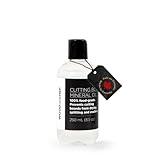
- FOOD SAFE MINERAL OIL FOR WOOD CUTTING BOARD : Be safe with our 100% foodsafe mineral oil for use on natural wood. It's a perfect fit for all of your wood cutting boards, utensils, countertops, salad bowls, wooden products, and stainless steel since it's odourless and colorless!
- RESTORE, PROTECTS AND EXTAND THE LIFE OF WOODEN PRODUCTS : Mineral oil works on everything all the time! By hydrating your board with our food grade penetrating oil, you seal the wood which protect it against water, prevent cracking, warping and drying.
- PREVENT STAINS : Seasoning your cutting boards with our mineral oil will protect it against stains! Since wood is porous without a finish the wood cutting boards or utensils usually absorb food juices, colors and aromas and we don't want that.
- EASY TO APPLY AND USE : The disc top cap is mess free and makes it easy to apply wood oil . For brand new boards, apply once every one or two weeks for the first 3 months. After that once a month should be fine. Be generous with the application, especially if the wood is dry!
- INDUCTION SEAL : WoodForChef uses an induction seal instead of regular pressure seal. That way we ensure that our products arrive at your house intact! No leak, no halfway full bottle!
What “sealed” means in this project
For a wooden utensil, “seal” is often used casually to mean conditioning the fibers and reducing rapid moisture exchange. Food-grade mineral oil and a mineral-oil-and-beeswax balm fit that meaning. Neither should be represented as a waterproof barrier. The wax layer may shed some droplets, but the wood can still absorb moisture and should still be kept out of sinks and dishwashers.
If you need a hard film specifically for a permanently display-only object, identify the existing finish first and choose a product whose manufacturer confirms compatibility. This source set does not establish a particular varnish, paint, or furniture oil as suitable for an unknown spatula. Once a non-food coating is applied, treat the piece as decoration permanently and label or store it accordingly so nobody mistakes it for a cooking utensil.
Free tools Windows power users keep installed
One-click scans. No signup required.
Display the finished spatula without undoing the work
- Mount or store it in a dry indoor location away from steam, splashing sinks, and condensation.
- Use a clean support that will not transfer dye, rust, or adhesive to the wood.
- Keep it out of direct heat and strong sunlight if the wood begins to dry, fade, or distort.
- Do not wrap it tightly while any product still feels oily or tacky; trapped residue attracts dust.
- If it is displayed with other kitchen tools, mark it as decorative when there is any chance of confusion.
A clean, dry cloth is usually enough for routine dusting. If the spatula becomes dirty, repeat a brief hand-wash and dry it completely before considering another conditioning treatment. Follow the original maker’s instructions if they specify a different maintenance method.
Troubleshooting common results
| Symptom | Likely explanation | Correction |
|---|---|---|
| Surface feels greasy after oiling | Too much product remains on the surface, or it has not absorbed as directed. | Buff with a clean dry cloth and follow the label’s handling instructions. Do not add more oil. |
| Wood still feels fuzzy | The fibers were not smoothed, or sanding was too light for the affected area. | Let the piece remain dry, sand lightly with the grain, remove dust, and repeat only the labeled conditioning process. |
| White or cloudy wax residue | Balm was applied too heavily or not buffed adequately. | Buff with a clean dry cloth. Avoid adding another layer until the surface is even. |
| Dark patches appear after washing | Moisture remains in end grain, a recess, or a crack. | Allow complete air-drying and inspect for structural damage before any finish is applied. |
| Finish beads up instead of absorbing | The spatula may already have a film finish or another treatment. | Stop applying product. Check the maker’s instructions and test compatibility before doing anything more aggressive. |
| Persistent chemical, rancid, or mold-like odor | Contamination or an unsuitable previous product may remain in the wood. | Do not return it to food use. If the problem cannot be safely removed, discard the spatula. |
When to stop and discard the spatula
Cleaning and conditioning are not substitutes for sound wood. Discard the spatula rather than decorating it for kitchen-adjacent display if it has deep splits, loose fragments, soft decay, severe burning, embedded chemicals, or contamination that remains after cleaning. If a coating is flaking and its identity cannot be established, do not assume a new oil or wax layer will make it safe for food.
For a permanently decorative object, disposal is still the better option when the wood is unstable enough to shed splinters or pieces. A finish can change the appearance, but it cannot restore missing material or guarantee that an unknown substance has been removed.
Source notes for the care decisions
The USDA Forest Service Forest Products Laboratory’s Finishes for Wood Bowls, Butcher Blocks, Other Items Used for Food, and Children’s Toys was revised in July 2013 and provides the food-contact finish guidance, including the recommendation to use a finish described as food grade or recommended for food use. Oklahoma CareerTech’s Hand Tools and Utensils procedure supports hand-washing wooden utensils in warm, soapy water, avoiding soaking and dishwasher heat, and sanding to remove fuzziness or stains. The Good Knot’s Wood Care Guide, accessed October 13, 2026, supplies maker-specific 220-grit advice. Bevel & Bond’s Board Balm — Cutting Board Conditioner & Wax page, also accessed October 13, 2026, describes applying balm to completely dry wood, allowing absorption, buffing away greasiness, and treating beeswax as water-shedding rather than waterproof. Product formulas and availability can change, so the current label remains controlling.
Recommended Free Tools
Quick Recap

Product prices and availability are accurate as of the date/time indicated and are subject to change. Any price and availability information displayed on Amazon at the time of purchase will apply.

