Windows Errors? Fix Them Before They Spread
Outbyte PC Repair · freeRepair common Windows errors and clear accumulated junk for a smoother, more stable PC - no reinstall needed.
Fix My PC Now →ThatPainter is reader-supported. When you buy through links on our site, we may earn an affiliate commission. Learn More
The safest way to clean a stained mattress is to use as little liquid as possible. Strip the bed, vacuum loose debris, blot fresh spills, apply a compatible cleaner sparingly, blot from the outside of the mark toward its center, and dry the mattress completely before using it again. Once the area is dry or nearly dry, baking soda can help absorb residual moisture and odors; it is not a universal stain remover.
Always read the mattress care label first. Foam, fiber, hybrid and innerspring mattresses can react differently to moisture and chemicals, and saturating any of them can push liquid into padding where it dries slowly. The method below covers urine, blood, sweat, food and drink marks while keeping moisture and chemical exposure controlled.
As an Amazon Associate I earn from qualifying purchases.
Recommended Free Tools
What to do immediately after a spill
- Remove bedding. Take off sheets, pads and the protector so you can see the full affected area. Launder those items according to their own care labels.
- Blot, do not scrub. Press clean, absorbent towels onto a fresh spill. Replace the towel as it becomes damp and continue until little liquid transfers. Rubbing can spread the stain and drive it deeper.
- Vacuum loose material. After the surface is free of wet residue, vacuum crumbs, hair and dried particles around the mark. A clean upholstery attachment helps prevent new debris from being pressed into the fabric.
- Check the care label. Follow any “spot clean only,” water-temperature, solvent or rotation instructions from the manufacturer. If the label prohibits a product or method, do not override it.
Work in a ventilated room. Keep children and pets away from wet cleaning products, and never combine products. The U.S. Environmental Protection Agency’s indoor-air guidance is explicit: “NEVER MIX CLEANING PRODUCTS.”
Supplies and safety checks
Gather clean white or colorfast cloths, a vacuum with an upholstery tool, a small bowl, clean water, and the cleaner appropriate for the stain and mattress label. You may also need baking soda, a mild detergent, a tested vinegar solution, or a labeled hydrogen-peroxide product. Use only a small amount of liquid at a time.
#1 Best Overall

- The End of All Stains - Save your rug, carpet, clothes, mattress, upholstery from permanent stain damage - Incredible! Stain Remover is here to save the day, Our powerful formula eliminates various stains and odors - from coffee, red wine, oil, dog and cat urine, grease and more.
- Easy to Use, Instant Results - Just spot and blot the stain with Incredible Stain Remover - no washing, rinsing, rubbing, or vacuuming necessary, Gone goes all traces of stain and odor - in just a few seconds, like magic.
- Safe For The Whole Family - Incredible! Stain Remover is tough on stains, but safe for everybody - even children and pets, Our waterbased formula is non-toxic, non-flammable, and non-irritating unlike other harsh cleaners.
- Incredible Value - With 1 bottle of Incredible! Stain Remover there's no need for a separate stain remover and odor eliminator products for your carpet, furniture, mattress and your clothes, Use Incredible! Stain Remover on various surfaces, and upholstery
- Important Notice - Incredible! Stain Remover has gained the trust of American households to remove tough stains and odors in their house, car or workplace. However some stains are impossible to remove and our product cannot remove permanent ink stains (only washable ink), clay, paint, or cooking oils or grease. This liquid is colourless and odorless. Please read the instructions carefully and reach out to us via Amazon if you have any questions.
- Patch test: Dab the proposed cleaner on a hidden seam or underside first. Wait for the test area to dry and check for color loss, texture change or a lingering ring.
- Read the product label: A product intended for a hard, nonporous surface is not automatically suitable for an absorbent mattress. Use a disinfectant on a mattress only when its label specifically permits that surface.
- Protect yourself: Follow the label’s ventilation, glove and eye-protection directions. Do not mix vinegar, peroxide, detergent, bleach or any other cleaner in the same container.
- Do not use bleach: Bleach can damage mattress materials and should not be added to another chemical.
The low-moisture cleaning method
1. Remove liquid before adding cleaner
For a wet mark, blot repeatedly with dry towels. If the spill has dried, gently lift any crusted residue with a soft brush or the edge of a spoon, then vacuum it. Avoid scraping aggressively, which can roughen the cover.
2. Choose one compatible treatment
Apply a small amount of the selected solution to a cloth or directly to the stained fabric only if the care label allows it. The cloth should be damp, not dripping. Treating a towel first gives you better control than pouring liquid over the mattress.
3. Blot from the perimeter inward
Start at the outer edge and work toward the middle. This limits the spread of a wet ring. Turn to a clean part of the cloth frequently so you lift soil instead of redepositing it. Stop if the padding begins to feel wet beneath the cover.
4. Remove cleaner residue
Use a separate cloth lightly dampened with clean water if the product label calls for rinsing. Keep the rinse minimal and blot again. Leaving a concentrated detergent or mineral residue can attract more soil.
Rank #2
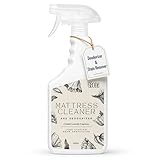
- Powerful Odor & Stain Removal: Eliminates body oils, sweat, spills, and musty smells fast
- Enzyme-Based Stain & Odor Removal: Enzymes break down tough odors fast by eliminating body oils, sweat, spills, and musty smells
- Non-Toxic & Family-Safe: Safe to use around kids, pets, and sensitive skin
- Sweet Lavender-Infused Freshness: Leaves bedding lightly scented with a soothing sweet floral touch
- Works on All Mattress Types: Safe for memory foam, protectors, and bedding
5. Dry with moving air
Open windows when conditions permit and run a fan across the surface. Stand or tilt the mattress only in a position the manufacturer permits; do not bend a foam mattress sharply. Do not replace sheets until the cover and the padding feel completely dry and there is no cool, damp area when you press lightly.
6. Use baking soda after drying
Spread a thin, even layer of baking soda over the dry or nearly dry treated area. Sleep Foundation guidance describes leaving it for at least eight hours; leaving it overnight is practical when the bed is not needed. Vacuum it thoroughly afterward with an upholstery attachment. Baking soda can help with odor and residual moisture, but it will not dissolve every set-in stain or replace blotting and drying.
The Tool Desk
Outbyte Driver Updater FREEFix the driver behind crashes, sound loss and screen glitchesFind Drivers →Outbyte PC Repair FREEClear out junk files and repair common Windows errorsFree Scan →How to remove common mattress stains
Urine and urine odor
Blot a fresh accident immediately, working until the towels no longer pick up much moisture. For the remaining discoloration or odor, use a small amount of a vinegar-based solution or a hydrogen-peroxide-based approach only after a hidden-spot test and a care-label check. A labeled hydrogen-peroxide product may identify urine among the soils it removes, but the label and mattress materials must permit use.
Apply the treatment sparingly, blot from the outside toward the center, and ventilate until fully dry. Then use the baking-soda step for at least eight hours or overnight and vacuum. If odor remains after the mattress is dry, one cautious repeat is preferable to flooding the area. Persistent odor can indicate contamination in the padding; stop repeatedly wetting it and consult a professional cleaner.
Rank #3

- CHEMICAL GUYS LIGHTNING FAST STAIN EXTRACTOR (SPI_191_16) – Professional-strength stain remover formula penetrates deep into carpet, upholstery, and fabric to quickly break down and lift stains, dirt, and odors for a restored, like-new look
- SAFE FOR NATURAL AND SYNTHETIC FIBERS – This car upholstery stain remover works on automotive interiors, home furniture, office chairs, rugs, and mats without causing fading, discoloration, or damage to delicate materials
- REMOVES TOUGH STAINS AND ODORS – A carpet stain remover that targets coffee, soda, wine, food, pet messes, and more while neutralizing lingering smells, leaving a clean, fresh scent behind after each use
- EASY TO USE SPRAY APPLICATION – Spray directly onto the affected area, agitate with a brush to loosen grime, and blot or vacuum away for professional results in minutes; great as an upholstery cleaner for furniture or auto upholstery cleaner
- DETAILER-APPROVED RESULTS AT HOME – Trusted by professional detailers, this upholstery cleaner spray delivers deep cleaning performance, giving any fabric surface a revived look, feel, and smell without harsh chemicals
Blood
Use cold water for the first blotting pass. Warm or hot water can make protein-based blood residue harder to remove. After lifting as much as possible, a labeled hydrogen-peroxide product can be considered only when the mattress label and materials allow it. Peroxide may lighten dyes, so test a hidden area and use the smallest practical amount.
Blot rather than scrub, remove any residue the product label says to rinse, and dry with airflow. Do not use bleach or combine peroxide with another cleaner.
The Tool Desk
Outbyte PC Repair FREERepair Windows errors before they cause bigger problemsFix Now →Outbyte Driver Updater FREEScan for outdated or missing drivers - takes under a minuteDriver Scan →Sweat and body oil
Prepare a very mild detergent solution and dampen a cloth lightly. Blot the yellowed or greasy area in small sections, turning the cloth often. Keep detergent and water out of the padding as much as possible; foam can hold moisture and develop a musty smell if it is flooded. Follow with minimal clean-water blotting when the detergent label requires it, then dry completely.
Food, coffee and other fresh spills
Lift solids with a spoon or dull edge before vacuuming the dry particles. Blot liquid from the perimeter inward with a cloth carrying a small amount of compatible mild cleaner. Coffee and colored foods may leave dye behind, so a hidden-spot test is especially important. Avoid vigorous rubbing, which spreads the mark and roughens the cover.
Rank #4

- Powerful stain removal 1st time - works in just 3 mins
- Specially developed to eliminate stubborn and dried-in stains from coffee to tomato sauce
- Neutralises odours
- Ideal for a variety of different indoor and outdoor upholstered surfaces such as sofas, car seats, mattresses etc.
- Integrated 2in1 triangle soft brush reaches every corner and hard-to-reach stains with ease
Unknown or set-in stains
Start with the least aggressive compatible method: dry removal, then a small amount of mild cleaner. Do not escalate to several chemicals in one session. If the mark remains after the area is dry, identify the likely soil before choosing another treatment, and patch-test again.
Mold, musty odor or persistent dampness
Do not keep re-wetting a mattress that stays damp, smells musty or shows extensive growth. Move it to a well-ventilated area only if it can be handled safely and the manufacturer permits the position. Extensive mold or moisture inside the padding warrants professional advice; replacement may be safer than repeated home treatment.
Do these 3 things before closing this tab:
1Clear out junk files and repair common Windows errors2Fix the driver behind crashes, sound loss and screen glitches3Repair Windows errors before they cause bigger problemsIs baking soda a green mattress cleaner?
Baking soda is useful as a dry odor-control and moisture-absorption step after spot cleaning. It is generally benign as a household chemical, but “green” does not mean risk-free: fine powder can irritate eyes or airways, and it should be vacuumed rather than left under bedding. Baking soda alone is not a reliable way to remove urine salts, blood proteins, grease or a deeply set dye.
Vinegar can be part of a tested urine-treatment approach, but it is still a chemical and should not be combined with peroxide, bleach or other cleaners. Use ventilation and the product directions that apply to your chosen solution.
Best Value

- STAIN AND ODOR REMOVER: Clorox Urine Remover for Stains and Odors breaks down urine to eliminate odor, not mask it, while the powerful hydrogen peroxide cleaner removes stains
- URINE CLEANER: Formula uses hydrogen peroxide to remove uric acid crystals and break down the cell structure of bacteria to eliminate the lingering smell and evidence of urine
- CARPET STAIN REMOVER: This powerful stain remover is safe to use on fibers and soft surfaces such as carpet upholstery mattresses and bed linens, as well as hard to clean surfaces such as grout
- OUTDOOR STAIN REMOVER: The hydrogen peroxide formula works great on hard non-porous surfaces such as concrete sidewalks, outdoor tile and trash areas
- GREAT FOR COMMERCIAL USE: From CloroxPro, this urine remover eliminates the smell and appearance of urine in schools, restaurants, bars, hotels, outdoor stadiums and more
Homemade treatment versus a certified commercial cleaner
A homemade baking-soda or vinegar approach has a short ingredient list and little packaging, but results depend heavily on soil type and application technique. A certified commercial stain remover can offer a formulation designed for a particular soil and clearer use directions, provided its label permits mattress use. EPA’s Safer Choice FAQ cautions that “Typically, homemade cleaners do not perform as well as commercially available products, which are specially formulated chemical blends designed for high performance.” Safer Choice certification identifies products made with ingredients evaluated under that program; vague phrases such as “eco safe” or “environmentally friendly” do not provide the same assurance.
| Factor | Homemade baking soda or vinegar approach | Certified commercial cleaner |
|---|---|---|
| Stain performance | Useful for odor control and selected spot treatments; performance varies by soil and recipe. | Formulated for stated soils, with performance and directions tied to its label. |
| Moisture risk | Low when baking soda is used dry; vinegar solutions still require careful, limited application. | Depends on the product format and how much is applied; over-wetting remains a mattress risk. |
| Ingredient transparency | Ingredients are familiar and limited. | Check the full label and any Safer Choice information rather than relying on a vague green claim. |
| Odor | Vinegar odor can remain temporarily; baking soda is relatively low-odor. | Fragrance and residue vary by formulation. |
| Cost and waste | Usually uses household supplies and little additional packaging. | Requires a purchased container, but a targeted formula may reduce repeat attempts. |
Whichever option you choose, the same limits apply: patch-test first, use minimal liquid, follow the label and dry the mattress fully.
Drying, inspection and when to stop
Drying is part of cleaning, not an optional finishing step. Check the treated area from several angles for a dark or cool patch, press lightly through the cover for hidden dampness, and smell for mustiness after the airflow period. Keep fans moving air across the surface rather than blowing a concentrated hot stream at one spot. Heat can damage some foams and fabrics, so follow the mattress maker’s instructions.
Stop home treatment and seek professional help when liquid has penetrated deeply, the odor returns after complete drying, a stain covers a large section, or mold is visible. Repeatedly soaking a mattress can create a bigger problem than the original mark.
Preventing the next stain
A washable waterproof or moisture-resistant mattress protector is the most practical prevention purchase. Select one that fits the mattress depth, allows reasonable breathability and can be laundered at the temperature its label specifies. Confirm that its construction is compatible with the mattress warranty and does not prevent the mattress from being used in its required position.
Wash the protector on its stated schedule, treat spills before they dry, and keep bedding off the mattress while a spot-treated area is still damp. In healthcare settings, CDC guidance emphasizes keeping mattresses dry and using compatible EPA-registered products on moisture-resistant covers when available; the same moisture-control principle is useful at home.
Quick wins for a faster PC:
Clear out junk files and repair common Windows errorsFree Scan →Fix the driver behind crashes, sound loss and screen glitchesFind Drivers →Repair Windows errors before they cause bigger problemsFix Now →Quick Recap
A quick decision checklist
- Is the care label available, and does it permit your planned cleaner?
- Have you removed bedding, vacuumed loose debris and blotted excess liquid?
- Did you test the product on a hidden area?
- Are you using one cleaner at a time and avoiding bleach?
- Is the cloth damp rather than dripping, with no liquid pooling on the mattress?
- Have you allowed complete drying before applying baking soda or replacing sheets?
- If the smell or dampness persists, have you stopped re-wetting and considered professional advice?

Product prices and availability are accurate as of the date/time indicated and are subject to change. Any price and availability information displayed on Amazon at the time of purchase will apply.

