ThatPainter is reader-supported. When you buy through links on our site, we may earn an affiliate commission. Learn More
Water conservation and wildfire protection are compatible when they are designed as one system. Prevent ignition and ember entry first, remove or separate combustible fuels around the building, and reserve dependable water for the situations in which it is most effective. A home fire-sprinkler system can use the household supply efficiently, but it is not a substitute for community water planning or wildfire response capacity.
As an Amazon Associate I earn from qualifying purchases.
How can you conserve water and still protect a home from fire?
Start with the measures that do not depend on large volumes of water: ignition-resistant construction, ember-resistant openings, clean roofs and gutters, and defensible space. Then design water systems for reliability rather than assuming that more storage or more irrigation automatically means more safety.
Wildfire exposure is driven by interacting conditions. Federal Wildland–Urban Interface (WUI) guidance identifies vegetative fuel type and loading, critical fire-weather frequency, terrain, existing construction materials, defensible space and water supply as parts of a risk assessment. Emergency-vehicle access, ignition-resistant materials, fire-resistance-rated construction, automatic sprinklers and defensible space are treated as complementary resilience measures. That guidance was developed for federal facilities under Executive Order 13728; it is not a universal code for every private property. Your architect, building official and fire department must confirm the rules that apply to your site.
#1 Best Overall

- 50-Gallon Capacity: Provides ample storage for harvested rainwater, ideal for watering gardens, lawns, and plants.
- Durable Construction: Made from UV-resistant polyethylene for long-lasting durability and protection from the elements. Made of 100% Recycled plastic.
- Overflow Valve: Built-in overflow valve for managing excess water and the option to connect multiple barrels for increased storage.
- Convenient Spigot: Easy-to-use plastic spigot for quick and efficient water retrieval.
- Low Maintenance: Easy to install and maintain, offering a simple, sustainable solution for homeowners.
Use a hierarchy of protection
- Prevent ignition. Keep embers and radiant heat from reaching combustible materials.
- Limit fuel. Break up continuous vegetation and remove easily ignited items near walls, decks and fences.
- Protect occupants and the structure. Use code-compliant residential sprinklers and fire-resistant assemblies where required or appropriate.
- Provide dependable water and access. Verify pressure, flow, storage, backup power, hydrant access and emergency-vehicle routes with local authorities.
This sequence matters for conservation. Water used to irrigate a carefully planned landscape or feed a sprinkler is targeted; water used to compensate for combustible design, blocked access or an unreliable supply may not prevent loss.
Do home fire sprinklers use a lot of water?
USFA says residential sprinklers can connect to the home water supply, use less water than business and industrial systems, and activate when a sprinkler head experiences a rapid rise in room temperature. Normally, only the sprinkler exposed to the fire sprays; the entire system does not discharge at once. These statements describe residential fire sprinklers, not the total water demand of suppressing a vegetation fire or defending a neighborhood.
USFA’s page, last reviewed April 1, 2023, publishes several estimates with no study method stated alongside them:
| USFA-published figure | How to interpret it |
|---|---|
| 82% reduction in risk of dying in a fire | The figure combines sprinklers and smoke alarms; it is not a sprinkler-only result and should not be treated as a universal prediction. |
| About $1.35 per square foot for a sprinkler in a new home | An estimate from USFA; actual design, labor, water-service and regional costs vary. |
| Potential 5–15% insurance-rate reduction when code requirements are met | A possible range cited by USFA, subject to the insurer, policy and jurisdiction. |
Residential sprinklers should therefore be evaluated as an early-response life-safety and property-protection system. They do not guarantee survival in a wind-driven wildfire, extinguish exterior fuels, or solve a community-wide shortage caused by a failed utility, inaccessible hydrant or simultaneous demand.
Residential sprinklers versus manual firefighting
| Consideration | Residential sprinkler system | Waiting for manual firefighting |
|---|---|---|
| Activation | Heat activates the sprinkler above the developing fire, whether or not someone is home. | Requires detection, a call, a responding crew and access to the building. |
| Water pattern | Targets the room or area where rapid heat is detected; USFA says only the exposed sprinkler sprays. | Crews may apply larger flows after fire growth and may need exterior protection. |
| Installation | Requires qualified design, hydraulic calculations, compatible piping and inspection under local rules. | No private installation, but depends on public response time, roads, staffing and water availability. |
| Scope | Primarily a residential structure-fire measure. | Can address a broader incident, including exterior fire, but is not guaranteed to arrive before ignition spreads. |
Never reduce a required fire-protection supply because a house has sprinklers. Confirm whether the system needs a dedicated connection, tank, pump, backflow protection or generator, and whether the local water utility can provide the required flow during an emergency.
How do embers ignite buildings?
USFA describes four pathways:
- Embers land directly on a roof, deck, wall or other part of the structure.
- Embers enter through windows, vents, eaves, soffits, roof edges or other openings.
- Embers land in nearby landscaping and ignite mulch, plants or accumulated debris.
- Embers ignite connected fuels such as wooden fences, sheds, stored lumber, furniture or woodpiles, which then expose the house.
Hardening one component while leaving another connected pathway untouched can fail. Alex Maranghides of the National Institute of Standards and Technology summarized the principle for USFA: “Implementing current knowledge of hardening for embers, if done in conjunction with addressing fire hazards, will very significantly reduce structure losses.” Treat that statement as a design direction, not a guarantee; a project-specific code review is still necessary.
Rank #2
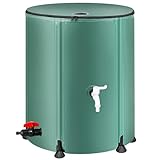
- 【Leak-Proof Design】Unlike typical rain barrels, our product features an integrated design with a straightforward screw-in faucet, eliminating the hassle of assembling multiple parts. This thoughtful construction guarantees a leak-proof system and simple installation
- 【Durable and Sturdy】Our collapsible rainwater collection system is made from premium three-layer PVC material, providing exceptional strength to endure even the toughest conditions. To enhance stability, the rain barrel includes circular footpads, effectively preventing any wobbling or tipping
- 【Easy to Store and Transport】 In contrast to bulky traditional wooden barrels, our rain barrel is foldable, making it easy to carry and store. Say goodbye to heavy, cumbersome containers and embrace convenience. Order our collapsible rain barrel today for effortless water conservation!
- 【Filtering Design】The top of our water storage container is equipped with a mesh design that prevents overflow and keeps leaves and debris out of your clean water. Rainwater collected through the faucet or overflow kit is clearer and can be reused for gardening, farm irrigation, car washing, and more—ideal for eco-conscious individuals
- 【Simple Installation and Exceptional Service】If you encounter any missing or damaged parts during installation, please contact us. We are dedicated to providing prompt replacements to ensure a worry-free experience for our customers
Windows, vents and openings
USFA highlights metal window screens and sealed openings as practical measures. Select screens that fit the specific window, vent or intake, preserve required ventilation, and meet local fire and building-code requirements. A product description alone does not establish ember certification or suitability. Inspect frames, joints, roof-to-wall intersections and attic vents for gaps that can admit embers.
Outdated Drivers Are Slowing You Down
One free scan finds every outdated or missing driver and matches the right update for your exact hardware.Free scan · exact hardware matchPC Slower Than It Used to Be?
A free scan shows the junk files, broken settings and background clutter dragging Windows down - then fixes them in one click.Free scan · Windows 10 & 11Fences and attached fuels
Where a wooden fence meets the building, USFA recommends a transition using metal or stone at the connection point. The purpose is to interrupt the route by which a burning fence can carry fire to the wall. Apply the same logic to gates, trellises, decks, storage boxes and woodpiles: separate or relocate them so one burning object cannot directly expose the structure.
What is defensible space?
Defensible space is a managed area around a building that reduces the chance of flame, radiant heat and embers reaching it and gives firefighters safer working conditions. USFA divides it into three zones. The distances are planning bands, not permission to ignore local vegetation rules or site-specific slope conditions.
| Zone | Distance from structure | Water-conscious actions | Primary maintenance |
|---|---|---|---|
| Immediate zone | 0–5 feet | Remove wood mulch, dead vegetation and other combustibles. Keep roofs and gutters free of leaves and needles. Favor noncombustible surfaces where practical. | Frequent removal of litter, dry plant matter and stored materials; inspect after wind events. |
| Intermediate zone | 5–30 feet | Prune dead or dying branches, space vegetation and maintain breaks between plants and structures. USFA advises watering this zone during a hot, dry summer when appropriate. | Seasonal pruning, irrigation checks and removal of fallen limbs; avoid treating drought-stressed vegetation as permanently safe. |
| Outer zone | 30–100 feet | Thin and space fuels to interrupt fire spread. Work with the terrain and local forest guidance rather than attempting to irrigate the entire area. | Remove ladder fuels, monitor regrowth and coordinate work across property boundaries where possible. |
The intermediate-zone watering advice is important: conserving water does not mean banning all irrigation near a home. Use irrigation where it supports healthy, appropriately selected plants and where local restrictions allow it. Do not rely on irrigation to compensate for dense, highly flammable or poorly maintained vegetation.
How should landscaping be planned for fire and drought?
Landscape choices must be local. USFA recommends consulting local foresters, selecting native plants suited to the area’s existing vegetation, avoiding invasive or more flammable non-native species, and reviewing the plan regularly. Plant moisture content changes with season, disease, pests and drought; a plant that is relatively low-risk when healthy can become hazardous when dead or stressed.
Free tools Windows power users keep installed
One-click scans. No signup required.
Before removing trees, grading, changing drainage or installing irrigation, check federal, state and local environmental, zoning and historic-preservation requirements. Some jurisdictions regulate vegetation removal, water use, wells, tanks, retaining walls or work near protected resources. A landscape professional familiar with wildfire mitigation can map slope, prevailing winds, access routes and neighboring fuels before specifying plants.
Rank #3

- 50-Gallon Capacity: Provides ample storage for harvested rainwater, ideal for watering gardens, lawns, and plants.
- Durable Construction: Made from UV-resistant polyethylene to withstand outdoor elements and ensure long-lasting durability.
- Overflow Valve: Built-in overflow valve for managing excess water and the option to connect multiple barrels for increased storage.
- Premium Brass Spigot: Features a high-quality brass spigot for easy, secure, and leak-free water retrieval.
- Low Maintenance: Easy to install and maintain, offering a simple, sustainable solution for homeowners.
Reduce irrigation without creating dry fuel
- Group plants with similar water needs and irrigate only their root zones.
- Use weather-based scheduling where permitted, then inspect emitters for leaks and overspray.
- Maintain soil health and mulch choices in accordance with local fire guidance; combustible wood mulch is specifically inappropriate in the immediate 0–5-foot zone.
- Replace dead or drought-damaged plants promptly and remove the dead material rather than leaving it as habitat or screening.
- Keep irrigation controls, pumps and valves accessible for inspection and emergency shutoff.
How should a site’s fire-protection water supply be designed?
Water planning is a reliability problem, not simply a storage-volume problem. Ask the authority having jurisdiction and the water provider to document:
- Available static and residual pressure and the flow that can be delivered during a fire.
- Whether the supply is municipal, well-based, tank-based or a combination, and how it performs during power outages.
- Required connection sizes, backflow protection, pumps, alarms, testing and inspection.
- Hydrant locations, turning radii, bridge or gate limits and year-round emergency access.
- Restrictions on drawing from ponds, streams, cisterns or recycled-water systems during an incident.
- Maintenance responsibility, refill time and fuel or backup-power requirements.
A private tank may improve resilience on a remote parcel, but the appropriate volume, pump rating and refill strategy are project-specific and are not established by the USFA material cited here. Do not select a tank or pump from a generic chart and assume it satisfies a fire department or sprinkler standard.
Site and community planning
Wildfire does not stop at a property line. Coordinate driveway widths, address visibility, gates, turnaround areas, hydrant clearance and shared fuel-reduction work with neighbors and the fire department. Federal WUI guidance treats access, water supply, ignition-resistant construction, fire-resistance-rated construction, automatic sprinklers and defensible space as an integrated set. A drought-tolerant planting scheme alone does not meet that standard.
The Tool Desk
Outbyte PC Repair FREEClear out junk files and repair common Windows errorsFree Scan →Outbyte Driver Updater FREEScan for outdated or missing drivers - takes under a minuteDriver Scan →A practical project workflow
- Map hazards. Record slope, wind exposure, vegetation, adjacent structures, fence lines, roof and siding materials, openings and water infrastructure.
- Identify ember routes. Mark vents, eaves, gutters, window screens, decks, fence connections and stored fuels that could receive embers.
- Set zone treatments. Apply the 0–5, 5–30 and 30–100-foot actions, adapting distances and vegetation work to local code and terrain.
- Verify construction details. Have an architect or building official review roof edges, vents, windows, siding, decks and fence transitions as a connected assembly.
- Design water systems. Obtain written flow and pressure information, then have a qualified fire-protection designer size sprinklers, pumps, tanks and controls if needed.
- Confirm access and approvals. Resolve fire-apparatus access, utility, environmental and historic-preservation requirements before construction.
- Schedule maintenance. Put gutter cleaning, screen inspection, pruning, fuel removal, irrigation checks and pump testing on recurring calendars.
- Reassess after change. Review the plan after remodeling, landscaping, drought, pest damage, nearby development or a change in local fire regulations.
Common mistakes that waste water or reduce protection
- “We use drought-tolerant plants, so the property is protected.” Plant choice does not replace ember-resistant construction, fuel separation, access or a reliable water supply.
- “Sprinklers will handle a wildfire.” Residential sprinklers address developing indoor fires; they do not extinguish a wind-driven vegetation fire outside.
- “Every sprinkler head will activate.” USFA says the sprinkler exposed to a rapid rise in heat is the one that sprays; system behavior still depends on approved design and maintenance.
- “A large tank solves the problem.” Without a tested pump, protected power, refill plan, compatible connections and fire-department approval, stored water may be unusable when needed.
- “Screens are interchangeable.” Opening size, mesh, frame, ventilation and code suitability differ. Measure each opening and obtain approval before installation.
- “Maintenance can wait for fire season.” Dead branches, clogged gutters and failed irrigation controls create risk before an official warning is issued.
Bottom line for architecture and design
Conserve water by making the building and site less likely to ignite, not by deleting fire-protection capacity. Use the immediate zone to remove combustibles, maintain and selectively irrigate the intermediate zone, and thin fuels farther out. Pair those actions with ember-resistant openings, thoughtful fence and storage details, code-compliant residential sprinklers where appropriate, and a water supply whose pressure, access and backup arrangements have been verified locally. The result is a coordinated design that uses water where it can do the most good while reducing the demand created by preventable ignition pathways.
Frequently Asked Questions
How far should landscaping be kept from a house in a wildfire area?
USFA describes three defensible-space bands: 0–5 feet, 5–30 feet and 30–100 feet. Apply different fuel-removal and spacing measures in each band, then confirm distances and vegetation rules with local officials because slope, fuels and adopted codes can change the required treatment.
How do I protect windows and vents from wildfire embers?
USFA highlights metal screens and sealed openings. Use products that fit the specific opening, preserve required ventilation and satisfy local building and fire codes; inspect frames, joints, eaves and roof edges for gaps as well.
Can I water landscaping during a hot, dry summer?
Yes, where local restrictions and the landscape plan allow it. USFA specifically advises maintaining and watering vegetation in the 5–30-foot intermediate zone during hot, dry summers. Irrigation does not replace fuel separation or ember-resistant construction.
Quick Recap

Product prices and availability are accurate as of the date/time indicated and are subject to change. Any price and availability information displayed on Amazon at the time of purchase will apply.

