Free tools Windows power users keep installed
One-click scans. No signup required.
What’s actually slowing this PC down?
Pick the symptom - the matching free tool is one click away.
ThatPainter is reader-supported. When you buy through links on our site, we may earn an affiliate commission. Learn More
A cooler home starts by stopping heat before it enters, then giving indoor heat a safe route out when outdoor conditions are favorable. Window orientation, exterior shade, insulation, roof design and selective ventilation should be planned as one system; active air-conditioning is the backup for climates and heat events that passive measures cannot handle.
As an Amazon Associate I earn from qualifying purchases.
There is no universal recipe. A dry climate with cool nights calls for a different balance of thermal mass and night flushing than a humid climate where opening windows can add moisture without removing heat. Use the sequence below to match the design to your sun exposure, humidity, air quality, security needs and expected heat.
The Tool Desk
Outbyte PC Repair FREEClear out junk files and repair common Windows errorsFree Scan →Outbyte Driver Updater FREEFix the driver behind crashes, sound loss and screen glitchesFind Drivers →Begin with the local heat pattern
Before choosing a roof, window package or fan, map how your site actually overheats. Note which façades receive direct sun in the morning and afternoon, whether bedrooms are exposed to late-day heat, how cool the air becomes overnight, and whether outdoor humidity remains high after sunset. Also account for wildfire smoke, traffic pollution, insects, security and prevailing breezes. These conditions determine whether ventilation helps or harms.
#1 Best Overall

- No Tools, No-Drill, Easy Install: Quick and easy to set up, these no drill blinds operate smoothly and preserve your window's clean look. Since you don't need to drill holes into your window frame or wall, these are a great option for renters or people who want to avoid causing damage to their living space.
- Solar Panel & Eco-Friendly: Each electric blinds comes with a dedicated solar panel that keeps your shades continuously powered. No more climbing ladders to replace batteries—ensuring safety and convenience while reducing waste.
- Smart Life: Each motorized blind includes a remote control to operate one shade. For whole-room convenience, upgrade to our 15-channel remote (Not included) to control up to 15 shades at once. Pair with the smart hub (Not included), open and close your roller shades from your smartphone or completely automate when they open and close with voice commands. Enjoy more easy living!
- Blackout Roller Shade: Constructed with four layers of premium fabric, these electric blinds completely block external light, creating an ideal dark sleep environment for bedrooms and ensuring enhanced privacy and better rest.
- Trusted After-sales Assistance: MUSCLEAREA indoor motorized automatic blinds are engineered to suit your smart home needs, and come with a 2-year After-sales Assistance! If you encounter any product issues, please don't hesitate to contact us—our dedicated after-sales team is prepared to provide prompt and effective solutions.
| Site or climate condition | Design emphasis | What to avoid assuming |
|---|---|---|
| Hot days with substantially cooler, clean nights | Exterior shade, a well-insulated envelope, secure cross-ventilation and a night-cooling plan. | That windows should stay open all day; daytime air may be hotter than indoors. |
| Hot and humid days and nights | Solar control, insulation, moisture management and efficient mechanical cooling; use ventilation only during genuinely cooler, drier periods. | That a breeze or open window will remove heat. The U.S. Department of Energy cautions that ventilation is not an effective cooling strategy in hot, humid climates. |
| Strong afternoon sun on west-facing rooms | Deep exterior overhangs, awnings, louvers, shutters or deciduous landscape shade designed for the window geometry. | That an interior curtain can block as much solar heat as an exterior screen. |
| Poor outdoor air quality, pests or security constraints | Filtered mechanical ventilation, secure limited openings and a plan for closing the house during smoke or pollution events. | That night flushing is always safe or practical. |
The World Health Organization’s housing guidance treats ventilation, solar exposure and the building envelope as connected health and design issues. A comfortable plan must also remain usable during heat alerts, when outdoor air may not be a safe cooling source.
Block solar heat before it reaches the glass
Design each façade for its sun
Window orientation changes the shading problem. Morning sun enters east-facing glass at a low angle; afternoon sun enters west-facing glass at a similarly difficult angle after the building and occupants have accumulated heat. South-facing windows in many northern-hemisphere locations can be easier to shade with correctly sized horizontal overhangs, while the exact geometry depends on latitude and season. In the southern hemisphere, the useful solar-control orientation is reversed. A designer should model the actual sun path rather than apply a generic “south is best” rule.
Put regularly occupied rooms, especially bedrooms, away from the most punishing late-day exposure when the site plan allows. If a west-facing room is unavoidable, reduce its glass area, place glazing under a shaded porch or use adjustable external louvers that can be closed before afternoon heat arrives. Trees and pergolas can help, but their mature height, seasonal leaf loss, maintenance and wildfire requirements need to be part of the plan.
Windows Errors? Fix Them Before They Spread
Repair common Windows errors and clear accumulated junk for a smoother, more stable PC - no reinstall needed.Free scan · no reinstallOutdated Drivers Are Slowing You Down
One free scan finds every outdated or missing driver and matches the right update for your exact hardware.Free scan · exact hardware matchPrefer exterior shading where feasible
The U.S. Environmental Protection Agency advises covering windows that receive morning and afternoon sun and notes that outdoor awnings and louvers can reduce heat entering a home more effectively than interior shades. The reason is straightforward: exterior devices intercept sunlight before it passes through the glass and becomes indoor heat. Fixed overhangs, operable awnings, shutters, exterior roller shades and vertical fins are all ways to keep direct radiation off the window.
Rank #2

- 【100% Blackout】Sumobaby blackout curtains adopts upgraded reflective silver coating and high-density black polyester, the blackout effect can easily reach 100%. Blocks sunlight and harmful UV rays to darken your room, reduce heat and enhance privacy.
- 【Strong Hook and Loop Tape】Each blind for windows come with 15 pairs of self-adhesive hook and loop tape,easy to apply,has strong stickiness,and firm grip,suitable for all kinds of flat surfaces. Such as glass,wall,aluminum alloy windows,etc. You don't need to worry about the window blinds falling.
- 【Easy to Cut】50"x60" blackout window blinds,because of the special material,you can easily cut the bedroom curtains into the shape you want to perfectly match different shapes of winow shades.It is recommended to cut the size slightly larger than the actual size of the window for a better shading effect.
- 【Premium Material】Sumobaby blackout window shades are made of thick,strong but soft high-density polyester fabric material.Ultra-light,durable,and comfortable texture,the front is matte black,and the back is silver gray,stain-resistant,and easy to clean.
- 【Multi-Scenario Use】The hook & loop tapes installation method and the packaging design of the sealed bag make the blackout window curtains easy to carry,and can perfectly create a comfortable dark sleeping environment or private space in various scenarios.Such as bedroom,dorm, baby room,TV room,in-vehicle and hostel.
Interior blinds, curtains and shades remain useful when exterior work is impractical, especially for rental properties or tightly constrained façades. Close them before the sun reaches the glass, choose a close fit with minimal side gaps, and treat them as a second line of defense rather than a substitute for exterior shade. Any window treatment must still allow emergency egress where required.
| Option | Best use | Design and maintenance considerations |
|---|---|---|
| Fixed overhang | New construction with predictable sun angles, especially where a roof or porch can shade glazing. | Must be sized for the site latitude and window height; an overhang that works at noon may not stop low-angle east or west sun. |
| Exterior awning or roller shade | Existing windows or façades needing adjustable control. | Check wind exposure, drainage, operation and clearances. Motorization can help occupants deploy shade consistently but adds electrical and maintenance needs. |
| Exterior louver or shutter | Strong low-angle sun, privacy needs or periods when windows should be fully protected. | Requires robust mounting and a plan for storms, cleaning and emergency access. |
| Interior blind or curtain | Low-disruption retrofit or situations where exterior installation is not allowed. | Install tightly and operate before direct sun. It limits glare and radiant discomfort but does not intercept all heat before it reaches the room. |
Make the roof and envelope do less cooling work
Cooling is easier when the roof, walls, windows and doors slow heat flow as a coordinated envelope. Department of Energy guidance identifies insulation, efficient windows and doors, shading, cool roofs, radiant barriers and controlled ventilation as complementary strategies. The correct combination depends on climate, roof assembly, orientation and whether the project is new construction or a renovation.
Roof and attic
A roof receives intense solar radiation, so specify a roof surface and assembly appropriate to local conditions. A cool-roof approach can reflect more sunlight, while insulation and air sealing reduce heat transfer into occupied rooms. In an attic, the designer must coordinate insulation, ventilation and moisture control; simply adding vents without a continuous air and water strategy can create problems rather than comfort. Radiant barriers may be relevant in assemblies with an appropriate air space, but their performance depends on correct installation and the rest of the roof system.
Recommended Free Tools
Do not assign a universal temperature drop or energy-saving percentage to a roof coating or material. Results vary with roof color, insulation, climate, duct location, shading and occupancy. Ask for assembly-specific specifications and verify that a product is compatible with the roof membrane, fire requirements and local weather.
Rank #3

- [ECO-FRIENDLY FABRIC ]: Light filtering roller shade is 100% polyester fabric. Good ventilation capability, anti-static, dust-proof and durable. The aluminum bottom rod replaces the plastic bottom rod to improve the overall stability, so that the panel and the bottom are on the same level, not easy to tilt, prevent wind blowing, and give users a better experience.
- [PROFESSIONAL AND UNIQUE DESIGN]: Our light filtering roller shades use woven technology to keep the room bright while blocking light. In addition, exquisite cordless lift mechanism could easily achieve raise and lower lift just by pull-push and it is safer for kids and pets.
- [FASHIONABLE STYLE]: The high-end fashion design style makes our roller shades more like home decorations rather than just a piece of furniture. A variety of different colors and sizes to choices can adapt to the various decoration styles of room, perfectly creating an open, chic, warm and comfortable space.
- [CONVENIENT INSTALLATION]: Our roller blind installation steps are simple and convenient. A window frame depth of at least 2 inches is required for installation and choosing the size of the roller shade according to the width of the window frame. The roller shade comes with an installation package, including installation instructions, installation screws, aluminum frame brackets, to help you better install the product.
- [QUALITY GUARANTEE]: We are full of confidence in the quality of our products and we hope you can also have the same comfortable and satisfying experience. If you are not satisfied with our products, you can contact us at any time and we will solve the problem for you ASAP.
Walls, windows and doors
Continuous insulation, reduced thermal bridging and careful air sealing help keep outdoor heat from bypassing the intended insulation layer. High-performance windows can reduce solar gain and conductive heat flow, but the glazing must be selected for its orientation and shading strategy. A low-solar-gain window on a shaded façade may perform differently from the same window on an exposed west wall. Seal door thresholds and weatherstripping, and avoid creating unplanned openings that undermine the envelope.
In a new home, these decisions belong in the energy and construction documents before framing. In an existing home, roof, wall or window changes can require substantial access, flashing work and coordination with moisture control. The WHO’s review of overheating interventions notes that retrofit feasibility varies, so rank projects by exposure and risk rather than replacing every component at once.
Use ventilation only when it can remove heat
Natural ventilation works when outdoor air is cooler than indoor air and is clean and acceptable to occupants. Cross-ventilation needs openings on different sides of a room or dwelling and an unobstructed path through the plan. High and low openings can support buoyancy-driven movement, while secure window hardware allows a home to be ventilated without leaving openings vulnerable.
The Tool Desk
Outbyte Driver Updater FREEScan for outdated or missing drivers - takes under a minuteDriver Scan →Outbyte PC Repair FREERepair Windows errors before they cause bigger problemsFix Now →Night ventilation, sometimes called night flushing, can discharge heat stored in floors, walls and furnishings after the outdoor temperature falls. A practical control sequence is to close shaded windows and exterior doors during the hot part of the day, then open selected secure openings when outdoor air is cooler than the indoor air. Close them again as soon as the outside temperature rises, humidity becomes excessive, smoke arrives or security conditions change.
Rank #4
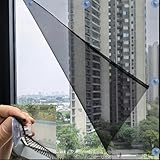
- 63" W x 39" L (160 cm x 100 cm),63" W x 78" L (160 cm x 200 cm), 63" W x 118" L (160 cm x 300 cm), unique suction cups make mounting this cordless window shade more convenient.
- Transparent shade for filtering glare. The fabric is Its special woven texture , and it effectively reduces the heat while still letting us enjoy the view.
- Easy to install without drilling, simply fix the suction cups and enjoy the soft and alluring light filtering effect of these woven shades
- it's a simple, effective fix for summer heat without sacrificing the view! Just enjoy the mountain view, and the heat is only an issue on summer days. Using the suction cups to put up the black fabric mesh has been a great solution.
- Reusable and washable cloth material, cut it to fit your window or car, install it with the included suction cups. This item is perfect for providing privacy and reducing sunlight.
Do not use open windows as a standing rule in a hot, humid climate. Moist outdoor air can raise indoor humidity, and ventilation cannot cool the home when outside air is hotter than the rooms it enters. The Department of Energy specifically warns about this limitation. Outdoor air quality, pollen, pests and noise may also make mechanical or filtered ventilation the better choice.
Plan the air path during design
- Place operable openings so air can move through living areas rather than stopping at a closed hallway or stair door.
- Provide transfer grilles, high transoms or dedicated pathways where privacy doors would otherwise block cross-flow, subject to fire and acoustic requirements.
- Locate kitchens, bathrooms and laundry exhaust so moisture and heat leave the building without drawing unwanted air through dusty or contaminated spaces.
- Use secure hardware, insect screens and controls that let occupants close openings quickly during storms, smoke or security events.
Add active cooling and heat-safety measures
Passive design reduces the cooling load; it does not guarantee safe indoor conditions during every heat event. Provide right-sized mechanical cooling where the climate, humidity or local heat record warrants it. Equipment selection should account for the reduced load created by shade and insulation, but it still needs to manage latent moisture in humid climates. Keep supply and return paths unobstructed and plan access for filter changes and service.
Fans can improve perceived comfort by moving air across skin, but the EPA states that fans do not cool the air. Use ceiling or portable fans as supplemental comfort measures, not as a replacement for cooling or heat-risk planning. A fan should not be relied on for a person who cannot safely respond to rising heat, and it should not blow hot outdoor air into a room merely because a window is open.
Quick wins for a faster PC:
Fix the driver behind crashes, sound loss and screen glitchesFind Drivers →Clear out junk files and repair common Windows errorsFree Scan →Include a simple monitoring plan. Place room thermometers in occupied bedrooms and living spaces, out of direct sun and away from supply registers. In humid regions, add humidity monitoring so ventilation decisions do not trade heat for moisture. A thermometer reports conditions; it does not prevent heat illness. During an official heat warning, follow public-health advice, check on vulnerable occupants and identify an alternative cooled location if the home cannot remain safe.
Best Value
- [ECO-FRIENDLY FABRIC ]: Light filtering roller shade is 100% polyester fabric. Good ventilation capability, anti-static, dust-proof and durable. The aluminum bottom rod replaces the plastic bottom rod to improve the overall stability, so that the panel and the bottom are on the same level, not easy to tilt, prevent wind blowing, and give users a better experience.
- [PROFESSIONAL AND UNIQUE DESIGN]: Our light filtering roller shades use woven technology to keep the room bright while blocking light. In addition, exquisite cordless lift mechanism could easily achieve raise and lower lift just by pull-push and it is safer for kids and pets.
- [FASHIONABLE STYLE]: The high-end fashion design style makes our roller shades more like home decorations rather than just a piece of furniture. A variety of different colors and sizes to choices can adapt to the various decoration styles of room, perfectly creating an open, chic, warm and comfortable space.
- [CONVENIENT INSTALLATION]: Our roller blind installation steps are simple and convenient. A window frame depth of at least 2 inches is required for installation and choosing the size of the roller shade according to the width of the window frame. The roller shade comes with an installation package, including installation instructions, installation screws, aluminum frame brackets, to help you better install the product.
- [QUALITY GUARANTEE]: We are full of confidence in the quality of our products and we hope you can also have the same comfortable and satisfying experience. If you are not satisfied with our products, you can contact us at any time and we will solve the problem for you ASAP.
The WHO European Region’s 8 June 2026 “#KeepCool in the heat” fact sheet states: “Use the night air to cool down your home. Reduce the heat load inside the apartment or house during the day by using blinds, shutters or curtains, and by turning off as many electrical devices as possible.” That advice links the two halves of the strategy: keep heat out during the day and use cooler conditions at night only when they are genuinely available.
Choose improvements by project scale
| Project scale | Typical actions | Questions to resolve first |
|---|---|---|
| Small, low-disruption retrofit | Interior blinds or curtains, exterior shade where permitted, fan placement, thermometer and operating schedule. | Which windows receive direct sun? Can treatments close before exposure? Are fans being used only when occupants and air conditions make them appropriate? |
| Moderate renovation | Exterior awnings or louvers, window replacement, air sealing, added insulation where accessible and improved controls. | Will new work preserve flashing, drainage, fire safety and emergency egress? Is the window’s solar-gain specification suited to its orientation? |
| Major envelope project | Roof replacement or cool-roof assembly, wall insulation, shading structures, redesigned openings and mechanical-system resizing. | How will the entire roof-wall-window system handle moisture, thermal bridges, structure, wind and future maintenance? |
| New construction | Site orientation, room placement, overhang geometry, window-to-wall ratio, envelope continuity, ventilation paths and active-cooling provision. | Can the design model seasonal sun, local weather, nighttime temperatures, air quality and likely occupancy before construction documents are finalized? |
A design workflow that avoids expensive mistakes
- Map heat sources. Record façade orientation, window size, shading hours, roof exposure and rooms that overheat first. Include neighboring buildings and future tree growth.
- Classify outdoor conditions. Compare daytime and nighttime temperatures, humidity, smoke or pollution risk, insects, noise and security constraints. This determines whether windows can be part of the cooling strategy.
- Set the solar-control hierarchy. Start with exterior shade for the most exposed glazing, then use interior treatments for remaining glare and heat. Confirm that every device can be operated and maintained.
- Detail a continuous envelope. Coordinate insulation, air sealing, window installation, roof assembly, doors and moisture control. Ask the design team to identify thermal bridges and service penetrations.
- Draw the ventilation path. Show where air enters, crosses rooms and exits. Add secure controls and a clear rule for closing openings when outdoor air is hotter, humid, polluted or unsafe.
- Size active systems after passive measures. Select cooling and dehumidification equipment for the resulting load, with accessible filters, condensate management and service clearances.
- Write the operating instructions. Specify when to deploy shades, when to close windows, when night ventilation is allowed and what occupants should do during a heat alert or smoke event.
- Commission and adjust. After occupancy, compare temperatures in the hottest rooms, check humidity and verify that shades, controls, exhaust fans and cooling equipment work as designed.
Common failure modes and fixes
The west bedroom still overheats
Check whether exterior shade is missing or deployed too late. Add or adjust an exterior awning, louver or shutter, reduce unprotected glazing where a renovation allows it, and confirm that the room’s insulation and air sealing are continuous. Interior curtains alone may not stop the afternoon solar load.
Opening windows makes the house muggy
Compare outdoor and indoor humidity and temperature before ventilating. In hot, humid weather, close windows and rely on the envelope, shading and mechanical dehumidification or cooling instead. Inspect bathroom and laundry exhaust so indoor moisture is not being added faster than it can leave.
Night flushing never cools the home
Measure outdoor temperature at the time windows are opened. If the air is not cooler than indoors, there is no useful heat-removal opportunity. Also check for blocked airflow, closed interior doors, insufficient outlet openings or thermal mass that remains hot. Stop the strategy when smoke, storms, pests or security concerns make it unsuitable.
Fans run constantly but occupants remain at risk
Reposition fans for air movement across occupants only when the room is not dangerously hot, and do not treat airflow as air cooling. Use the thermometer to recognize worsening conditions, activate mechanical cooling or move occupants to a cooler location according to local heat-health guidance.
A retrofit creates leaks or condensation
Pause work and have the roof, window or wall junction inspected. New insulation, shading attachments and replacement windows must preserve flashing, drainage and drying paths. A cooler surface is not a successful retrofit if it introduces water damage or hidden moisture.
Design for resilience, not a single perfect day
The most reliable home combines several modest defenses: shade that blocks direct sun, an envelope that slows heat flow, ventilation that operates only under favorable outdoor conditions, and active cooling for humidity and extreme events. Design each layer for the local climate and for the way occupants will actually operate it. A home that stays cooler with the windows closed during a humid heatwave is a different success story from one that depends on cool desert nights, but both can be designed deliberately.
Quick Recap

Product prices and availability are accurate as of the date/time indicated and are subject to change. Any price and availability information displayed on Amazon at the time of purchase will apply.

