Free tools Windows power users keep installed
One-click scans. No signup required.
ThatPainter is reader-supported. When you buy through links on our site, we may earn an affiliate commission. Learn More
The safest way to brighten a Victorian room is to work from least permanent to most permanent: uncover and redirect the daylight you already have, improve reflectance with carefully chosen finishes, add layered electric light, and consider changes to windows or walls only after the room’s historic fabric and legal status have been assessed. A lighter paint colour can help, but it is only one part of the solution.
As an Amazon Associate I earn from qualifying purchases.
Victorian houses vary enormously. A north-facing parlour, a central hallway, and a rear room with an oversized sash window have different problems. The sequence below helps you identify whether the room lacks incoming light, has daylight blocked by furniture or window treatments, or simply needs better evening and task lighting.
What’s actually slowing this PC down?
Pick the symptom - the matching free tool is one click away.
Start by finding out why the room feels dark
Spend a day observing the room before buying paint or fittings. Note which window provides useful light, the hours when it reaches the floor and walls, and whether the room is gloomy all day or only after sunset. Record the effect of curtains, shutters, nearby buildings, trees and furniture. A Victorian room can feel dim because little daylight enters, because the available light is stopped at the window, or because dark, low-reflectance surfaces absorb it.
#1 Best Overall

- Large Full Length Mirror: Measuring 64" x 21", this full-length mirror offers a generous viewing area that easily reflects your entire body. With a clean, minimalist design featuring a rectangular arched vertical frame and a smooth, flawless surface, it not only serves its purpose but also enhances the beauty of any space
- High Quality Materials: Crafted from premium nano tempered glass and a one-piece aluminum alloy frame, this full-body mirror is built to resist cracking, fading, and shattering. The high-definition, distortion-free reflection ensures you look your best every time, helping you stay confident and positive throughout the day
- Wall & Stand Versatility: Use it your way—stand it upright on the floor, lean it casually against the wall, or mount it securely to save space. A complete screw kit is included for wall mounting, giving you the flexibility to position the mirror safely and prevent accidental tipping
- No Assembly Required: Ready to use right out of the box—no setup needed. The lightweight yet sturdy frame allows you to move it easily wherever you need it. Perfect for bedrooms, living rooms, walk-in closets, home gyms, and any other space where a clear, full-length reflection is essential
- Customer Care Commitment: Your satisfaction matters to us. If your mirror arrives damaged or you have any concerns about its quality, please reach out to our customer service team. We're available 24/7 to provide prompt assistance and ensure you receive the best possible resolution
Look at the room from the doorway and from each seat. Tall bookcases, wardrobes and plants can interrupt the path between the window and the rest of the room. A sofa placed directly across a bay window may leave the glass technically uncovered while still making the room feel closed in. Move one item at a time and watch the room at different times of day; there is no universal furniture arrangement or measured brightness gain that applies to every house.
Before preparing surfaces, establish whether the property is listed, lies in a conservation area, or contains unusually intact decoration. Historic England advises working with a historic home’s character and making the most of original decorative features. Painted or stained woodwork can be characteristic, and stripping paint or lime plaster may remove layers of history that cannot be replaced. If you find stencilling, marbling, old wallpaper, signwriting or several coherent paint layers, pause and seek conservation advice rather than treating them as failed modern finishes.
1. Make the existing daylight do more work
Clear the window during daylight hours
Open curtains fully in the daytime and choose tracks, poles or blinds that can sit clear of the glass when open. A treatment that stacks inside the reveal may expose more of the window than one that bunches over the wall. Keep privacy, glare and heat gain in mind: a south-facing room may need a translucent blind at midday, while a front room may require privacy in the morning. Use the least visually intrusive solution that meets those needs.
Existing shutters, architraves, sash boxes and mouldings are part of the room’s design. Do not remove them simply to gain a few centimetres of glass. Clean glazing carefully, repair loose catches and check that sash windows open safely. If a curtain lining or pelmet hides an upper sash, test whether a shorter or more flexible treatment reveals it without cutting into the joinery.
Reflect light, rather than pretending to create it
A mirror can redirect daylight from a bright window onto a darker wall. Place it opposite the window, or angle it so the mirror actually sees the useful part of the sky. The design suggestion is practical rather than conservation guidance: a mirror cannot create daylight where the window receives none, and a badly positioned one may reflect a distracting glare or the back of a curtain.
Rank #2

- 【𝗗𝗘𝗦𝗜𝗚𝗡 𝗦𝗧𝗬𝗟𝗘】The mirror full length is a good choice for you to see yourself and your outfit better while also helping a room appear large and brighter. this full length mirror come in size 70" x 26", It is very like a art through time, adding a wider visual experience to the home.
- 【𝗛𝗜𝗚𝗛 𝗗𝗘𝗙𝗜𝗡𝗜𝗧𝗜𝗢𝗡 𝗥𝗘𝗙𝗟𝗘𝗖𝗧𝗜𝗢𝗡】This full body mirror is made of explosion-proof glass materials,Providing High quality reflection without distortion, rust-proof and durable, such as accidental damage, the mirror glass will not be scattered all over the place to ensure your safety.
- 【𝗘𝗔𝗦𝗬 𝗧𝗢 𝗜𝗡𝗦𝗧𝗔𝗟𝗟】The floor mirror has an U-bracket, and you can place it wherever you want. Besides, you can also use the hooks on the back to hang it on the wall, which is also a good choice for leaning against the wall.you can use it as leaning mirror,standing mirror,wall full length mirror.
- 【𝗠𝗨𝗟𝗧𝗜𝗙𝗨𝗡𝗖𝗧𝗜𝗢𝗡 𝗙𝗨𝗟𝗟 𝗠𝗜𝗥𝗥𝗢𝗥】 Whether you want to make a small space feel larger or add a touch of luxury to your home, full body mirror for bedroom are a great place to start, it is also a perfect decoration for bedroom, living room, hallway, entry, dressing room.
- 【𝗦𝗔𝗧𝗜𝗦𝗙𝗔𝗖𝗧𝗜𝗢𝗡 𝗚𝗨𝗔𝗥𝗔𝗡𝗧𝗘】 Shop with confidence. We provide customers with a more humane return policy., please do not hesitate to contact us, we will reply and help you solve the problem within 24 hours.
Use a large wall mirror only where its scale suits the room and its fixing will not damage important plaster, panelling or wallpaper. A freestanding or lightly fixed mirror is easier to remove if the position proves ineffective. Check the reflection from the main seating position at several times of day, particularly when low winter sun can produce glare.
2. Choose brighter finishes without erasing the period
Walls and ceilings
Light-reflective walls and ceilings usually make a room feel more open, but “paint everything white” is not a preservation strategy. Victorian interiors used many colours, and a warm off-white, pale stone, muted green, dusty blue or other soft tone may sit more naturally with timber, encaustic tile, brass and patterned textiles than a stark brilliant white. Sample large boards and view them in morning, afternoon and electric light before committing.
A ceiling that is a little lighter than the walls can lift the upper part of the room. In a room with a decorative cornice, paint the ceiling, cornice and wall in related tones rather than cutting a harsh line through the moulding. Gloss level matters as much as colour: a washable matt or low-sheen finish can reflect some light without producing the hot spots that a high gloss creates on an uneven historic wall.
Woodwork, plaster and hidden decoration
Painted or stained skirtings, doors, shutters and panelling may be original or early layers that give the room its identity. Historic England specifically warns that aggressive stripping can destroy historic finishes and hidden decoration. Do not sand through a surface merely because it is dark, and do not assume that bare timber is more authentic than painted timber.
Where a repaint is appropriate, clean gently, test a small inconspicuous area and use a preparation method compatible with the existing coating. Avoid power sanding that spreads dust into mouldings and avoid heat or chemical stripping unless a conservation professional has confirmed that the substrate and surrounding finishes can tolerate it. Repair cracks and failed plaster before painting; uneven, powdery surfaces will make even a light colour look dull.
Rank #3
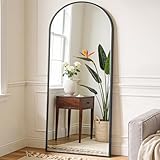
- Full Size: Our OLIXIS large mirror full length is 64" in length and 21" in width, which is large enough to give you a view of your entire figure and ensure that you go out every day in perfect condition
- Unique Design: The floor mirror features a clean, right-angled top frame design, blending sharp geometry with practicality. Its slim aluminum frame adds a modern touch to the mirror, making it both a functional piece and a striking decor item for your space
- High Definition Imaging Glass: Our standing mirror is made of 3mm high-definition glass. Upgraded sterling silver layer explosion-proof glass, more high-definition, not easy to break, strong and durable. Even if it is accidentally damaged by an external force, the fragments of the mirror will not scatter and protect you and your family
- Multiple Functions: The bedroom full length mirror can be tilted to the wall or mounted vertically on the wall. You can also open the stand and place it anywhere. It is suitable for bedrooms, living rooms, cloakrooms, home gyms, hallways, clothing stores, etc
- Customer Service Assurance: Your floor length mirror and standing mirror arrive safely thanks to packaging that has fully passed the international drop test. We know how stressful cracked or broken full body mirror delivery can be
If you are unsure whether a dark surface is modern paint, a historic colour scheme or a decorative technique, commission a paint analysis or conservation assessment before removal. That investigation may reveal that the apparently gloomy finish is a significant surviving layer worth retaining, while adjacent walls can be lightened instead.
Recommended Free Tools
3. Improve the room’s layout before altering its structure
Central rooms, stair halls and circulation spaces are common dark areas in Victorian houses because they sit away from external walls. Start with reversible changes: lower tall furniture, move solid pieces away from the window wall, and keep a clearer visual route from the doorway toward the brightest opening. A glass-fronted cabinet, open shelving or a lower console can sometimes replace a bulky opaque unit without changing the architecture.
Visual connections between adjoining rooms can also make a dark space feel brighter. Opening a door between a hall and a reception room, using glazed internal doors where they already exist, or aligning sightlines can bring borrowed light into the view. These are design options to assess in context, not instructions to remove walls. A wall may contain structural support, services, chimney fabric or significant joinery.
Sketch the proposed arrangement and live with it for a week before commissioning work. Consider how the room is used, where screens create reflections, whether a desk needs a stable task-light position and whether a clear route is required for accessibility. A brighter-looking plan that makes the room impractical will not be an improvement.
4. Layer electric light for evenings and tasks
Historic England recommends that a new lighting scheme respond to the room’s layout and historic decoration. Where early fittings survive, retain them where feasible and make them part of the modern plan. New fittings should harmonise with the space and be installed with minimal damage to historic fabric. Recessed downlights are particularly problematic where historic ceilings or walls survive because they require repeated holes and can cut through decorative plaster.
Do these 3 things before closing this tab:
1Fix the driver behind crashes, sound loss and screen glitches2Clear out junk files and repair common Windows errors3Scan for outdated or missing drivers - takes under a minuteRank #4

- Oversized Floor Mirror: Our 72"X44" standing full length mirror provides ample views to see yourself at a glance, ensuring you look your best from all angles. It also makes your space feel bigger and brighter.
- Safety Assurance: Our extra large full body mirror utilizes premium glass for clear and realistic reflections. Besides, the mirror features tempered glass and shatter-proof film, significantly reduces the risk of glass breakage, strong security for you and your loved ones.
- Frame Design: The sleek design of the minimalist and stylish rectangular large standing mirror is ideal for any modern or traditional decor style, and the standing full length mirror is made of high quality aluminum alloy frame, exquisite workmanship, rustproof and durable, not easy to deform.
- Highly Practical: The oversized full length mirror is equipped with an adjustable U-shaped floor stand and back hook, you can stand it on the floor or lean it against the wall according to your preference and space, or hang it vertically or horizontally on the wall to save space.
- Versatile Decor: Extra large floor mirror full length is suitable for bedroom, living room, checkroom, gym, home gym, Yoga, bathroom, entryway, hallway, clothing store, bridal store, hair salon and more.
| Layer | What it does | Victorian-room approach |
|---|---|---|
| General or ambient | Provides comfortable background light for moving around and conversation. | Use an existing pendant, a carefully located ceiling fitting, or wall lights that suit the room’s scale. Diffuse shades reduce harsh pools of light. |
| Task | Lights reading, writing, cooking, dressing or other close work. | Place a table lamp, adjustable wall lamp or floor lamp where the task occurs. Keep cables tidy and avoid fixing through panelling or decorative plaster. |
| Accent | Draws attention to a picture, fireplace, joinery or architectural feature. | Use a movable lamp or discreet directional fitting to wash a feature rather than flooding every surface equally. |
Use separate switching or dimming so the room can change from bright cleaning light to a lower evening level. Warm, comfortable light generally sits more naturally with timber and aged finishes than a cold, blue-looking source, but the exact lamp colour should be judged with your paint samples and fabrics. Check that a new fitting does not conceal, overload or force the removal of an original one. A qualified electrician should inspect old wiring and confirm that any alteration is safe.
5. Deal with windows for comfort, not just appearance
Historic England recommends retaining and repairing historic windows where possible. Draught-proofing and carefully designed secondary glazing can improve comfort while keeping the original window in place. Secondary glazing must be designed around shutters, sash weights, mouldings and the way the window is cleaned; a poorly fitted system can obstruct operation or alter the appearance of the reveal.
Condensation risk deserves specific attention. Adding a tighter inner layer changes how moisture moves through the window assembly. Before installation, check ventilation, room humidity and the condition of paint and putty. A specialist familiar with historic windows can specify the gap, seals and opening arrangement rather than treating secondary glazing as a one-size-fits-all product.
Replacement windows, enlarged openings and rooflights are more intrusive decisions. They can affect the building’s significance, external appearance and weathering details, as well as the room’s light. Do not remove original glass or joinery solely to chase a brighter interior when repair, cleaner glazing, a better treatment or a mirror could address the actual problem.
Windows Errors? Fix Them Before They Spread
Repair common Windows errors and clear accumulated junk for a smoother, more stable PC - no reinstall needed.Free scan · no reinstallOutdated Drivers Are Slowing You Down
One free scan finds every outdated or missing driver and matches the right update for your exact hardware.Free scan · exact hardware match6. Know when a major alteration is justified
Architectural changes belong at the end of the decision process. An architecture practice’s discussion of Victorian houses identifies visual connections between rooms, lighter finishes, improved window treatments and layout adjustments as possible approaches, especially in dark central spaces. It does not establish that removing a wall, changing a window or adding a rooflight is suitable for your house.
Best Value

- This standing mirror measures 56x15 inches. Suitable for bathrooms, bedroom, living room, behind the door, which can be mounted on wall,free standing. This full length mirror is a must-have for home improvement.
- HD REFLECTION & EXPLOSION PROOF: This wall mirror is made of HD float glass, better reflection, more durable. And floor mirror has an explosion proof design on the back to prevent splinters and make the mirror safer.
- DURABLE & STURDY FRAMED: Mirror frame is made of Aluminium alloy, which is not easily discoloured, not easily deformed and has better performance than MDF and wooden ones,especially in humid environments.
- EASY TO USE: Arched full body mirror package comes with screws and anchors for wall mounted, Also you can lean on the wall, freestand on the floor directly.
- PROTECTIVE PACKING & AFTER SALES GUARANTEE: This stand up mirror is wrapped in polystyrene and cardboard to reduce breakage in transit. If you encounter any breakage or quality problems, please contact us and we will solve them properly.
Before pursuing structural work, establish whether the wall is load-bearing, whether it contains a chimney breast or services, and whether the room’s mouldings, skirtings or cornices run through it. Check local planning and building-control requirements. Listed buildings usually require consent for work that affects their special interest, and properties in conservation areas may face additional controls. Ask a conservation professional or architect with relevant experience to document what will be lost, retained and repaired.
| Approach | Reversibility | What it addresses | Preservation impact |
|---|---|---|---|
| Move furniture and open treatments fully | High | Blocked or poorly distributed daylight | Usually minimal |
| Add or reposition a freestanding mirror | High | Redirects useful daylight | Minimal if not fixed into significant fabric |
| Change paint colour or sheen | Medium | Surface reflectance and visual weight | Requires careful preparation; historic layers may be at risk |
| Add table, floor or wall lighting | Medium to high | Evening and task illumination | Low if existing points are used; higher if new holes are needed |
| Repair, draught-proof or add secondary glazing | Low to medium | Comfort and window performance | Must protect original glass, shutters, mouldings and ventilation |
| Open walls, replace windows or add rooflights | Low | Fundamental daylight or connection problems | Potentially substantial; permissions and specialist advice may be required |
A practical order of work
- Document the room. Photograph windows, joinery, plaster, fittings and decorative surfaces. Note orientation, privacy needs, glare and how the room is used.
- Test the daylight. Move furniture, open curtains and shutters as far as practical, and observe the result at several times of day.
- Trial reflection. Place a removable mirror where it can reflect the window or bright sky; remove it if it produces glare or an unhelpful view.
- Sample finishes. Test wall and ceiling colours, sheen and their relationship to existing woodwork. Investigate suspicious layers before sanding or stripping.
- Plan lighting layers. Retain viable historic fittings, then add movable task and accent lights. Have wiring assessed before altering points.
- Review windows. Repair and draught-proof first where appropriate. Obtain a design for secondary glazing that accounts for shutters, mouldings, cleaning and condensation.
- Assess architectural work last. Obtain structural, conservation and regulatory advice before cutting openings, changing windows or installing rooflights.
Common mistakes to avoid
- Painting every timber surface white: it can remove a characteristic historic finish and may not solve a daylight problem.
- Buying a mirror by size alone: position and the light source it reflects matter more than a large specification.
- Installing a grid of recessed lights: it can damage surviving ceilings and produce flat, glary illumination.
- Blocking the window with furniture: even attractive pieces can stop light reaching the room’s deeper surfaces.
- Replacing sound historic windows prematurely: repair and compatible secondary glazing may improve comfort while retaining character.
- Assuming a dark room needs a wall removed: test layout, treatments, finishes and layered lighting before irreversible work.
- Ignoring privacy and glare: a fully uncovered window is not a successful solution if the room becomes unusable at certain hours.
How the sequence changes by room type
Front parlour with a street-facing sash window
Prioritise a treatment that clears the glass while preserving privacy, then test a mirror on a side wall rather than directly opposite a low winter sun. Keep the fireplace, cornice and joinery visually prominent; a warm pale wall colour and focused lamps can brighten the room without making it look newly built.
Central hallway or stair hall
Check whether doors are normally left open and whether bulky coats, cabinets or dark runners absorb the available light. A brighter ceiling, a well-placed wall mirror and discreet wall lighting may improve the experience without altering the stair enclosure. Treat any glazed door or fanlight as a character feature, not an obstacle to be replaced.
The Tool Desk
Outbyte Driver Updater FREEFix the driver behind crashes, sound loss and screen glitchesFind Drivers →Outbyte PC Repair FREEClear out junk files and repair common Windows errorsFree Scan →Rear room with a large garden window
Keep planting, furniture and heavy curtains from reducing the opening’s effect. Control glare with a flexible blind, and use the view as part of the room’s brightness. If the window is draughty, investigate repair and secondary glazing before replacement.
Listed or highly decorated interior
Document first and obtain suitably qualified conservation advice before stripping, rewiring, drilling or changing windows. The aim is a lighting and colour scheme that reveals the existing fabric, not one that makes the room resemble a contemporary blank canvas.
The result to aim for
A successful Victorian room usually feels lighter because several modest decisions reinforce one another: daylight is allowed through the window, a reflective surface redirects it, finishes are chosen to lift rather than flatten the architecture, and electric light is layered for real activities. Original windows, fittings, shutters, mouldings, plaster and paint are assessed before anything is removed. That approach preserves the evidence of the house while making the room more usable in both daylight and darkness.
Quick Recap

Product prices and availability are accurate as of the date/time indicated and are subject to change. Any price and availability information displayed on Amazon at the time of purchase will apply.
Free tools Windows power users keep installed
One-click scans. No signup required.

