Outdated Drivers Are Slowing You Down
The Tool Desk
Outbyte Driver Updater FREEScan for outdated or missing drivers - takes under a minuteDriver Scan →Outbyte PC Repair FREEClear out junk files and repair common Windows errorsFree Scan →One free scan finds every outdated or missing driver and matches the right update for your exact hardware.Free scan · exact hardware match
PC Slower Than It Used to Be?
A free scan shows the junk files, broken settings and background clutter dragging Windows down - then fixes them in one click.Free scan · Windows 10 & 11
ThatPainter is reader-supported. When you buy through links on our site, we may earn an affiliate commission. Learn More
Do not treat suspected lead paint like ordinary paint. In a U.S. home built before 1978, assume painted surfaces may contain lead unless qualified testing shows otherwise. The safest choice for renovation, repair, or painting that could disturb the coating is a lead-safe certified contractor. If you do proceed with homeowner work, contain the room, keep people out, use dust-minimizing methods, handle debris carefully, and clean with HEPA vacuuming followed by wet wiping.
Make the safety decision before buying paint
The key question is not simply whether a new coating will cover the old one. It is whether preparation, repairs, or cleanup will disturb the existing paint and release dust or chips. A fresh coat does not make sanding, scraping, drilling, or careless cleanup safe.
Recommended Free Tools
As an Amazon Associate I earn from qualifying purchases.
Use the home’s age as a warning
For U.S. homes built before 1978, the Environmental Protection Agency (EPA) advises treating paint as lead-based unless an inspection or other documentation establishes otherwise. The construction year is a screening clue, not a test result. A newer addition may have different coatings, while an older house can contain several layers of paint applied at different times.
If you do not have reliable documentation for the surfaces being disturbed, plan the work as though lead is present. That approach avoids relying on an uncertain visual inspection or on the age of one layer of paint.
#1 Best Overall

- Upgraded Formulation for Optimal Lead Testing: NewPos lab specializes in researching the best lead test kit, starting with chemical formulations, we have global formulations of lead testing kits, and after 1,000 experiments, NewPos have upgraded our chemical formulations to make the test results more accurate
- It's the Vinegar-Activated Test that's Most Accurate: The 30 Swabs lead paint test kit must be dipped in vinegar to get accurate results; this is much more accurate than using water; take a bit of vinegar from the kitchen, put a lead test swabs in the vinegar, and wet it all down to test
- Results in 30 Seconds: Dip a lead test kit for dishes into white vinegar for a while, the tip of the lead swab turns orange yellow, then wipe the surface of the object with the tip of the lead swab for 30 seconds; when the swab turns red/purple or pink, it indicates the presence of lead, while Yellow signifies no lead detected
- Suitable for Many Surfaces Containing Lead: Caution is needed if you want to test valuable items such as antiques, as vinegar itself is acidic and can affect solid surfaces; at home lead testing kit are suitable for various painted metal & ceramic surfaces, such as dishes toys pottery jewelry water bottle woodwork cups glazes and plumbing
- Unable to Determine the Results & Any Problems with the Lead Detection Kit Please Contact us ! NewPos are responsible for every lead test strips NewPos produce, no matter there is any problem you can contact us on the packaging, we will help you solve the problem as soon as possible
Choose between qualified testing and the assumption of lead
| Approach | What it establishes | What it does not establish | When it is useful |
|---|---|---|---|
| Assume lead is present | Provides the conservative basis for containment, dust control, and cleanup. | It does not identify which layers contain lead or prove that a particular surface is lead-free. | When work is imminent and no qualified test or documentation is available. |
| Qualified inspection or risk assessment | A certified lead inspector or risk assessor can test affected surfaces and identify lead hazards within the scope of the inspection. | It does not automatically cover every surface or future repair; confirm exactly what was tested. | When you need a surface-specific decision before a larger project. |
| Recognized test kit used by a certified renovator | May identify whether the tested coating is positive or negative under the applicable procedure. | Results apply only to the locations and layers tested and must be interpreted by the trained person using the kit. | For a certified renovator determining whether specific covered work is subject to the federal renovation requirements. |
| X-ray fluorescence (XRF) or paint-chip testing by a qualified professional | Provides an instrumental or laboratory result for submitted or scanned samples, within the professional’s stated scope. | It cannot answer for untested rooms, layers, or surfaces. | When you need a documented professional assessment. |
EPA says testing is not required by the federal Renovation, Repair and Painting (RRP) rule. However, if there is no documentation that the paint is not lead-based, the rule’s requirements apply to covered work. Testing can inform a project, but it is not a substitute for containment and cleanup when paint will be disturbed.
What’s actually slowing this PC down?
Pick the symptom - the matching free tool is one click away.
Why ordinary repainting methods can create a hazard
Renovation and painting activities can produce lead dust and debris. Dry sanding is especially problematic because it turns a coating into fine airborne and settled particles that can spread beyond the work surface. Scraping, drilling, cutting, friction from windows and doors, and repairs to damaged areas can also disturb multiple paint layers.
Dust does not have to remain visible to be a concern. It can settle on floors, sills, tools, clothing, and household objects, then move to other rooms. The safety objective is therefore a complete system: isolate the area, minimize dust at the source, protect the worker, control waste, and clean the work zone methodically.
DIY or a lead-safe certified contractor?
EPA recommends that homeowners hire a lead-safe certified contractor for an RRP project in a pre-1978 home. A certified firm is required for covered compensated work in pre-1978 homes and child-occupied facilities, and workers must be trained in lead-safe practices. This is the appropriate route when the job involves substantial preparation, repairs, painted-surface demolition, window replacement, or any situation in which you cannot reliably isolate and clean the area.
| Consideration | DIY work | Certified contractor |
|---|---|---|
| Who performs the work | The homeowner, accepting responsibility for following dust-control and cleanup practices. | An EPA-certified firm with trained workers for covered work. |
| Best fit | Limited work that can be contained, does not require high-dust methods, and can be stopped if the coating is unstable. | Projects with significant disturbance, occupied homes, difficult containment, or uncertainty about the work’s regulatory status. |
| Testing decision | You may choose to assume lead is present or arrange qualified testing. | The firm can use the recognized testing options available to certified renovators and explain the project scope. |
| Cleanup and verification | You must complete and inspect the containment and cleaning yourself. | The contractor follows required work practices and should explain how the area will be cleaned and verified. |
Ask a contractor to show current certification, describe the containment plan, identify who is trained to perform the work, and explain waste handling and final cleaning. Certification does not remove the need to discuss the exact surfaces and methods proposed.
Rank #2

- 🧪【RAPID 30S RESULTS & HIGH SENSITIVITY】Empower your home safety with our lead test kit for dishes and paint. Engineered for consumer-friendly accuracy, these lead test swabs provide rapid results in just 30 seconds. The upgraded chemical reagent is highly sensitive, capable of detecting lead on many common household surfaces. Simply watch for the color change: Red/Purple/Pink means lead is present, while Mustard Yellow indicates a no lead detected surface.
- 🚫【MUSTARD YELLOW BASELINE & ACCURATE RESULTS】Tired of confusing results? Our lead paint test kit features a clear color-coded system to eliminate guesswork. Unlike generic lead test strips that might give ambiguous readings, our swabs transform into a vibrant Mustard Yellow immediately after being moistened under water for 2-8 seconds, providing a stable baseline. This ensures you can accurately distinguish between a safe item and a hazardous one without "false positive" frustrations.
- 🏠【VERSATILE HOME APPLICATIONS】A comprehensive lead testing kit for every household's needs. From vintage crockery and pottery to children's toys, jewelry, and metal plumbing, our swabs cover all bases. It is the ideal lead tester pen alternative for inspecting antique furniture, bathtub glazes, and woodwork. Whether you are a homeowner or an antique collector, this kit helps users make informed decisions about household surfaces.
- 📦【30 COUNT VALUE PACK & 2-YEAR SHELF LIFE】Each bottle contains 30 Pcs of high-quality lead check swabs, providing a cost-effective solution for whole-house testing. Designed for longevity, these swabs have a 2-year shelf life, allowing you to keep them on hand for future purchases. Please Note: This product is designed for surface testing only and is not intended for detecting lead in water or other liquids.
- ⚠️【SAFE OPERATION & EXPERT COMPLIANCE】Safety is our priority. These lead swabs are easy to use: Moisten, Shake, and Rub. Designed for adult use (Entry-level skill), the kit requires no complex lab equipment. To ensure accuracy and safety, avoid touching the swab head with your bare hands and never put it in your mouth. Proudly sourced with high-quality standards, AssuTest provides a practical tool for household surface screening in your daily life.
Prepare a contained work area
Set up before opening a paint can. EPA’s DIY guidance identifies heavy plastic sheeting and tape for containment and lists protective equipment to consider. Use the following sequence for a homeowner project that you have decided is appropriate to undertake.
- Define the work zone. Include every surface that may be disturbed and enough surrounding floor and furniture area to catch chips and dust. If you cannot keep the work area separate from the rest of the home, stop and obtain professional advice.
- Remove people and belongings. Keep children, pets, and anyone not doing the work out of the area. Remove movable furniture, toys, food, and other objects that could collect dust. Cover items that cannot be moved.
- Shut down pathways for dust. Close doors and openings to other rooms and cover them with taped plastic where appropriate. Plan how you will enter and leave without stepping on contaminated sheeting.
- Protect floors and fixed surfaces. Extend heavy plastic sheeting beyond the immediate wall or trim and secure its edges with tape. Seal seams and openings so debris cannot migrate underneath.
- Gather cleanup equipment first. Have a HEPA vacuum suitable for lead-dust cleanup, disposable or washable wet-wiping materials, waste bags, tape, and replacement protective gear available before work starts. A HEPA vacuum is one part of the process, not proof that the room is safe by itself.
- Plan waste handling. Decide where used plastic, disposable clothing, chips, and other debris will be placed without carrying loose material through clean parts of the house. Follow applicable local disposal requirements.
- Protect ventilation equipment. Prevent dust from being drawn into heating, cooling, or air-circulation systems serving other rooms. If you cannot control that pathway, do not start the work.
- Set a stop point. Stop immediately if containment tears, dust escapes, the coating begins to fail unexpectedly, or you discover work that requires demolition or another high-dust method.
Use protective equipment correctly
EPA’s homeowner guidance lists a disposable N-100 certified respirator, disposable coveralls, a painter’s hat, shoe covers, eye protection, and gloves as equipment to consider. These items reduce contact with dust but do not make an uncontrolled process safe. A respirator is only useful when it is the correct type, fits the wearer, and is used according to its instructions; it cannot protect other occupants or prevent dust from settling on surfaces.
- Put on protective clothing and shoe covers before entering the contained zone.
- Keep contaminated gloves and coveralls from touching clean door handles, phones, food, or other household items.
- Remove disposable gear in a way that does not shake dust into the air, and place it directly into the planned waste container.
- Do not wear work clothing into other rooms or outside areas where it could spread dust.
How to paint without creating unnecessary dust
Do not dry-sand suspected lead paint
Do not begin by sanding a suspected lead-coated surface to make it smooth. Do not casually scrape peeling paint or use a method that creates visible dust. The exact preparation method depends on the coating’s condition and the repair, so follow current EPA guidance and the coating manufacturer’s instructions. If achieving a sound surface would require extensive sanding, demolition, or removal of unstable paint, hand the job to a certified contractor.
Assess the coating before opening the paint
Look for peeling, chipping, flaking, chalking, friction damage, and areas where the substrate is exposed. Windows, doors, trim, and surfaces that rub against one another deserve particular attention because movement can disturb old layers. If the paint is failing over a broad area, postpone the project and obtain a professional assessment rather than trying to bury the problem under a new coat.
Keep preparation dust-minimizing
Use methods that do not generate airborne dust, keep the contained area protected, and collect debris as it is created. Do not use a household vacuum that is not designed for fine hazardous dust. Keep tools and materials inside the work zone, and do not carry unbagged debris through the home.
Rank #3

- Due to the drying process, there are slight variations in the shade of the cotton swabs from batch to batch; however, this does not affect the final test results.
- 🧪【RAPID 30S RESULTS & HIGH SENSITIVITY】Empower your home safety with our lead test kit for dishes and paint. Engineered for consumer-friendly accuracy, these lead test swabs provide rapid results in just 30 seconds. The upgraded chemical reagent is highly sensitive, capable of detecting lead on many common household surfaces. Simply watch for the color change: Red/Purple/Pink means lead is present, while Mustard Yellow indicates a no lead detected surface.
- 🚫【MUSTARD YELLOW BASELINE & ACCURATE RESULTS】Tired of confusing results? Our lead paint test kit features a clear color-coded system to eliminate guesswork. Unlike generic lead test strips that might give ambiguous readings, our lead test swabs transform into a vibrant Mustard Yellow immediately after being moistened under water for 2-8 seconds, providing a stable baseline. This ensures you can accurately distinguish between a safe item and a hazardous one without "false positive" frustrations.
- 🏠【VERSATILE HOME APPLICATIONS】A comprehensive lead testing kit for every household's needs. From vintage crockery and pottery to children's toys, jewelry, and metal plumbing, our swabs cover all bases. It is the ideal lead tester swab alternative for inspecting antique furniture, bathtub glazes, and woodwork. Whether you are a homeowner or an antique collector, this kit helps users make informed decisions about household surfaces.
- 📦【30 COUNT VALUE PACK & 2-YEAR SHELF LIFE】Each bag contains 30 Pcs of high-quality lead check swabs, providing a cost-effective solution for whole-house testing. Designed for longevity, these swabs have a 2-year shelf life, allowing you to keep them on hand for future purchases. Please Note: This product is designed for surface testing only and is not intended for detecting lead in water or other liquids.
Apply the new coating only to a suitable surface
Painting over an intact, well-bonded coating can avoid some disturbance compared with removing it, but it is not a blanket exemption from lead-safe practices. Clean and prepare only as needed, avoid actions that abrade the old coating, and follow the new paint’s instructions. If the surface cannot accept a new coating without aggressive preparation, the project has moved beyond a simple repaint and should be evaluated by a certified professional.
Clean the work area in the right order
Cleanup is not an optional final sweep. EPA identifies HEPA vacuuming and wet wiping as cleanup steps and calls for cleaning and verifying the work area. Work slowly so you do not re-aerosolize settled dust.
- Collect large debris first. Fold or roll contaminated plastic inward so dust and chips remain contained. Place it and other debris into sturdy bags without dropping material outside the work zone.
- HEPA-vacuum the contained zone. Vacuum floors, horizontal surfaces, edges, corners, ledges, and the exterior of tools where dust may have settled. Move methodically rather than repeatedly walking across cleaned areas.
- Wet-wipe surfaces. Wipe the same surfaces with damp cleaning materials, changing them when dirty. Include floors, sills, trim, and other horizontal surfaces that could hold residue.
- HEPA-vacuum again where appropriate. After wet wiping has dried, use the HEPA vacuum as part of the final cleaning sequence recommended for the work area.
- Inspect the boundary. Check the edges of plastic, nearby floors, doorways, tools, and the route used to remove waste. If you find dust outside containment, isolate that area and clean it rather than assuming the amount is harmless.
- Remove containment carefully. Keep the dirty side folded inward, seal the waste, and remove it without dragging plastic through clean rooms.
- Clean or discard equipment. Follow the equipment manufacturer’s instructions for the HEPA vacuum and dispose of contaminated disposable materials according to applicable requirements. Do not use compressed air or a dry broom to “finish” the room.
Do not return children, pets, or other occupants until containment has been removed and the area has been thoroughly cleaned and checked. If you cannot determine whether dust escaped, arrange professional evaluation rather than relying on appearance alone.
Understand when federal RRP requirements apply
EPA’s RRP requirements concern covered compensated renovation, repair, and painting work in pre-1978 homes and child-occupied facilities. Covered firms must be certified, workers must be trained in lead-safe practices, and specified work practices must be followed when lead paint is disturbed.
The rule includes exceptions and minor-work thresholds, but they are project-dependent. EPA specifically notes that window replacement and demolition of painted surfaces are covered regardless of those thresholds. A homeowner’s unpaid work may not fit the same regulatory category as compensated work, yet the dust-control principles remain relevant to protecting occupants.
Rank #4
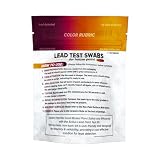
- Batch Traceability & Satisfaction Guarantee – Every swab is part of a rigorously tracked batch for full traceability and quality assurance. If you're not 100% satisfied, we’ll make it right—no questions asked.
- SCIENTIFICALLY FORMULATED: Scitus Labs; lead testing kits offer an exceptionally reliable method for detecting lead on painted surfaces—by using vinegar to activate, our swabs trigger a targeted chemical reaction that specifically identifies lead, ensuring greater consistency and accuracy compared to generic water-activated lead tests.
- MADE IN THE USA: Our lead tests are proudly manufactured in the United States for 100% quality assurance. We take pride in our exceptional product, delivering accurate, fast, and reliable lead testing results for personal and professional use.
- FOR USE ON PAINTED SURFACES: Our convenient lead test swabs are perfect for testing windows, doors, walls, floors, baseboards, ceilings, and any other painted surface in your home or office. Compact, reliable, and easy to use, these lead testing swabs are also perfect for new homeowners, renters, real estate agents, contractors, and anyone wanting to test for lead paint in their environment.
This is a U.S. federal overview, not a determination for a particular address. State, tribal, and local requirements may be stricter, and HUD-assisted housing can have additional obligations. Check current EPA guidance and the rules that apply where the property is located before starting.
Independent reader supportYour contribution helps us test, update, and keep practical guides available for everyone.Common situations and the safest response
“Can I paint over lead paint without sanding?”
Sometimes a sound, intact coating can be repainted without sanding, but the answer depends on its condition and the preparation required. Do not sand suspected lead paint merely to make the finish smoother. If the coating is peeling, heavily damaged, or impossible to prepare without generating dust, stop and hire a certified contractor.
Quick wins for a faster PC:
Fix the driver behind crashes, sound loss and screen glitchesFind Drivers →Repair Windows errors before they cause bigger problemsFix Now →“Do I have to test before repainting?”
Federal RRP rules do not require testing in every case. If you lack documentation that the paint is not lead-based, covered work is treated as subject to the rule. Qualified testing can be valuable when you need to know whether particular surfaces contain lead, but a negative result applies only to the tested locations and layers.
“The room is small. Can I skip plastic sheeting?”
No. Room size does not prevent dust from settling on floors, tools, clothing, and doorways. Containment should be scaled to the work, not omitted because the space appears manageable.
“Can I use my regular vacuum?”
EPA’s cleanup guidance identifies HEPA vacuuming. A standard household vacuum is not a substitute for equipment designed to capture fine dust. If you do not have suitable HEPA equipment and wet-wiping supplies, postpone the work or hire a professional.
Best Value

- 2-in-1 LEAD DETECTION: Safe Home provides the only LEAD COMBO-KIT on the market which includes 10 DIY surface swabs that issue results in 30-seconds to a detection of 5 ppm AND a sample-submission kit for optional in-depth Lead testing at our EPA-certified lab to a detection of 0.006 ppm. All of this…in ONE KIT!
- DIY LEAD SCREENING: Safe Home provides the only Do-It-Yourself Lead screening kit that uses ultra-sensitive ACS (American Chemical Society) Grade Reagents, in our test swabs. This minimizes background interferences and issues more reliable results, than competitive brands. Safe Home costs a bit more, but you can trust the quality of our products.
- OPTIONAL LEAD TESTING AT OUR CERTIFIED LAB: Contractors and discerning homeowners can also use our Lead Sample Submission Kit, for optional testing at our EPA-certified lab. Testing at our laboratory meets EPA, NLLAP, RRP, and PPE guidelines. Our lab results can also be used for disposing of remediated materials to hazardous vs. non-hazardous landfills. NOTE: Lab fees are required for optional testing at our EPA-certified laboratory.
- MULTI-PURPOSE APPLICATIONS: Test for Lead in paint, dust, soil, wood, toys, furniture, metal, plastic, and more. Includes simple instructions for DIY screening and for sample collection and submission to our EPA-certified lab, for testing. MADE in the USA with domestic and international components. *Please Note: If testing surfaces that are sealed like ceramics, only the outer surface will be tested.
- EXPERIENCED CUSTOMER SUPPORT: Before, during, and after DIY screening or LAB testing for Lead, Safe Home provides qualified personnel with 40+ years of experience in testing Lead, to guide you. Reach out any time. We are happy to assist!
“What if I find chips outside the work area?”
Stop the job, keep people out of the affected path, and prevent further tracking. Collect visible debris carefully, HEPA-vacuum and wet-wipe the affected surfaces, and reassess the containment plan. A widespread or uncertain release is a reason to call a lead-safe contractor or qualified environmental professional.
“Is a respirator enough?”
No. EPA presents protective equipment as one element of a broader system that includes isolation, dust minimization, careful waste handling, and thorough cleanup. Personal equipment cannot protect occupants from dust left on surfaces or carried into other rooms.
When to stop and bring in a professional
- The home was built before 1978 and the project involves extensive preparation or repairs.
- Paint is peeling, flaking, or damaged across a large area.
- Window replacement, painted-surface demolition, or another high-disturbance activity is planned.
- You cannot isolate the room or keep occupants out.
- You do not have a suitable HEPA vacuum, containment materials, or a realistic waste plan.
- Dust has escaped containment or you cannot verify that cleanup was complete.
- The work is compensated renovation in a pre-1978 home or child-occupied facility and you are unsure whether the firm and workers meet RRP requirements.
For project-specific help, look for a currently certified lead-safe firm, lead inspector, risk assessor, or dust-sampling professional whose qualifications match the service you need. Confirm the surfaces covered, the proposed methods, cleanup procedure, and documentation before work begins.
A concise pre-start checklist
- Confirm the property’s construction date and locate any existing lead-paint documentation.
- Decide whether to assume lead is present or arrange qualified testing.
- Determine whether the work is covered compensated renovation under current federal, state, tribal, local, or HUD-related requirements.
- Choose a certified contractor when EPA recommends one or when the work cannot be safely contained.
- Remove occupants and belongings from the work zone.
- Install taped heavy-plastic containment and protect pathways to other rooms.
- Obtain a suitable HEPA vacuum, wet-wiping supplies, waste bags, and the protective equipment listed in EPA’s homeowner guidance.
- Reject dry sanding and any method that creates uncontrolled dust.
- Plan HEPA vacuuming, wet wiping, waste removal, and final inspection before applying paint.
- Stop if the coating is more damaged or the containment less effective than expected.
What “safe” means for this project
Painting over suspected lead paint is not made safe by the new color, a single piece of protective equipment, or a quick vacuum pass. A defensible approach assumes lead in a pre-1978 home unless qualified evidence shows otherwise, uses a lead-safe certified contractor for covered or difficult work, and treats containment, dust control, waste handling, and HEPA-and-wet cleanup as one process. When those conditions cannot be met, postponing the repaint is safer than turning ordinary preparation into a lead-dust release.
Quick Recap

Product prices and availability are accurate as of the date/time indicated and are subject to change. Any price and availability information displayed on Amazon at the time of purchase will apply.
The Tool Desk
Outbyte PC Repair FREERepair Windows errors before they cause bigger problemsFix Now →Outbyte Driver Updater FREEFix the driver behind crashes, sound loss and screen glitchesFind Drivers →
