What’s actually slowing this PC down?
Free tools Windows power users keep installed
One-click scans. No signup required.
Pick the symptom - the matching free tool is one click away.
ThatPainter is reader-supported. When you buy through links on our site, we may earn an affiliate commission. Learn More
As an Amazon Associate I earn from qualifying purchases.
The right home-gym setup starts with the room, not a shopping list. Match flooring to the surface underneath and the exercises you will perform; keep heavy equipment at the perimeter so the center stays clear; then use lighting and mirrors to make movement visible without glare. Flooring, storage, and fixtures all have product-specific limits, so confirm compatibility, load ratings, anchors, and installation directions before buying.
Start with the room and the workouts
List the activities the room must support before choosing any material. A space used for yoga, mobility work, and body-weight circuits has different impact and rolling-load demands from one used for a rack, barbell, adjustable bench, or treadmill. Note where equipment will be placed, where a person needs to walk around it, and whether noise could affect a room below. The existing surface matters just as much: concrete, wood, vinyl, tile, and a garage slab can react differently to moisture, friction, weight, and cleaning products.
#1 Best Overall
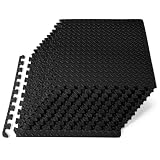
- PROTECTIVE GYM FLOOR MAT: Durable, non-skid gym flooring for home gym that covers and protects your floor or carpet while creating a comfortable workout room or play mat
- HIGH QUALITY FOAM: High-density EVA foam mat provides excellent support and cushion; Contains NO toxic phthalates; Excellent alternative to rubber gym mats; Color and texture may vary slightly by production batch
- VERSATILE: The water-resistant, noise-reducing design is easy to clean, great for indoor purposes including your garage floor mat, carpet tiles protector, gyms, a home fitness room, and more; Best results on flat, hard surfaces
- EASY ASSEMBLY: Lightweight interlocking foam floor mats connect easily, and can be disassembled just as fast for quick storage of your home gym equipment; Foam may compress slightly under heavy objects causing minor surface variation
- COVERS 48 SQ FT: Each tile measures 24 in x 24 in x ½ in - thick from the highest point of the texture; Includes 12 tiles with end borders for a polished look. Care: Apply warm water and dish soap with a soft cloth or towel and air dry
Measure the usable rectangle after accounting for doors, radiators, windows, columns, and low ceilings. Mark the equipment footprints with painter’s tape. Include the clearance needed to load a bar, open a cabinet, swing a kettlebell, or step off a cardio machine. This drawing becomes the basis for flooring quantities, storage locations, and light placement.
Choose a flooring format that fits the surface and activity
Home-gym flooring is sold as exercise mats, rubber tiles, interlocking squares, modular systems, and rolls. Lowe’s describes mats and rubber tiles, including interlocking pieces that can be configured to an area and disassembled later. Life Fitness also describes rubber flooring that is easy to install and commonly sold through online and hardware retailers. Those descriptions identify formats, not a universal best choice.
| Format | Useful when | Questions to check before purchase |
|---|---|---|
| Individual mat | You need a defined exercise or equipment pad and may want to remove it easily. | Does its underside grip the existing floor? Is its size large enough that edges will not interfere with footwork or wheels? |
| Interlocking tile | You want to cover a custom area with pieces that can be assembled and disassembled. | Are the edges compatible with neighboring pieces, and will the seams stay closed under the equipment you plan to place on them? |
| Modular rubber tile | You want replaceable sections or a planned zone around a rack or lifting platform. | What thickness, density, adhesive requirement, and subfloor preparation does the manufacturer specify? |
| Roll flooring | You prefer fewer seams across a broad, regularly shaped area. | Can the roll enter the room, be cut accurately, and be installed on the stated substrate without trapping moisture? |
Availability, dimensions, and installation requirements vary by product. Treat the table as a planning framework rather than a performance ranking.
Windows Errors? Fix Them Before They Spread
Repair common Windows errors and clear accumulated junk for a smoother, more stable PC - no reinstall needed.Free scan · no reinstallCrashes, No Sound, or Screen Glitches?
Random freezes, missing sound and display glitches usually trace back to one bad driver. Find and replace yours safely.Free scan · under a minuteInterlocking squares are a format, not a thickness recommendation
Life Fitness gives 24-by-24-inch interlocking squares as a standard example and notes that thickness varies by product. Use that dimension only when a specific product states it; do not assume every interlocking tile has the same size. Eleiko’s flooring range runs from 7 mm to 80 mm on its current product page (accessed October 13, 2026). That is the range of one manufacturer’s products, not an industry standard or advice that one thickness suits every exercise.
Rank #2

- DUAL-TEXTURE DESIGN: This mat features textured top surface and textured bottom layer; dual-texture EVA foam delivers balanced comfortable touch, suitable for barefoot or shoe use
- DURABLE EVA FOAM CONSTRUCTION: Thick, high-density EVA foam helps resist everyday wear, compression, cracking, and tearing; the water-resistant surface wipes clean easily after sweat, light spills, or dirt for simple maintenance
- QUICK INTERLOCKING SETUP: Puzzle-edge tiles connect easily without tools, allowing you to assemble, remove, or rearrange your floor layout as needed; the lightweight, stackable design makes storage simple when not in use
- GENEROUS 18 SQ. FT. COVERAGE: Each set covers up to 18 square feet, with individual tiles measuring 12.6” x 12.6” x 0.4”; cushioned EVA foam helps provide joint support while helping protect hardwood, tile, and concrete floors from scratches, scuffs, and everyday impact
- VERSATILE FITNESS FLOORING: Suitable for home gyms, apartments, garage workout areas, yoga, Pilates, stretching, cross-training, and general exercise, creating a comfortable and practical surface for adult fitness routines
How thick should gym flooring be?
There is no evidence-based single thickness for every home gym. Decide from the activity, equipment, subfloor, and the product’s stated use. A light exercise mat may be appropriate for stretching, while a zone under heavy equipment may call for a different construction. Check whether the manufacturer specifies use under racks, benches, dropped weights, or cardio equipment; also check permitted substrates and edge treatments. Do not infer impact protection, sound reduction, or structural capacity from thickness alone.
Check the existing floor before ordering
Lowe’s advises: “Always check the manufacturer’s guidance to ensure the type of gym flooring you’re considering is rated for your existing flooring.” Follow that instruction literally. Confirm that the surface is sound, clean, dry, and sufficiently flat for the chosen system, and ask the flooring manufacturer about painted slabs, finished wood, resilient flooring, or other coverings. A rubber product can be compatible with one substrate and unsuitable for another because of staining, plasticizer transfer, adhesive interaction, or moisture conditions. If the instructions call for a moisture test, primer, underlayment, expansion gap, or adhesive, treat it as a requirement rather than an optional upgrade.
Calculate how many tiles or mats you need
Measure the planned coverage in the same units shown on the product page. For a rectangular zone, multiply length by width to obtain area. Divide that area by one tile’s area, then round up to a whole piece. Add extra pieces for cuts, damaged edges, and a later replacement; the manufacturer or installer may specify a different allowance. For an irregular room, divide the plan into rectangles, calculate each section, and add the results. Draw the tile grid on your plan so seams do not land directly beneath a rack foot or across a doorway.
Quick wins for a faster PC:
Scan for outdated or missing drivers - takes under a minuteDriver Scan →Repair Windows errors before they cause bigger problemsFix Now →Build the flooring plan in an orderly sequence
- Map the activities. Mark lifting, cardio, mobility, and circulation zones separately. Identify where impact, rolling loads, sweat, or chalk are most likely.
- Inspect the substrate. Look for cracks, dampness, loose coatings, uneven transitions, and areas that cannot support the proposed installation. Resolve those conditions before covering them.
- Read the product instructions. Verify substrate compatibility, tile orientation, seam treatment, adhesive or floating installation, expansion allowances, cleaning limits, and any restrictions on dropping weights.
- Lay out the grid. Start from a visible reference line, keep cut pieces at less prominent edges where possible, and maintain transitions that will not catch a shoe or wheel.
- Protect high-load points. Use only accessories or platforms approved for the flooring system. A thicker-looking tile is not proof that a rack, sled, or loaded bar is supported.
- Test before filling the room. Walk, lunge, roll equipment, and perform a light version of the planned movements. Check for shifting, raised seams, odors, or moisture before bringing in every item.
Use storage to preserve an open training center
The Home Depot recommends placing heavier items around the perimeter and along walls so the middle remains available for movement. Its guidance also favors vertical cubbies, with free weights and other heavy objects low and smaller or lighter accessories in bins above. This arrangement reduces the number of obstacles in the exercise path and puts the greatest loads closer to the floor.
Rank #3

- PROTECTIVE GYM FLOOR MAT: Durable, non-skid gym flooring for home gym that covers and protects your floor or carpet while creating a comfortable workout room or play mat
- HIGH QUALITY FOAM: High-density EVA foam mat provides excellent support and cushion; Contains NO toxic phthalates; Excellent alternative to rubber gym mats; Color and texture may vary slightly by production batch
- VERSATILE: The water-resistant, noise-reducing design is easy to clean, great for indoor purposes including your garage floor mat, carpet tiles protector, gyms, a home fitness room, and more; Best results on flat, hard surfaces
- EASY ASSEMBLY: Lightweight interlocking foam floor mats connect easily, and can be disassembled just as fast for quick storage of your home gym equipment; Foam may compress slightly under heavy objects causing minor surface variation
- COVERS 144 SQ FT: Each tile measures 24 in x 24 in x ½ in - thick from the highest point of the texture; Includes 36 tiles with end borders for a polished look. Care: Apply warm water and dish soap with a soft cloth or towel and air dry
| Storage approach | Best fit | Decisions and cautions |
|---|---|---|
| Floor-standing rack, shelf, or cubby | Dense or heavy equipment that needs low, direct access. | Check footprint, tipping resistance, shelf rating, and whether doors or drawers need a clear swing. |
| Wall-mounted panel and accessories | Bands, handles, jump ropes, balls, towels, and other small items that benefit from vertical storage. | Verify the wall construction, fasteners, anchor spacing, accessory rating, and the manufacturer’s installation method. |
| Dedicated cardio bay | A treadmill, bike, rower, or similar machine that is used frequently. | Leave the machine’s required clearance, route the power cord safely, and consider a mat where the manufacturer permits one. |
| Open perimeter zone | Benches, racks, and other large pieces that define the room’s edges. | Keep exits, ventilation, windows, and emergency access clear; do not turn the perimeter into an unmarked trip line. |
Match capacity claims to the exact wall system
Gladiator describes configurable wall panels, shelves, baskets, a ball caddy, and mesh baskets for gym organization. Its article states a capacity of up to 50 lb per square foot for its GearWall panel system. That figure applies to the named system under its specified mounting conditions; it cannot be generalized to another panel, a drywall surface, or an unverified anchor. Before loading any wall storage, identify the wall material and framing, use the specified hardware, distribute weight as instructed, and confirm the rating for each accessory rather than relying on the panel’s headline number.
Store by weight, frequency, and shape
Put dumbbells, plates, kettlebells, and other dense objects on the lowest rated surface that is easy to reach without bending into a traffic lane. Keep bands, straps, collars, jump ropes, and small accessories in labeled bins or baskets where they cannot fall into the exercise area. Long bars need a rack or wall holder designed for their length and load; do not improvise with hooks that have no stated rating. Group the equipment used in the same workout, but leave enough space to remove one item without unloading an entire shelf.
Reduce noise without promising soundproofing
The Home Depot notes that placing a mat under cardio equipment may decrease noise in rooms below and protect the floor. This is a practical possibility, not a soundproofing guarantee. Check the cardio machine and flooring instructions, then test vibration at the times the room will actually be used. Building construction, machine movement, and the location of the downstairs room all affect what neighbors hear.
Do these 3 things before closing this tab:
1Clear out junk files and repair common Windows errors2Fix the driver behind crashes, sound loss and screen glitches3Repair Windows errors before they cause bigger problemsDesign lighting for visibility first, atmosphere second
Lighting should let you see foot placement, equipment settings, and body alignment without forcing you to squint or work in glare. The available guidance does not establish a universal lux level, color temperature, fixture type, or placement rule. Choose fixtures only after considering the room’s ceiling, wiring, ventilation, moisture exposure, and local electrical requirements.
Rank #4

- 💪 #𝟭 𝗣𝗥𝗢𝗧𝗘𝗖𝗧𝗜𝗩𝗘 𝗙𝗟𝗢𝗢𝗥 𝗠𝗔𝗧 𝗦𝗘𝗧 𝗪𝗜𝗧𝗛 𝟭𝟴 𝗣𝗨𝗭𝗭𝗟𝗘 𝗣𝗜𝗘𝗖𝗘𝗦 + EDGE PIECES FOR PERFECT FLOOR PROTECTION - protect your floor from scratches, knocks, dents, cold, noise, sweat and other fluids with probably the best and most secure protective floor mat available on the market. Completely BPA-free for your safety and well-being.
- 💪 𝗛𝗜𝗚𝗛-𝗤𝗨𝗔𝗟𝗜𝗧𝗬, 𝗗𝗨𝗥𝗔𝗕𝗟𝗘, 𝗥𝗘𝗟𝗜𝗔𝗕𝗟𝗘 - the highly compressed, environmentally friendly, non-toxic EVA foam with anti-slip surface is perfect as floor layering for fitness and gym spaces, under sports equipment, work spaces, garages, basements and more. The mat's premium lightweight material also makes it noise- and impact-dampening, warmth-insulating, waterproof, long-lasting and easy to clean with soap and water.
- 💪 𝗧𝗛𝗘 𝗕𝗘𝗦𝗧 𝗖𝗛𝗢𝗜𝗖𝗘 𝗙𝗢𝗥 𝗬𝗢𝗨𝗥 𝗙𝗟𝗢𝗢𝗥 𝗔𝗡𝗗 𝗬𝗢𝗨𝗥 𝗜𝗡𝗗𝗜𝗩𝗜𝗗𝗨𝗔𝗟 𝗡𝗘𝗘𝗗𝗦 - Perfect if you’re a home gym owner or renter building your own workout space. Used by athletes and families, the cushioned EVA surface reduces pressure on knees and joints, while the expandable puzzle design lets you customize your floor protection setup.
- 💪 𝗦𝗠𝗔𝗟𝗟𝗘𝗥 𝗠𝗔𝗧𝗦 𝗙𝗢𝗥 𝗠𝗢𝗥𝗘 𝗙𝗟𝗘𝗫𝗜𝗕𝗜𝗟𝗜𝗧𝗬 - 18 mats, with each one a size of 12.6'' x 12.6'' x 0.40'' + edge pieces | 𝗖𝗼𝗺𝗽𝗹𝗲𝘁𝗲 𝘀𝘂𝗿𝗳𝗮𝗰𝗲 𝗮𝗿𝗲𝗮: 𝗮𝗽𝗽𝗿𝗼𝘅. 𝟲 𝗳𝘁 𝘅 𝟯 𝗳𝘁 = 𝟭𝟴 𝗳𝘁𝟮.
- 💪 𝗣𝗥𝗘𝗠𝗜𝗨𝗠 𝟮𝟰/𝟳 𝗦𝗨𝗣𝗣𝗢𝗥𝗧: 𝗪𝗘 𝗔𝗥𝗘 𝗔𝗟𝗪𝗔𝗬𝗦 𝗧𝗛𝗘𝗥𝗘 𝗙𝗢𝗥 𝗬𝗢𝗨 - Order today and see for yourself. If you are not completely satisfied, just contact our 24/7 support team and we will help you in any way we can.
Use daylight without creating glare
Observe the room at the times you plan to train. Windows can provide useful natural light, but direct sun may create reflections on screens, chrome equipment, or mirrors. If a mirror faces a bright window, the reflected source can be more distracting than the original. Adjustable shades or curtains can let you control contrast while preserving daylight.
Place mirrors where they help movement
Life Fitness says mirrors can amplify light and make a gym feel larger. A mirror can also help you check alignment, but it should not occupy a wall needed for storage or sit where a dropped object could strike it. Secure it using hardware and a wall method appropriate to its size and weight, and keep its reflection from pointing directly into a bright fixture.
Choose a mood deliberately
Life Fitness describes harsh or dim lighting versus softer lighting as atmosphere choices. Use brighter, even illumination where you perform technical movements or read machine displays. A softer layer can make a stretching or recovery corner feel calmer, provided it does not leave steps, corners, or equipment handles in shadow. If one switch cannot serve both purposes, separate the functional and ambient circuits or use controls approved for the installed fixtures.
Do these 3 things before closing this tab:
1Repair Windows errors before they cause bigger problems2Fix the driver behind crashes, sound loss and screen glitches3Clear out junk files and repair common Windows errorsCoordinate flooring, storage, and lights by zone
A coherent plan assigns each part of the room a job. For example, place the rack and heavier storage along one wall, create a continuous clear rectangle in the center for mobility and free-weight work, and reserve a corner for cardio with its own access path. Keep the flooring seams and transitions outside the main footwork area when possible. Aim light at the activity rather than at a mirror, glossy screen, or the user’s eyes. Mount small-item storage where it can be reached without stepping into the lifting zone.
Best Value

- [Upgraded Dual-Layer Design]: Concerned about your equipment scratching the floor during workouts? Our 2 in 1 Rubber Top EVA Foam Exercise Gym Mats are crafted to solve this issue. The textured rubber top layer, combined with a high-density EVA foam bottom layer, seamlessly creates a non-slip tough surface with excellent shock absorption.
- [Easy to Assemble and Detach]: 12 tiles (24" x 24" x 0.56" each), covers 48 sq ft (8 × 6 ft). Upgraded larger interlocking locks provide a secure fit, preventing any separation during use, ensuring you can work out without concerns of shifting. Simple assembly and detachment make it effortless to set up your home gym.
- [Sturdy Rubber Build]: Crafted from premium recycled rubber, our gym mats handle intense workouts with ease. These resilient tiles effortlessly support heavy machinery, providing reliable floor protection against scratches, scuffs, and dents from weights, dumbbells, medicine balls, jump ropes, and other workout gear in a home gym.
- [Versatile Rubber Flooring]: Place it wherever you need! Ideal for the garage, basement, gym, home fitness room, or playroom, these interlocking Teethed Tiles are easily detachable or linkable. Adjust or extend them as necessary, offering flexibility for various spaces.
- [Effortless to Maintain]: Crafted from High-Density EVA Foam, these tiles minimize noise and vibration, allowing quiet and comfortable workouts. The waterproof feature makes cleaning a breeze with a damp cloth. Ideal for yoga, benches, workouts, treadmills, crossfit, kettlebells, cardio, and more.
In a garage or basement, confirm that the floor system and electrical fixtures are suitable for the actual moisture and temperature conditions. In an upstairs room, account for the building’s floor construction and the route by which equipment will be delivered. None of these room types has a universal flooring, storage, or lighting package; the correct selection depends on the measured space and the manufacturer’s limits.
Installation and use checklist
- Record room dimensions, ceiling height, doors, windows, outlets, and the clearances required by every machine.
- Identify the substrate and resolve moisture, cracking, loose finishes, or uneven transitions before installation.
- Keep the product’s compatibility statement with your purchase records, including any restriction on existing flooring.
- Confirm tile or roll dimensions, thickness, density, seam method, and replacement availability from the current product documentation.
- Use only the stated anchors and fasteners for wall storage; verify framing and accessory-specific capacity.
- Place dense equipment low and perimeter storage away from exits and movement lanes.
- Check mirrors and lights for glare from windows, screens, and polished equipment.
- Protect cords, transitions, and edges from becoming trip hazards.
- Ventilate during installation if the product instructions require it, and observe any curing or acclimation period.
- Recheck seams, mounts, and fasteners after the first few workouts and whenever the layout changes.
A simple decision worksheet
Before ordering, write one answer beside each question:
- What will happen on the floor? List the exercises, impact, rolling loads, and whether weights may be set down heavily.
- What is underneath? Name the substrate, its condition, and any finish that could react with rubber, adhesive, or moisture.
- What must stay open? Draw the central movement rectangle and every equipment clearance.
- What must be stored? Sort equipment by weight, dimensions, frequency of use, and whether it needs wall support.
- What must be visible? Identify screens, mirrors, footwork areas, and any glare sources at training time.
- Which claims are product-specific? Highlight every load, thickness, compatibility, and installation statement that must be checked against the exact model.
Keep this worksheet with the room plan. When equipment changes, update the load map and clearances instead of adding storage wherever a gap appears.
What’s actually slowing this PC down?
Pick the symptom - the matching free tool is one click away.
What the available guidance can—and cannot—tell you
The cited material provides practical layout and buying advice from retailers and manufacturers, not independent comparative testing. It does not establish an injury rate, performance advantage, market statistic, universal thickness, guaranteed acoustic result, or fixture specification. Use the guidance to frame decisions, then rely on the exact product documentation and, where structural or electrical work is involved, a qualified local professional.
Quick Recap

Product prices and availability are accurate as of the date/time indicated and are subject to change. Any price and availability information displayed on Amazon at the time of purchase will apply.

