Windows Errors? Fix Them Before They Spread
Recommended Free Tools
Repair common Windows errors and clear accumulated junk for a smoother, more stable PC - no reinstall needed.
Fix My PC Now →Free scan · no reinstall
ThatPainter is reader-supported. When you buy through links on our site, we may earn an affiliate commission. Learn More
As an Amazon Associate I earn from qualifying purchases.
Protect porch planters before the cold night arrives. Move tender, movable pots into a heated room, porch, garage or other warm protected structure. For containers that must stay outdoors, place them against a building, cluster them together, insulate the pot sides and cover the foliage with a secured frost cloth or household covering held off the leaves. Watch both the forecast low and how long temperatures will remain below freezing: Iowa State University Extension and Outreach advises acting when lows reach the mid-30s°F, while covering is typically no longer effective near 28°F, particularly during a long or severe freeze.
The Tool Desk
Outbyte Driver Updater FREEFix the driver behind crashes, sound loss and screen glitchesFind Drivers →Outbyte PC Repair FREERepair Windows errors before they cause bigger problemsFix Now →These steps reduce risk rather than guarantee survival. Plant species, recent acclimation, pot size, wind, exposure and the duration of cold all change the outcome.
#1 Best Overall
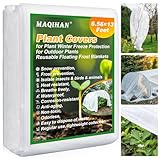
- Product Features: Our plant covers are ideal for protecting all plant. Made from premium 1 oz/sq non-woven fabric, their durability and breathability ensuring both insulation against frost and facilitation of sunlight penetration for healthy plant growth
- Versatility: These covers serve triple duty as frost protection, snow protection, animal barriers, insect barriers, and sun shields, adaptable to various gardening needs, the versatile row covers promise a tailored fit for all horticultural necessities
- Usability: Users can cut the frost blanket according to the size of the plant, and then easily cover the plant blanket directly on the plant, lay the cover loosely over plants, or fix it with the help of hoops or frames, providing customizable protection
- Cold & Wind Protection: Shield delicate plants from wintry chills and harsh winds, safeguarding them from frost damage. Regulate sunlight exposure to prevent overheating, maintaining optimal growth conditions. Maintain stable soil temperatures
- Optimize Performance: Deploy the covers before sunset to harness residual warmth from the soil. Once morning temperatures rise above freezing, remove the covers to permit sunlight warming. Wet covers should be dried before reuse
Why porch planters freeze faster than plants in the ground
Frost forms when plant tissue cools to the freezing point and ice can damage cells. A freeze occurs when the air and the plant interior fall below 32°F. The same forecast temperature can produce different results depending on the plant, how long the cold lasts and whether the container is exposed to wind.
Roots in a container have less surrounding soil to buffer temperature changes than roots in the ground. The sides and bottom of a pot are exposed to cold air, so a plant can suffer root damage even when its leaves are partly protected. NC State Extension explains that container roots are more exposed to cold and recommends insulating containers and monitoring winter moisture.
Two broad weather patterns matter:
- Advective freeze: a dry, cold air mass arrives, often with wind. Wind strips heat from pots and makes covers harder to keep in place.
- Radiational freeze: a clear, calm night lets heat escape upward, allowing cold air to settle near the ground. A sheltered porch can be safer than an exposed yard, but an unheated porch is not automatically warm enough for every plant.
Wind is especially challenging during an advective freeze, so a loose sheet or blanket can fail unless it is anchored and reaches the ground.
Do these 3 things before closing this tab:
1Repair Windows errors before they cause bigger problems2Scan for outdated or missing drivers - takes under a minute3Clear out junk files and repair common Windows errorsWhich porch planters need protection first?
Start with plants known to be frost-sensitive rather than treating every pot identically. Tender annuals, tropicals, warm-season herbs and other plants that show cold injury easily deserve attention first. Valuable specimens and recently moved outdoor houseplants also warrant a conservative response.
Make a quick risk list
- High priority: tender annuals, tropical foliage plants and any plant you already know is damaged by a light frost.
- Higher exposure: small containers, pots on an open railing, hanging baskets and containers exposed to prevailing wind.
- Lower immediate priority: plants that tolerate your local frost season, provided the forecast and exposure remain within their known tolerance. The sources do not establish one universal safe temperature for every species.
Do not infer hardiness from a plant’s appearance alone. A plant that survived a cool evening may still be injured by a longer freeze, and a sheltered, large container may fare differently from a small pot in the same weather.
When should you act?
Use the forecast overnight low as an early warning, then account for duration and wind. Iowa State’s practical guidance is to take action for vulnerable plants when temperatures dip into the mid-30s°F. Acting at that point gives you time to move pots, gather insulation and secure a cover before temperatures fall.
Rank #2

- ALL-SEASON PLANT PROTECTION - Safeguard your plants through the harsh winters with our breathable Plant Frost Cover, designed to shield against frost, freezing temperatures, snow, and harsh winds. Extend your growing season into the colder months while ensuring your plants thrive year-round.
- PROMOTES HEALTHY GROWTH - Our frost cover acts as an insulation layer, creating a microclimate that keeps plants warmer in cold weather. This helps prevent frost damage and promotes healthier growth, giving your plants a head start in the growing season and accelerating germination.
- BREATHABLE & PERMEABLE DESIGN - Engineered to allow essential light, air, and water to penetrate while keeping out the cold. Your plants receive the necessary nutrients for growth without being smothered, making it ideal for delicate seedlings and established plants alike.
- UV SUN SCORCH & WIND PROTECTION - Not just for the cold, this cover also offers UV protection to prevent sunburn scorching during unexpected winter sun exposure, while also serving as an effective windbreaker, reducing plant stress caused by strong winds.
- DURABLE & EASY TO USE - Made from high-quality, reusable materials, our Plant Frost Cover is easy to install and remove, making seasonal transitions simple. Its durable construction ensures long-lasting protection, giving you peace of mind through multiple winters.
Iowa State also says covering is typically no longer effective below about 28°F. That is a practical limit, not a guarantee or a precise threshold for every plant. Damage can occur above 28°F when below-freezing conditions last five hours or more. A forecast of 30°F for one brief hour is therefore not equivalent to 30°F lasting through the night.
The Tool Desk
Outbyte Driver Updater FREEFix the driver behind crashes, sound loss and screen glitchesFind Drivers →Outbyte PC Repair FREERepair Windows errors before they cause bigger problemsFix Now →Use this weather checklist
- Check the forecast low for the coldest part of the night, not only the evening temperature.
- Look for the expected number of hours below 32°F and whether wind is forecast.
- Note whether the night is likely to be clear and calm (radiational) or windy with an advancing cold air mass (advective).
- Begin protection in the mid-30s°F for vulnerable plants rather than waiting for frost to appear.
- If the forecast approaches or drops below 28°F, prioritize moving plants indoors or into a genuinely warmer structure; do not rely on a cover as a guarantee.
For outdoor houseplants that spent summer outside, Iowa State gives a different, seasonal transition point: bring them inside when nighttime temperatures consistently reach the 50s°F. That advice concerns moving plants indoors for the season, not the short-term response to one unexpected frost. See Iowa State’s houseplant transition guidance for that distinction.
If you can move the pot, do this first
Moving a vulnerable container to a warmer protected place is the most dependable practical action described by the extension sources. Iowa State calls bringing plants indoors the easiest way to protect them from frost or freeze damage. Texas A&M AgriLife likewise recommends moving valuable container plants to a garage or another protected location during a killing freeze.
Step-by-step relocation
- Move before the cold arrives. Do not wait until leaves are already frosted. Transport the pot while the soil and plant are still above freezing.
- Choose a suitable space. A heated room, enclosed porch, warm protected structure or garage can work, depending on the plant and the expected duration of the freeze. An unheated garage or porch should not be described as safe for every species during a prolonged hard freeze because the sources do not set one universal indoor temperature.
- Keep the pot stable. Set it where it will not be knocked over, and avoid placing foliage directly against a cold window or exterior door.
- Allow practical clearance. Keep covers, leaves and insulation away from heaters, flames and vents. Do not bring soil, leaves or pots indoors if they are visibly infested or saturated.
- Return the plant after the event. Wait until freezing conditions have passed, then move it back gradually if the indoor location is much warmer or dimmer than the porch.
If only a few pots can be moved, give priority to the most tender and valuable plants, the smallest containers and those in the most exposed positions.
If the planter must remain outdoors
Outdoor protection works best as a combination: reduce wind, cluster containers, slow heat loss through the pot and protect the foliage. No single wrap has a universal temperature rating in the extension guidance, so judge the setup by the forecast, duration and plant tolerance.
Free tools Windows power users keep installed
One-click scans. No signup required.
1. Create a sheltered cluster
- Move pots against a building, wall or other structure that blocks prevailing wind.
- Place containers close together so the group loses less heat from its exposed sides than isolated pots.
- Keep the cluster on the porch or patio rather than directly in a low spot where cold air can settle, when that option is available.
- Leave enough access to inspect each plant and to secure a cover over the entire group.
UF/IFAS Extension explains that grouping containers and adding mulch reduces heat loss from container sidewalls. Grouping is a heat-conservation measure, not a promise that the center of the cluster will remain above freezing in a severe event.
Rank #3
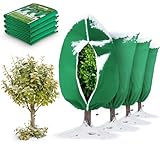
- All-in-One Frost Protection Set Comes with 6 plant covers in 3 different sizes – 23.6x31.5", 31.5x47.2", and 47.2x70.9". Perfect for protecting small potted plants, medium bushes, and tall shrubs all at once.
- Effective Winter Protection Keep your plants safe from frost, snow, and freezing wind. The thick non-woven fabric provides excellent insulation while still allowing
- Easy to Use & Adjustable Design Each cover features a built-in drawstring at the bottom for quick tightening and secure fit — prevents it from being blown away by strong wind or heavy rain.
- Reusable & Durable Material Made of high-quality tear-resistant and breathable fabric. Washable, foldable, and reusable year after year without losing shape or protection strength.
- Suitable for All Garden Types Ideal for outdoor gardens, vegetable patches, flower beds, and young trees. One set meets all your winter plant protection needs, saving you time and effort.
2. Insulate the container, not only the leaves
Wrap the sides of the pot to slow heat loss from the root zone. Options named by the extension sources include a frost blanket, bubble wrap, closed-cell foam, quilt batting, household insulation or a blanket. A wire enclosure filled with leaves or straw is another approach. Keep the material secured and avoid blocking drainage holes.
NC State and NC State Cooperative Extension describe container insulation as part of winter protection; the Pender County Center guidance also recommends wrapping containers and using covers. If quilt batting or household insulation could become wet, shield it from rain so it does not remain saturated around the pot. Inspect the container after the event rather than assuming a particular wrap provides a fixed number of degrees of protection.
3. Add mulch or loose insulating material carefully
Mulch around the outside of grouped pots or inside a wire enclosure can reduce heat loss from the container sides. Keep loose material from sealing the drainage openings or staying against a plant crown where persistent moisture could cause rot. A wire enclosure filled with leaves or straw should be stable enough that wind cannot scatter the material overnight.
What’s actually slowing this PC down?
Pick the symptom - the matching free tool is one click away.
How to cover foliage without causing more damage
A cover protects the above-ground parts of a plant from frost and can trap some radiant heat, but setup matters as much as the fabric. Frost cloth or frost fabric is designed for this use; sheets, blankets, towels, tarps and quilts can also be used for a short cold event.
Covering procedure
- Install a support. Use stakes, hoops, a cage or another frame so the material does not rest directly on foliage. Contact with a cold, wet cover can injure leaves.
- Drape to the ground. UF/IFAS advises extending the cover to the ground to trap radiant heat. Covering only the top of a plant leaves a path for heat to escape.
- Secure the edges. Weigh or clip the material around the pot, porch rail or support so wind cannot lift it. Do not compress delicate stems under heavy objects.
- Combine foliage and pot protection. A cover over leaves does not insulate the root ball; use pot-side insulation and shelter as well.
- Ventilate or remove it after the cold. Take the cover off when freezing conditions have passed, or open it during a sunny day so heat and humidity do not build up excessively. Re-cover before the next cold night if the forecast still requires protection.
Plastic tarps can be useful as an outer wind barrier when supported, but do not let impermeable material rest on leaves. A household sheet or blanket may be adequate for a light frost, yet the sources do not assign a guaranteed temperature benefit to any fabric.
Should you water porch planters before a freeze?
Moist soil can store and re-radiate more solar heat than dry soil, according to UF/IFAS, but prolonged saturated conditions can damage roots. Watering is therefore a moisture-management decision, not a substitute for moving or covering a plant.
Rank #4

- Upgrade Rounded Top Plant Covers: The plant covers freeze protection adopt a newly upgraded dome expansion design, creating maximum 3D protective insulation space. It outperforms flat covers of the same size, effectively reducing the risk of branch/leaf breakage, and provides a warm, safe overwintering environment for trees, shrubs, flowers, vegetables, and other outdoor plants in autumn and winter
- Freeze Protection & Breathable Light Transmission: Made of premium thickened non-woven fabric, the frost blankets for outdoor plants are tear-resistant and abrasion-proof, withstanding frost, snow, rain, wind, hail, and other weather conditions. Plant covers for winter have 50% light transmission, it ensures free air/moisture circulation without condensation, fostering a breathable, warm, and healthy growing environment for plants
- Side Zipper & Bottom Drawstring: The frost blankets cloths for outdoor plants is designed with zippers and adjustable drawstrings. The zipper design is easy to cover or remove, making it convenient for watering, trimming, or inspecting the condition of plants without damaging branches/leaves. The drawstring design enhances the stability of the frost blankets cloths, preventing it from flying off and improving the heat preservation effect
- Muti Size for Choose: We offer three sizes of outdoor plant covers for winter freeze protection for you to choose from: 40inx47in, 47inx72in, and 75inx90in, available in white/beige. Attention: Please confirm the circumference of the plant first to obtain the best protection effect
- Widely used: Winter plant covers freeze protection is an ideal choice for outdoor plant protection, which not only keeps warm but also prevents animals from gnawing, insects from invading, and birds from pecking. Plant covers freeze protection are perfect for protecting yard trees, shrubs, potted plants such as banana trees, palm trees, olive trees, tree ferns, rose bush, apple/orange/lemon/citrus/blueberry trees, etc
Texas A&M AgriLife recommends thoroughly watering valuable containers before a killing freeze. Follow that advice only when the container drains freely and the plant is not already wet; do not leave a pot sitting in water. For routine winter care, NC State advises checking moisture and watering dry containers when temperatures are expected to be above freezing.
Do not run a household sprinkler over porch planters as a do-it-yourself freeze-protection system. UF/IFAS notes that household irrigation systems generally cannot maintain the continuous film of liquid water used in commercial freeze protection and may cause more harm than good. Spraying can add weight, chill foliage and leave roots saturated.
Independent reader supportYour contribution helps us test, update, and keep practical guides available for everyone.Choose a method by situation
| Situation | First choice | What it protects | Main limitation |
|---|---|---|---|
| Tender plant in a movable pot; forecast near freezing | Move to a heated room, enclosed porch or other suitable protected structure before the cold night | Whole plant and root ball | A porch or garage is not automatically warm enough during a prolonged hard freeze |
| Valuable container during a killing freeze | Move to a garage or protected location; use additional insulation if it cannot be moved | Whole plant, with the strongest practical reduction in exposure | Texas A&M warns that every protective strategy has limits |
| Several pots on an exposed porch | Cluster against a building, insulate pot sides and cover the group to the ground | Root zone, foliage and wind exposure | Wind can lift covers; severe or prolonged cold may still injure plants |
| Pot cannot be moved; light frost expected | Support a frost cloth, sheet or blanket above foliage and anchor the edges | Foliage and some radiant heat | Covering is typically no longer effective near 28°F, and duration matters |
| Small exposed container with dry soil | Check moisture; water only if dry and temperatures will remain above freezing long enough for drainage | Maintains normal root moisture and may improve heat storage | Watering alone does not prevent freeze damage, and saturated roots can be harmed |
The sources do not provide a universal product rating in degrees of protection. Compare methods by the plant’s cold tolerance, forecast low, expected duration, wind and whether the method protects foliage, pot sides and roots, or all three.
What changes the plan: wind, duration and freeze type
Short, calm radiational frost
For a brief, calm night near the freezing point, sheltering pots against a building, grouping them, insulating the sides and using a ground-reaching cover may be sufficient for some tender plants. Start early because clear skies can produce the lowest temperatures just before sunrise.
Windy advective freeze
Wind makes protection more difficult. Use the most sheltered location available, anchor every edge and inspect the setup after the wind begins. A loose cover that lifts from the pot or exposes the root ball is not functioning as intended.
Recommended Free Tools
Long or severe freeze
If temperatures are forecast well below freezing or below freezing for many hours, move plants indoors whenever possible. Iowa State’s approximately 28°F covering limit and five-hour warning show why a fabric cover should not be treated as a guarantee. Texas A&M states that all protective strategies have limitations and that occasional severe frosts or freezes can overwhelm even strong efforts.
Best Value

- [1.5oz/yd² Frost Cloth for Plant Freeze Protection]Made with 1.5oz/yd² per sq yd garden fabric, this frost cloth helps protect plants from frost, cold wind, and sudden temperature drops while allowing sunlight, air, and moisture to pass through.
- [Multiple Sizes for Different Garden Needs]Available in multiple sizes to fit raised beds, vegetable rows, shrubs, flowers, and potted plants. Choose the right coverage for small garden beds, larger planting areas, or seasonal crop protection.
- [Floating Row Cover for Raised Beds]Lightweight fabric can rest directly over crops or pair with hoops, frames, or stakes. Ideal for seedlings, vegetables, strawberries, herbs, flowers, and other outdoor plants.
- [Versatile Garden Fabric Blanket]Use it as a frost blanket, garden bed cover, winter plant cover, or greenhouse fabric to help create a more stable growing environment through fall, winter, and early spring.
- [Easy to Install, Secure, and Store]Drape the frost cloth over your plants and secure it with clips, stakes, stones, or hoops. Fold after use for compact storage and reuse for winter gardening, spring seedlings, or fall protection.
After the cold night
- Remove or ventilate covers once freezing conditions have passed and the day is warming.
- Check whether wind displaced insulation or opened gaps down to the pot.
- Inspect leaves, stems and the soil surface, but do not assume immediate discoloration shows the full extent of injury.
- Confirm that drainage holes remain open and that insulation has not trapped standing water.
- Keep monitoring the forecast; a second cold night may require the same setup again.
Do not expose a newly protected plant to a sudden hot, sunny location simply because the cover came off. Return it to its normal porch position when conditions are suitable, and continue ordinary moisture checks.
Common mistakes and how to correct them
Waiting for visible frost
Problem: By the time crystals appear, tender tissue may already be cooling rapidly. Correction: Prepare when the forecast reaches the mid-30s°F for vulnerable plants.
Protecting leaves while leaving the pot exposed
Problem: Container roots lose heat through the sidewalls and bottom. Correction: Insulate the pot and group it with other containers in shelter.
Letting fabric touch foliage
Problem: Cold, wet material can damage leaves and stems. Correction: Build a support and keep the cover above the plant.
Covering only the top
Problem: Heat escapes from the open sides. Correction: Extend the cover to the ground and secure the edges.
Leaving the cover on all day
Problem: Sun can create excessive heat and humidity under a sealed cover. Correction: Remove or ventilate it after the cold event and during a sunny day.
Assuming watering or a sprinkler will prevent freezing
Problem: Household irrigation does not provide the continuous liquid-water film used in commercial systems and can saturate roots. Correction: Water only when soil is dry, drainage is good and above-freezing conditions are expected; rely on shelter, insulation and relocation for actual cold protection.
Trusting a cover below its practical limit
Problem: A cover cannot reliably overcome a severe or prolonged freeze. Correction: Move the plant to a warmer protected place whenever possible and treat outdoor covering as risk reduction, not insurance.
Quick Recap
Quick action checklist
- Identify tender, tropical and valuable pots before the weather turns cold.
- Check the overnight low, hours below 32°F and forecast wind.
- At mid-30s°F, begin moving or preparing vulnerable planters.
- Move movable pots to a heated room, suitable enclosed porch, garage or other warm protected structure.
- For pots staying outside, place them against a building and cluster them.
- Insulate pot sides with a frost blanket, bubble wrap, closed-cell foam, quilt batting, household insulation, a blanket or a leaf-filled wire enclosure.
- Support a frost cloth, sheet or blanket above foliage, extend it to the ground and anchor it.
- Ventilate or remove the cover after the cold passes and inspect drainage and moisture.
- If the forecast approaches 28°F or the freeze will last for many hours, do not rely on a cover alone.

Product prices and availability are accurate as of the date/time indicated and are subject to change. Any price and availability information displayed on Amazon at the time of purchase will apply.

