Crashes, No Sound, or Screen Glitches?
What’s actually slowing this PC down?
Pick the symptom - the matching free tool is one click away.
Outbyte Driver Updater · freeRandom freezes, missing sound and display glitches usually trace back to one bad driver. Find and replace yours safely.
Find the Right Drivers →ThatPainter is reader-supported. When you buy through links on our site, we may earn an affiliate commission. Learn More
A durable concrete-floor refresh follows three steps: clean and profile the slab, repair defects and check for moisture, then choose and apply a finish that suits the floor. Skipping any one of them can leave you with peeling paint, uneven color, trapped moisture or repairs that remain visible.
Use the sequence below for an interior room, garage, utility area or exterior slab. Product labels control the final details—especially primer, ventilation, recoat and cure times—but the preparation decisions are the same.
As an Amazon Associate I earn from qualifying purchases.
Quick wins for a faster PC:
Fix the driver behind crashes, sound loss and screen glitchesFind Drivers →Repair Windows errors before they cause bigger problemsFix Now →The three-step sequence at a glance
- Clean and profile: Remove dirt, oil, grease, mastic, loose coating and dust. Etch or mechanically profile uncoated concrete until the surface has a consistent, lightly abrasive texture.
- Repair and resolve moisture: Fill cracks, chips, holes and voids with compatible material, remove unsound coating, and test for moisture before you commit to a coating.
- Select and apply the finish: Match sealer, stain or paint to the appearance, traffic, moisture, ultraviolet exposure, slip-resistance needs and condition of the slab.
The International Concrete Repair Institute describes preparation as producing a “sound, clean, and suitably roughened surface” for adhesion or penetration. That definition explains why washing alone is not enough: a floor can look clean while still being too smooth, dusty or damp for a finish.
Step 1: Clean the slab and create a profile
Remove everything that can interfere with adhesion
Start by removing furniture, stored items and loose debris. Sweep or vacuum the entire area, including corners, joints and the wall-to-floor edge. Scrape off mastic, adhesive residue and flaking material with a tool that will not gouge sound concrete. Any coating that is peeling, blistering or powdery is not a stable base; remove it in this step and continue back to material that is firmly attached.
#1 Best Overall

- Durable Epoxy Acrylic Formula: Resists hot tire pickup, scuffing, cracking, peeling, and fading. KILZ 1-Part Epoxy Floor Paint delivers long-lasting protection and a satin finish that looks great on concrete surfaces.
- Interior & Exterior Use: Designed for use on both indoor and outdoor horizontal surfaces. Ideal as concrete paint for basements, garage floors, and as an exterior paint for porches, driveways, and pool decks.
- Versatile Surface Application: Use on properly prepared porous concrete, masonry, stone, and brick. Not for vertical surfaces or areas exposed to hydrostatic pressure or forklift traffic. Residential use only.
- Low-VOC, Easy Application: This water-based interior/exterior paint applies easily with a roller or brush and cleans up with soap and water. Covers 300–400 sq. ft. per gallon on smooth surfaces, 200–300 on rough.
- Trusted KILZ Performance: KILZ has been a leader in surface coatings for over 50 years. Backed by a brand known for quality and innovation in paint and primer solutions for every part of your home.
Oil and grease need more than a quick mop. Apply a concrete-compatible degreaser, scrub with a stiff non-metal brush, and rinse thoroughly. Behr’s preparation guidance specifically calls for degreasing and vigorous scrubbing, followed by removal of excess water and drying. Work in manageable sections so the dirty solution does not spread over areas you have already cleaned.
Rinse and dry completely
Rinsing removes cleaner and the loosened contamination. Use a wet vacuum, squeegee or absorbent material to collect excess water rather than allowing it to migrate into cracks or toward walls. Do not judge dryness by appearance alone; a slab can look dry while retaining moisture in pores and joints. Allow the surface to dry for the period required by the product instructions and the conditions in the space.
Do these 3 things before closing this tab:
1Clear out junk files and repair common Windows errors2Fix the driver behind crashes, sound loss and screen glitches3Repair Windows errors before they cause bigger problemsEtch or mechanically profile uncoated concrete
Freshly cleaned concrete may still be too smooth for a coating. For uncoated slabs, Behr recommends cleaning and etching, then checking the finished surface. If you use a chemical etcher, let it stand for 10–20 minutes before vigorous scrubbing, as directed by the manufacturer. Rinse until the residue is gone and collect the rinse water in accordance with the label and local requirements.
Rank #2

- PAINT AND PRIMER IN ONE: Self-priming battleship gray formula saves time by combining a primer and paint in a single ready-to-use product
- HOT TIRE AND CHEMICAL RESISTANT: Resists damage from hot tires, motor oil, grease and gasoline on garage and driveway surfaces
- UV AND WEATHER RESISTANT: Durable satin finish resists fading and peeling in both interior and exterior applications
- VERSATILE CONCRETE COATING: Ideal for garages, carports, driveways, basements, porches, patios, walkways and pool decks
- EASY CLEANUP: Advanced acrylic formula cleans up with soap and water and is designed to be environmentally friendly
A practical field check is the texture test: when dry, the concrete should feel similar to medium-grit sandpaper. Wipe a finger across the surface; it should not pick up a powdery film. A smooth, glossy or dusty area needs additional preparation before you proceed. Mechanical profiling may be appropriate where chemical etching is unsuitable, but use a method and tool that the finish manufacturer permits.
Observe the new-concrete cure requirement
Do not treat a newly placed slab simply because it feels hard. Behr states that new concrete must cure for 30 days before any floor treatment. That is a manufacturer instruction; another product may specify a different interval. Check the label for the exact coating you plan to use and use the longer applicable requirement when instructions differ.
Preparation checklist
- All dirt, oil, grease, mastic and loose coating have been removed.
- Cleaner has been rinsed away and excess water collected.
- The slab is dry, with no powder transferring to a wiped finger.
- Uncoated concrete has a consistent, medium-grit-sandpaper-like profile.
- New concrete has met the treatment interval stated by the product manufacturer; Behr’s interval is 30 days.
Step 2: Repair defects and resolve moisture before coating
Inspect only after cleaning
Cleaning can reveal defects hidden by grime. Look for cracks, chips, holes, voids, spalls and low spots, and mark their locations. Distinguish a stable, narrow surface crack from a loose or hollow area around it; a patch placed over unsound concrete will fail with the material beneath it. If a previous coating is delaminating, remove it back to sound material instead of burying the loose edge.
Rank #3
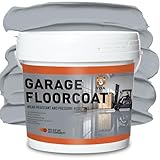
- COVERAGE: Professional-grade floor coating covers up to 120 square feet per gallon with excellent durability and scratch resistance, (1 kg) of coating, Covers an area of approximately 3 square meters (32 square feet) per coat, the actual coverage area depends on the surface condition and coating thickness. For rough or porous floors, patching or leveling may be performed, otherwise, additional coating material will be required.
- VERSATILE APPLICATION: Suitable for multiple indoor surfaces including wood, metal, brick, plastic, and concrete in garages, basements, and interior spaces
- READY TO USE: Single-component formula requires no mixing and comes in an attractive Smoke Gray color that enhances any space
- LOW VOC FORMULA: Features a low volatile organic compound composition making it suitable for indoor applications with proper ventilation
- FINISH & FORM: Delivers a sophisticated matte finish in liquid form, perfect for achieving a professional-looking floor coating
Use compatible repair materials
Choose a concrete patch or filler that is compatible with the planned finish and the location of the repair. Follow its instructions for mixing, placement, tooling and cure. A repair that remains soft, damp or dusty is not ready for primer, stain, sealer or paint. Keep repaired areas within the product’s recommended thickness and feather edges where the instructions call for it, so the transition does not telegraph through a thin finish.
After the repair cures, remove sanding dust or residue without recontaminating the slab. Recheck the repaired area for soundness and profile it as required by the finish system. Repairs can remain visually apparent under transparent or translucent products, so account for that when deciding between a sealer, stain and opaque paint.
Perform a plastic-sheet moisture test
Before painting or applying another film-forming coating, Sherwin-Williams recommends a simple screening test. Tape all edges of a 2-foot-by-2-foot plastic sheet tightly to the concrete, leave it in place for 48 hours, then inspect the underside of the plastic and the concrete beneath it.
Rank #4

- Durable Epoxy Acrylic Formula: Resists hot tire pickup, scuffing, cracking, peeling, and fading. KILZ 1-Part Epoxy Floor Paint delivers long-lasting protection and a satin finish that looks great on concrete surfaces.
- Interior & Exterior Use: Designed for use on both indoor and outdoor horizontal surfaces. Ideal as concrete paint for basements, garage floors, and as an exterior paint for porches, driveways, and pool decks.
- Versatile Surface Application: Use on properly prepared porous concrete, masonry, stone, and brick. Not for vertical surfaces or areas exposed to hydrostatic pressure or forklift traffic. Residential use only.
- Low-VOC, Easy Application: This water-based interior/exterior paint applies easily with a roller or brush and cleans up with soap and water. Covers 300–400 sq. ft. per gallon on smooth surfaces, 200–300 on rough.
- Trusted KILZ Performance: KILZ has been a leader in surface coatings for over 50 years. Backed by a brand known for quality and innovation in paint and primer solutions for every part of your home.
- Moisture: droplets or a damp film indicate water is collecting under the sheet.
- Discoloration: a darker patch can signal moisture movement even without visible droplets.
- Condensation: fogging or beads on the plastic show that vapor is present at the test area.
If any of these signs appears, do not coat over it. Sherwin-Williams states that the source must be located and the cause corrected before painting. Test more than one representative area when conditions may vary, such as near exterior walls, plumbing or a floor drain. A plastic-sheet test is a screening method, not a substitute for any quantitative moisture test required by the coating manufacturer.
Windows Errors? Fix Them Before They Spread
Repair common Windows errors and clear accumulated junk for a smoother, more stable PC - no reinstall needed.Free scan · no reinstallOutdated Drivers Are Slowing You Down
One free scan finds every outdated or missing driver and matches the right update for your exact hardware.Free scan · exact hardware matchMoisture decision points
- No signs under the sheet: continue with the product’s remaining preparation requirements.
- Signs in one area: investigate local causes such as a leak, wet wall edge or plumbing route, correct the source, allow the slab to dry, and retest.
- Signs across several areas: treat the condition as a slab-wide moisture problem. Resolve the source before selecting a coating; changing products without correcting the water will not solve the failure.
Step 3: Choose and apply the right finish
There is no universally best concrete finish. The right choice depends on how much of the original concrete you want to see, how the floor will be used, whether moisture or ultraviolet exposure is present, how much wear you expect, and how visible repairs may be.
| Finish | Appearance and opacity | Texture and repair visibility | Wear, moisture and UV considerations | Maintenance and compatibility questions |
|---|---|---|---|---|
| Sealer | Usually preserves more of the concrete’s existing look than an opaque coating. | Leaves much of the slab texture visible; repairs and color variation can remain apparent. | Protection depends on the specific sealer and exposure. Confirm suitability for the traffic, moisture and outdoor or indoor conditions. | Best when preserving the substrate matters. Verify that the sealer is compatible with existing coatings and repairs. |
| Stain | Adds color while retaining variation rather than hiding the slab completely. | Concrete texture and differences in absorption remain part of the appearance; patched areas may show. | Confirm resistance and suitability for the floor’s traffic, moisture and UV exposure before use. | Requires a consistently prepared, absorbent or otherwise label-approved surface. Check compatibility with any prior coating. |
| Paint | Provides opaque coverage and the broadest color choice of the three. | Can conceal more background variation, but chips, wear patterns and failed repairs can become visible as the film ages. | Select a system rated for the expected traffic and exposure. Moisture under the film can cause failure. | Follow the complete system instructions for primer, coats, recoat window, ventilation and cure. Confirm adhesion to the existing slab or coating. |
Match the finish to the floor’s job
- Choose a sealer when preserving the concrete’s character and texture is more important than changing its color.
- Choose a stain when you want color but still want natural variation and some surface character to show.
- Choose paint when you need an opaque, strongly colored surface and accept that a film can chip or develop visible wear paths.
For any option, confirm slip-resistance requirements, especially where water, tracked-in rain or cleaning solution may be present. The finish, any broadcast aggregate and the cleaning routine must work together; do not assume that a smooth decorative result is automatically suitable for a wet walking surface.
Best Value

- PAINT AND PRIMER IN ONE: Self-priming armor gray formula saves time by combining a primer and paint in a single ready-to-use product
- HOT TIRE AND CHEMICAL RESISTANT: Resists damage from hot tires, motor oil, grease and gasoline on garage and driveway surfaces
- UV AND WEATHER RESISTANT: Durable satin finish resists fading and peeling in both interior and exterior applications
- VERSATILE CONCRETE COATING: Ideal for garages, carports, driveways, basements, porches, patios, walkways and pool decks
- EASY CLEANUP: Advanced acrylic formula cleans up with soap and water and is designed to be environmentally friendly
Apply the product as a system
- Read the entire label and technical instructions before opening the container. Confirm the permitted substrate, moisture limits, temperature range, ventilation requirements and tool recommendations.
- Check whether a primer is required. A primer can be part of the adhesion system, particularly over an existing coating or a repaired area, but only use one approved for the finish.
- Mix or agitate the product exactly as directed. Do not add thinner, water or another component unless the label permits it.
- Lay out an application plan that keeps a wet edge and avoids trapping yourself in a corner. Keep the film thickness, overlap and coverage within the stated instructions.
- Respect the recoat window. Applying the next coat too soon can disturb the first; waiting beyond the permitted window may require additional preparation.
- Protect the surface for the full cure period, not merely until it feels dry. Keep traffic, furniture and water away until the manufacturer’s return-to-service instruction is met.
A practical work plan from inspection to cure
Scheduling the work in the right order prevents a clean slab from being contaminated again. First, identify the intended finish and read its restrictions. Then complete cleaning and profiling, allow the slab to dry, perform repairs, and run the moisture test before committing to the finish. If a repair or moisture correction changes the surface, repeat the relevant cleaning, drying and profile checks.
Plan for edges, joints, drains, steps and transitions separately. Mask adjacent walls and surfaces only after dust-producing preparation is complete. Keep a written record of the product name, batch information, mixing details, coat times and the date the floor can receive traffic; this makes troubleshooting easier if a problem appears later.
The Tool Desk
Outbyte Driver Updater FREEFix the driver behind crashes, sound loss and screen glitchesFind Drivers →Outbyte PC Repair FREERepair Windows errors before they cause bigger problemsFix Now →Safety and environmental handling
- Wear protective clothing, eye protection and chemical-resistant gloves when handling cleaners or etchers.
- Read the product label and safety-data sheet before use. If the label requires respiratory protection, use the specified equipment and follow its limitations.
- Ventilate indoor work areas as directed, while preventing dust or vapors from moving into occupied rooms.
- Keep rinse water and chemical solutions out of storm drains. Collect, contain and dispose of them using the label instructions and applicable local rules.
- Use tools compatible with the product and the surface. A non-metal stiff brush is specifically recommended in Behr’s cleaning guidance.
- Keep people and pets away from wet chemicals and uncured coatings, and store containers closed when not in use.
Troubleshooting: what a failed refresh usually means
The coating peels or lifts
Common preparation causes are oil or cleaner residue, an insufficient profile, dust, an unsound old coating or moisture beneath the film. Remove failed material back to a sound edge, identify which preparation step was missed, correct that condition and follow the finish manufacturer’s repair procedure rather than applying another coat over the failure.
The finish looks patchy or blotchy
Stain can reveal differences in absorption between the original slab and repairs, while paint can emphasize uneven repairs or inconsistent film build. Check whether the substrate was uniformly prepared and whether the product permits spot repairs. If the appearance is unacceptable, the remedy may involve a broader re-preparation and a finish with greater opacity, not simply another isolated patch.
Powder remains on the surface
Powder on a wiped finger indicates that dust or residue is still present, or that the surface has not been adequately prepared. Remove the residue, rinse or vacuum as the product instructions require, allow the slab to dry, and repeat the texture and cleanliness checks before coating.
Moisture appears after the test or after coating
Stop the application and locate the water source. A leak, wall-edge entry, plumbing issue or vapor movement must be corrected before recoating. Allow the concrete to dry and repeat the screening test; changing color or brand without correcting the source leaves the underlying failure mechanism in place.
Quick Recap
Final pre-coating checklist
- The slab has met the required cure age for new concrete.
- Contaminants and loose coatings are gone, and rinse residue has been removed.
- The surface is dry, non-powdery and suitably roughened for the selected product.
- Cracks, chips, holes and voids have been repaired with cured, compatible material.
- Peeling or unsound coating has been removed to a stable edge.
- The plastic-sheet test showed no moisture, discoloration or condensation—or any detected source has been corrected and the area retested.
- The selected finish matches the desired opacity, texture, traffic, moisture, UV and slip-resistance requirements.
- Primer, coats, recoat time, ventilation and cure instructions are understood before application begins.

Product prices and availability are accurate as of the date/time indicated and are subject to change. Any price and availability information displayed on Amazon at the time of purchase will apply.

