What’s actually slowing this PC down?
Do these 3 things before closing this tab:
1Clear out junk files and repair common Windows errors2Scan for outdated or missing drivers - takes under a minute3Repair Windows errors before they cause bigger problemsPick the symptom - the matching free tool is one click away.
ThatPainter is reader-supported. When you buy through links on our site, we may earn an affiliate commission. Learn More
As an Amazon Associate I earn from qualifying purchases.
The safest way to remove vintage wallpaper from plaster is not a single product or technique. First determine whether the paper has historic value, whether the plaster is sound and dry, and whether the wallpaper is painted or water-resistant. Test the least invasive option in a hidden area, add as little moisture as possible, and stop immediately if the plaster, finish, or decorative surface lifts, crumbles, or becomes unstable. Valuable historic paper or deteriorated plaster should be assessed by an experienced paper conservator or preservation professional rather than treated as an ordinary redecorating job.
The Tool Desk
Outbyte PC Repair FREERepair Windows errors before they cause bigger problemsFix Now →Outbyte Driver Updater FREEFix the driver behind crashes, sound loss and screen glitchesFind Drivers →Why vintage wallpaper and plaster require a different approach
Modern wallpaper removal advice often assumes a stable gypsum board wall that can tolerate scoring, soaking, scraping, and repeated wetting. Vintage wallpaper may be bonded to lime, gypsum, or composite plaster; it may also be part of a historically significant finish. Plaster can lose its surface, detach from its backing, or crumble when a tool or softened adhesive pulls on a weak area. The paper itself may be more valuable than the finish you plan to apply afterward.
#1 Best Overall

- CHEMICAL FREE WALLPAPER REMOVER: Just add distilled water to this Wagner steam cleaner for a natural and environmentally friendly way to remove old or outdated wallpaper. No chemicals are needed, making this a safe option for a house with kids or pets
- EASY WAY TO REMOVE WALLPAPER: Use this steam cleaner to apply steam to your wallpaper. This will soften the adhesive backing, allowing for easy wallpaper stripping and removal
- TWO STEAMPLATES: Includes a large 8" x 11" steam plate for large work areas and a small 3" x 6" steam plate for small work areas. The new and improved steam plates provide more uniform distribution of steam and higher efficiency to speed up projects
- LONG RUN TIME: This wallpaper steamer heats up in approximately 12 minutes and offers up to 2 hours of usage time on a full tank, which is perfect for big wallpaper removing projects
- LIGHTWEIGHT AND PORTABLE: The steamer is lightweight and portable to easily maneuver around large rooms. Plus, the 12 ft. cool touch hose provides 24 ft. working area to reach tall walls and across rooms
The available preservation guidance does not establish a universal, damage-free method for every vintage wallpaper and plaster combination. The National Park Service’s Standards for Restoration state: “Treatments that cause damage to historic materials will not be used.” That principle changes the goal from removing the paper at any cost to making a defensible decision about whether removal is appropriate at all.
A historical U.S. government technical report describes a conventional wallpaper steamer with a penetrant for paper that is not painted over or resistant to water. It says scoring can help steam reach water-resistant or painted-over wallpaper, but also notes that steaming may be ineffective in some cases. Those observations are conditional descriptions, not proof that steaming or scoring is safe for fragile historic plaster, and they do not evaluate current steamer models.
Make the stop-or-proceed decision before wetting the wall
Use the following decision factors together. No single observation is enough to clear a wall for removal.
| What you find | Why it matters | Most conservative next step |
|---|---|---|
| The wallpaper may be original, rare, signed, unusually patterned, or important to the building’s history | Removal could destroy evidence or a significant finish that cannot be replaced | Pause DIY work and consult an experienced paper conservator or preservation specialist |
| Plaster is powdery, hollow-sounding, cracked, bulging, detached, or already shedding finish | Adhesive softening or tool pressure can take plaster or its finish with the paper | Have the wall assessed before attempting removal |
| There are tide marks, staining, a musty smell, active dampness, or recurring blistering | Moisture behind the paper may signal a wet wall or another building problem | Investigate the source and mechanical or structural cause before adding water |
| Paper is painted, glossy, coated, or otherwise water-resistant | Water and steam may not penetrate; scoring may be needed for penetration, but it increases the risk of cutting the surface | Test a tiny hidden area only; treat steam as conditional, not guaranteed |
| Suspect old paint may lie beneath the wallpaper | Disturbing old paint can create a lead exposure issue | Follow current local lead-safety rules and use qualified assistance before disturbing the layer |
| Paper is loose at an edge and the wall feels firm and dry | A small dry test may reveal whether the bond is already failing without introducing moisture | Lift only a very small area with minimal force; stop at the first sign of plaster or finish movement |
These are decision criteria, not a success-rate ranking. The source material provides no comparative statistics for methods, no universally best tool, and no test showing that a particular steamer or scoring tool is harmless on fragile plaster.
Inspect the wallpaper and plaster without disturbing them
Look for historic significance
Photograph the room, seams, borders, labels, inscriptions, repairs, and repeating patterns before moving anything. Record which walls have paper and whether different layers appear to have been installed at different times. A conservator can use that documentation to decide whether the paper should be preserved in place, repaired, or removed in sections. The National Park Service publication Wallpapers in Historic Preservation recommends that repairs to valuable historic wallpaper be undertaken only by an experienced paper conservator.
Rank #2

- Chemical Free Cleaning: Just pour into tap water and wait for a while, the wallpaper steamer will produce pressurized and high-temperature steam, which is used to clean the grease, loosen and dissolve dirt on the surface. The whole process doesn’t use any chemicals.
- Long Run Time & Simple Operation: When filled with water, the wallpaper remover provides continuous cleaning power for a long time. Then simply hold the steam plate against the wallpaper about 10 seconds, the steamer achieves quick wallpaper removal.
- Safety Power-off Protection: Equipped with safe power-off device, the wallpaper steamer will not overheat. So there is no need to worry about the fire problem. Besides, after heat dissipation, it will reset automatically and regenerate steam.
- Lightweight and Thoughtful Design: With two handles on the reservoir and steam plate, the wallpaper remover is absolutely portable. Plus, it is lightweight and easy for you to move and operate at home, really suitable for bedroom, kitchen and living room.
- Versatile Use in Housework: High-temperature and eco-friendly steam can also be used to simply clean dirt on furniture surface, kitchen countertop, electrical appliances, etc. Thanks to multipurpose use, it helps you save cost and space of housework.
Check for dampness before adding moisture
Feel for cool or damp areas without pressing hard, and look for staining, salt deposits, softened seams, bubbling, and areas that repeatedly fail. Old paste can lose strength through excessive dryness or moisture, and moisture may be evidence of a wet wall behind the paper. The National Park Service guidance says the underlying cause should be investigated; do not use steam to mask a leak, condensation problem, rising damp, or another building defect.
Assess plaster stability
Do not probe cracks, scrape the surface, or enlarge a loose edge merely to see what is underneath. Note visible cracks, bulges, detached areas, crumbling edges, and places where the finish is already lifting. A wall that looks sound in one corner may be unstable elsewhere, so choose any test area only after inspecting the entire wall.
Windows Errors? Fix Them Before They Spread
Repair common Windows errors and clear accumulated junk for a smoother, more stable PC - no reinstall needed.Free scan · no reinstallOutdated Drivers Are Slowing You Down
One free scan finds every outdated or missing driver and matches the right update for your exact hardware.Free scan · exact hardware matchConsider hidden paint and other layers
Older wallpaper may cover several paint and paper layers. The historical technical report warns that old leaded paint may be beneath wallpaper. Its warning predates current regulations and is not a substitute for your jurisdiction’s present requirements. If the building’s age or records make lead plausible, obtain current local guidance and qualified help before cutting, sanding, scraping, or otherwise disturbing the layers.
Choose a method by condition, not by the wallpaper’s age alone
“Vintage” describes age, not how a paper will behave. A thin uncoated paper can release differently from a painted-over paper, and a sound plaster wall can respond differently from a damp or detached one. Use the least invasive option that the small test supports.
Dry lifting: only when an edge releases with almost no resistance
If an existing seam or damaged edge is already loose, a very small dry test can show whether the paper can be lifted without wetting. Use minimal hand force and keep the test inconspicuous. This is a cautious decision step, not a claim that dry stripping is safe in general. Do not pull steadily against resistance, use a broad scraper to lever the paper, or continue when the plaster surface moves with it.
Rank #3

- Just fill with clean-preferably hot water to wait for approx.25 mins and place the steam plate on your wall for about 10 seconds--the steam will penetrate the wallpaper, natural cleaning that lifts away dirt and grime on nearly any surface.
- The 4.5 Liters(1 Gallon) water tank can produce approximately 3-hour steaming time per fill up, sufficient time to clear your mold wallpaper. And this steamer reaches up to 212°F (100°C), easy to remove vinyl, painted, and multiple layers of wallpaper. The short 2-minutes refilling and removing process provide great conveniences.
- Safety cut-out is fitted to prevent overheating the elements when the water boils low. Remove the filler cover after 2 minutes and rinse with water. Then it will self-reset and reproduced steam within 5-25 minutes. Plus, the visible exterior water level indicator allows you to know when to refill and when to stop.
- With a lightweight design and two easy-grip handles, the steam wallpaper remover is portable enough to use anywhere. The 10 foot steam hose and rectangle structure allows you to remove wallpaper with ease, and the built-in handle on the steam plate allows for easy, one-handed operation.
- This steamer is versatile and can be used for a wide variety of household. Deep clean by harnessing high-temperature water for solid surface as immaculate as they are environmental friendly.
Dry lifting is not a solution for firmly bonded paper. If the test produces tearing, a powdery surface, a lifted finish, or a visible change in the plaster, stop and reassess.
Recommended Free Tools
Steam with a penetrant: a conditional option
NBS Technical Note 770 describes a conventional wallpaper steamer used with a penetrant to loosen wallpaper that is not painted over and is not water- or grease-resistant. In that limited context, heat and moisture can soften the paste enough for the paper to release.
The same report says steaming may be ineffective in some cases. It does not establish a safe exposure time, temperature, tool setting, or procedure for fragile historic plaster. It also does not test current products. Therefore, a wallpaper steamer is a conditional method to test, not a blanket recommendation. Do not assume that a steamer marketed for ordinary modern walls is suitable for a historic plaster assembly.
Scoring: penetration aid with a trade-off
Water-resistant or painted-over paper can block moisture. The historical report notes that scoring may help steam penetrate those surfaces. Scoring also creates cuts through the wallpaper and potentially into the finish or plaster, so it is more invasive than simply testing an existing loose edge. If the wall is fragile, damp, historically important, or likely to contain suspect paint, do not score it as an experiment; obtain professional advice first.
When steam or scoring is the wrong choice
- Do not add moisture while the wall is visibly damp or while the source of dampness is unknown.
- Do not rely on steam to solve a bond that remains firm after a small test; the report explicitly says it may fail.
- Do not score merely because a first pass is slow. A slower result is safer than cutting the substrate.
- Do not continue when plaster, skim coat, paint, or decorative finish lifts with the paper.
A cautious removal sequence for a non-significant, sound, dry wall
The sequence below is a conservative synthesis of the preservation warnings and the conditional method descriptions. It is not a tested protocol for every plaster system.
Quick wins for a faster PC:
Scan for outdated or missing drivers - takes under a minuteDriver Scan →Repair Windows errors before they cause bigger problemsFix Now →Fix the driver behind crashes, sound loss and screen glitchesFind Drivers →Rank #4

- 【KITLUCK Chemical Free Wallpaper Remover Steamer】 Just fill with clean water to wait for approx.20 mins and place the steam plate on your wall for about 10 seconds--the steam will penetrate the wallpaper for removal old or outdated wallpaper, loosing and dissolve dirt, and natural cleaning that lifts away dirt and grime on nearly any surface. No chemicals are needed, making this a safe option for a house with kids or pets.
- 【Lightweight and Portable Design】 KITLUCK wallpaper steamer is lightweight and portable to easily maneuver around different large room. The 11.5 ft cool touch hose and power cord provides more working area to reach tall walls and across rooms without constantly relocating the wall paper steamer.
- 【Long Running Time and Easy Operation】 1.2 Gallon water tank heats up in approximately 20 minutes and offers up to 2 hours of usage time on a full tank, sufficient time to clear your mold wallpaper. And this steamer reaches up to 212°F (100°C), The short 2-minutes refilling and removing process provide great conveniences.
- 【Wide Range for Household Tasks】 The high-temperature steam can also be used for cleaning dirt on furniture surface, kitchen countertops. With its multifunctional capabilities, the steam cleaner helps you save time in your cleaning routine. In addition to wallpaper removal, this steam cleaner is also effective for sterilizing surfaces, killing weeds, and cleaning vinyl floor tiles.
- 【Safety Power-off Protection】 Equipped with safe power-off device, the wallpaper steamer remover tool will not overheat. So there is no need to worry about the fire problem. Besides, after heat dissipation, it will reset automatically and regenerate steam.
- Document the starting condition. Photograph the wall and note cracks, bulges, damp marks, loose areas, and the location of every test. This gives you a reference for detecting movement or damage.
- Confirm that the paper is not being treated as a historic artifact. If its value is uncertain, stop and seek a paper conservator’s opinion before removing a larger area.
- Confirm that the wall is dry and stable. If there is dampness, investigate the cause first. If plaster is crumbling or detached, arrange an assessment rather than testing a removal tool.
- Select a hidden test location. Choose a small area behind furniture or near an existing damaged edge, but do not enlarge a defect simply to make testing easier.
- Try the least invasive release available. If an edge lifts with almost no resistance, test a tiny dry lift. If it does not, do not force it; move to professional advice or a carefully controlled conditional method.
- If considering steam, verify the paper’s behavior. The historical report’s steam description applies to paper that is not painted over or water-resistant. Keep the test brief and localized, and watch the plaster and finish rather than judging only whether the paper softens.
- If the surface is painted or water-resistant, treat scoring as a risk decision. Scoring may improve penetration, according to the report, but it can also cut the underlying surface. Do not score a fragile or historically significant wall without specialist direction.
- Remove only what releases without substrate movement. Work in small areas and avoid aggressive scraping or prolonged wetting. The moment the plaster, skim, paint, or decorative layer begins to lift, crumble, or deform, stop.
- Reinspect before expanding the work area. Compare the test with your photographs. A successful-looking strip is not proof that the next section has the same adhesive, paint layers, or plaster condition.
- Escalate when conditions change. A hidden damp spot, a different paper layer, an unexpected paint film, or any suspected lead layer changes the risk assessment. Pause and obtain appropriate professional advice.
Stop criteria: signs that removal is damaging the wall
Stopping early is a successful outcome when the alternative is permanent loss of plaster or historic material. End the test or work session if you see any of the following:
- Plaster particles, flakes, or a powdery film coming away with the paper.
- Paint, skim coat, decorative finish, or a paper layer beneath the target wallpaper lifting.
- A crack widening, a bulge moving, or a previously firm area becoming hollow or detached.
- Wallpaper tearing into small fragments while the adhesive remains firmly bonded.
- Dampness spreading, staining appearing, or the wall becoming softer after moisture is introduced.
- A suspected old paint layer being cut, scraped, or exposed without a current lead-safety plan.
- Steam failing to loosen the paper while the wall continues to absorb heat or moisture.
Do not “finish the section” after a stop sign. Cover or protect the exposed test area in a way that does not trap unexplained moisture, document what happened, and arrange an assessment if the cause is not obvious.
Independent reader supportYour contribution helps us test, update, and keep practical guides available for everyone.Historic wallpaper: when conservation is the correct answer
Some wallpaper is evidence of a room’s date, occupants, technology, or decorative scheme. Removing it can erase information even when the paper looks worn. If the paper is valuable, the wall is part of a historic restoration, or you cannot tell whether a pattern is original, consult an experienced paper conservator before using water, steam, scoring, solvents, or scraping.
The National Park Service’s Wallpapers in Historic Preservation guidance is especially relevant because it addresses historic wallpaper rather than ordinary renovation paper. Its recommendation that valuable-paper repairs be performed by an experienced paper conservator sets a practical threshold: uncertainty about significance is a reason to pause, not a reason to test a stronger tool.
If the project follows a preservation standard, the broader rule is equally important: the treatment must not cause damage to historic materials. A new paint color is reversible compared with a removed pattern, torn paper, or lost plaster key; once the historic layer is gone, it cannot be recreated from a generic replacement roll.
Best Value
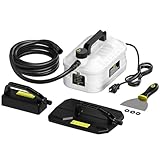
- Efficient Wallpaper Removal: Wallpaper steamer generates steam in about 15 minutes to soften stubborn adhesive, allowing wallpaper to peel away with less scraping and reduced wall damage, ideal for renovation, repainting, and DIY wall preparation
- Long-lasting Continuous Steam Power: Wallpaper remover steamer delivers up to 2 hours of continuous steam from a large-capacity tank, allowing you to complete bedrooms, living rooms, and large wallpaper removal projects without frequent refilling
- Chemical-Free & Family-Safe Cleaning: Wall paper steamer removal uses only water to loosen wallpaper glue without harsh chemicals, ideal for family homes, rental turnovers, nurseries, and indoor remodeling where air quality and safety matter
- Dual Steam Plates for Precision Work: Wallpaper remover includes large and small steam plates for wide surfaces and tight spaces like corners and edges, so you’ll be able to tackle nearly any wallpaper removal or redecorating project with ease
- Complete DIY Kit Ready to Use: Wall paper remover includes a full accessory set with steam hose, dual steam plates, scraper, and sealing gaskets, making setup easy for homeowners, landlords, contractors, and DIY users
Moisture, plaster, and the problem behind the wallpaper
Wallpaper can conceal a building defect. Dampness may come from plumbing, exterior water entry, condensation, drainage, or another mechanical or structural cause. The National Park Service guidance specifically warns that moisture can indicate a wet wall behind the paper and recommends investigating the cause. Adding steam before that investigation can spread moisture into plaster and paste, making the wall harder to diagnose and potentially weakening more material.
Excessive dryness can also affect old paste. That does not mean a dry wall should be deliberately humidified or soaked; it means the adhesive’s behavior is not predictable from age alone. Treat every change in moisture as a potential material change, and reassess rather than repeating the same treatment with more heat or water.
Lead and other safety issues beneath old paper
The historical technical report raises the possibility of old leaded paint beneath wallpaper. Because that report is historical, its warning does not provide current permissible work practices, testing requirements, containment rules, or disposal instructions. Those requirements vary by jurisdiction and building type.
If lead is plausible, consult current local or national guidance and a qualified professional before disturbing the layers. Do not sand, dry-scrape, score, or use a removal method that creates dust or chips based solely on advice intended for ordinary wallpaper. The same caution applies if the building has unknown coatings, friable material, or occupants who are especially vulnerable to contamination.
Common mistakes and safer corrections
| Mistake | Why it can fail | Correction |
|---|---|---|
| Assuming every wallpaper can be steamed | Steam may not penetrate painted or water-resistant paper and may be ineffective in some cases | Identify the surface first and treat steam as a localized, conditional test |
| Scoring deeply to speed up a slow removal | Cuts can reach the finish or plaster and increase the area exposed to moisture | Stop and reassess; do not escalate tool pressure simply because progress is slow |
| Soaking a wall that shows damp marks | Moisture may be evidence of a leak or other underlying problem | Investigate and correct the cause before adding water |
| Pulling through resistance | The paper may be bonded more strongly than the plaster surface | Use minimal force and stop at any plaster or finish movement |
| Treating historic paper like disposable renovation material | Removal can destroy irreplaceable evidence | Document it and consult an experienced paper conservator |
| Ignoring old paint beneath the paper | Disturbance may create a lead-safety hazard | Follow current jurisdiction-specific guidance and use qualified assistance |
| Assuming one successful test proves the whole wall is safe | Layers, paste, moisture, and plaster condition can change across a room | Reinspect each materially different area before proceeding |
How to choose the right professional
Ask for the person’s relevant experience, not merely a general decorating credential. A paper conservator is the appropriate specialist when the wallpaper itself may have historic value. A preservation contractor or plaster conservator is useful when the substrate is unstable, damp, or architecturally significant. A lead professional may be needed when suspect paint could be disturbed. For a complex wall, these roles may need to coordinate rather than substitute for one another.
Give the professional your photographs, building age if known, locations of dampness or movement, and any test results. Explain whether the goal is preservation, safe removal, or preparation for a new finish. That information helps avoid an irreversible removal being undertaken before the project’s purpose is clear.
Quick Recap
What the evidence does—and does not—establish
- There is no established universal method that removes every vintage wallpaper without risking plaster.
- A historical government report describes steam plus a penetrant for some non-painted, non-water-resistant papers.
- The same report says scoring may help with water-resistant or painted-over paper and that steaming may fail in some cases.
- Those method descriptions do not demonstrate safety for fragile historic plaster or validate current products.
- National Park Service guidance supports investigating dampness and using experienced paper conservators for valuable historic wallpaper.
- The possibility of old leaded paint requires current, local safety advice rather than improvised removal instructions.
- No published success-rate statistic or named-person quotation establishes one method as best.
Sources and standards
- National Park Service and Government Publishing Office, Wallpapers in Historic Preservation — historic wallpaper care, moisture concerns, and the role of experienced paper conservators.
- National Bureau of Standards, U.S. Department of Commerce, NBS Technical Note 770 — historical discussion of steam, penetrants, scoring, limitations, and possible leaded paint beneath wallpaper.
- U.S. National Park Service, The Secretary of the Interior’s Standards for the Treatment of Historic Properties: Restoration as a Treatment and Standards for Restoration — the principle that treatments causing damage to historic materials will not be used.

Product prices and availability are accurate as of the date/time indicated and are subject to change. Any price and availability information displayed on Amazon at the time of purchase will apply.
Do these 3 things before closing this tab:
1Fix the driver behind crashes, sound loss and screen glitches2Clear out junk files and repair common Windows errors3Scan for outdated or missing drivers - takes under a minute
