Outdated Drivers Are Slowing You Down
One free scan finds every outdated or missing driver and matches the right update for your exact hardware.Free scan · exact hardware match
PC Slower Than It Used to Be?
A free scan shows the junk files, broken settings and background clutter dragging Windows down - then fixes them in one click.Free scan · Windows 10 & 11
ThatPainter is reader-supported. When you buy through links on our site, we may earn an affiliate commission. Learn More
Do not automatically dig out an overgrown shrub. A healthy, multi-stemmed deciduous shrub can often be restored by removing its oldest stems over several years or, when the species responds well, by cutting it back hard during dormancy. The right choice depends on the shrub’s identity, flowering habit, health, age of the woody base, and your willingness to lose flowers temporarily.
First identify the plant and inspect its canes. Then choose staged renewal for a lower-risk transition, hard rejuvenation for a suitable vigorous shrub that can regrow from its base, or replacement when the plant is weak, diseased, unsuitable for renovation, or too woody to respond reliably.
Recommended Free Tools
As an Amazon Associate I earn from qualifying purchases.
What to check before pruning an overgrown shrub
“Overgrown” describes size, not necessarily poor health. A shrub may be tall, crowded or bare inside yet still have vigorous roots and living buds capable of producing a new framework. Before making a major cut, answer four questions.
Is it a multi-stemmed deciduous shrub?
Hard rejuvenation is most clearly suited to multi-stemmed or cane-type deciduous plants that naturally send up new shoots from the base. Common examples in extension guidance include lilac, forsythia, beautybush, mockorange, viburnum and dogwood. These plants can often replace old canes with new basal growth.
#1 Best Overall

- CLEAN CUTS FOR LIVE GROWTH: Bypass blade design is ideal for pruning delicate flower stems and green growth, helping reduce crushing and plant damage while cutting stems and small branches up to 5/8” in diameter
- BLADES STAY SHARP: Precision-ground steel blades are engineered to stay sharp through heavy use, & all-steel construction provides lasting durability, delivering consistent cutting performance for regular garden maintenance & detailed pruning tasks
- SMART BLADE FEATURES: Blade coating helps reduce friction for smoother cuts, minimizes sap buildup & gumming, and enhances resistance to rust for longer-lasting performance in outdoor conditions; sap groove keeps the blades from sticking during use
- COMFORTABLE, CONTROLLED GRIP: Ergonomic, non‑slip handle enhances control and reduces hand fatigue during repetitive cuts; easy‑open safety lock secures the blade for safe transport and compact storage
- INCLUDES: (1) Fiskars Bypass Pruning Shears designed for everyday gardening and plant care and backed by a Lifetime Warranty. Product care tips: Wipe pruners clean after each use to prevent sap build-up and lightly oil blade for longer product life
Do not assume the same treatment works for every tree, shrub or hedge. Single-trunked plants, grafted plants with a vulnerable top, and shrubs that do not regenerate from their base may be permanently disfigured by a low cut. Evergreen shrubs require separate species-specific advice; the Royal Horticultural Society notes that some can be renovated, but recommends checking the individual plant’s guidance.
What’s actually slowing this PC down?
Pick the symptom - the matching free tool is one click away.
Is the plant healthy enough to recover?
Look for flexible young stems, live buds, normal leaf color during the growing season and no evidence of a spreading disease or severe root problem. A weak or sickly shrub is a poor candidate for drastic pruning because cutting removes much of its remaining leaf area without fixing the underlying cause. Colorado State guidance also cautions that extremely overgrown shrubs with very large, woody bases may not respond well.
Correct soil, drainage, light, irrigation or pest problems before deciding that size alone is the issue. If the shrub is declining, badly diseased or planted in a location that cannot support it, replacement is often more reliable than renovation.
When does it flower?
Flowering time determines what you sacrifice. Spring-flowering shrubs commonly form their flower buds on older wood. A severe dormant-season cut can therefore remove the coming season’s flowers, and heavy pruning may reduce or eliminate bloom for two or three years in some cases. Shrubs that flower on new growth are usually easier to renovate without losing an entire flowering cycle, but confirm the species before cutting.
Choose between staged renewal, hard rejuvenation and replacement
| Approach | Best fit | How it works | Main trade-off |
|---|---|---|---|
| Staged renewal | A healthy shrub whose form or some flowering should be preserved, or a plant whose response is uncertain | Remove selected oldest stems at ground level over two or three years, while retaining and thinning vigorous new shoots | Takes longer and leaves part of the old structure in place during the transition |
| Hard rejuvenation | A vigorous, suitable, multi-stem deciduous shrub that can regrow from its base | Cut the canes low during the appropriate dormant-season window, then select and thin the new shoots | Creates a dramatic temporary change and can remove flowers for one or more seasons |
| Replacement | A weak or sickly plant, unsuitable species, or shrub with a very large woody base and poor expected response | Remove the old plant after diagnosing site problems; replant only when conditions are suitable | You give up an established plant, although a valued shrub may sometimes be propagated first |
Staged renewal is the conservative default when you are unsure. Hard rejuvenation is not simply a more enthusiastic version of ordinary trimming; it is a species- and condition-dependent reset.
What’s actually slowing this PC down?
Pick the symptom - the matching free tool is one click away.
Rank #2

- LONG-LASTING SHARPNESS: Japanese SK5 bypass blade with titanium coating is tested through 5,000 cuts to maintain a sharp edge and deliver clean, consistent cuts on live stems and branches
- BUILT FOR 5X DURABILITY: Heavy-duty 3-layer titanium-coated SK5 blade resists wear and corrosion, while anodized aluminum handles and high-hardness screws reinforce the pruner. Repeated cutting tests show up to 5X the durability of standard pruners
- POWERFUL 4X LEVER CUTTING: The optimized lever-action design multiplies cutting force up to 4X, making thicker branches easier to prune with less hand effort. Cuts branches up to 3/4" with smooth, controlled power for everyday garden pruning
- ARTHRITIS & SENIORS FRIENDLY: Ergonomic non-slip rubber handles cushion pressure and provide a secure, comfortable grip, helping reduce hand and wrist fatigue. A comfortable hand pruner for seniors, arthritis and longer pruning sessions
- ONE-HAND SAFETY LOCK: The easy-access safety lock opens and closes with one hand for faster trimming, then securely holds the blades closed for safer carrying and storage
When to prune: use dormancy, flowering and local climate together
There is no single calendar date that fits every region. Iowa State and Minnesota Extension commonly recommend late winter or early spring for rejuvenating appropriate deciduous shrubs, before new growth begins. Iowa State describes a regional hard-renovation window of March or early April and a cut approximately 4–6 inches above the ground. That timing is guidance for its climate, not a universal rule.
UK-oriented Royal Horticultural Society advice gives autumn to spring, usually November through March, for deciduous renovation and spring for evergreen renovation. The difference reflects climate and horticultural context. In any region, avoid cutting when the ground is frozen, when severe cold is imminent, or when new growth has already begun and a fresh cut would be exposed to damaging conditions.
- Spring-flowering shrubs: expect to lose many or all flowers after a hard cut because older buds have already formed. Staged renewal preserves more bloom.
- Summer-flowering shrubs: renovation before spring growth often gives the plant time to produce flowering shoots, but verify the species’ habit.
- Evergreens: do not transfer deciduous-shrub timing or cut heights automatically. Check species-specific local guidance.
- Uncertain identification: delay a major cut until you can identify the plant or consult a local extension service, nursery professional or horticultural society.
How to renovate gradually over three years
Staged renewal removes the oldest wood while the shrub still has enough foliage and structure to function. Iowa State’s example uses a three-year sequence. Use clean, sharp tools and make each cut at ground level or at the plant’s base, without leaving long stubs.
- Inspect and mark stems. Identify the thickest, oldest, least productive canes. Prioritize stems that are crossing, damaged, declining or crowded in the center. Leave younger, well-placed stems that carry useful foliage or flowers.
- Remove about one-third in year one. In late winter or early spring, cut roughly one-third of the large, old stems to the ground. Do not merely shorten their tops; the purpose is to remove aging framework and make room for basal replacement shoots.
- Thin new growth as it appears. During the growing season, keep the strongest, best-spaced shoots and remove weak, excessively crowded or poorly positioned sprouts. Avoid allowing a dense thicket of replacement stems to develop.
- Remove about half of the remaining old stems in year two. Repeat the process the following dormant season, again choosing the oldest and least useful canes. Retain enough younger growth to maintain the desired outline.
- Finish in year three. Remove the rest of the old framework and continue thinning the replacement shoots. By the end of the sequence, the shrub should consist primarily of younger, better-spaced stems.
The exact number of stems is less important than the principle: remove the oldest wood in stages and guide the new growth instead of letting every shoot remain. This approach takes longer than a hard cut, but it reduces the visual shock and gives you opportunities to reassess the plant’s vigor each season.
How to perform a hard rejuvenation cut
Use this method only after confirming that the shrub is a healthy, suitable, multi-stemmed deciduous species. Minnesota Extension describes cutting all canes close to the ground in early spring for very overgrown shrubs. Iowa State gives 4–6 inches as a regional example. The RHS gives approximately 10–20 cm (4–8 inches) or low branches in its UK guidance. These measurements are not interchangeable prescriptions for every plant; follow species-specific local recommendations.
Rank #3

- Drop-forged construction delivers exceptional durability and sturdiness for long-term heavy garden use.
- Premium SK-5 steel blade with titanium coating and ultra-fine polishing ensures sharpness, rust resistance, and smooth cutting.
- Ergonomic non-slip aluminum handles wrapped with PVC offer lightweight strength, comfort, and reduced hand fatigue.
- Built-in sap groove effectively channels away sap to prevent sticking and keep blades clean during pruning.
- Capable of cutting branches up to 3/4 inch in diameter, ideal for live plants, stems, and light woody pruning tasks.
- Prepare the site. Remove ties, debris and competing weeds around the base so you can see every cane. Water normally if the soil is dry, but do not work in waterlogged ground.
- Choose the dormant window. Make the cut in the locally recommended late-winter, early-spring or autumn-to-spring period for deciduous plants. Avoid an active growth flush or weather that threatens freshly cut stems.
- Cut each cane low. Remove the stems close to the ground, using a tool capable of cutting that diameter cleanly. Avoid ragged tears and unnecessary stubs. A few inches of stem may be appropriate under one regional recommendation, while another advises 4–8 inches; the plant and local climate decide the final height.
- Clean up and label the plant. Remove cut material so disease or pest problems are not left at the base. Mark the shrub if its identity is uncertain before new shoots obscure the structure.
- Wait for replacement shoots. New growth may emerge from the base and lower stems. Do not assume every shoot should remain.
- Select a framework. Keep strong, well-spaced shoots positioned to form the future shrub. Remove excess, weak, rubbing or badly placed growth as it develops.
- Feed and mulch appropriately. The RHS recommends feeding and mulching in spring following hard pruning. Keep mulch away from direct contact with stems, and do not use fertilizer as a substitute for correcting poor drainage, drought or disease.
A hard cut can leave the plant looking bare for a time and may delay flowers. Recovery varies with species, root health, weather and aftercare; no pruning method guarantees a successful restart.
Tools and cutting technique
Selective renovation requires control rather than a uniformly clipped surface. Maryland Extension recommends hand pruning shears instead of hedge shears for formal shrubs when making individual, deliberate cuts. Minnesota’s renewal method likewise depends on removing particular old stems, not shaving the outside of the plant.
- Use sharp, clean hand pruners for small shoots and fine heading cuts.
- Use a larger bypass lopper or pruning saw when a cane exceeds the safe capacity of hand pruners. No single tool is appropriate for every stem diameter.
- For a heading cut that shortens a stem rather than removes it, cut just above a healthy bud or branch and avoid leaving a long stub.
- Disinfect tools when moving between plants with suspected disease, and keep blades sharp so cuts are smooth.
- Wear eye protection, gloves and long sleeves when old branches are stiff, thorny or under tension.
Aftercare: guide the new shrub instead of letting it become crowded again
Renovation is a multi-season process. The first flush of shoots often arrives unevenly, and selecting the future framework is as important as making the initial cut.
Thin for spacing and strength
Retain vigorous shoots that are distributed around the base and point outward into open space. Remove weak shoots, tightly clustered sprouts and stems that rub or compete. A smaller number of well-spaced canes is easier to maintain than a mass of identical shoots.
Protect the root zone
Maintain consistent moisture while the plant rebuilds its canopy, especially during dry weather, but avoid saturated soil. Renew a shallow organic mulch layer in spring, keeping it off the stems. Do not stimulate stressed or diseased plants with heavy feeding.
Rank #4
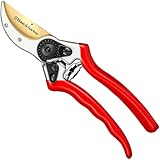
- Sharp, Clean Cuts Every Time – Engineered from Japanese grade, high-carbon steel, ClassicPRO bypass pruning shears for gardening stay sharp and make precise cuts that encourage healthy growth and won’t damage your plants
- No More Hand Fatigue and Wrist Strain – ClassicPRO gardening shears are designed with an ergonomic handle, non-slip grips, and shock-absorbing pads, making them lightweight and comfortable for smaller hands, seniors, and arthritis sufferers
- Rust and Corrosion Resistant – Tired of garden shears that rust after just a few uses? Our heavy duty pruning shears are constructed from anodized aluminum with titanium-coated blades to reduce friction and protect against rust and corrosion
- One Gardening Pruner, Many Uses - Preferred by professional landscapers and master gardeners, ClassicPRO clippers for gardening are adjustable general-purpose secateurs and branch cutters to trim trees, plants, and indoor flowers up to 1” thick
- Designed to Last Season After Season – Tired of cheap, low-quality hand pruners for gardening? Our heavy duty handheld garden clippers are designed for durability and longevity so you always have reliable shears
Expect a temporary change in size and flowers
Hard pruning changes the shrub’s proportions immediately. The plant may be much shorter and less leafy for part of the season. Spring bloom can be absent after severe pruning, and Iowa State notes that heavy pruning may reduce or eliminate flowers for two or three years in some cases. Staged renewal is the better choice when preserving an established outline or regular bloom matters.
Independent reader supportYour contribution helps us test, update, and keep practical guides available for everyone.When replacement is the better decision
Choose replacement rather than renovation when the plant is persistently weak, sickly, badly damaged or clearly unsuitable for a basal regrowth method. An extremely old shrub with a massive woody base may produce few useful shoots after a hard cut. Also reconsider renovation if the shrub is in the wrong light, has chronic drainage problems, or is outgrowing a location that cannot accommodate its mature size.
If the plant has sentimental or unusual value, the RHS suggests propagating a valued old shrub before hard pruning when feasible. A rooted cutting or other suitable propagation method can preserve the plant’s genetics while allowing you to establish a healthier specimen in a better site. Propagation success depends on species and technique, so obtain plant-specific instructions.
Troubleshooting common renovation problems
“The shrub produced dozens of shoots.”
That is a common response to a hard cut. Thin progressively, retaining the strongest, best-positioned stems rather than allowing every basal shoot to mature. Removing excess growth early prevents a new overcrowded framework.
“There are no flowers this year.”
Severe pruning may have removed older flower buds, especially on spring-flowering shrubs. Check whether the plant is producing healthy foliage and new stems before judging the renovation. Flowering should be assessed against the species’ normal flowering wood, not against the first season after a reset.
Best Value

- · ULTRA-SHARP SK5 STAINLESS STEEL - Engineered with premium SK5 stainless steel, these heavy duty pruning shears deliver razor-sharp precision and maximum hardness. The rust-resistant blades are designed to stay sharp longer, effortlessly resisting corrosion and sap buildup for smooth, friction-free garden shears performance year after year.
- · CLEAN CUTS FOR 1 INCH THICK BRANCHES - Say goodbye to crushed stems and ragged bark. Our professional bypass pruning shears slice through thick branches up to 1 inch like butter(as the videoes show). By ensuring perfectly clean cuts without leaving debris, it helps your roses, fruit trees, and indoor plants heal faster and stay healthy.
- · ERGONOMIC COMFORT FOR ARTHRITIS & WEAK HANDS - No more hand fatigue or wrist strain! Featuring a non-slip SoftGrip handle with premium cushioning, these garden clippers absorb pressure with every cut. It is the ultimate arthritis friendly hand pruner for seniors or anyone with limited hand strength to enjoy yard work pain-free.
- · 100% LEFT-HANDED FRIENDLY & SAFETY LOCK - Unlike standard garden scissors that flop and crush stems when used left-handed, our uniquely balanced hand pruners work flawlessly for both right and left-handed users. Equipped with a secure, easy-to-operate safety lock to protect your fingers and ensure safe storage.
- · HIGH-VISIBILITY RED & LIFETIME WARRANTY - Never lose your tools in the grass again! The vibrant high-visibility red handle makes these plant shears pop instantly in any backyard setting. We stand behind our industrial-grade quality—enjoy 100% risk-free shopping backed by our ironclad Lifetime Warranty. Perfect gardening gifts for women and men!
“Only weak or uneven shoots appeared.”
Recheck species suitability, root-zone conditions, light, moisture and disease. A poor response can indicate that the shrub was not a good candidate or that an underlying stress remains. Do not keep cutting lower in search of a guaranteed recovery.
Free tools Windows power users keep installed
One-click scans. No signup required.
“The shrub is still too large after staged pruning.”
Continue removing the oldest remaining framework in the next planned stage and thin replacement shoots. If the mature size is fundamentally incompatible with the site, replacement with a better-sized plant may be more sustainable than repeated severe pruning.
A practical decision checklist
- Identify the shrub and confirm whether it is deciduous, multi-stemmed and capable of basal regrowth.
- Inspect for disease, root stress, severe dieback and an excessively woody base.
- Record whether it flowers on old wood or new growth.
- Check the dormant-season timing recommended for your region and species.
- Choose staged renewal if you need to preserve form, flowers or a safety margin.
- Choose hard rejuvenation only for a vigorous, suitable shrub and accept a temporary loss of size and bloom.
- Use hand pruning for selective cuts and tools sized to each stem.
- Plan several seasons of shoot selection, thinning, moisture management and mulch.
- Replace the shrub when health, species or site conditions make recovery unlikely.
The practical answer to “What is the best way to prune large, overgrown shrubs?” is therefore conditional: renew old canes gradually when you want control and continuity; rejuvenate hard when a healthy deciduous shrub is a strong candidate for basal regrowth; and replace when the plant’s condition or biology makes either approach unrealistic.
Frequently Asked Questions
Can every overgrown shrub be cut to the ground?
No. Hard rejuvenation is most appropriate for healthy, multi-stemmed deciduous shrubs that regrow from the base. Evergreens, single-trunked plants, weak shrubs and plants with very woody bases require species-specific advice or may be better replaced.
Will a hard cut kill my shrub’s flowers?
It can remove the coming season’s flowers, particularly on spring-flowering shrubs that carry buds on older wood. Heavy pruning may reduce or eliminate bloom for two or three years in some cases.
Should I renovate gradually or all at once?
Use staged renewal when preserving form or some flowering matters, or when the plant’s response is uncertain. Use a hard cut only when the shrub is healthy, suitable and able to regrow from its base.
What should I do with new shoots after rejuvenation?
Retain strong, well-spaced shoots that can form the future framework, and remove weak, crowded, rubbing or poorly positioned growth as it develops.
Quick Recap

Product prices and availability are accurate as of the date/time indicated and are subject to change. Any price and availability information displayed on Amazon at the time of purchase will apply.

