Free tools Windows power users keep installed
One-click scans. No signup required.
ThatPainter is reader-supported. When you buy through links on our site, we may earn an affiliate commission. Learn More
The right stone is the one whose verified properties, detailing and installation satisfy the actual exposure and loads while delivering the appearance the project can accept. Treat the stone, anchors, support, interfaces and structure as one building assembly—not as a finish chosen from a photograph. Start with the use and context, obtain current test evidence for the proposed stone and finish, then document the complete support and attachment system against applicable codes.
As an Amazon Associate I earn from qualifying purchases.
Why a beautiful stone sample is not a performance specification
Natural stone is a family of materials, not a single performance category. Two slabs that look similar can differ in absorption, density, strength, bending behavior, abrasion resistance, weathering response and variability. Even the same named stone can change with quarry location, bench, lot, finish, thickness and fabrication.
What’s actually slowing this PC down?
Pick the symptom - the matching free tool is one click away.
Appearance therefore establishes design intent, not structural or durability performance. A color board cannot prove that a panel will resist wind pressure, that a floor will tolerate expected traffic, or that a facade will remain compatible with its anchors and backing wall. Those questions require property data for the proposed material and an engineering review of the assembly.
#1 Best Overall
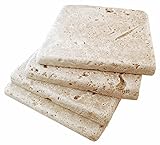
- Tile Dimensions and Construction: 4x4 Tumbled Travertine tile with rounded edges and 3/8 inches thickness
- Natural Stone Characteristics: Rustic look with porous texture and naturally occurring holes, every piece is unique in coloring with inherent variations in color and veining patterns
- Versatile Application: Suitable for walls, trim, and floors in hallways, kitchens, baths, and showers
- Usage Flexibility: Designed for both residential and commercial use
- Premium Quality Selection: Hand selected premium quality natural stone tile
ASTM C1528/C1528M-26 is a general dimension-stone selection guide for professionals who select, specify, install, purchase, fabricate and supply natural-stone construction products. Its organizing principle is practical: define the application first, then select and document material and systems that suit it. The current listing was updated July 15, 2026; verify the edition in force when your specification is issued.
Start by defining the use and context
Before comparing colors or quarry names, write a short performance brief. It should identify what the stone does, where it is located and what it will experience. A useful brief answers the following questions.
- Location: interior or exterior; wall, floor, stair, countertop, rainscreen, curtain-wall infill, retaining element or another application.
- Exposure: water, freeze-thaw cycles, salts, pollutants, ultraviolet light, thermal movement, cleaning chemicals, impact and expected traffic.
- Loads and actions: dead load, wind, seismic movement, live load, concentrated loads, handling loads and any impact or blast requirement applicable to the project.
- Geometry: panel or tile dimensions, thickness, unsupported span, edge conditions, penetrations, joints and tolerances.
- Appearance: base color, veining, grain direction, finish, reflectance, acceptable range of natural variation and the intended scale of pattern.
- Project constraints: code jurisdiction, sourcing, fabrication capacity, schedule, maintenance plan, access for replacement and budget.
This brief prevents a common error: allowing an attractive sample to become the de facto specification before anyone has defined the service conditions. If the use changes—from an interior feature wall to an exterior panel, for example—the evidence and detailing must be reconsidered rather than carried over by assumption.
Recommended Free Tools
Separate stone type, source and finish
Identify the material precisely
Record the geological or commercial stone type, quarry or source, processor, finish and intended thickness. “Marble” or “granite” alone is not enough to identify a production material. Ask the supplier to state the source and lot represented by each test report and sample, and to explain whether the finish tested is the finish being specified.
Use the applicable stone-specific specification
ASTM C615/C615M-23 addresses granite dimension stone and identifies relevant physical-property requirements including absorption, density, compressive strength, modulus of rupture, abrasion resistance and flexural strength. ASTM C503/C503M-23 is the corresponding current listed specification for marble, with its own requirements. Do not apply a granite requirement to marble, or treat a value reported for one stone as representative of another type.
| Material reference | What it provides | How to use it |
|---|---|---|
| ASTM C615/C615M-23 | Granite dimension-stone specification; addresses categories such as absorption, density, compressive strength, modulus of rupture, abrasion resistance and flexural strength. | Check the current standard and test context for the proposed granite, finish, thickness and application. Do not transfer its limits to another stone type. |
| ASTM C503/C503M-23 | Marble dimension-stone specification with requirements specific to marble dimension stone. | Use the marble specification and its referenced methods for the proposed material. Confirm that supplier data identify the actual source and product. |
| ASTM C1528/C1528M-26 | General selection guidance for dimension-stone construction products and the professionals who select, specify, install, purchase, fabricate and supply them. | Use it to structure the selection process, documentation and coordination with related materials and assemblies. |
| ASTM C1242-26 | Guidance for stone attachment systems, including design considerations, documentation, materials, anchors, testing, compatibility and workmanship. | Apply it to the complete support and anchorage design, especially where performance is uncertain or system interfaces are complex. |
The standards identify property categories and design considerations; they do not make a particular quarry suitable for every project. Obtain the current editions and applicable test methods rather than copying a numeric limit from an old report or an unrelated stone.
Rank #2

- 3" x 6" Tumbled natural stone travertine, Creamy light tones, each piece is different from each other
- Aged Surface and edges evoke a simpler time with more depth less fuss
- Real materials last longer and age better
- Perfect for modern farmhouse look or your arts and crafts projects
- 1pc covers 0.125 sqft, 8 pcs cover 1 sqft, 40 pcs cover 5 sqft. Worry free ordering from Squarefeet Depot, if any damage we replace it
Build an evidence package for the proposed stone
Request current, traceable test data
Ask for reports that identify the stone, source, finish, specimen orientation, thickness, conditioning, test method, laboratory and date. A report for an unnamed “similar” stone is a lead for investigation, not proof of compliance. Where the project has unusual exposure or loading, specify additional testing with the design team and laboratory.
Interpret properties by the failure mode they address
- Absorption and moisture evidence: informs water uptake and moisture-related detailing, but one moisture value is not a complete durability assessment. Review drainage, joints, sealants, backing walls and freeze-thaw or salt exposure together.
- Density and self-weight: affect support reactions, handling and anchorage demand. Use the value for the proposed material and thickness in structural calculations.
- Compressive strength: can be relevant to bearing and localized compression, but it does not by itself establish resistance to bending, anchors or facade loads.
- Modulus of rupture and flexural strength: address bending behavior. Relate the test orientation and specimen size to panel geometry, support spacing and expected load paths.
- Abrasion resistance: matters where walking, wheeled traffic, grit or repeated cleaning can wear the finish. Match the evidence to the actual exposure rather than using a generic floor assumption.
- Thermal and movement behavior: may govern joints, restraint and interface detailing even when basic strength values are adequate. Coordinate movement with the structure, backup wall and sealant system.
Do not use a single property as a proxy for all durability. A low absorption value does not establish abrasion resistance; a high compressive value does not establish safe panel bending; and a favorable laboratory result does not validate an incompatible anchor or backing system.
Account for natural variability
ASTM C1242-26 calls for pertinent property ranges and variability to be determined by testing and statistical methods evaluated using sound engineering principles, and it emphasizes recent test data where applicable. Request enough data to understand the spread, not only a best or average result. Discuss how lot changes, orientation, discontinuities, veins, fissures and fabrication operations could affect the critical property.
When the performance record is unknown or questionable, plan confirmatory testing and an engineering review before approving fabrication. A single certificate should not be treated as a permanent guarantee for every future shipment from a quarry.
Design the stone and its supports as one assembly
Stone cladding does not carry loads in isolation. Panels, kerfs or inserts, anchors, rails, clips, mortar or adhesive, drainage paths, insulation, sheathing, curtain-wall members and the structural frame interact. ASTM C1242-26 states in §4.3: “Stone and its support systems are part of a building’s skin and shall be compatible with the behavior and performance of other interfacing systems, such as the curtainwall and superstructure frame.”
The Tool Desk
Outbyte Driver Updater FREEScan for outdated or missing drivers - takes under a minuteDriver Scan →Outbyte PC Repair FREEClear out junk files and repair common Windows errorsFree Scan →Document the load path
Show how gravity, wind, seismic movement, handling and accidental actions travel from the stone through anchors and supports into the structure. State which components carry vertical load, which resist lateral load, and how tolerances are accommodated. Check local stresses at holes, kerfs, edges and bearing points, not only the nominal panel strength.
Rank #3

- Easy DIY, Just Peel & stick, cut with tin snip , utility knives or hand saws, saving large amount on labor.
- 3"x6" individual subway tile, plans the layout freely to your imagination
- Waterproof, heat resistant, stain resistant, anti-scratch, high impact, color fadeless, easy to clean, durable
- Suitable surfaces: painted gypsum/dry wall, ceramic tile, linoleum, glass, marble/granite, metal/steel, sealed/polished/painted wood
- Unsuitable surfaces: brick wall, oily glossy painted wall, textured wall and any uneven rough surfaces
Coordinate geometry and movement
Panel dimensions, thickness, support spacing and joint widths should be selected together. Provide movement joints and slotted or otherwise adjustable connections where required by the structural and enclosure design. Prevent rigid restraint from forcing the stone to accommodate movement intended for the frame or backup wall. Detail drainage and ventilation so water is not trapped behind the stone.
Review interfaces and materials
Confirm compatibility among anchors, fasteners, membranes, sealants, mortars, adhesives, insulation and the stone finish. Consider corrosion, staining, galvanic interaction, alkali exposure, differential movement and access for inspection. The attachment guide covers material considerations, anchor applications, documentation and installation workmanship; use those topics to organize the interface review.
Specify installation workmanship
State substrate tolerances, anchor setting, torque or tightening requirements where applicable, joint preparation, sealant installation, protection during construction, cleaning methods and inspection hold points. A sound design can fail through poor drilling, over-tightening, inadequate bearing, contaminated bonding surfaces or unapproved field alterations.
Control appearance without pretending natural variation is a defect
Define the visual range
Describe color, veining, grain direction, finish, gloss, edge profile, book matching or running pattern, and the acceptable range of variation. Use representative samples that show both the preferred appearance and the natural limits the project will accept. A single small sample rarely communicates full-scale movement in veining or the distribution of color.
Relate samples to the quarry lot and fabrication
Confirm that the approved sample comes from the source and production period intended for the work. Ask how slabs will be selected, sequenced, cut and labeled. Review dry layouts or a mockup when scale, joint rhythm, tonal transitions or repair visibility are important. Record acceptance criteria in the submittal so a later shipment is not judged against an unrecorded expectation.
Coordinate finish and maintenance expectations
Finish selection affects slip, reflectance, cleaning response, visible wear and how the stone reads under changing light. Specify cleaning products and protection methods that will not damage the finish or introduce staining. Maintenance requirements should be agreed with the owner before approval, not discovered after installation.
Rank #4

- The rock plate can let the reptile grind the nail easily.It can be used as a basking platform.
- This Reptile Basking Platform made of high quality rock,which is with hard texture, natural color,the rough edges polished by hand.
- The bottom of the rock slab is designed with four EVA pads to prevent slip .
- The Reptile Basking Platform will absorb water and then slowly volatile, which can improve the humidity of the turtle box.
- Size: 40cm x 25cm
A step-by-step specification and quality-assurance workflow
- Define the application. Record location, function, exposure, loads, geometry, desired appearance, code jurisdiction and project constraints. Identify the consequences of failure and the areas that require inspection or mockup.
- Identify candidates. Name the stone type, quarry or source, finish and proposed thickness. Request current test data tied to that material, and ask the supplier to explain any gaps or substitutions.
- Apply the correct standards. Review ASTM C615/C615M-23 for proposed granite, ASTM C503/C503M-23 for proposed marble and ASTM C1528/C1528M-26 for selection guidance. Use the current editions and methods; do not combine values from different stone types or editions.
- Evaluate the full assembly. Design and document panels, supports, anchors, movement, joints, drainage, backing wall and structural interfaces. Check compatibility and code compliance with the structural and enclosure professionals.
- Set visual and workmanship controls. Define samples or mockups, acceptable appearance variation, panel sequencing, fabrication tolerances, installation procedures, protection, cleaning and inspection responsibilities. Include submittal requirements and hold points in the project documents.
- Close evidence gaps. If a property, interface or installation condition is unknown or questionable, obtain targeted testing and a review by a stone specialist and qualified structural or enclosure professionals before release for fabrication.
Use a comparison matrix instead of a popularity ranking
A useful comparison records evidence against the project brief. It does not rank stones as universally “best.” The following structure can be inserted into a submittal review or design meeting.
| Decision axis | Questions to answer | Evidence to record | Approval test |
|---|---|---|---|
| Mechanical | Can the proposed material and geometry resist gravity, wind, seismic and handling actions? | Current strength and bending data; specimen orientation; engineering calculations; anchor and support design. | Values and calculations address the actual stone, thickness, span and load path. |
| Moisture | How will water enter, drain, dry and interact with the stone and adjacent layers? | Absorption and other relevant moisture data; drainage and joint details; exposure assessment. | No single property is being used as a substitute for enclosure design. |
| Wear and exposure | Will traffic, impact, grit, chemicals, salts, freeze-thaw or ultraviolet exposure change the finish or integrity? | Abrasion and exposure-relevant testing; cleaning and maintenance requirements. | Evidence matches the location and service conditions. |
| Aesthetic | What color, veining, finish, scale and variation are acceptable? | Representative samples, mockup, quarry-lot identification, layout and sequencing plan. | Stakeholders approve a defined range, not an undefined ideal. |
| Assembly and detailing | Are supports, anchors, movement joints and interfaces compatible? | Drawings, calculations, anchor data, interface details, tolerances and installation method. | Stone and adjacent systems are reviewed together. |
| Compliance and delivery | Can the team source, fabricate, inspect, install and maintain the specified material within project constraints? | Code review, submittals, contractor qualifications, schedule, maintenance plan and procurement records. | Responsibilities and acceptance criteria are documented before procurement. |
Codes, qualifications and quality assurance
Stone applications must comply with the building codes and regulations applicable to the project. Those obligations vary by jurisdiction and occupancy; a material specification cannot replace the project engineer’s code analysis. Related materials and assemblies also need evaluation for compatible interactive behavior.
The Natural Stone Institute’s Quality Assurance Specification Language can help teams structure sample language for exterior cladding and qualified commercial contractors. Treat that document as sample language, not as a universal code, mandatory specification or endorsement. Adapt it to the project’s jurisdiction, procurement model, inspection plan and design responsibility.
Identify who reviews shop drawings, who approves stone samples and mockups, who verifies anchors and substrate conditions, and who records nonconformances. Require written approval for substitutions. If a quarry lot, finish, thickness, anchor or backing condition changes, trigger a renewed technical and visual review rather than assuming the original approval remains valid.
Common failure modes and corrective actions
| Observed problem | Likely gap | Corrective action |
|---|---|---|
| Panels crack near anchors or edges. | Local stresses, edge distances, drilling, torque or movement were not checked for the actual geometry. | Stop affected work, document the condition, review the load path and installation records, and obtain engineering direction before repair or replacement. |
| Color or veining differs sharply from the approved appearance. | Sample was not tied to the production lot, or acceptable variation was never defined. | Compare the shipment with the approved sample and mockup, record lot information, and apply the documented acceptance range. |
| Moisture staining or trapped water appears behind cladding. | Drainage, joints, flashing, ventilation or interface compatibility was incomplete. | Investigate the water path and drying strategy; do not assume a sealer alone resolves an enclosure defect. |
| Finish wears or becomes difficult to clean. | Exposure, abrasion, chemicals or maintenance procedures were not matched to the selected finish. | Confirm the service condition, cleaning products and finish evidence; revise the maintenance method or replace unsuitable material where necessary. |
| Field changes create inconsistent anchors or joints. | Installation tolerances and change-control requirements were unclear. | Require a documented field-change process, inspection hold points and engineer or designer approval for changes affecting performance. |
What the available evidence can—and cannot—tell you about cost and sustainability
The cited standards identify measured property categories and assembly considerations, but they do not provide a defensible, general comparison of stone durability, cost or environmental impact across all varieties. Avoid inserting generic claims such as “this stone lasts longer,” “this option is cheaper” or “this quarry has a lower footprint” without project-specific evidence.
For cost, obtain quotations that include quarrying, slab or block yield, fabrication, testing, packaging, transport, lifting, support systems, installation, protection, maintenance and likely replacement access. For environmental decisions, request a documented assessment appropriate to the project and compare equivalent functional performance, service life assumptions and transport boundaries. Keep those figures qualified by source, date, geography and scope.
Final approval checklist for the design team
- The use, exposure, loads, geometry and appearance range are written in the project brief.
- The stone type, source, finish, thickness and production lot are identified.
- Current, traceable test data address the proposed material and the relevant failure modes.
- Granite and marble requirements are taken from their respective current specifications, not interchanged.
- Variability and recent data have been considered using sound engineering judgment.
- Panels, anchors, supports, joints, drainage, backing wall and structural frame are documented as one assembly.
- Movement, tolerances, corrosion, staining, sealants, mortars, adhesives and maintenance interfaces have been reviewed.
- Samples or mockups establish an acceptable visual range and fabrication sequence.
- Codes, qualifications, submittals, inspections, workmanship and substitution procedures are assigned to named project participants.
- Unknown or questionable performance has been addressed through targeted testing and qualified technical review.
When these checks are complete, the project is no longer choosing stone by appearance alone. It is specifying a verified material and a coordinated assembly whose performance and visual intent can be managed through procurement, fabrication and installation.
Quick Recap

Product prices and availability are accurate as of the date/time indicated and are subject to change. Any price and availability information displayed on Amazon at the time of purchase will apply.

