Windows Errors? Fix Them Before They Spread
Free tools Windows power users keep installed
One-click scans. No signup required.
Repair common Windows errors and clear accumulated junk for a smoother, more stable PC - no reinstall needed.
Fix My PC Now →Free scan · no reinstall
ThatPainter is reader-supported. When you buy through links on our site, we may earn an affiliate commission. Learn More
As an Amazon Associate I earn from qualifying purchases.
Timber veneer is a thin layer of real wood, not a single finished product. The same species can look and perform very differently depending on how it was cut, matched, bonded to a substrate, edged, coated and documented for fire and environmental performance. For an architectural project, specify the complete veneered panel or component—not “oak veneer” alone—then approve the appearance and verify the assembly evidence before production.
Do these 3 things before closing this tab:
1Fix the driver behind crashes, sound loss and screen glitches2Repair Windows errors before they cause bigger problems3Scan for outdated or missing drivers - takes under a minuteWhat architectural timber veneer is
Veneer is real wood supplied as sliced, sawn, peeled sheets or strips. The Forest Stewardship Council (FSC) classification treats those forms as separate product categories; that classification identifies what a product is, but it is not a certificate that a particular supplier or panel is FSC-certified.
#1 Best Overall

- Wood Veneer Sheets Variety Pack for Creative Projects: this wood veneer sheets variety pack includes 30 square veneer sheets in mixed brown colors, giving you multiple wood grain options in one set for marquetry, inlay, and woodworking designs
- Practical Dimensions: each of our wood veneer boasts a size of 7.9 x 7.9 inches/ 20 x 20 cm, the thickness is different due to wood reasons, about 1/50 inches/ 0.5 mm; These slim wood veneers are great for handcrafting enthusiasts, easy to cut into precise shapes, offering design flexibility; Suitable for intricate details, it supports smooth handling and accuracy for precise projects
- Natural Wood Veneer with Grain Texture: made from real wood, these wood veneer sheets feature natural grain patterns and color variations; Each sheet has its own look, adding authenticity and depth to finished pieces
- Wood Veneer for Marquetry, Inlay and DIY Crafts: the wood veneer for marquetry and inlay, as well as furniture accents, cabinet surfaces, box making, restoration work, and other DIY woodworking applications
- Unfinished Veneer Sheets for Custom Bonding: these veneer sheets do not include adhesive, allowing you to choose your preferred glue or bonding method based on your project needs and woodworking techniques
In interiors, the face veneer is bonded to a manufactured core such as medium-density fibreboard (MDF), moisture-resistant MDF, plywood or another engineered board. It can then be made into wall and ceiling panels, doors, furniture, cabinetry, joinery, screens and other decorative architectural elements. An International EPD System listing for veneered MDF describes furniture, interior applications, doors and decorative architectural elements as intended uses, with fire-retardant, water-resistant and acoustic variants within the covered product family. A natural-wood ceiling-panel system described by USG similarly illustrates how veneer can be supplied as a coordinated panel system with submittal, architectural-specification, installation and CAD/Revit information.
These are examples of system possibilities, not a universal performance promise. Decorative veneer should be treated as an interior finish unless the selected manufacturer’s documentation specifically supports another exposure or structural use. A veneer face does not, by itself, make a panel structural, exterior-grade, moisture-proof or fire-rated.
Why the specification must go beyond species
A useful specification records the visual, constructional and compliance decisions that determine the delivered panel. At minimum, identify:
What’s actually slowing this PC down?
Pick the symptom - the matching free tool is one click away.
- wood species, source or product range, grade and cut;
- leaf sequence and matching method;
- face-veneer thickness and whether a balance back is required;
- core or substrate, panel thickness and tolerances;
- edge treatment, including veneer edge banding or solid-timber edging;
- adhesive and manufacturing process where relevant to the warranty or certification;
- stain, clear coat, sheen, colour-blending and UV-protection requirements;
- perforations, grooves, CNC routing, nesting or other machining;
- required fire classification for the project jurisdiction and assembly; and
- chain-of-custody, emissions, EPD and maintenance documents.
Leaving these items open invites substitutions that may change the appearance, stability, fire result or environmental declaration. A written schedule and an approved panel layout are more reliable than a species name and a small loose sample.
Choose the cut, grade and visual character
Sliced, sawn and peeled veneer
Sliced veneer is commonly selected for decorative architectural work because the slicing direction exposes a controlled figure and allows leaves to be assembled into sequences. Sawn veneer is thicker and has a different visual and manufacturing profile. Peeled veneer is produced by rotating a log against a knife and can create a more continuous, rotary-cut appearance. Strips are another defined veneer form. Confirm which form the supplier is offering; “wood veneer” does not identify the manufacturing method.
Rank #2

- REAL WOOD VENEER SHEET – ready to stain, real wood veneer sheets which are ideal for using when repairing or refacing furniture, cabinets and fine woodworking. High quality veneer sheets that will stand the test of time
- PAPER BACKED FOR EASY HANDLING – our veneer sheets are 10 mil paper backed to help you grip the veneer easier when working on your project. Easy to apply with super bonding adhesive, these veneer sheets are strong yet flexible and won’t split the grain when bent to fit to your requirements
- EASY TO USE CABINET VENEER SHEETS – these wood veneer sheets for cabinets are ready for you to easily stain match your existing furniture for a seamless, premium finish. Simply cut to size with a box knife and apply contact adhesive with a roller to achieve best results
- “A” GRADE” PREMIUM QUALITY – made from the highest “A” grade veneer quality, this flexible veneer sheet is ready to stain for your restoration and repair work. The overall thickness of .024”
- VERSATILE AND COST-EFFECTIVE VENEER SHEETS – our wood veneer sheets can be used for a wide variety of projects including cabinets, resurfacing tables and general repair. Simple to use, these are a cost-effective way of restoring your projects back to their former glory without having to replace them
Species and grade
Species influences colour, pore pattern, figure and ageing, while grade controls the amount of natural character and permitted features. A European oak guide, for example, notes that differences between logs and samples, together with natural or manufacturing features, can be intrinsic characteristics rather than defects. Ask the supplier to state the acceptable range for knots, colour shifts, sapwood, mineral streaks, open grain, repaired areas and other features. Do not assume that a photographic sample represents every leaf in a large installation.
Face thickness and balance
Face-veneer thickness affects sanding allowance, edge detailing and the ability to repair the surface. A balanced panel normally uses a compatible back or balancing layer to reduce distortion caused by unequal stresses. The required construction depends on the core, panel dimensions, humidity and manufacturing method. Specify the face, back and substrate together rather than selecting a face sheet in isolation.
Matching and layout: make the visual intent explicit
Book matching
Book matching places successive leaves as mirror images, producing a symmetrical, repeating figure. It is often chosen for doors, feature walls and furniture fronts where a deliberate centre line is desired. The mirror effect can make colour differences between adjacent leaves more noticeable, so require a full-size layout or elevation approval for prominent areas.
Random matching and colour blending
Random matching varies the leaf orientation and sequence to create a less formal field. Colour blending moderates transitions between leaves from different parts of a log. The Briggs European-oak example says crown-cut material is normally book-matched but recommends random-matched, colour-blended veneer for large walls and ceilings or CNC-routed nesting. That recommendation is product-specific; another species or supplier may use different standard layouts.
Approval procedure
- State the intended match—book, slip, random, colour-blended or another named sequence—in the finish schedule.
- Request representative leaves or a mock-up showing the range expected across the project, not only the most attractive sample.
- Review a panel elevation or room-by-room layout, including joints, doors, reveals, lighting and grain direction.
- Record acceptable colour and figure variation, feature limits and the position of any approved feature panels.
- Obtain written approval before pressing or machining. Retain the approved sample and layout with the submittal.
For large expanses, inspect the mock-up under the project’s intended lighting. A finish that appears uniform in a showroom may read as strongly varied beside daylight, grazing light or dark adjacent materials.
Rank #3
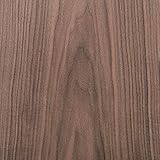
- REAL WOOD VENEER SHEETS – ready to stain, real wood veneer sheets which are ideal for using when repairing or refacing furniture, cabinets and fine woodworking. High quality Wood Veneer Sheet that will stand the test of time.
- PEEL & STICK FOR EASY APPLICATION – our Wood Veneer Sheets are ultra flexible and they are bonded to paper backing which, when peeled off, will provide a strong adhesive that will stick to any Rotary surface. Easy to apply with super bonding self adhesive, these veneer sheets are strong and flexible, it won’t split the grain when bent.
- EASY TO USE CABINET VENEER SHEETS – these wood veneer sheets for cabinets are ready for you to easily stain, match your existing furniture for a seamless, premium finish. Simply cut to size with a box knife and apply with a stiff bladed scraping tool or wooden block to achieve best results.
- “A” GRADE” PREMIUM QUALITY AND SIZING INFO – made from the highest “A” grade veneer quality, Real Wood Veneer Sheets, this flexible Wood Veneer Sheet is ready to stain for your restoration and repair work. The overall thickness is 0.4 MM
- VERSATILE AND COST-EFFECTIVE VENEER SHEETS – our Wood Veneer Sheet can be used for a wide variety of projects including cabinets, resurfacing tables and general repair. Simple to use, these are a cost-effective way of restoring your projects back to their former glory without having to replace them.
Build the complete panel, not just the face
The same veneer can behave differently on different substrates. MDF offers a smooth, consistent base for many interior panels; moisture-resistant MDF may be appropriate in a more humid interior when the documented assembly permits it; plywood can provide a different screw-holding or dimensional profile. The core, adhesive, face, back and finish should be treated as one engineered component.
Recommended Free Tools
Specify the nominal panel thickness and the actual edge condition. Options can include a veneer edge band, a solid-timber edge, a lipped edge, a shadow gap or a machined profile. Edge details expose the relationship between face and core and may require a different grain direction or a separate approval sample.
The Briggs document lists MDF, moisture-resistant MDF, plywood and other substrate possibilities and several thicknesses. It also describes a low-yellowing two-pack polyurethane finish with UV inhibitors. Those are examples of one product line, not a universal prescription. Require the selected supplier to state the coating chemistry, sheen, colour, repair method and whether the finish is factory-applied.
Machining and integration
Coordinate veneer direction with doors, drawer fronts, access panels, acoustic slots, grilles and CNC-cut patterns. Routing can expose the core or create a visible change in grain at the cut edge. Ask for a machined sample when the design includes perforations, nesting, deep grooves or tight radii. Any such change can also affect a tested fire assembly.
Where veneered panels are useful
- Walls and feature surfaces: book-matched panels create a formal focal point; random or colour-blended layouts can reduce the sense of repetition over broad areas.
- Ceilings: panel systems can combine a timber appearance with acoustic or service-integration options when the manufacturer documents those functions.
- Doors and frames: sequence adjacent leaves and coordinate edge treatment so the face, stile, rail and reveals read as one composition.
- Furniture and joinery: consistent substrate thickness, edge construction and finish specifications help separate shop-made components from field-finished work.
- Screens and partitions: confirm whether the backing, acoustic build-up, impact resistance and support framing are part of the tested system.
- Decorative architectural elements: use the manufacturer’s panel, mounting and maintenance documentation rather than assuming that a raw veneer sheet can be installed in the same way.
Environmental conditions still matter. Establish the interior temperature and humidity range, protect panels from wet trades and direct water, and follow the supplier’s acclimatisation and storage instructions. The available material does not establish a general exterior-durability claim for decorative veneer.
Rank #4

- Wood Veneer Sheets Variety Pack for Creative Projects: this wood veneer sheets variety pack includes 30 square veneer sheets in mixed brown colors, giving you multiple wood grain options in one set for marquetry, inlay, and woodworking designs
- Thin Square Wood Veneers, Easy to Cut and Shape: each wood veneer sheet measures 12 x 12 inches/ 30.5 x 30.5 cm with varied thickness (approx. 0.5 mm), making these veneers easy to cut, trim, and shape for detailed craft and woodworking projects
- Natural Wood Veneer with Grain Texture: made from real wood, these wood veneer sheets feature natural grain patterns and color variations; Each sheet has its own look, adding authenticity and depth to finished pieces
- Wood Veneer for Marquetry, Inlay and DIY Crafts: the wood veneer for marquetry and inlay, as well as furniture accents, cabinet surfaces, box making, restoration work, and other DIY woodworking applications
- Unfinished Veneer Sheets for Custom Bonding: these veneer sheets do not include adhesive, allowing you to choose your preferred glue or bonding method based on your project needs and woodworking techniques
Fire performance belongs to the assembly
Never assign a fire rating to veneer alone. The required classification depends on the project’s location, occupancy, building type and application. Obtain evidence for the complete specified build-up, including face veneer, adhesive, substrate, backing or balance layer, finish, mounting method and any perforation or machining.
The Timber Veneer Association of Australia (TVAA) describes changes to regulatory practice for timber-veneered wall and ceiling products in Australia and New Zealand from 1 May 2019. Its second edition of A Manual for Decorative Wood Veneering Technology, published in 2014 and written by Dr Barbara Ozarska of the University of Melbourne’s Forest Products Research Group, addresses successful veneer use and potential UV-related discolouration. Those publications provide technical context; they do not replace the current code and report required for a specific project.
Example: a documented Australian assembly
The Briggs example reports Group 3 for its named veneer on standard MDF at 6 mm and thicker, and Group 2 for the same veneer on Flameblock FRMDF at 12 mm and thicker. The report warns that substituting another FRMDF brand invalidates the referenced certification. The group-number discussion is tied to its cited NCC 2019 context and should not be reused as a current, universal rule.
Before approving a substitution, check that the report covers the exact veneer species and construction, board brand and thickness, adhesive, coating, backing, fixing and machining. A slotted, thinner, perforated or differently coated panel may require new evidence even when the face looks identical.
Crashes, No Sound, or Screen Glitches?
Random freezes, missing sound and display glitches usually trace back to one bad driver. Find and replace yours safely.Free scan · under a minuteWindows Errors? Fix Them Before They Spread
Repair common Windows errors and clear accumulated junk for a smoother, more stable PC - no reinstall needed.Free scan · no reinstallHow to evaluate sustainability evidence
“Veneer is sustainable” is too broad to be a defensible project statement. Environmental outcomes depend on forest sourcing, log utilisation, processing, adhesives, substrate manufacture, transport, coating, service life, maintenance and end-of-life handling.
Best Value
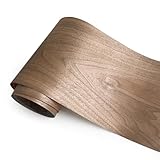
- Natural and beautiful: Wood veneer is a thin wooden sheet material produced by rotary cutting or sawing of logs, Has a natural woody feel,Different wood textures and tones can meet various design styles and aesthetic needs.
- Multifunctionality: Can be applied to various surfaces, suitable for refurbishment and production of furniture, cabinets, doors, speakers, and wall panels.
- Durable and Stable: The wood veneer uses backing materials to enhance durability and stability, making it less prone to deformation or cracking, and can maintain aesthetics and practicality for a long time.
- Flexible and Convenient: Its flexibility allows for easy installation on flat or curved surfaces, meeting design requirements of various shapes and sizes.
- Environmental protection and health: Wood veneer comes from wood, which is a renewable resource. The use of wood veneer conforms to the concept of green decoration and is conducive to sustainable development.
Forest and chain-of-custody claims
Ask for current chain-of-custody evidence tied to the actual supplier, product and claim. The TVAA identifies Responsible Wood, PEFC and FSC chain-of-custody schemes in Australia and supports sourcing from sustainably harvested logs. FSC’s classification of veneer forms is useful for product description, but it does not prove that a particular panel carries FSC certification. Check certificate scope, certificate holder, product group and claim wording on the documents supplied for the project.
Environmental Product Declarations
An Environmental Product Declaration (EPD) is product-specific. Compare EPDs only when the declared unit, life-cycle scope, product category rules, manufacturing geography, assumptions and validity period align. Danzer reports cradle-to-gate EPDs for listed European products, including sliced hardwood and veneer products, valid from June 2024 through June 2029 and available on request. An International EPD System listing for Kaltsidis veneered MDF describes a representative product covering multiple variants. Neither source establishes that veneer has lower impacts than every alternative finish.
For a project submission, file the EPD with the product name, variant, manufacturing location and validity date. Do not transfer results from one product family to another, and do not treat an EPD as a green rating or a substitute for chain-of-custody evidence.
Free tools Windows power users keep installed
One-click scans. No signup required.
A practical specification and approval workflow
- Define the use. Identify wall, ceiling, door, furniture, screen or other component; interior environmental conditions; dimensions; exposure to impact, cleaning and light; and whether acoustic, moisture or fire performance is required.
- Select the visual system. Record species, cut, grade, face thickness, leaf sequence, match, colour blending, grain direction and acceptable natural features.
- Engineer the panel. Name the substrate, core thickness, balance back, adhesive or bonding requirements, edge detail, joints, mounting and any machining.
- Set the finish. Specify stain or natural appearance, gloss level, coating type, UV-inhibitor requirement, repair expectations and cleaning regime. Confirm whether the finish is factory-applied.
- Request evidence. Collect technical data, installation instructions, maintenance guidance, fire reports for the exact assembly, emissions information where relevant, chain-of-custody documents and an EPD if a project credit or comparison requires one.
- Approve samples and layout. Review a representative mock-up in project lighting, then approve the panel elevation, joint pattern, edge and machined details in writing.
- Control production. Require identification of veneer batch or log group where available, protect approved faces during fabrication and reject unapproved substitutions before installation.
- Plan handover. Deliver care instructions, cleaning products or limitations, repair guidance, fire documentation and as-built product records to the building owner.
Maintenance, light and ageing
Clear finishes do not freeze timber’s appearance. Wood can change colour with light exposure, and the TVAA manual specifically discusses potential UV-related discolouration. A low-yellowing coating with UV inhibitors may reduce unwanted change for a particular product, but it does not make the surface colour-invariant.
Use the selected manufacturer’s technical bulletin for veneered-product care. In general, keep water and aggressive chemicals away from unsealed edges and joints, remove dust with a soft method, and test any cleaner in an inconspicuous area before wider use. Do not specify a generic polish, solvent or abrasive pad without confirming compatibility with the actual coating.
Explain to the owner that natural variation, gradual colour change and minor feature differences are part of real wood’s character. A maintenance plan should state cleaning frequency, spill response, protection during later works and the approved method for touch-up or panel replacement.
Comparison checklist for competing veneer systems
| Decision area | Questions to document |
|---|---|
| Species and cut | Which species, cut form and grade are offered? Are the colour and feature ranges defined? |
| Matching | Is the layout book-matched, random-matched, slip-matched or colour-blended? Is a full-size layout approved? |
| Construction | What are the face thickness, balance back, core, panel thickness, adhesive and tolerances? |
| Edges and machining | Are edges veneered or solid timber? How are reveals, grooves, perforations and CNC cuts treated? |
| Finish | What coating, sheen, colour, UV protection, repair method and cleaning limits apply? |
| Fire | Does the report cover the exact substrate, thickness, finish, backing, fixing and machining in the project jurisdiction? |
| Indoor environment | Are emissions, moisture resistance or acoustic data required, and are they documented for this variant? |
| Sourcing | Does chain-of-custody evidence identify the actual supplier, product group and claim? |
| EPD | What product, declared unit, geography, scope, PCR and validity period does the EPD cover? |
| Support | Are submittal, installation, CAD/BIM, maintenance and replacement instructions available? |
Common specification failures and their remedies
- “Oak veneer” with no layout: add cut, grade, match, feature limits and a signed panel elevation.
- Sample treated as a colour guarantee: approve a representative mock-up and state the acceptable natural range.
- Fire rating copied from another board: obtain a report for the exact assembly and do not substitute the substrate without review.
- FSC assumed from the word “veneer”: request current chain-of-custody evidence tied to the claim.
- EPD used as a universal ranking: compare aligned declarations and disclose scope, geography and validity.
- Face selected without a core or edge detail: specify the complete panel and coordinate machining before fabrication.
- Interior finish exposed to unsuitable conditions: verify humidity, water and light exposure against the manufacturer’s documented limits.
- Maintenance left to the installer: hand over the coating-specific care bulletin and approved cleaning method.
What a defensible veneer submittal contains
A complete submittal allows another professional to identify exactly what was approved. Include the product name and variant, veneer form, species, grade, cut, face and back construction, substrate and thickness, edge details, finish, match drawings, sample or mock-up photographs, installation method, fire report, emissions or acoustic data where required, chain-of-custody documents, EPD with validity information, and maintenance instructions. Mark every item that is product-specific and identify any option that has not been tested in combination with the selected assembly.
Quick wins for a faster PC:
Scan for outdated or missing drivers - takes under a minuteDriver Scan →Clear out junk files and repair common Windows errorsFree Scan →Quick Recap

Product prices and availability are accurate as of the date/time indicated and are subject to change. Any price and availability information displayed on Amazon at the time of purchase will apply.

