Do these 3 things before closing this tab:
1Clear out junk files and repair common Windows errors2Fix the driver behind crashes, sound loss and screen glitches3Repair Windows errors before they cause bigger problems
ThatPainter is reader-supported. When you buy through links on our site, we may earn an affiliate commission. Learn More
Start with the wettest pot, let its soil surface dry as the plant allows, place yellow sticky cards, and treat soil-dwelling larvae with a properly labeled Bti product or Steinernema feltiae nematodes if activity continues. Those steps attack the breeding site, flying adults, and immature stages instead of merely spraying insects in the air.
“ASAP” means beginning the highest-value controls today, not expecting every adult to vanish within hours. Fungus gnats spend most of their lives in potting media, and at 75°F a generation can be completed in about 17 days, depending on temperature. A successful plan therefore combines immediate monitoring with repeated source control.
What fungus gnats are—and why the pot matters
Fungus gnats are small, dark flies commonly seen around houseplants, windows, and lights. Adults are annoying but do not bite. Their larvae live in moist potting soil containing organic material. In large numbers, larvae can injure roots and stunt seedlings or other young plants, while established plants often show only nuisance-level damage.
Recommended Free Tools
As an Amazon Associate I earn from qualifying purchases.
The most important distinction is life stage: adults fly, but immature gnats are in the soil. University of California Statewide Integrated Pest Management guidance says control should focus on the immature stages because most of the life cycle occurs in the growing medium. A trap can reduce adult numbers without stopping the next generation if the soil remains wet.
Use the four steps below in order. The first identifies the source, the second removes favorable breeding conditions, the third catches and measures adults, and the fourth targets larvae when cultural control alone is not enough.
#1 Best Overall
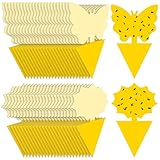
- Ultra Sticky & Fast Acting: Bright yellow color attracts fruit flies and fungus gnats instantly, while extra-strong adhesive locks insects in place without dripping or drying out. Two Shapes: Sunflower, Butterfly
- Safe for Home & Plants: Chemical-free, non-toxic, and odorless—safe to use around kids, pets, houseplants, herbs, and vegetables indoors or outdoors.
- Easy to Use & Long Lasting: Just peel and stick near plants or problem areas. Each trap works for weeks, reducing the need for frequent replacements.
- Double-Sided Design for Maximum Catch: Catches flying pests from both sides, covering more area than single-sided traps and helping monitor infestation levels effectively.
- Eco-Friendly Pest Control Solution: No pesticides, no sprays, no harmful fumes. A clean and responsible way to control flying insects in your home and garden.
1. Find the breeding pot and confirm the diagnosis
Watch what happens when you water
Inspect plants during and immediately after watering. Small flies that rise from the soil, crawl briefly on the pot rim, or gather around the affected plant are more consistent with fungus gnats than flies entering from outdoors. Check every plant, not just the one where you first noticed adults; several pots can be involved.
Free tools Windows power users keep installed
One-click scans. No signup required.
Look for the combination of tiny dark flies and consistently damp, organic-rich media. A dry room with flies but no activity from any pot may indicate another source, so do not treat every flying insect as a fungus gnat automatically.
Test drains as well as plants
Extension guidance from the University of Maryland recommends checking whether adults originate from a particular plant or from a drain. Temporarily cover a suspected pot or drain with fine screen or cheesecloth, leaving airflow but preventing insects from passing freely. Observe the covered source over the next several days. If adults repeatedly appear at a drain rather than a pot, treating houseplants will not solve the problem; the drain needs separate cleaning and moisture management.
Move infested plants only when necessary and keep them away from uninfested areas. Carrying pots through the home can spread adults to additional rooms. Group suspect plants in one easy-to-monitor location while you work through the steps.
Check for conditions that support larvae
- Soil that stays wet for many days after watering.
- Saucers, cachepots, or trays holding standing water.
- Decaying leaves or other organic debris on the soil surface.
- Containers with blocked drainage holes or compacted media.
These clues identify the management problem even when larvae are too small to see. Finding the wettest container is usually more useful than chasing individual adults.
2. Make the soil less inviting
Let the surface dry to a plant-appropriate depth
Correct overwatering first. Virginia Cooperative Extension recommends allowing the top 13 mm (0.5 inch) of soil to dry between waterings for suitable houseplants and calls this “probably the best and easiest control for these pests.” Use that measurement as a practical benchmark, not a universal rule. Plants that require evenly moist soil, seedlings, and some tropical species can be harmed by aggressive drying; follow the moisture needs of the particular plant.
Rank #2

- [Catches Gnats, Fruit Flies, Whiteflies And More] Yellow sticky traps with top-grade adhesive grab fungus gnats, aphids, fruit flies, thrips, and whiteflies on contact from both faces. Place each card at soil level near drainage holes for fastest results. Works for indoor plants and outdoor gardens.
- [Decorative Shapes That Stay In Your Pots Year-Round] Yellow sunflower and butterfly designs look intentional in any plant display rather than calling out a pest problem. The yellow color attracts insects and decorates at the same time. Leave one trap per pot as a permanent monitoring layer; if a new infestation starts, you will spot insects on the surface before your plants show damage. Two options offer flexibility across pot sizes and styles.
- [Peels Clean Without Tearing] Start at the bottom and slowly peel one protective film at a time to cleanly reveal the adhesive face. The thicker rigid plastic stake and trap keep the card flat and straight throughout setup so you do not wrestle a floppy surface. No glue on hands, tearing, accidental folding before insertion, or hassle. Three steps: peel, hold, push into soil.
- [Family Friendly Design & Odorless] The family friendly physical adhesive trap is odorless and leaves no residue on surfaces near your plants. Keep out of direct reach to avoid hair or skin contact with the glue surface.
- [Works Indoors, Outdoors And In Hanging Baskets] UV-resistant construction holds up under direct sunlight without degrading the adhesive. The pointed plastic stake inserts directly into soil; use the included wire to hang traps near hanging baskets, window herb gardens, or bare-root seedling trays where no soil is available. Two deployment modes, one pack.
Press a finger or a clean moisture meter into the top layer before watering. If the surface is still damp, wait and check again. When watering is due, apply enough to moisten the root zone, then allow excess to drain fully. Do not leave the pot sitting in runoff.
Improve drainage and remove breeding material
- Confirm that the container has open drainage holes.
- Empty saucers and decorative cachepots after water has finished draining.
- Remove dead leaves, algae, and other decaying debris from the soil surface.
- Use a growing medium and container combination that does not remain saturated.
Do not cover the soil with a thick layer of another material as a substitute for correcting irrigation. The goal is to reduce persistent moisture throughout the medium, not merely hide the surface.
Repot only when it solves a real problem
If media is badly compacted, drainage is defective, or roots are suffering, repotting into fresh, appropriately draining mix can remove a major breeding reservoir. Iowa State University Extension includes repotting among management options. Repotting every plant solely because one adult was seen adds stress and can spread insects during handling, so reserve it for a moisture or root-health reason.
Quick wins for a faster PC:
Clear out junk files and repair common Windows errorsFree Scan →Fix the driver behind crashes, sound loss and screen glitchesFind Drivers →Repair Windows errors before they cause bigger problemsFix Now →After repotting, clean the old pot and discard contaminated media rather than mixing it into other containers. Keep the newly handled plant in the monitoring area until sticky-card counts show that activity has declined.
3. Trap and monitor adult gnats
Place yellow sticky cards correctly
Put yellow sticky cards in or immediately beside affected pots, with the adhesive surface near the foliage and soil line without touching leaves. Use enough cards to cover a group of plants, and label their locations and dates. Replace cards when they are covered with insects or dust.
Cards serve two purposes: they remove flying adults and show where activity remains. A card beside one pot that catches many adults while cards elsewhere remain clear points you back to the likely source. Continue checking cards after changing watering practices; fewer captures over successive checks indicate that the breeding population is shrinking.
Know what traps can and cannot do
Sticky cards do not directly kill larvae in potting media. They can make a room look better quickly by reducing adults, but eggs and larvae already in wet soil can mature later. Treat cards as monitoring and adult suppression, not as a stand-alone eradication method.
Do not spray insects in flight. Adults are short-lived compared with the soil stages, and indoor spraying creates exposure and residue without correcting the damp medium that supports reproduction.
4. Target larvae when activity persists
Bti: use the right product and follow its label
A product containing Bacillus thuringiensis subsp. israelensis (Bti) and labeled for the intended houseplant use can be applied to the soil to target fungus gnat larvae. Read the entire label for permitted plants, mixing or dilution directions, application method, protective equipment, storage, and disposal. A Bti product made for caterpillars is not the same treatment for fly larvae.
Rank #3

- 【Non-toxic and Odorless】Our double-sided sticky sheets are made of environmentally friendly materials and coated with a safe, odorless, non-toxic adhesive that does not contain any chemicals, which is not only harmless to humans and pets, but also effectively controls pests and breaks their breeding cycle.
- 【Long-Lasting and Durable】Our sticky fly traps use double-sided thickened adhesive, UV-resistant and waterproof. No need to replace until the bugs are completely covered.
- 【Easy to Use】Just uncover the covers on both sides of the trap, insert it into the soil, and it's ready to work. This is a fungus gnat trap suitable for indoor and outdoor use thar protects your plants from insects.
- 【Usage scenarios】The sticky insect trap is suitable for greenhouses, orchards, tea gardens and backyard gardens.
- 【Package Includes】Containing 100pcs yellow fruit fly sticky traps, absolutely enough for you to use
UC IPM notes that Bti does not persist indoors and that repeat applications at approximately five-day intervals may be needed. Treat that interval as guidance, not an automatic schedule: the product label controls how often and how much to apply. Continue managing moisture and monitoring cards while applications work.
The U.S. Environmental Protection Agency describes Bti toxins as specifically targeting mosquito, blackfly, and fungus gnat larvae and reports no human toxicity in its assessment of the toxins. That statement concerns the active ingredient’s assessed toxicity; it does not replace the directions or precautions on the particular registered product.
Do these 3 things before closing this tab:
1Scan for outdated or missing drivers - takes under a minute2Clear out junk files and repair common Windows errors3Fix the driver behind crashes, sound loss and screen glitchesSteinernema feltiae nematodes: a living, condition-dependent option
Beneficial nematodes of the species Steinernema feltiae can seek out and infect fungus gnat larvae in the growing medium. They are living organisms, so buy only what you can apply promptly and follow the supplier’s storage and mixing instructions. Apply them to media that is suitably moist, because excessive drying can reduce their ability to move and survive.
Do not combine a nematode application with a watering restriction that leaves the treatment layer bone-dry. Instead, maintain the moisture conditions specified for the nematode product while avoiding waterlogging. Their performance depends on temperature, moisture, product viability, and contact with the soil zone where larvae are present.
Which method should you choose?
| Method | Main target | What it does quickly | What it cannot do alone | Key conditions |
|---|---|---|---|---|
| Let the surface dry, improve drainage, remove debris | Eggs and larvae indirectly | Removes the wet breeding environment | Does not immediately remove flying adults | Dry only as far as the plant tolerates; empty standing water |
| Yellow sticky cards | Adults | Catches flies and reveals active pots | Does not reach larvae in soil | Place near affected containers and replace when full |
| Labeled Bti soil treatment | Larvae | Directly targets immature stages | Does not correct overwatering or guarantee one-application control | Use only a product labeled for the intended houseplant use; repeat only as directed |
| Steinernema feltiae nematodes | Larvae | Biological control in the growing medium | May perform poorly if conditions or product viability are unsuitable | Apply promptly and maintain the product’s required moisture conditions |
For a small home infestation, begin with moisture correction and sticky cards. Add one larval treatment when adults continue appearing or cards show sustained activity after the soil-management change. Combining every product at once makes it harder to identify what worked and can expose plants to unnecessary treatments.
Independent reader supportYour contribution helps us test, update, and keep practical guides available for everyone.A practical same-day and follow-up plan
Today
- Inspect every plant and nearby drain; identify the pot or drain with the strongest activity.
- Place yellow sticky cards beside suspect containers and record the starting locations.
- Remove standing water and decaying debris.
- Check the top 13 mm (0.5 inch) of soil and postpone watering where that layer is still damp, unless the plant requires consistently moist conditions.
Over the next several days
- Check cards and soil moisture daily or according to the plant’s normal care schedule.
- Keep suspect plants grouped for observation and avoid moving them through clean rooms.
- If adults continue emerging from moist soil, choose either a labeled Bti product or Steinernema feltiae nematodes and apply exactly as directed.
- For Bti, follow the label’s repeat-use instructions; an approximately five-day interval is mentioned by UC IPM but is not a universal prescription.
After treatment
Replace full sticky cards and compare capture levels rather than judging success from one glance. New adults can emerge from eggs laid before treatment, so a short period of continued captures does not automatically mean failure. Persistent captures after moisture correction and properly applied larval control suggest that another pot, a drain, or unsuitable application conditions need investigation.
The Tool Desk
Outbyte PC Repair FREEClear out junk files and repair common Windows errorsFree Scan →Outbyte Driver Updater FREEScan for outdated or missing drivers - takes under a minuteDriver Scan →Common mistakes and how to correct them
Relying on traps alone
Traps remove adults but leave larvae in the medium. Keep cards in place, but pair them with irrigation and soil management.
Drying every plant aggressively
Over-drying can injure plants that need even moisture. Apply the 0.5-inch benchmark only where compatible with the species and growing stage.
Rank #4

- Highly effective trapping: Our fruit fly trap uses double-sided adhesive cards with a strong, chemical-free adhesive that effectively catches insects. The environmentally friendly material is free from chemicals and odours, making it safe for humans and pets. To facilitate application in warmer weather, cool the cards before use
- EFFORTLESS PLACEMENT: These traps can be easily inserted into the soil and thus provide effortless protection against mosquitoes, fruit flies and other pests without the need for complicated installation. Perfect for potted plants, gardens or anywhere insect control is required
- Effective pest control: the bright yellow colour attracts a variety of flying insects such as mosquitoes, fruit flies and aphids and provides efficient pest control indoors and outdoors
- Versatile use: suitable for gardens, kitchens, greenhouses and potted plants indoors, provides non-toxic pest control that does not harm the environment or your plants
- Customer satisfaction guaranteed: Your satisfaction is important to us. Should you have any questions or concerns, you can contact us at any time. Your satisfaction is our priority
Using a generic insecticide spray
UC IPM states that insecticides are important in some commercial plant production but generally are not recommended for fungus gnat management in and around the home. Iowa State Extension is even more direct: “We do not recommend insecticides as they are not necessary and they are not effective for fungus gnat control in houseplants.” These recommendations address routine home infestations; they do not mean every commercial situation is identical. For ordinary houseplants, source control and larval-targeted options are the better-supported approach.
Applying the wrong biological product
Bti products intended for caterpillars do not substitute for a Bti formulation labeled for fungus gnat larvae. Nematodes also require live-product handling and suitable moisture. Verify the target, label, timing, and storage instructions before application.
Expecting instant eradication
Adults already present may continue to appear while immature stages complete development. Because a generation can take about 17 days at 75°F, temperature-dependent follow-up is essential. Start promptly, but judge progress by declining captures and healthier soil conditions rather than by a promise that the room will be gnat-free the same day.
When the problem may not be in a plant
If cards near plants stay empty while flies repeatedly emerge near a sink or floor drain, investigate that drain instead of escalating plant treatments. A drain can provide a separate moist organic source. Likewise, if only one container produces adults, concentrate inspection and treatment there rather than applying products across the entire collection.
Seek a more detailed plant-health diagnosis when seedlings collapse, roots smell sour, foliage wilts despite wet soil, or damage continues after larvae are addressed. Those symptoms can indicate root disease, poor drainage, or another pest in addition to fungus gnats.
Quick Recap
How to keep fungus gnats from returning
- Water according to each plant’s needs rather than on a fixed calendar.
- Allow an appropriate surface layer to dry before the next watering.
- Use containers with functioning drainage and empty runoff promptly.
- Remove fallen leaves and other decaying material from pot surfaces.
- Quarantine newly acquired or recently repotted plants while monitoring them with a sticky card.
- Keep a card near a previously affected group for early detection after treatment.

Product prices and availability are accurate as of the date/time indicated and are subject to change. Any price and availability information displayed on Amazon at the time of purchase will apply.

