Crashes, No Sound, or Screen Glitches?
Random freezes, missing sound and display glitches usually trace back to one bad driver. Find and replace yours safely.
Find the Right Drivers →Free scan · under a minute
As an Amazon Associate I earn from qualifying purchases.
ThatPainter is reader-supported. When you buy through links on our site, we may earn an affiliate commission. Learn More
The best kitchen splashback protects the wall from heat, steam, oil and daily cleaning while giving the room a deliberate focal point. For a fast, low-maintenance surface, choose toughened painted glass, a large porcelain slab or stainless steel. For pattern and personality, glazed metro tiles, mural tiles and mixed materials offer more visual variety. Natural stone and engineered quartz deliver a premium, continuous finish but require more careful templating, budgeting and (for porous stone) sealing.
#1 Best Overall

- Easy DIY, Just Peel & stick, cut with tin snip, utility knives or hand saws, saving large amount on labor
- 3"x6" individual subway tile, plans the layout freely to your imagination
- Waterproof, heat resistant, stain resistant, anti-scratch, high impact, color fadeless, easy to clean, durable
- Suitable surfaces: painted gypsum/dry wall, ceramic tile, linoleum, glass, marble/granite, metal/steel, sealed/polished/painted wood
- Unsuitable surfaces: brick wall, oily glossy painted wall, textured wall and any uneven rough surfaces
What a kitchen splashback needs to do
A splashback is one of the hardest-working surfaces in a kitchen. It sits where cooking vapour, grease and splashes meet the wall, so material selection is both a design decision and a maintenance decision. Start with the hob manufacturer’s required clearances and any local gas or building requirements before ordering a panel or setting a finished height. Those rules take priority over a preferred look.
Then assess the wall as a whole. Cabinet colour, worktop pattern, lighting, socket positions, extractor location and the amount of visible wall all affect whether a bold splashback feels intentional or overwhelming. Compare the number of grout joints, surface porosity, cleaning routine, reflectivity, templating accuracy and the way the material meets the worktop. Include installation and finishing in the budget: a low-cost sheet can become expensive if the wall needs extensive preparation or the template is wrong.
Ten splashback ideas at a glance
| Idea | Material behaviour | Cleaning and maintenance | Design character |
|---|---|---|---|
| Classic glazed metro tile | Glazed ceramic is a sensible choice for a hob zone. | Grout joints require routine cleaning. | Brick layout; grout colour can sharpen or soften the geometry. |
| Large-format porcelain slab | Porcelain can mimic stone and comes in broad finishes. | Fewer joints reduce grout-cleaning work. | Calm, continuous-looking wall. |
| Painted toughened glass | Smooth, non-porous and grout-free. | Quick to wipe. | A saturated colour creates one strong focal panel. |
| Mirrored glass | Reflective glass adds apparent depth. | Reflections and marks are more visible. | Useful for a small or dark kitchen. |
| Brushed stainless steel | Durable, hygienic and heat-resistant. | Easy to clean, but fingerprints and fine scratches can show. | Functional, professional character behind a hob. |
| Engineered quartz return | Creates a premium, continuous surface with the worktop. | Low-joint design when used as a full-height return. | Matching upstand or return; leading choice in Houzz’s 2025–26 UK data. |
| Natural stone slab | Premium, strongly veined surface; porous stone needs treatment. | Sealing and care depend on the stone. | Book-matched or dramatic veining makes the wall a feature. |
| Patterned or mural tile | Tile format allows a decorative composition. | Grout maintenance remains part of the specification. | Focus behind the hob or frame the pattern to control visual noise. |
| Layered mixed materials | Combines tile with a stainless-steel plate or glass panel. | Each material keeps its own care routine. | Contrast and texture add visual interest. |
| Aluminium or pressed metal | Durable and stable sheet material. | Cloth and soapy water are suitable for the described finish. | Coloured, patterned or metallic; lighter and DIY-friendly in concept. |
1. Classic glazed metro tile
A brick-pattern metro tile works when you want a familiar kitchen language that can be adjusted without replacing the tile. Glazed ceramic is a sensible hob-zone choice, and the large range of colours, sizes, textures and patterns lets you tune the scale to the room. A pale tile with a close-toned grout recedes into the wall; a contrasting grout makes every brick line part of the design.
Quick wins for a faster PC:
Repair Windows errors before they cause bigger problemsFix Now →Scan for outdated or missing drivers - takes under a minuteDriver Scan →Plan the layout from the most visible edge rather than allowing a narrow sliver to land beside a cabinet. Dry-lay the first courses, mark the centre line of the hob and decide where cuts will be hidden. Use a grout colour that suits the cleaning you are prepared to do: a high-contrast joint makes grease and uneven tooling more noticeable than a blended joint.
2. Large-format porcelain slab
Large-format porcelain gives you a quieter wall with fewer joints. That matters behind a hob, where every joint is another line that can collect residue and require brushing. Porcelain is also available in finishes that imitate stone, so you can get a veined or mineral appearance without using a natural slab.
Its visual calm depends on accurate measurement. Large pieces expose out-of-square walls and poorly positioned sockets, so have the wall templated after cabinets, worktops and extraction equipment are fixed. Confirm the installer can cut openings safely and support the slab during handling; a design that looks simple can demand more precise installation than a small tile.
Rank #2

- 2-3 Times Thickness: Much thicker than ordinary peel & stick tile, 2mm-2.5mm each, durable and solid tile, unlike soft sticker tiles
- Stronger Upgrade Adhesive: 3X Stronger backing glue than ordinary vinyl backsplash tile, not only stick firmly to the smooth surface, but also available on lightly textured wall
- 1.4 Times Coverage Area: 10 sheets thickened self-adhesive tiles, 12" X 12" each, which covers 40% more area than 10"x10" tile
- Widely Use: Perfectly decorated in kitchen island walls, bathroom backsplash, shower, fireplace, and installed behind the stove
- Easy Do It Yourself: Just peel, interlock and stick. No need to overlap, no grout and no mess, save your time and money on labor
3. Painted toughened glass in a saturated colour
Painted toughened glass is the direct route to a bold colour block. The face is smooth, non-porous and grout-free, so wiping is quick and there are no joints to discolour. A deep green, blue, terracotta or another saturated tone can carry the visual weight of a patterned tile while leaving the rest of the kitchen restrained.
Order the panel to the final template, including socket cut-outs and corners. Check the glass specification and fixing method with the supplier, and keep the hob manufacturer’s clearance requirements visible during design. Use the panel as a full run for a strong horizontal band, or stop it at a deliberate boundary such as the end of the worktop rather than an arbitrary cabinet edge.
4. Mirrored glass for a small or dark kitchen
Mirrored glass bounces light around a compact or poorly lit kitchen and can make a short wall feel deeper. It is most effective where the reflection has something attractive to repeat: a pendant, a timber shelf or a well-composed view. Decide in advance whether you are comfortable seeing reflections of dishes, appliances and activity.
The same reflective quality that adds depth also makes marks and reflections conspicuous. Specify the cleaning expectation with the installer and choose lighting that does not create an uncomfortable glare. Keep joins and silicone lines as discreet as possible, because a reflective surface makes alignment errors easier to spot.
5. Brushed stainless steel behind the hob
Stainless steel is a practical choice for frequent cooking. It is durable, hygienic, heat-resistant and easy to clean, which is why a brushed panel works naturally behind the hob. The brushed direction can help the panel sit alongside appliances and hardware rather than looking like a mirror.
The finish has a visible maintenance trade-off: fingerprints and fine scratches show on many stainless-steel surfaces. Wipe in the grain direction and avoid abrasive products that can add marks. A dedicated hob plate can also be used as one layer in a mixed-material scheme, allowing tile or paint elsewhere while concentrating the most robust surface where splashes are greatest.
Rank #3
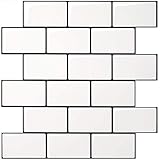
- Upgraded Thicker Build: 2–3 times thicker than regular peel and stick tiles, resistant to tearing and bending for easier installation.
- Stronger Adhesive Backing: Upgraded backing glue grips smooth, clean surfaces and lightly textured walls firmly for a more secure application.
- Classic Contrast Style: White subway tiles with contrasting black grout add crisp definition and a timeless look to your wall.
- Standard Size & Value Pack: Includes 10 ticker self-adhesive tile sheets measuring 12 x 12 inches for your wall makeover project.
- Versatile Wall Decor: Suitable for kitchen backsplashes, kitchen island walls, and other decorative wall applications.
6. Engineered quartz carried up from the worktop
Carrying engineered quartz from the worktop up the wall creates a continuous, premium look. You can use a matching upstand for a restrained transition or a full-height return for a stronger architectural effect. The uninterrupted material suits kitchens where the worktop is already the main investment and you want the wall to read as part of the same plane.
Houzz reported engineered quartz as the leading splashback material in its UK data for renovating homeowners choosing or updating a splashback during 2025–26, at 36%. The same survey recorded porcelain at 7%, granite at 6% and stainless steel or metal at 4%. Those figures describe that specific UK homeowner group and period; they are not a universal ranking of performance or value.
Quartz installation is template-led. Confirm the slab’s permitted use, edge details, socket positions and joint locations with the fabricator before manufacture. Matching the worktop is visually powerful, so check a physical sample against cabinet doors and daylight rather than relying only on a screen image.
7. Natural stone as a statement slab
A strongly veined natural-stone slab can turn the splashback into the room’s artwork. Book-matching or deliberately centring the veining makes the wall feel designed rather than leftover. This approach works best when cabinets and accessories are quiet enough to let the stone remain the focal point.
Porous stone needs appropriate sealing or treatment, and the required care depends on the particular stone and finish. Ask the fabricator which products are compatible and how often the surface should be checked. Include the slab’s weight, access route and support details in the installation plan; a dramatic piece is only successful when it can be transported and fixed without damage.
8. Patterned or mural tile
Decorative tile supplies the memorable “fall in love” moment: a repeating geometric, botanical or mural-like composition can give a plain kitchen an identity. To prevent visual noise, concentrate the pattern behind the hob, or frame it as a panel inside a calmer field tile. This also lets you use a more expensive decorative tile in a controlled quantity.
Rank #4

- Enhanced Strength – At 0.08 inches thick, these tiles are 2–3 times sturdier than standard ones, offering enhanced durability and resistance to warping
- Seamless Application – Designed for convenience, these tiles feature an intuitive peel and stick backing that allows for a smooth and effortless installation process
- Premium Quality Adhesion – Made from premium adhesive material, these tiles offer a secure and long-lasting bond to surfaces, ensuring stability and endurance over time
- Contemporary Aesthetic – With their sleek and sophisticated appearance, these tiles instantly elevate the visual appeal of any room, bringing a modern flair to kitchens and beyond
- Ideal for any Space – Engineered to withstand moisture, they are perfectly suited for damp environments such as kitchen counters, bathroom walls and so on
Set out the artwork before adhesive is mixed. Mark the centre of the cooking zone, align the strongest motif with that axis and check how the image terminates at sockets, corners and the underside of cabinets. Keep a record of the tile batch and spare pieces for future repairs; replacing one damaged decorative tile can be difficult if the product is discontinued.
Free tools Windows power users keep installed
One-click scans. No signup required.
9. Layered mixed materials
Combining materials creates contrast without asking one finish to do every job. For example, use a quiet tile across the main wall, then add a stainless-steel hob plate or a coloured glass panel at the highest-splash area. The result can introduce both visual interest and texture; Massimo Buster Minale, founder of Buster + Punch, describes mixed-material splashbacks in those terms.
Design the junction as a deliberate detail. Decide which surface finishes first, how the edge is capped and how each material will be cleaned. Keep the number of transitions manageable: every change needs a straight line, a seal or a trim that must remain sound.
10. Aluminium or pressed-metal panel
An aluminium or pressed-metal sheet can deliver a coloured, patterned or metallic statement with less visual and physical weight than a stone slab. Aluminium is described as durable and stable, and the cited care approach is simple: clean it with a cloth and soapy water. That makes the format appealing for a lighter, more DIY-friendly project concept.
Confirm the panel’s heat suitability, edge treatment and fixing instructions before placing it behind a hob. Pressed patterns catch light and can disguise small marks, while a smooth metallic sheet gives a sharper industrial look. Sample the finish beside the worktop because metallic colour shifts noticeably under warm and cool lighting.
How to choose between the ten options
- Prioritise the quickest wipe: choose painted toughened glass, porcelain with minimal joints, stainless steel or a continuous quartz return.
- Want colour without a busy pattern: specify a saturated painted-glass panel.
- Need a traditional, changeable look: use glazed metro tile and let the grout set the contrast.
- Want a luxury focal point: compare engineered quartz with a veined natural-stone slab, including sealing and fabrication requirements.
- Need more light in a compact room: consider mirrored glass, but accept that marks and reflections will be visible.
- Prefer texture or a lighter panel: investigate pressed metal or a layered combination of tile and metal.
Installation checklist before ordering
- Record the finished geometry. Measure the wall after cabinets and worktops are in place. Note corners, returns, extractor position, sockets and any visible service points.
- Check heat clearances. Follow the hob manufacturer’s instructions and applicable local gas or building requirements. Do this before choosing the panel size or material.
- Choose the endpoint. Decide whether the splashback stops at the worktop, runs to the underside of cabinets or continues higher as a feature wall. Keep the endpoint aligned with a real architectural line.
- Template accurately. Large glass, stone, quartz and metal panels should be templated against the actual wall. Recheck every cut-out before manufacture.
- Prepare the substrate. The wall must be sound, clean and sufficiently flat for the selected fixing system. Resolve uneven plaster and moisture problems before installation.
- Install and finish. Use the supplier’s specified adhesive, fixings, trims and sealants. Allow the stated curing time before exposing the surface to steam or cleaning.
- Inspect the result. Check joints, edges, socket surrounds, silicone lines and the clearance around the hob before the installer leaves.
Cleaning and maintenance decisions
Choose the finish you will actually maintain. Grouted tile rewards regular wiping and occasional joint cleaning. Non-porous glass removes the grout step but still needs a soft cloth to avoid streaks. Stainless steel is straightforward to clean when wiped with its grain, while mirrored glass makes every smear more apparent. Natural stone requires the additional discipline of the correct sealer and stone-safe products. Aluminium panels use a cloth and soapy water for the described finish, but always follow the particular supplier’s instructions.
Do not assume that a material’s resistance to heat makes every installation safe. The panel, adhesive, edge trim and sealant all need to be suitable for their position, and the hob clearance remains the controlling requirement.
Common mistakes to avoid
- Ordering a made-to-measure panel from early measurements and then moving a cabinet, socket or extractor.
- Choosing a porous stone for its appearance without agreeing a sealing and care schedule.
- Using a reflective finish without checking what it will reflect at night and under task lighting.
- Allowing a bold pattern to continue around awkward corners without a full dry layout.
- Comparing material prices alone instead of including templating, cut-outs, transport, installation and finishing.
- Ignoring the hob manual or local gas requirements because a panel is marketed as heat-resistant.
Making the final choice
Shortlist two or three materials, then test samples beside your actual worktop and cabinet doors in daylight and evening light. Mark the proposed panel outline with tape so you can judge its height and visual weight from normal standing positions. The right splashback is the one whose cleaning routine, heat clearances, installation demands and visual character all fit the way you use the kitchen—not merely the one that looks best in a catalogue.
Quick Recap

Product prices and availability are accurate as of the date/time indicated and are subject to change. Any price and availability information displayed on Amazon at the time of purchase will apply.

