Windows Errors? Fix Them Before They Spread
Repair common Windows errors and clear accumulated junk for a smoother, more stable PC - no reinstall needed.
Fix My PC Now →Free scan · no reinstall
ThatPainter is reader-supported. When you buy through links on our site, we may earn an affiliate commission. Learn More
As an Amazon Associate I earn from qualifying purchases.
If freezing weather is approaching, concentrate first on three failure points: air leaks around doors and windows, water in exposed plumbing, and a heating system that has not been checked. Seal stationary cracks with caulk, use weatherstripping on moving joints, disconnect and drain outdoor hoses, insulate vulnerable pipes, and verify that your furnace or heat pump has a clean, correctly sized filter. These measures address common risks quickly, but they are not a universal recipe for every house.
Recommended Free Tools
The U.S. Department of Energy treats weatherization as a whole-house process that can include the building shell, mechanical equipment, ventilation, and combustion safety. Use the projects below as last-minute triage; arrange a broader assessment if leakage is extensive, plumbing is inaccessible, or heating equipment behaves unusually.
#1 Best Overall
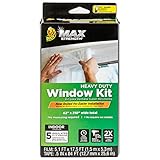
- Save on energy costs during cold weather months. Duck Max Strength shrink window film is puncture-resistant and two times thicker than standard window kits to create an airtight seal inside your home to block drafts and cold weather
- Easy-to-install roll of shrink film means no measuring needed - once applied, cut film to size
- Tools needed: scissors and hair dryer. For best results apply window films indoors on clean and dry surfaces, including painted or finished wood, aluminum or vinyl
- After installation, crystal clear and transparent window film is easy to see through. Once season is over, the window kit removes easily
- Window Kit includes 1, 62" x 210" roll of shrink film and 1, 0.5" x 84' foot roll of tape; Can insulate up to 5 standard sized 3' x 5' windows
Why these three projects deserve the last-minute attention
Cold weather exposes weaknesses that are easy to overlook during mild seasons. A gap at a door can make one room uncomfortable, a few ounces of water trapped in an exterior pipe can split a fitting, and a restricted filter can reduce airflow just when the heating system is working hardest. The right priority depends on your climate, construction, plumbing layout, and equipment.
Heating is usually the largest winter energy expense. A 2021 article from the U.S. Department of Energy Office of Indian Energy used roughly 45% as a general share of average household energy expenses attributed to heating-related costs. That figure is framing, not a current guarantee for every household. Likewise, sealing one visible gap will not produce a predictable bill reduction if other leakage, insulation, equipment, or thermostat settings dominate your home’s performance.
For a quick decision, walk the house and ask:
- Can you see or feel air movement at a stationary crack or around a moving door or window?
- Are any water lines in an unheated or drafty space, or connected to an outdoor hose bib?
- Is the heating filter dirty, overdue, or an unknown size, and has annual maintenance been skipped?
If the answer to all three is no, do not create unnecessary work. If you find widespread leakage, damp insulation, unsafe combustion conditions, or equipment you cannot access safely, an energy assessment or qualified trade professional is more appropriate than improvisation.
Project 1: Seal drafts at the actual leak
Air-sealing works when the material matches the joint. The U.S. Department of Energy distinguishes between fixed parts of the building and parts that must move during normal operation.
Rank #2
- This product adds a great value
- Product is highly durable and very easy to use
- Item length: 8.0 inches
- Model Number: V73/3H
| Leak location | Suitable approach | Do not do this |
|---|---|---|
| Small crack between stationary materials, such as trim and a wall | Apply an appropriate bead of caulk, then tool and allow it to cure according to the product directions. | Do not use weatherstripping where the surfaces never move; it can leave an uneven, ineffective seal. |
| Joint around an operable window or door | Install correctly sized weatherstripping so the sash or door still opens, closes, and latches. | Do not caulk or foam the moving joint shut. |
| Gap at a window or door rough opening | Use caulk, backer rod, or low-expansion spray foam specifically designated for doors and windows, depending on the gap. | Do not fill a moving sash or hinge area with foam, and do not assume fibrous insulation alone is an air seal. |
Find the high-value leaks first
Start with exterior doors and windows that visibly leak, rattle, or feel drafty. Check the perimeter where trim meets the wall, the meeting rail or jamb of an operable window, and the threshold and jambs of a door. Look for cracked or missing sealant, compressed or torn weatherstripping, and daylight at a closed unit. A leak that disappears when the door or window moves belongs in the weatherstripping category; a crack that remains between fixed materials belongs in the caulk category.
Seal a stationary crack
- Clean dust, loose paint, and failed sealant from the joint without damaging the surrounding finish.
- Choose a caulk compatible with the surfaces and the location. Keep the bead small enough to bridge the crack rather than smearing it over trim.
- Apply a continuous bead, tool it neatly, and respect the curing and temperature instructions on the cartridge.
- Recheck the joint after curing and operate nearby windows and doors to ensure nothing has been bonded accidentally.
Weatherstrip a moving joint
- Measure the perimeter that must be sealed and inspect the existing stop, jamb, or meeting rail for a clean mounting surface.
- Buy a profile and size that compresses when closed but does not prevent the lock from engaging.
- Install it continuously around the moving edge, trimming corners neatly and avoiding gaps at the threshold.
- Close and open the unit several times. A seal that causes binding, a failed latch, or a visible bow needs adjustment rather than more material.
Handle rough-opening gaps carefully
At the space between a frame and the surrounding opening, the appropriate material depends on gap width and access. DOE Building Science Education identifies caulk, backer rod, and canned spray foam as possible choices. If foam is appropriate, use a low-expansion product designated for doors and windows; high-expansion foam can distort a frame. Fibrous insulation may slow heat transfer, but it does not by itself stop air movement through a gap.
Do not seal vents, combustion-air openings, flues, or chimneys as part of a draft hunt. A tighter shell still needs appropriate ventilation and safe operation of combustion appliances. If you suspect backdrafting, damaged venting, or extensive hidden leakage, stop the DIY work and arrange qualified evaluation. Blower-door testing is one tool professionals use to assess whole-house air leakage.
Project 2: Protect exposed plumbing before the hard freeze
Water expands as it freezes, so the most urgent plumbing is not necessarily the pipe you can see inside a heated room. Prioritize outdoor hose bibs and lines in garages, crawlspaces, basements, attics, and cabinets against exterior walls. Pipes near holes, uninsulated walls, or strong drafts deserve extra attention.
Rank #3

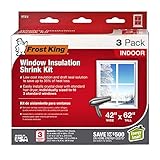
- Save on energy costs during cold weather months. This rolled window kit creates an airtight seal inside your home to block drafts and cold weather
- Easy-to-install roll of shrink film means no measuring needed - once applied, cut film to size
- Tools needed: scissors and hair dryer. For best results apply window films indoors on clean and dry surfaces, including painted or finished wood, aluminum or vinyl
- After installation, crystal clear and transparent window film is easy to see through. Once season is over, the window kit removes easily
- Window Kit includes 3, 62" x 210" rolls of shrink film and 3, 0.5" x 54' foot rolls of tape; Can insulate up to 15 standard sized 3' x 5' windows
Shut down and drain outdoor hose connections
- Remove every garden hose, splitter, timer, and nozzle from the outdoor faucet. Store them where they will not freeze.
- Close the interior shutoff valve that supplies the hose bib, if your plumbing has one.
- Open the exterior bib so water remaining between the valve and the outlet can drain.
- Leave the outdoor connection in the position recommended by its design and inspect for leaks before temperatures fall.
A frost-free faucet can still fail if a hose or attachment traps water, so disconnecting the hose remains important. Pool and sprinkler systems require their manufacturer’s or installer’s winterization procedure. The American Red Cross specifically advises against adding antifreeze to those lines unless the manufacturer or a qualified professional directs it.
Insulate pipe runs with measured sleeves
Pipe insulation helps slow heat loss, but a sleeve only works well when it fits. DOE Building Science Education lists tubular sleeves, spiral wrap, and fiberglass batts as potentially effective forms when installed properly. Measure the pipe’s outside diameter and match it to the sleeve’s inside diameter; a generic “one size fits all” assumption is not supported.
| What to check | Why it matters |
|---|---|
| Pipe outside diameter | Determines the sleeve’s required inside diameter. |
| Pipe material and temperature | Confirms that the insulation and any adhesive are compatible with the installation. |
| Joints, valves, and fittings | Shows where pieces must be cut and fitted without blocking access to a shutoff. |
| Drafts and openings around the pipe | May require air-sealing the surrounding building joint, not merely wrapping the pipe. |
Slide or wrap insulation continuously along accessible sections, close seams as directed, and keep shutoff valves identifiable. Do not cover a leak and assume it is fixed. If a pipe is already dripping, corroded, or unsupported, repair the plumbing before insulating it.
The Building America program cited by DOE estimates that uninsulated hot-water pipes account for 16%–23% of distribution heat loss, varying by climate. It also reports a 4%–5% annual water-heating energy-use reduction from adding ¾-inch pipe insulation. Those are program figures, not measurements of your house and not promises of savings.
Rank #4
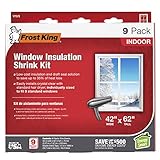
- This product adds a great value
- Product is highly durable and very easy to use
- This product is manufactured in China
- If you want to open your windows in the warmer months, you'll need to take it off. Otherwise, sunlight and normal stress can also make the tape fail eventually. For a good seal, it's probably best to re-apply them every year.
Use heat cable only as a listed product
The Red Cross names UL-listed heat tape or heat cable as an option for exposed pipes. Electrical products have specific placement, grounding, surface, and temperature requirements. Select a product listed for the pipe and location, inspect it for damage, and follow its instructions exactly. Never overlap or improvise a cable arrangement, and do not use an unlisted heating cord as a substitute.
If the house will be vacant
For an unoccupied home during cold weather, Red Cross guidance says to leave the heat on at no lower than 55°F. In very cold conditions, it also suggests allowing a small flow of cold water from a faucet served by exposed pipes. That is a situational precaution, not a replacement for insulating vulnerable lines, maintaining heat, or repairing a plumbing defect. Have someone check the property if a failure could go unnoticed for days.
Respond safely to a frozen pipe
A faucet that produces only a trickle can indicate a frozen section. If you can identify and safely reach the blockage, use gentle heat such as a heating pad or hair dryer and keep the faucet open while thawing. Never use an open flame, torch, grill, or kerosene heater. If the frozen area cannot be found, is inside a wall, or will not thaw, shut off water if possible and call a licensed plumber. Thawing can reveal a split that leaks as soon as flow returns.
Do these 3 things before closing this tab:
1Repair Windows errors before they cause bigger problems2Fix the driver behind crashes, sound loss and screen glitches3Clear out junk files and repair common Windows errorsProject 3: Check heating-system readiness
This is a readiness inspection, not an invitation to dismantle a furnace, alter gas controls, or repair a heat pump without training. The DOE home checklist recommends annual professional maintenance for furnaces and heat pumps and regular filter checks.
Best Value
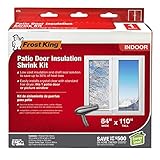
- Frost King V76H Shrink Window Kit 84-Inch by 110-Inch, Clear
Check the filter now
- Turn the system off according to the equipment instructions.
- Remove the existing filter and read its size, airflow direction, and replacement information. If the label is missing, check the equipment label or manual rather than guessing.
- Inspect the filter for visible dirt and restriction. Replace it when dirty.
- Install the replacement with the airflow arrow pointing in the equipment’s indicated direction, then close the access panel securely.
- Restart the system and confirm normal airflow and operation.
DOE winter guidance says to check a filter monthly, replace it when dirty, and at minimum replace it every three months. The correct interval and filter type depend on the equipment, occupancy, indoor air conditions, and manufacturer’s instructions; no single filter specification applies to every system.
Book annual service and watch for warning signs
Arrange professional maintenance if the annual visit is due, the system short-cycles, airflow is weak, temperatures are uneven, noises are new, or the equipment struggles to reach the thermostat setting. A technician can inspect components that are not safe or practical for a homeowner to open. For combustion equipment, qualified service should include appropriate safety and venting checks; whole-house weatherization guidance treats combustion-appliance testing as a health-and-safety measure.
Keep supply and return grilles clear, but do not block combustion-air openings or vents in an attempt to stop drafts. If you smell fuel, see soot, notice a damaged flue, or a carbon-monoxide alarm sounds, leave the area and contact emergency services or the appropriate utility response before troubleshooting.
Free tools Windows power users keep installed
One-click scans. No signup required.
A practical last-minute sequence
When a freeze is forecast within a day or two, use this order so a missed outdoor connection does not compete with cosmetic caulking:
- Start outside: remove and drain hoses, close the indoor hose-bib valve, and open the bib.
- Walk unheated spaces: identify exposed pipes, measure their diameters, and install correctly sized sleeves where access is safe.
- Protect the occupied house: check the heating filter, confirm the thermostat and equipment operate normally, and arrange service for overdue or abnormal systems.
- Seal obvious air leaks: caulk fixed cracks, weatherstrip moving joints, and use only suitable low-expansion window-and-door foam or backer rod at rough openings.
- Escalate uncertain work: call a plumber, HVAC professional, or energy assessor for hidden pipes, extensive leakage, combustion concerns, or inaccessible equipment.
Mistakes that turn winterization into a problem
- Using one material everywhere: caulk, weatherstripping, backer rod, and low-expansion foam serve different joints.
- Foaming a moving component: a sash or door must remain operable and latched.
- Leaving a hose attached: trapped water can defeat a frost-free faucet.
- Buying an unmeasured sleeve: insulation that is loose, crushed, or the wrong diameter leaves gaps.
- Adding antifreeze to irrigation or pool plumbing without direction: follow the manufacturer’s or installer’s procedure.
- Thawing with flame: open flames can ignite materials and damage plumbing; use gentle heat or call a plumber.
- Treating a filter change as furnace service: a clean filter does not replace annual inspection or combustion-safety checks.
- Sealing vents and flues: draft reduction must never compromise ventilation or appliance safety.
When a whole-house assessment is the better project
Quick fixes make sense when the defect is visible, reachable, and clearly understood. An energy assessment is more valuable when rooms remain drafty after basic sealing, insulation is wet or missing, air leaks are hidden in an attic or crawlspace, or you want to prioritize shell improvements against mechanical upgrades. DOE’s whole-house approach considers the building shell, heating and cooling equipment, and health and safety together. That broader view prevents a well-intended seal from masking a ventilation or combustion problem.
Quick Recap

Product prices and availability are accurate as of the date/time indicated and are subject to change. Any price and availability information displayed on Amazon at the time of purchase will apply.

