Free tools Windows power users keep installed
One-click scans. No signup required.
ThatPainter is reader-supported. When you buy through links on our site, we may earn an affiliate commission. Learn More
The most effective way to make a home more disability-friendly is to start with what the person living there needs to do, then remove the barriers that interfere with those tasks. A clear route, better lighting, a lever handle, a properly installed grab bar or a no-step entrance may matter more than a large renovation. Walk through the home with the resident, identify difficult or unsafe activities, and choose changes that fit the person, mobility or sensory aids, building structure and budget.
As an Amazon Associate I earn from qualifying purchases.
Start with the resident’s priorities
“Disability-friendly” is not one fixed layout. A wheelchair user, a person who uses a walker, someone with limited grip strength, and someone with low vision may need different solutions. The Administration for Community Living (ACL) describes home modification as a process that begins by identifying the changes desired or needed by the person who lives in the home.
Crashes, No Sound, or Screen Glitches?
Random freezes, missing sound and display glitches usually trace back to one bad driver. Find and replace yours safely.Free scan · under a minuteWindows Errors? Fix Them Before They Spread
Repair common Windows errors and clear accumulated junk for a smoother, more stable PC - no reinstall needed.Free scan · no reinstallBegin with activities rather than products. Ask the resident:
#1 Best Overall

- Matters need Attention: Only suitable for tiles measuring 4×4 inches or larger. For the safety of the seniors and elderly, please pay attention that the suction grab bars for shower ONLY sticks on smooth and non-porous AIRTIGHT walls which are NOT air-permeable like metal, glass, tile, marble, stainless steel and acrylic but does NOT apply on uneven tile, unfinished marble, wallpaper, dry wall, porous wall, painted wall, etc. Please don't put all the body weight on the shower grip
- Easy for Installation: Each suction cup shower handle equips 2 Strong suction cups with locking latches to provide stable protection. The bathtub hand rafully removable, reusable and causing no damage to your wall
- Safety to Users: Each shower bars safety is fabricated with an Anti-Slip Strip on top of the handrail, which creates strong friction to better keep your hands ON the grab bar. On the bottom of the grip covers the curved wave design which is suitable for fingers, giving you double protection to guarantee safety and security. The safety shower bars for elderly is able to support up to 240 LBS heavy duty EACH and also waterproof, staying sturdy and stable
- Multiple Applications: Many people in daily life need help keeping balance when standing up and walking. Yet we couldn't be there help them all the time. But this shower bar for bathroom can easily provide them safe, effective and convenient help! The grab bars for bathtub and shower is suitable to install in Bathroom, Bathtub, Shower, Toilet and Kitchen to offer assistance getting up for elderly & seniors, pregnant women, kids, injured, handicapped and the people who have trouble in mobility
- Warm-hearted Service: If any of the TAILI shower grip product did not meet your requirements, simply contact us and we will help to solve it. If problems when firstly installation, please wash the suction cup, dry it with hair dryer and test it on the smooth glass surface. If suction holds, that means initial wall might not applicable for using suction cup, please change installation location
- Which entrance is used most often, and where does getting in or out become difficult?
- Where do you lose balance, need another person’s help, or avoid going altogether?
- Which doors, faucets, switches, appliances or storage areas are hard to grip, see or reach?
- What equipment do you use now, and what equipment might you use later?
- Is the goal greater independence, fewer falls, less fatigue, easier caregiving, or the ability to remain at home?
Record the task, the barrier and the preferred outcome. For example, “I cannot carry a plate from the kitchen to the table while using my walker” points to a route and layout problem; “I cannot turn the bathroom knob with my arthritic fingers” points to a control that may be replaced. This approach prevents buying equipment that does not solve the actual problem.
Use a room-by-room home accessibility audit
Take the route the resident follows during a normal day. Check the entrance, bedroom, bathroom, kitchen, living area and exits. Look for trip hazards, narrow or blocked paths, poor contrast, hard-to-operate controls and places where a person must stretch, twist or carry something while holding a mobility aid.
- Watch the task. Let the resident demonstrate without rushing or correcting them. Note where assistance is requested or a task is abandoned.
- Remove simple barriers first. Reposition furniture, clear clutter, secure or remove loose rugs and improve lighting before planning construction.
- Match the change to the user. Check reach, grip, balance, vision, hearing, transfer technique and the dimensions of the actual mobility device.
- Decide whether the change is temporary or structural. A lamp or lever handle is usually easier to reverse than a widened doorway, ramp or lift.
- Test before committing. Use a temporary arrangement or have an occupational-therapy or home-modification professional assess the proposed location when safety or transfers are involved.
Do not treat a measurement from a public-building standard as an automatic rule for a private home. The best placement and clearance depend on the resident, device and structure.
Do these 3 things before closing this tab:
1Fix the driver behind crashes, sound loss and screen glitches2Clear out junk files and repair common Windows errors3Scan for outdated or missing drivers - takes under a minuteMake the main entrance and routes usable
No-step entry, ramp or lift
If stairs block the entrance, possible solutions include a no-step route, a ramp or a stairway chair lift. ACL lists ramps and stairway chair lifts among typical home modifications. The right choice depends on the route used, available space, grade, weather exposure, transfer ability, power needs and whether the resident can operate the equipment safely.
A temporary threshold solution may help with a small lip, while a larger level change generally requires a designed ramp or lift. Have a qualified installer evaluate the structure and drainage; an improvised ramp can be slippery, unstable or too steep for the person and device. Keep the route clear of snow, leaves, cords and stored items, and provide lighting that reaches the landing and controls.
Handrails and support along steps
Handrails on stairs and other changes in level can provide a continuous point of support. They should be positioned where the resident can actually grasp them and should not end before the person reaches a stable landing. A rail does not make a staircase safe for every user, so consider whether a ramp, lift or alternate entrance is more appropriate.
Rank #2

- DURABLE & SUPPORTIVE CONSTRUCTION: 24-inch long stainless steel grab bar with 1.25 inch diameter; supports up to 500 lbs when installed in a stud or when using SecureMounts (not included)
- EASY INSTALLATION: SecureMount design for easy, secure installation (sold separately) delivering safety and peace of mind
- STYLISH STAINLESS FINISH: Stainless finish delivers a lightly brushed warm gray metallic look and coordinates with other Moen bathroom accessories and hardware
- ADA COMPLIANT: Complies with Americans with Disabilities Act (ADA) specifications
- BUILT TO LAST: Corrosion-resistant, sturdy handicap grab bar backed by Moen’s Limited Lifetime Warranty
Clear paths and doorways
Widening a doorway may improve access for a wheelchair, walker or caregiver, but the needed clearance is individual rather than a universal private-home number. Measure the device in use, the turning movement and the door hardware. Sometimes the lower-cost fix is moving a cabinet, changing the swing, removing a door that is not needed or replacing bulky furniture.
Create a route with enough room to approach the door, operate the handle and pass through without twisting. Keep hallways and transfer areas free of boxes, plant stands and decorative items. High-contrast stair tape can help a person with low vision distinguish steps; it should be firmly attached and kept in good condition.
Improve bathroom safety and independence
Bathrooms combine water, hard surfaces, transfers and tight spaces, so changes must be selected and installed carefully. ACL and Eldercare Locator materials identify grab bars, handheld shower heads, shower seats and non-skid flooring as possible modifications.
Grab bars
Grab bars can support entry, standing, turning and transfers when they are mounted to a structure that can withstand the intended load and placed where the resident’s hands naturally reach. A suction accessory or a towel bar is not automatically a safe substitute. Have the wall construction and mounting method checked, especially in a tiled or prefabricated shower.
Shower access
A handheld shower head can let a seated or standing user direct water without reaching overhead. A shower seat may reduce fatigue or fall risk, but it needs to fit the enclosure and leave a safe way to transfer. A no- or low-threshold shower can help some users but may require substantial waterproofing and drainage work.
Flooring and water control
Non-skid flooring and prompt removal of standing water can reduce slipping. Secure or remove loose bath mats, and make sure any remaining mat has a stable backing. Place soap, towels and controls within the resident’s safe reach so they do not need to lean across a wet surface.
Rank #3

- Enhance Bathroom Safety: Shower grab bars for seniors enhance bathroom safety. For the elderly and those suffering with mobility issues, a grab bar makes bathing a safer experience
- Non-slip Design: Bathroom grab bars have a unique non-slip knurled surface. It provides good traction especially when gripping is difficult, or when hands are wet
- Suitable for All: This shower bar is 1 inches in diameter and fits all hand sizes. It comes in 7 lengths (12", 16", 18", 20", 24", 32" and 36") for all needs
- Sturdy and Long-lasting: Made from stainless steel, this shower bar is incredibly robust and will not rust over time. Its high load-bearing capacity ensures a safe bathroom experience for your family
- Multipurpose: The hand rails wall mounted can not only be used as bathtubs and showers to protect your safety, but also put your towels, clothes, etc
Toilet and sink tasks
Observe how the resident sits, stands and turns. A grab bar or other support may help, but placement should be based on the person’s transfer method and the wall’s structure. Faucet controls that are difficult to turn can sometimes be replaced with lever-style handles, provided the fixture is compatible and the new control does not create a scalding risk.
Make doors, switches and everyday controls easier
Lever-style handles
Lever-style door and sink handles can be easier than round knobs for people with limited grip, pain or one-handed use. Check that the lever does not catch clothing or obstruct a mobility aid, and confirm that the lock can be operated with the resident’s available hand function.
Lighting and visual contrast
Improved lighting can make routes, stair edges, labels and obstacles easier to see. Use even illumination at entrances, halls, stairs, bathrooms and work surfaces; reduce glare and replace bulbs that have failed. Contrast can help distinguish a stair edge, door from a wall or a control from its background. Test the arrangement at the time of day when the resident normally uses the space.
What’s actually slowing this PC down?
Pick the symptom - the matching free tool is one click away.
Reachable controls
Place frequently used switches, thermostats and appliance controls where the resident can approach them without stretching or blocking a route. A change may be as simple as relocating a lamp switch or using a remote control. Any electrical alteration should be completed by a qualified professional when wiring, moisture or code compliance is involved.
Adapt the kitchen and storage to actual tasks
ACL home-modification guidance treats reachable controls and adaptable features as goals rather than prescribing one cabinet plan. Ask what the resident needs to reach, lift, see or operate. Store the most-used items between the person’s safest reach range and avoid placing heavy cookware overhead.
Clear a route from the refrigerator to the preparation and eating areas. Arrange frequently used ingredients so the resident does not need to carry items across a room while using a walker or cane. A pull-out shelf, a relocated microwave or a variable-height work surface may help one person and hinder another, so test the working position first.
Rank #4

- SUPERB MATERIAL: The shower grab bars for seniors is made of stainless steel which is waterproof, rustproof and Sturdy. Up to 500 pounds of pulling force, offer a stability and balance for people with trouble standing for long periods of time, and create a safe bathroom experience for your family.
- NON-SLIP AND RELIABLE: The bathroom grab bars considering that the smooth surface of stainless steel is not conducive to power assist, unique non-slip surface with a knurled surface, the anti-slip function works well even with wet hands or in a wet bathroom.
- EASY INSTALLATION: Grab bars for wall allows for easy, secure installation at any angle with our assembly instructions, concealed screw design to allows you to cover any unsightly screw holes to keep your bathtubs and showers clean and beauty.
- WIDE USAGE APPLICATIONS: The hand rails can not only be used for bathtubs and showers to protect your safety, but also can be used along stairways, or in the kitchen, living room, bedroom, laundry room for additional fall prevention. Especially for the handicap, elderly, pregnant women, and children.
- Full CUSTOMER SATISFACTION: If you have any questions about product quality, installation issues or other issues, please contact us as soon as possible. We will reply within 24 hours and provide you with a satisfactory solution or otherwise.
For someone with low vision, labels with strong contrast and consistent locations can make controls easier to identify. For someone with limited hand strength, large handles and easy-to-operate controls may matter more than cabinet appearance. Keep the floor dry and avoid storing items where they protrude into a walking path.
Address low-complexity changes before construction
Small changes can produce a meaningful improvement and help reveal what larger work is truly necessary:
- Remove or secure loose rugs and cords.
- Rearrange furniture to create a direct, uncluttered route.
- Add task lighting at stairs, entries, counters and reading areas.
- Replace difficult knobs with compatible lever-style handles.
- Move daily-use items to reachable shelves and drawers.
- Use high-contrast tape or markings where step edges are hard to distinguish.
- Keep a stable chair near tasks that cause fatigue, if it does not obstruct the route.
Reassess after each change. If the resident still needs to pull on an unstable object, climb, reach over water or make a risky transfer, the problem needs a different solution rather than more reminders to be careful.
Choose modifications by barrier, independence and permanence
| Barrier | Possible modification | What to verify | Typical reversibility |
|---|---|---|---|
| Stairs prevent entry | No-step route, ramp or stairway chair lift | Route, space, slope or equipment operation, weather and structure | Ramp may be removable; no-step work is structural; lift depends on installation |
| Door is hard to pass or operate | Clear the route, change swing, widen doorway or install a lever handle | Device width, approach space, wall framing and hardware compatibility | Furniture and handles are usually easier to reverse than widening |
| Bathroom transfer or shower is unsafe | Grab bar, shower seat, handheld shower head or non-skid flooring | Mounting strength, transfer method, enclosure fit and water control | Flooring and some fixtures may be replaceable; structural mounting may not be |
| Low visibility or glare | Improved, even lighting and high-contrast markings | Glare, shadows, switch location and the resident’s vision | Usually easy to change |
| Frequently used items are unreachable | Reposition storage, add pull-outs or use adaptable counters | Safe reach, load, clearance and the person’s working posture | Rearrangement is easiest; cabinetry is more permanent |
The table describes categories, not a universal prescription. A home-modification assessor can help decide whether the resident needs support for balance, a stable transfer surface, a powered device or simply a clearer route.
Independent reader supportYour contribution helps us test, update, and keep practical guides available for everyone.Plan work, installation and maintenance
Separate the project into immediate, near-term and structural changes. Immediate work might be clearing a route and improving a lamp. Near-term work could include compatible handles or a properly mounted grab bar. Structural work might involve a doorway, ramp, lift or bathroom remodel.
Free tools Windows power users keep installed
One-click scans. No signup required.
- Confirm the building conditions. Check wall framing, floor strength, moisture, drainage, electrical supply and landlord or association rules before ordering materials.
- Use qualified installers for safety-critical work. Incorrect attachment or waterproofing can fail even when the product itself is appropriate.
- Keep instructions and schedules. Record what was installed, where, and when fasteners, batteries, filters or nonskid surfaces need inspection.
- Recheck after a change in function. A new wheelchair, walker, prosthesis, vision change or caregiver routine can alter the safest route.
Current official guidance in the reviewed materials does not establish universal prices or a ranking of modifications. Costs vary with the home, labor, materials and local requirements, so obtain site-specific estimates rather than relying on a generic figure.
Best Value
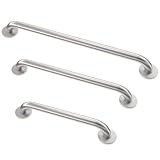
- Complete ADA Compliance Set: This 3-pack includes all essential grab bars for shower and restroom use (18”, 36”, 42”). Crafted from heavy-duty premium stainless steel with a reinforced 2MM flange, it surpasses standards, supports 600 lbs, and guarantees long-term safety for high-traffic commercial environments. ⚠️ CRITICAL: Please measure your wall space BEFORE ordering—42" bar requires approx. 44" of clear wall length.
- Maximum Durability & Lifetime Warranty: Engineered from heavy-duty premium stainless steel (1.5” OD, 18-gauge), these reliable grab bars are built for a lifetime of use. Backed by our limited lifetime warranty, they are a cost-effective investment that drastically reduces replacement needs in any setting
- Superior Support for Accessibility: Our handicap grab bars are engineered to exceed ADA and ANSI standards, offering secure 600-lb support. The versatile 12-hole mounting design ensures compliant and flexible installation on virtually any wall surface for public venues and stalls
- Professional, Hassle-Free Installation: Achieve a clean, modern look with concealed flanges and snap-on covers that hide all screws. The complete hardware kit allows for quick and easy installation of our grab bars for bathroom, making safety upgrades simple and aesthetically pleasing
- Critical Fall Prevention for Seniors: Provide dependable stability with our shower safety bars for seniors. The optimal 1.5” diameter and secure grip inspire confidence, effectively preventing slips and falls in wet bathroom conditions for aging adults and those with mobility needs
Find local advice, funding and providers
The ACL’s Home Modification Information Network is a free resource for locating programs, funding opportunities and providers. Its September 28, 2026 announcement says searches can be made by need and ZIP code. Eligibility, geographic coverage and available funding vary, so ask each program what it covers, whether an assessment is required, and whether the work must be completed by an approved provider.
Keep copies of assessments, estimates, approvals and installation records. If a modification is urgent because of a fall or an unsafe transfer, say so when contacting a program, while still confirming the provider’s credentials and the proposed installation.
Understand the ADA and housing rules without overgeneralizing
The ADA Standards for Accessible Design apply to covered public, government and commercial facilities and to specified construction or alteration circumstances. They are not a blanket design code for every private home. Do not assume that a dimension from an ADA diagram automatically determines what your house must have.
Private housing may also involve the Fair Housing Act. The U.S. Department of Justice guide to disability-rights laws describes tenant rights to make reasonable access-related modifications in a private living space and in common-use areas, subject to the rules and circumstances that apply. Tenants should review their lease, state and local requirements, and the specific housing situation before doing work. A landlord’s response, payment responsibility and restoration obligations can depend on those facts; no general article can promise a particular outcome.
A practical decision sequence
- Name the task. Describe exactly what the resident wants to do independently or more safely.
- Identify the barrier. Decide whether it is reach, grip, balance, vision, route clearance, transfer, fatigue or a building feature.
- Try the least disruptive effective change. Clear, relocate, illuminate or replace a control when that solves the problem.
- Escalate when safety depends on structure. Seek an assessment for ramps, lifts, doorway changes, grab-bar mounting and bathroom remodeling.
- Check local support. Use the ACL network and ask about programs, funding, providers and eligibility by ZIP code.
- Test and maintain. Have the resident use the completed change in the real routine, then inspect it periodically.
A disability-friendly home is one that supports the resident’s own routines with fewer unsafe workarounds. Let the person’s priorities determine which change comes first, and treat every modification as part of an ongoing fit between the individual and the home.
Quick Recap

Product prices and availability are accurate as of the date/time indicated and are subject to change. Any price and availability information displayed on Amazon at the time of purchase will apply.

