PC Slower Than It Used to Be?
A free scan shows the junk files, broken settings and background clutter dragging Windows down - then fixes them in one click.Free scan · Windows 10 & 11Crashes, No Sound, or Screen Glitches?
Random freezes, missing sound and display glitches usually trace back to one bad driver. Find and replace yours safely.Free scan · under a minuteThatPainter is reader-supported. When you buy through links on our site, we may earn an affiliate commission. Learn More
Short answer: Start with matte where a quiet, low-reflection look and camouflage for minor wall flaws matter most; choose eggshell for a balanced finish in moderately used rooms; and consider satin where walls face more touching, scuffing, or some moisture. Those are useful starting points, not universal rules. Sheen names and washability vary by paint line, so the product label and technical data for the exact paint should decide the final choice.
As an Amazon Associate I earn from qualifying purchases.
What paint sheen changes
Matte, eggshell, and satin are different levels of light reflection. That visual difference affects how a wall looks under daylight and artificial light, how strongly it reveals bumps and patches, and how it handles routine cleaning. A more reflective surface generally makes wiping and stain resistance easier, but angled light can emphasize dents, roller marks, and uneven repairs. A flatter surface visually softens those defects, yet aggressive scrubbing may leave a polished patch called burnishing.
What’s actually slowing this PC down?
Pick the symptom - the matching free tool is one click away.
Sheen is only one part of performance. The resin, pigment, curing behavior, intended surface, and formulation of a particular product can matter as much as the name on the can. One maker may place an eggshell near another maker’s satin. For that reason, use the finish category to narrow your choice, then read the exact product’s washability, moisture-use, and application information.
#1 Best Overall
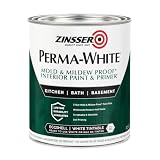
- Self-Priming formula - requires no sanding
- Mold & Mildew-Proof paint film - guaranteed for 5 years
- Resists dirt and moisture on film coating
- Finish is washable and scrubbable with soap and water
- Product contains a mildewcide to prevent the growth of mold and mildew on the paint film only
Matte, eggshell, and satin compared
| Finish | Appearance | Where it is a useful starting point | Main advantage | Main caution |
|---|---|---|---|---|
| Matte | Soft, very low-luster reflection | Bedrooms, quiet living spaces, low-contact walls, and surfaces with minor imperfections | Downplays small flaws and produces a calm look | Some matte products are harder to scrub; cleaning performance is product-specific |
| Eggshell | Moderate, subtle sheen | Living rooms, dining rooms, and other moderate-traffic areas | Balances a restrained appearance with more practical cleanability than very flat paint | Terminology and durability vary between product lines |
| Satin | Noticeably brighter low-luster reflection | Hallways, family rooms, children’s rooms, kitchens, and bathrooms when the product is rated for the surface | Usually easier to wipe and more resistant to marks than flatter finishes | Reflects grazing light and can highlight wall defects or uneven sheen |
This table describes common positioning, not a universal performance scale. Sherwin-Williams groups satin and eg-shel in one guidance section, while Behr presents eggshell and satin as separate choices. Always use the paint line’s own definitions when two products appear close.
Room-by-room recommendations
Bedrooms
Matte is a sensible first look for a bedroom when you want walls to recede rather than shine. Behr describes matte as a soft-looking bedroom option, and its US interior sheen guidance says, in the context of its own products, that “Matte has a low luster reflective finish that is durable, easy to clean, touches up well, and also hides minor surface imperfections.” Treat that as Behr’s product guidance, not a guarantee for every matte paint.
Eggshell or satin can be better if the room receives frequent contact from children, pets, luggage, or furniture. Sherwin-Williams lists eggshell and satin among bedroom choices as well. Decide whether the priority is a quieter appearance or easier routine wiping, then verify the specific product’s washability.
Living rooms and dining rooms
Eggshell is a practical middle option for a living room with normal household use. Behr places eggshell enamel in moderate-traffic spaces such as living rooms. It gives more visual depth than matte without the stronger highlights of satin.
Matte can suit a formal or lightly used living or dining room, especially when plaster, drywall, or older repairs are not perfectly uniform. Sherwin-Williams lists matte for living and dining rooms. In a busy open-plan room, choose based on where hands, chairs, and food are most likely to contact the walls rather than applying one sheen automatically to the entire space.
Hallways, family rooms, and children’s rooms
These areas typically collect fingerprints, shoulder marks, toy impacts, and scuffs. Sherwin-Williams lists satin or eggshell for hallways, children’s bedrooms, and family rooms where nicks and scuffs are concerns. Satin is a reasonable starting point when frequent wiping is expected; a washable eggshell or a durable matte formulated for cleaning may be preferable when you want less reflection.
Rank #2

- PAINT + PRIMER IN ONE: Evolve’s paint-and-primer formula helps you get great coverage from the start, sealing your surface and reducing the extra work of multiple coats.
- AVAILABLE IN MULTIPLE SHEENS, COLORS & SIZES: Choose from a curated palette of designer colors in Flat, Eggshell, Satin, and Semi-Gloss sheens to match any style, room, or project. Available in 1-Gallons & 5-Gallons.
- EGGSHELL SHEEN – Soft, Velvety Glow: Offers a gentle sheen that balances elegance with durability. Ideal for moderate-traffic areas like dining rooms, hallways, and family rooms. Easy to clean without compromising the finish.
- STAIN & SCRUB RESISTANT: Built to last in real spaces, Evolve helps resist marks, scuffs, and water spotting, so your home continues to look polished and well-maintained.
- DESIGNED FOR MOISTURE-PRONE AREAS: Formulated to perform well in bathrooms, kitchens, entryways, laundry rooms, and other high-humidity spaces.
Look for the product’s stated scrub or washability information instead of assuming that every satin will outperform every matte. If a wall already has visible patching, a lower-luster product can hide more, but that benefit must be weighed against the cleaning demands of the room.
Recommended Free Tools
Kitchens
Satin is commonly considered for kitchen walls because cooking creates fingerprints, splashes, and occasional grease spots. Behr recommends satin for moderate-to-high traffic or some moisture exposure, and its guidance names kitchens as an example. Select a product labeled for interior walls and follow its cure time before washing.
Areas directly behind a range or sink may need a surface designed for that exposure rather than a different sheen alone. Ventilation, a suitable primer, and careful preparation are still necessary; satin cannot compensate for persistent condensation, leaks, or unprepared substrate.
Bathrooms
Satin is a common starting point for bathroom walls when the product is intended for that use. Sherwin-Williams suggests satin or semi-gloss for bathroom areas, while Behr identifies satin with some moisture exposure. The room’s ventilation and the wall material matter as much as sheen. Use an exhaust fan, allow the coating to cure as directed, and confirm that the label permits the intended bathroom surface.
Do not treat “bathroom” as a license to use any shiny paint anywhere. A shower surround, trim, ceiling, and ordinary painted drywall have different exposure levels and may require different products.
Uneven walls and ceilings
Flat or matte finishes are usually the safest visual choice when the goal is to make dents, textured repairs, or waviness less obvious. Sherwin-Williams recommends flat for ceilings and for uneven or textured walls, and explains that low-reflectance finishes conceal blemishes better. Satin can create bright bands across a wall when light enters from a nearby window at a shallow angle.
Rank #3

- Use for a variety of indoor and outdoor project surfaces including wood, metal, plaster, masonry or unglazed ceramic
- Water-based acrylic formula is low odor, resist chips and provides long-lasting protection
- Covers up to 120 sq ft and dries to touch in 30 minutes for quick project completion
- Semi-gloss finish minimizes surface imperfections, goes on smoothly and provides excellent hide
- Prior to application sand surfaces with 180/200 grit sandpaper, then wash with a degreaser, allow the surface to dry and apply paint
If a ceiling has water stains, cracks, or poor patching, fix the underlying problem and prime it before selecting sheen. A flatter finish can reduce visual distraction, but it does not repair the surface.
Trim, doors, and cabinets
This comparison is primarily about wall finishes. Trim, doors, and cabinets are often specified separately. Sherwin-Williams points to gloss or semi-gloss for those elements because the harder, brighter surface can tolerate handling and make details stand out. Use the trim product’s own instructions; matte, eggshell, or satin wall paint should not be assumed suitable for every cabinet or door.
How the appearance and cleaning trade-off works
Reflection and visible flaws
Light reflects more strongly from satin than from eggshell, and more from eggshell than from matte. On a perfectly smooth wall, that can add definition and make color appear richer. On a repaired or textured wall, the same reflection can reveal every shallow ridge. Window position is important: light traveling across a wall from the side exposes irregularities that direct light may hide.
What’s actually slowing this PC down?
Pick the symptom - the matching free tool is one click away.
Stains, wiping, and burnishing
Higher-sheen surfaces are typically easier to keep clean and more stain-resistant, according to Sherwin-Williams. Flatter finishes can be difficult to clean, and repeated rubbing may create shiny spots. Use a soft cloth, mild cleaner approved by the product maker, and minimal pressure. Test an inconspicuous area first, because a successful cleaning method for one formulation can damage another.
There are product-specific exceptions. Sherwin-Williams’ Duration Home line is offered in matte, satin, and semi-gloss and is designed for improved washability. That example shows why sheen alone cannot predict performance; do not generalize one line’s formulation to all matte paints.
A decision framework that works in any room
Sherwin-Williams summarizes sheen selection around the type of room, what is being painted, lighting, window position, traffic, performance expectations, and aesthetic preference. Use those factors in this order:
Rank #4

- ALL-IN-1 PAINT & PRIMER: A hardy multi-purpose and multi-surface one-coat paint and primer in one for almost any indoor or outdoor surface. A wall, ceiling, floor, skirting board, cabinet, furniture and door paint for your bathroom, kitchen, home and garden.
- DURABLE & VERSATILE: A highly pigmented, thick formula available in 12 bold colors and a Matte, Satin or Gloss finish. Ideal for interior and exterior paint jobs on wood, laminate, plastic/UPVC, metal, concrete, brick, masonry, stone, glass and more.
- EFFECTIVE MONEY & TIME SAVER: A quick painting solution for DIY or professional builders and painters; our luxuriously opaque formula requires just 1 coat and is fast drying for a premium finish.
- ADVANCED ECO FORMULA: Our UK-made chalk paint is water-based, non-toxic, low odor, and has low VOCs for an environmentally friendly decorating choice.
- EASY APPLICATION: Remove dirt with a damp cloth, wipe the surface clean and dry, sand/score the surface (optional based upon the finish required), stir to mix the color and paint with a brush or roller.
- Identify the surface. Decide whether you are coating ordinary drywall, a previously painted wall, a ceiling, trim, cabinetry, or a damp-area surface. Confirm that the product is approved for it.
- Assess the wall condition. On smooth, well-prepared walls, you can choose more sheen for visual depth. On uneven walls, a flatter finish reduces reflected highlights.
- Map contact and cleaning. Count hand-height traffic, furniture rubbing, children’s activity, pets, and food or water splashes. More contact raises the value of a washable formulation.
- Study the light. Check windows, lamps, and the direction of grazing light. A satin that looks restrained in a shaded store may look much brighter beside a large window.
- Set the visual priority. Choose whether the room should feel soft and quiet, balanced, or slightly more defined and reflective.
- Read the technical information. Confirm the manufacturer’s sheen description, washability, recommended uses, recoat guidance, and any restrictions for moisture or trim.
Step-by-step: choose the finish before buying paint
- Photograph or inspect the room at several times of day. Look at the walls in morning daylight, afternoon light, and evening lamp light. Note any angle where repairs become obvious.
- Mark high-contact zones. Doorways, stair approaches, switch areas, dining-chair height, and the wall behind a desk often need more cleaning than the rest of the room.
- Separate surfaces. Plan wall, ceiling, trim, and cabinet products independently. A single room may legitimately use more than one sheen.
- Shortlist one or two finishes. For example, compare matte with washable eggshell in a bedroom, or eggshell with satin in a hallway.
- Buy or obtain real samples. Paint a large test area or a movable board with the actual product. Small color cards cannot show how a sheen reacts to your wall texture and lighting.
- View the sample from different angles. Stand beside the window, across the room, and near the main light source. Check for flashing, roller texture, and whether the reflection is comfortable.
- Confirm the label before purchasing the full quantity. Make sure the product is intended for the substrate and room conditions and that its cleaning claims meet your expectations.
Preparation and application affect the final sheen
Even the correct finish can look poor over contamination or uneven porosity. Clean grease and dust, repair dents, sand ridges, remove loose coating, and prime repaired or porous areas as directed. Without consistent preparation, a wall can show dull and shiny patches that are mistaken for a sheen-selection error.
Free tools Windows power users keep installed
One-click scans. No signup required.
Maintain a wet edge, use the roller nap recommended for the surface, and keep application pressure consistent. Touch up with the same product, color, batch when possible, and application method. A different tool or partially cured area can reflect light differently, especially in satin.
Respect the stated recoat and cure times. A wall that feels dry can still be soft enough to burnish under cleaning or furniture contact. Do not wash newly painted surfaces until the product label says they have cured sufficiently.
Independent reader supportYour contribution helps us test, update, and keep practical guides available for everyone.Cleaning and maintenance by finish
Matte
Remove dust with a soft, dry microfiber cloth or a lightly damp cloth. Blot marks rather than scrubbing. If the manufacturer permits mild detergent, dilute it and test first. Stop if the spot becomes glossier than the surrounding wall; that is burnishing, not improved cleanliness.
Eggshell
Eggshell generally tolerates routine wiping better than very flat paint, but the exact product controls the result. Use a soft sponge, limited water, and gentle passes. Rinse cleaner residue and dry the area without polishing it.
Satin
Satin is often selected where wiping is frequent, yet it can still show streaks or uneven touch-ups. Clean with a soft cloth and the product maker’s recommended solution. If a stain will not release, repainting the entire wall from corner to corner usually produces a more uniform appearance than repeated spot scrubbing.
Best Value

- WHAT'S IN THIS 10 PIECE PAINT KIT FOR WALLS: includes one plastic paint tray; one 9 inch roller frame; one 4 inch mini roller frame; two 9 inch microfiber roller covers (1/2 inch nap); two 4 inch microfiber roller covers (1/2 inch nap); one 1 inch flat brush; one 1.5 inch angle sash brush; one 2 inch angle sash brush
- Versatile Application: Perfect for any project, this set includes paint rollers 9 inch for large surfaces and smaller brushes for detail work
- All-in-One Kit: This paint brush set and paint tray combo ensures you have all the paint supplies needed for any home improvement task
- Professional Grade: Get a smooth, even finish with our high-quality paint roller set; ideal for applying interior paint gallon or smaller quantities
- Cost-Effective: This paint brush and roller set provides unbeatable value; includes paint pan and paint trays for easy cleanup and reuse
Common mistakes and how to correct them
Choosing by name alone
Problem: You assume that every eggshell or satin has the same reflectance and durability. Correction: Compare the maker’s definitions and technical data, then test the exact product in the actual room.
Using satin to hide a damaged wall
Problem: The extra sheen highlights ridges, nail pops, or waves. Correction: Repair and prime first, or move to eggshell or matte if the remaining texture is acceptable.
Assuming matte cannot be washable
Problem: You reject matte even when a particular line is designed for cleaning. Correction: Read the product’s washability statement. Some matte formulations, including the cited Duration Home example, are specifically designed for improved washability; that feature is not universal.
Quick wins for a faster PC:
Scan for outdated or missing drivers - takes under a minuteDriver Scan →Repair Windows errors before they cause bigger problemsFix Now →Assuming satin solves bathroom moisture
Problem: The coating is expected to withstand condensation, leaks, or poor ventilation by itself. Correction: Fix moisture sources, ventilate, prepare the surface, and use a product labeled for the application.
Matching a touch-up by color but not by sheen
Problem: The new spot has a different reflection even though the color is nominally identical. Correction: Use the same sheen, product line, preparation, and tool; for visible areas, repaint the full wall plane.
What the manufacturer guidance does—and does not—establish
Behr’s room suggestions place matte in bedrooms, eggshell in moderate-traffic living rooms, and satin in moderate-to-high-traffic or somewhat moisture-exposed spaces such as kitchens and baths. Sherwin-Williams similarly associates matte or flat with lower-reflection applications, eggshell and satin with traffic-prone rooms, and satin or semi-gloss with bathroom areas. These are practical starting points rather than building-code requirements or guarantees.
Sherwin-Williams also publishes technical gloss and sheen measurements on a 0–100 reflectance scale using 60-degree or 85-degree measurement angles for particular product lines. Those figures describe the tested products and angles; they are not a universal numeric scale for every paint sold as matte, eggshell, or satin.
A practical finish plan for a typical home
| Area | Initial shortlist | Choose the lower-sheen option when… | Choose the higher-sheen option when… |
|---|---|---|---|
| Bedroom | Matte, eggshell, or satin | You want a soft look and walls have visible minor repairs | People, pets, or furniture frequently mark the walls |
| Living or dining room | Eggshell or matte | Traffic is light and appearance is the priority | Meals, children, or frequent cleaning increase contact |
| Hallway or family room | Eggshell or satin | The wall is uneven and a washable matte product is available | Scuffs and fingerprints are routine |
| Children’s room | Washable eggshell or satin; durable matte may fit | You value low reflection and the product’s cleaning data supports it | Walls need repeated wiping |
| Kitchen | Satin, subject to label | Reflection would expose significant wall defects and exposure is modest | Splashing and wiping are regular |
| Bathroom | Satin or a product-specific bathroom finish | The room is dry, well ventilated, and the product permits a lower sheen | Condensation and cleaning are frequent and the label supports the use |
| Ceiling | Flat or matte | You need to minimize reflected defects | A special ceiling product or design intentionally calls for more reflection |
| Trim and doors | Often semi-gloss or gloss, product dependent | The manufacturer specifies a lower sheen for the particular substrate | Handling, wiping, and visual contrast are priorities |
Bottom line: match sheen to the room, wall, and product
Use matte for a calm, forgiving appearance; eggshell when you want a measured compromise; and satin when contact, cleaning, or limited moisture exposure deserves greater weight. Then adjust that starting point for wall condition, window light, ventilation, substrate, and the exact formulation. A carefully prepared wall painted with the right product-specific sheen will outperform a one-size-fits-all rule.
Quick Recap

Product prices and availability are accurate as of the date/time indicated and are subject to change. Any price and availability information displayed on Amazon at the time of purchase will apply.

