ThatPainter is reader-supported. When you buy through links on our site, we may earn an affiliate commission. Learn More
A mudroom is a working transition between outdoors and the rest of your home. It contains wet coats, muddy shoes, bags, pet equipment and everyday clutter before they spread through living areas. The most effective mudroom may be a dedicated room, but it can also be a carefully planned zone beside a frequently used door. Start with your household’s actual traffic and gear, then fit the location, circulation, storage, surfaces and drying strategy to that reality.
As an Amazon Associate I earn from qualifying purchases.
What a mudroom does—and what it does not require
The central job is containment: give dirt, water, footwear, coats, umbrellas, bags and related equipment a place to stop when people enter or leave. That makes a mudroom practical rather than merely decorative. It can sit by a rear or side entrance, beside a kitchen, in a laundry or utility room, on an enclosed porch, or at the edge of a garage, provided people can use it without carrying mess across the house.
Free tools Windows power users keep installed
One-click scans. No signup required.
In a cool or cold climate, a mudroom can also act as an airlock. YourHome’s Australian Government guidance describes an enclosed entry that limits cold air entering and warm air leaving. The arrangement only works when there is enough space to close one door before opening the other, so treat it as a layout-dependent benefit, not a universal energy-saving guarantee.
#1 Best Overall

- More Comfortable Shoe Change Cabinet: With a 25 mm sponge cushion on the bench top, you can change shoes by sitting on the bench more comfortable without bending down or squatting
- Keep Your Shoes Organized: The depth of bench is 13.8 inches, which makes it easily to put in your shoes, meanwhile shoes of various heights can be placed by adjusting middle movable boards. The bench doors design ensures not only your privacy, but also a tidy space
- Match Your Room Style: Classic barn-door design is quite suitable for different home decoration styles. You can put it at various places in your home such as entrance, corridor, bedrooms, etc
- Stable & Long-lasting: Made of EPA-Certified board, the product is stable with a static load of up to 300 lbs. The zipper design of cushion can help you remove and clean cover easily. What are you hesitating about? Now preparing a shoe bench for your home
- Easy Installation: You will finish assembly easily in a short time with detailed installation diagram and numbered parts
There is no independent study in the cited sources establishing a particular reduction in dirt, humidity, energy use or home value. Design decisions should therefore be based on your routines, site conditions and building requirements rather than promised performance figures.
Plan from people, gear and routines
Make an inventory before drawing cabinets
Write down everyone who uses the entrance and everything that arrives with them. Include everyday and seasonal shoes, coats, school or sports equipment, work bags, umbrellas, laundry, and pet items if applicable. Count the items that need quick access and those that can be stored higher or behind doors. This prevents a photograph of someone else’s cubbies from dictating a layout that cannot hold your belongings.
Lower storage matters when children or people with mobility restrictions use the space. Keep frequently handled items within the reach of the people who actually use them, while reserving high shelves for seasonal gear. Wider access and low storage are useful planning considerations, but the public ADA standards page concerns covered public and commercial facilities; it does not by itself set requirements for a private residential mudroom. Check the accessibility rules that apply in your location for a specific project.
Choose containers before built-ins
Boston-based designer Kristina Crestin, quoted by This Old House, advises: “I always select storage bins before designing cubbies—or even a bench with bins below for shoes—so I know everything will fit!” Use that sequence when planning: measure the baskets, bins or shoe containers you expect to use, then set cubby, shelf and bench dimensions around them.
Rank #2

- More Comfortable Shoe Change Cabinet: With a 2-inch thickened padded sponge cushion on the bench top, you can change shoes by sitting on the bench more comfortable without bending down or squatting
- Keep Your Shoes Organized: The depth of bench is 13.8 inches, which makes it easily to put in your shoes, meanwhile shoes of various heights can be placed by adjusting middle movable boards. The bench doors design ensures not only your privacy, but also a tidy space
- Match Your Home Style: Enhance your home decor with the bench's modern style, featuring clean lines and a sophisticated finish that complements any contemporary interior. You can put it at various places in your home such as entryways, corridor, living rooms, bedrooms, etc
- Stable & Long-lasting: Made of EPA-Certified board, the product is built to last and with a static load of up to 300 lbs. The zipper design of cushion can help you remove and clean cover easily. What are you hesitating about? Now preparing a shoe bench for your home
- Easy Assembly: Designed for quick and hassle-free assembly with clear instructions and all necessary hardware included. Set up your bench in no time and enjoy its benefits immediately
Put the drop zone on the route people really use
The best location is the door where muddy or wet gear most often enters, not necessarily the formal front entrance. A direct outside connection limits the distance that soil and water travel. Homes & Gardens quotes deVOL Creative Director Helen Parker: “Have the room located directly to the outside, to avoid muddy boots and gardening equipment being traipsed through your house.” That principle is especially useful for gardeners, dog owners and households that use a rear or side door more than the front one.
| Possible location | When it can work | Checks before committing |
|---|---|---|
| Rear or side entry | The household regularly enters there with outdoor footwear or equipment. | Confirm the path does not block the main circulation route and that the door can operate alongside benches and cabinets. |
| Laundry or utility room | Existing service space already handles household work and can accommodate a drop zone. | Protect appliance access, allow damp items to dry, and verify that added plumbing or ventilation meets local requirements. |
| Kitchen-side entry | The entrance is part of the daily school, work or shopping route. | Keep the cooking and food-preparation path clear while providing a defined place for shoes, bags and coats. |
| Enclosed porch | The porch can be secured from weather and connected directly to the home. | Check insulation, moisture exposure, door sequencing and available depth for storage. |
| Garage transition | People come in from the garage with tools, sports equipment or dirty footwear. | Garage conversions and separations can involve fire, ventilation, electrical and structural rules; obtain local code advice before construction. |
Walk the route while carrying the bulkiest items. If a person must cross a living room to reach the bench, or if an open door collides with storage, the proposed location is not functioning as a transition. An existing room can be adapted when its layout supports this route; a new addition offers more flexibility but brings greater design, permitting and construction complexity.
Coordinate circulation, seating and storage
A seat lets people change footwear without balancing in the doorway. Hooks or pegs keep coats, bags and umbrellas ready for quick departure. Shelves, cubbies and baskets contain shoes and smaller items. Open compartments allow damp belongings to air; closed cabinets conceal visual clutter. Use a mixture only when each type has a clear job.
| Storage choice | Most useful for | Decision question |
|---|---|---|
| Hooks or pegs | Coats, bags and umbrellas used frequently. | Can every user reach a hook without standing in the traffic path? |
| Shelves | Shoes, baskets and items that need visible access. | Will the shelf depth leave enough clear floor for the route and door swing? |
| Baskets or bins | Small items and footwear that need containment under a bench or on a shelf. | Have the actual containers been measured before cubbies are built? |
| Drawers or cabinets | Items the household wants concealed and protected from view. | Does the added door or drawer clearance interfere with circulation? |
| Open and closed combination | Frequently used or damp items in the open, less-used items behind doors. | Does the balance match both airing needs and the household’s tolerance for visible clutter? |
Compare fitted and freestanding storage by the amount of wall and floor area each uses and how easily the arrangement can change. Fitted units can use an awkward wall efficiently; freestanding pieces are easier to move if routines change. In either case, check bench depth, door swings, drawer travel and access to every shelf before ordering or building.
Rank #3
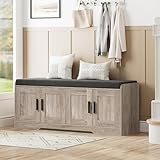
- More Comfortable Shoe Change Cabinet: With a 2-inch thickened padded sponge cushion on the bench top, you can change shoes by sitting on the bench more comfortable without bending down or squatting
- Keep Your Shoes Organized: The depth of bench is 13.8 inches, which makes it easily to put in your shoes, meanwhile shoes of various heights can be placed by adjusting middle movable boards. The bench doors design ensures not only your privacy, but also a tidy space
- Match Your Home Style: Enhance your home decor with the bench's modern style, featuring clean lines and a sophisticated finish that complements any contemporary interior. You can put it at various places in your home such as entryways, corridor, living rooms, bedrooms, etc
- Stable & Long-lasting: Made of EPA-Certified board, the product is built to last and with a static load of up to 300 lbs. The zipper design of cushion can help you remove and clean cover easily. What are you hesitating about? Now preparing a shoe bench for your home
- Easy Assembly: Designed for quick and hassle-free assembly with clear instructions and all necessary hardware included. Set up your bench in no time and enjoy its benefits immediately
Size the room without treating a guideline as a code rule
Lowe’s 2023 planning guide gives 6 by 6 feet to 7 by 9 feet as usual mudroom dimensions. That is a planning estimate, not a minimum size or a universal standard. Allow more area if you intend to add laundry appliances. The correct footprint is the one that lets people enter, turn, sit, open doors and reach storage without squeezing past one another.
Mark the proposed bench, cabinets and door swings on the floor with tape before installing anything. Test the route while wearing bulky footwear and carrying bags. Include clearance for appliance doors if the room also houses laundry, and leave a place where wet items can stand or hang without dripping onto the walking line.
Choose surfaces for dirt, water and maintenance
High-traffic flooring needs to tolerate soil and water and be practical to clean. The cited guides suggest tile or stone, vinyl over a moisture-proof substrate, concrete, ceramic tile, porcelain, luxury vinyl and luxury vinyl tile. Lowe’s specifies that tile or stone should be non-slip. Homes & Gardens cautions that deeply pitted or uneven surfaces can trap mud and points to smoother stone-effect porcelain and luxury vinyl tile as alternatives.
What’s actually slowing this PC down?
Pick the symptom - the matching free tool is one click away.
| Surface option mentioned by the guides | Planning points to verify |
|---|---|
| Tile or stone | Confirm non-slip suitability, substrate preparation, grout and cleaning requirements for the site. |
| Vinyl or luxury vinyl tile | Verify the product’s moisture limits, subfloor requirements, seams and maintenance instructions. |
| Ceramic or porcelain tile | Check texture, slip considerations, installation method and whether the surface is too deeply pitted to clean easily. |
| Concrete | Confirm that the existing or proposed slab is appropriate for the intended finish and moisture conditions. |
These are options identified by editorial guides, not comparative laboratory tests or performance rankings. Read the specifications for the exact product and installation location. At the threshold, Lowe’s recommends: “Use nonskid, washable rugs to collect water and dirt before they’re tracked into the house.” Choose a mat or washable rug that fits the doorway, lies flat and can be removed for cleaning.
Rank #4

- Multifunctional Shoe Cubby Bench: Are your shoes are piled up all over your entryway? This entryway cabinet will be the perfect solution for you. This storage bench with 12 compartments is able to store the daily shoes of your whole family. The hooks in 2 rows hold jackets and accessories
- Removable Padded Seat: Soft sponge cushion is covered with breathable cotton and linen fabric, and it comes with sticky back fastener to prevent the cushion from slipping when sitting on it. You can also use it as a window seat or bed-end stool for storing blankets, books and toys
- Entryway Bench with Coat Rack: The hooks in 2 rows with a large storage bench offer enough space to hang your coats and keep your shoes organized, giving a new look to your entryway. Coat hooks on the wall hold coats, bags and other items for you and your guests. It is the right-hand furniture for keeping your hallway tidy
- Sturdy Shoe Bench: This multifunctional storage bench is made of sturdy particleboard, it is strong enough to support up to 330 lb. Family members or guests can change shoes in a comfortable position while sitting on the soft padded stool
- Easy Assembly: Our shoe organizer comes with numbered parts and includes all necessary tools and a detailed step-by-step graphic instruction manual, allowing you to effortlessly assemble the coat rack shoe bench for ready to use in no time
Give wet gear a drying and cleaning plan
Wet coats, shoes, umbrellas and pet equipment need somewhere to drip, dry and be cleaned. Keep damp items where air can reach them rather than sealing them immediately in a closed cabinet. A tray or washable mat below footwear can confine drips, while a dedicated hook or rail keeps wet coats off the floor.
Lowe’s says heating and ventilation reduce humidity and help garments dry, and describes an exhaust fan with a timer that vents outdoors. Homes & Gardens suggests an extractor fan or a window that can safely be left open, with a dehumidifier as a possible alternative when those options are unavailable. These are general planning suggestions, not a ventilation specification. The correct equipment and duct route depend on the building, climate and local rules; confirm them with an appropriately qualified professional.
Plan cleaning access at the same time as storage. A floor that can be swept or mopped easily, removable mats, and a place for brushes or cleaning supplies reduce the temptation to carry muddy items farther into the house. If pets use the entry, decide whether their towels, leads and washing supplies belong in open, ventilated storage or a separate cabinet.
Do these 3 things before closing this tab:
1Repair Windows errors before they cause bigger problems2Fix the driver behind crashes, sound loss and screen glitches3Clear out junk files and repair common Windows errorsUse lighting and finishes to support the work
Lighting should make the threshold, floor and storage contents easy to see at the times the entrance is busiest. Place switches where someone entering with full hands can reach them, and avoid allowing a tall cabinet or open door to cast the only work area into shadow. Select wall and trim finishes that can be wiped without damaging the surface, especially beside hooks, benches and the door. The sources do not establish a particular fixture, brightness level or paint product, so choose those details for the room’s dimensions and electrical conditions.
Best Value

- Claim Your Boho Vibes: Part of the ELLAN Collection, this shoe bench combines a woven rattan look, rounded corners, and slim pulls for a cozy, relaxed boho feel. Pair it with the matching storage cabinets to create a unified, inviting space
- Customizable & Versatile: This 4-door storage bench with cabinet has 2 adjustable shelves with 5 height options each, holding various types of family footwear—from heels to sneakers to ankle boots. It fits easily in your entryway, bedroom, or mudroom
- Sturdy & Durable: Built with 1.2" thick panels, this shoe storage bench offers a solid structure and a top that supports up to 300 lb; the synthetic rattan surface is water- and stain-resistant, making cleanup easy and ensuring long-lasting use
- Comfortable Cushion: This entryway storage bench boasts a high-density foam-padded cushion that offers a softer, more supportive seat, so changing shoes feels easier and more relaxing
- Simple, Guided Assembly: Clearly labeled parts and illustrated instructions walk you through each step, so you can put this entryway bench with storage together with confidence and minimal effort
Decide which extras justify renovation
A sink or laundry connection can be useful when the room has enough space and plumbing can be routed sensibly. A dog wash or shower attachment may suit a household that frequently cleans pets or dirty equipment. None of these features is essential to the definition of a mudroom.
The project becomes more consequential when it adds plumbing, wiring, structural changes or a garage separation. Garage conversions may require review of fire separation and other local provisions. Ventilation, electrical work, structural alterations and new water connections should be designed and completed according to applicable rules by appropriately qualified professionals. Obtain approvals before work begins rather than assuming an existing porch, utility room or garage edge can be altered without review.
A practical decision sequence
- Map the routine. Identify the door used most, list each person’s gear, and note which items arrive wet, muddy, bulky or seasonal.
- Test the location. Choose a direct route to the outside and walk it with bags, footwear and equipment. Reject layouts that force mess through living areas or obstruct the main path.
- Measure real containers. Select baskets, bins and shoe storage first, then size cubbies, shelves and the bench around them.
- Draw circulation. Mark door swings, bench depth, cabinet openings, appliance access and a clear standing area on the floor.
- Assign open and closed storage. Put damp or frequently used items where they can air and be reached quickly; conceal less-used items only where doors and drawers will not interfere with movement.
- Specify cleanable surfaces. Compare flooring by moisture exposure, slip needs, texture, substrate, maintenance and installation requirements. Add a flat, washable nonskid mat at the threshold.
- Resolve moisture. Decide where wet footwear, coats, umbrellas and pet gear will drip and dry. Confirm heating, extraction, windows and any dehumidification approach for the particular building.
- Check the project scope. Before adding plumbing, electrical work, structural changes or a garage separation, verify local rules and obtain qualified advice.
Common planning mistakes to avoid
- Copying a display layout. A photo does not reveal how many people use the entrance or how much sports, school, work or pet gear they carry.
- Building cubbies before buying bins. Containers that do not fit create wasted space and loose piles.
- Ignoring the door swing. A bench or cabinet that blocks an open door turns the transition into a bottleneck.
- Choosing a difficult-to-clean texture. Deep pits and uneven surfaces can hold mud; verify maintenance requirements before installation.
- Sealing wet items immediately. Damp coats and shoes need a planned drying location and suitable airflow.
- Treating a size range as a rule. The 6-by-6-foot to 7-by-9-foot figure is a Lowe’s planning estimate, not a code minimum.
- Assuming a private home follows public-facility standards. Accessibility and construction obligations depend on the project and jurisdiction; verify them locally.
When a mudroom is worth the space
A dedicated room makes sense when a household has a heavily used exterior door, persistent wet or dirty gear, and enough area to keep storage and circulation separate. A smaller drop zone can deliver the same basic function when the home cannot spare a room: concentrate hooks, a seat, footwear containment and a washable threshold mat beside the most-used entrance. In both cases, success comes from matching the transition to real behavior, not from adding the largest possible cabinet wall.
Quick Recap

Product prices and availability are accurate as of the date/time indicated and are subject to change. Any price and availability information displayed on Amazon at the time of purchase will apply.

