Recommended Free Tools
Crashes, No Sound, or Screen Glitches?
Do these 3 things before closing this tab:
1Scan for outdated or missing drivers - takes under a minute2Repair Windows errors before they cause bigger problems3Fix the driver behind crashes, sound loss and screen glitchesFree scan · under a minute
Windows Errors? Fix Them Before They Spread
Free scan · no reinstall
Outdated Drivers Are Slowing You Down
Free scan · exact hardware match
ThatPainter is reader-supported. When you buy through links on our site, we may earn an affiliate commission. Learn More
Paint is usually the better choice when you want a new opaque color on sound cabinets; strip-and-refinish is the better choice when suitable wood grain is worth preserving. Neither option fixes delaminating panels, moisture-damaged fiberboard, loose joints, sagging shelves, or a cabinet layout you dislike. The right decision starts with the cabinet material and condition, then weighs appearance, preparation, downtime, durability, and a written project scope.
As an Amazon Associate I earn from qualifying purchases.
“Refinishing” is used inconsistently in the home-improvement industry. In this guide, painting means cleaning, preparing, priming when required, and applying an opaque coating. Strip and refinish means removing much of the existing finish from suitable wood and applying a new stain, paint, lacquer, or sealer. Some contractors call any finish update refinishing, so ask exactly which process their estimate includes.
Painting and strip-and-refinishing are different scopes
Painting changes the visible color without showing the natural grain through the coating. It can modernize a dated oak, maple, or painted kitchen and offers the widest color range. Strip-and-refinish work is a restoration process: the existing coating is removed or substantially reduced, the wood is prepared, and a new stain or clear finish is applied. It can also end with paint, which is why the word “refinishing” alone is not precise.
#1 Best Overall
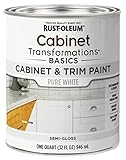
- CABINET TRANSFORMATION: Refresh outdated cabinets, vanities, furniture and trim with rich Pure White color and a smooth semi-gloss finish
- DURABLE PERFORMANCE: Easy-to-clean finish resists dirt and grime while standing up to household chemicals
- SMOOTH APPLICATION: Outstanding flow and leveling help create a beautiful finish with brush, roller, pad applicator or airless sprayer
- FAST PROJECT COMPLETION: Dries to touch in 30 minutes, recoats in 2 hours and is ready for normal use after 24 hours
- INTERIOR CABINET COATING: Ideal for kitchens, bathrooms, laundry rooms and other interior cabinet and trim applications
Both methods work on the existing cabinet footprint. They do not change door profiles, add storage, correct an inconvenient layout, or replace failed cabinet boxes. If the fronts are sound but you want a different door style, refacing is a separate project; if the boxes or layout are fundamentally unsuitable, replacement may be more rational.
What painting can and cannot do
- It can hide an unwanted wood tone, cover color variation, and create a consistent finish across doors, drawer fronts, and exposed boxes.
- It cannot make a warped door flat, restore missing veneer, strengthen a loose joint, or stop swelling caused by an active leak.
- It requires a sound, paint-compatible surface and preparation matched to the existing coating.
What strip-and-refinishing can and cannot do
- It can restore or reveal grain on appropriate solid-wood components and renew a worn stain or clear coat.
- It adds labor for stripping, neutralizing or cleaning residue, sanding, stain control, and sealing.
- It cannot turn damaged substrate into new wood. Veneer, laminate, and wrapped finishes need a different assessment, and some are poor candidates for conventional stripping.
Start with the cabinet material and condition
Before choosing a color or requesting a price, identify what the doors, drawer fronts, and boxes are made from. HUD USER describes refinishing guidance for solid-wood portions and warns that the process does not work well on veneer, laminate, or wrapped finishes (HUD USER kitchen-cabinet guidance). A professional should confirm the substrate on a door edge or an inconspicuous area rather than guessing from the visible grain.
Quick wins for a faster PC:
Scan for outdated or missing drivers - takes under a minuteDriver Scan →Repair Windows errors before they cause bigger problemsFix Now →| Cabinet situation | Likely implication |
|---|---|
| Sound solid wood with a worn stain or clear coat | Either painting or strip-and-refinishing may be suitable; choose based on whether you want opaque color or visible grain. |
| Veneer over a stable core | Refinishing options are limited by veneer thickness and adhesive condition. Aggressive stripping can damage it; a coating system approved for the substrate may be safer. |
| Laminate or melamine | Conventional wood stripping is generally inappropriate. Painting requires exceptionally careful cleaning, adhesion preparation, and a compatible primer or coating specified for the surface. |
| Rigid thermofoil that is splitting or peeling | Angi identifies splitting rigid thermofoil as a poor refinishing candidate; replacement of fronts or a broader cabinet solution may be more realistic (Angi). |
| Moisture-swollen fiberboard, delamination, loose rails, weak joints, or sagging shelves | These are structural or substrate problems. Paint may conceal them briefly but will not repair the cause. |
Separate cosmetic wear from structural failure
Look for bubbling or lifted laminate, swollen bottom edges under the sink, cracks that reopen after tightening, doors that no longer sit square, and shelves that sag under normal loads. Trace any moisture damage to its source before finishing. A finish contractor can sometimes replace a small damaged part, but that repair must appear as a separate line item in the bid. If several boxes are failing, compare the repair cost and expected service life with refacing or replacement.
Appearance: opaque color versus visible grain
Paint gives you a broad palette, from white and muted neutrals to deep colors, and creates a uniform look across mixed wood tones. Because it is opaque, it hides most grain, knots, and color variation. Brushed or rolled paint can show application texture; sprayed coatings can look smoother but require more masking, ventilation, and skill.
Strip-and-refinishing can preserve or reveal grain on suitable wood. A stain will not behave identically on every species: end grain, repairs, and adjacent boards may absorb differently. Clear finishes retain more of the existing character but also leave dents, seams, and color variation visible. Refinishing can instead end with paint, so specify whether you expect stain, clear coat, lacquer, or an opaque coating.
Rank #2

- Includes 30 featured and newest released color card. Sprayed on color to see our colors in your homes lighting for more accurate color choices.
- ALL-IN-ONE Paint - NO Sanding, NO Priming, NO Top Coat Required, Low Luster, Velvet Sheen Finish
- Interior/Exterior - Paint your whole house - Ideal for hard surfaces including walls, doors, cabinets, counters, furniture, metal, glass, ceramics and floor and wall tile
- Durable yet stretches to paint smooth fabrics, vinyl and leather
- Results cannot be guaranteed. Digital screens may not show color accurately. Product search "ALL-IN-ONE PAINT by Heirloom Traditions, Color Confidence Card", for an accurate color choice.
Neither process changes a raised-panel profile, rail width, or decorative routing. If you dislike the door shape itself, refacing with new fronts addresses that issue more directly than applying another finish.
Do these 3 things before closing this tab:
1Scan for outdated or missing drivers - takes under a minute2Repair Windows errors before they cause bigger problems3Fix the driver behind crashes, sound loss and screen glitchesHow much does it cost to paint or refinish kitchen cabinets?
Published prices are illustrations, not interchangeable quotes. The sources below do not define the same kitchen size, location, number of doors, preparation level, or included repairs, so they cannot establish a national apples-to-apples price.
| Published figure | What it represents | Qualification |
|---|---|---|
| $1,500–$5,000 | Refinishing range in an Angi consumer article updated July 8, 2026 | Angi, 2026; project scope and local conditions vary (source). |
| $4,300–$9,980 | Refacing range in the same Angi article | Angi, 2026; refacing replaces fronts and is not the same scope as painting or stripping (source). |
| $3,500 | Illustrative cabinet-painting job | Benjamin Moore contractor guidance; year is not stated on the page, and it is an example rather than a local quote (source). |
| Upwards of $24,000 | Cabinet replacement example | Benjamin Moore contractor guidance; not a standardized national estimate (source). |
| $3,000–$8,500 | Professional refinishing range on a contractor page | Contour Coatings presents this as a local/market estimate, reinforcing variability rather than defining a national average (source). |
Stripping generally costs more than a straightforward repaint because it adds finish removal and additional cleaning and sanding. A repaint can become expensive when doors require extensive repairs, when boxes and interiors are included, or when the coating must be sprayed in a controlled area. Hardware replacement, masking, ventilation controls, and temporary kitchen protection can also change the total.
What an itemized estimate should identify
- Number of doors, drawer fronts, end panels, toe kicks, and exposed cabinet sides.
- Whether cabinet boxes, interiors, and undersides are included.
- Repairs such as filling dents, rebuilding edges, replacing hinges, or correcting loose joints.
- Surface preparation: degreasing, deglossing, scuff sanding, stripping, and dust control.
- Primer and topcoat products, sheen, color, and compatibility with the existing substrate.
- Application method: spray, brush, or roll; and where spraying will occur.
- Masking, ventilation, daily cleanup, hardware removal and reinstallation.
- Expected cure period, return-to-service date, and workmanship warranty.
Obtain at least two bids written to the same scope. A low number that excludes boxes, repairs, or cure-related downtime is not comparable with a complete proposal.
Durability: why there is no honest universal lifespan
There is no defensible, universal year count for either painted or stripped-and-refinished cabinets in the reviewed evidence. HUD USER cautions that a site-applied refinish “will not usually be as durable as a manufacturer’s” finish (HUD USER). The same guidance identifies repeated abrasion and standing moisture as the two major sources of finish damage and deterioration.
The Tool Desk
Outbyte PC Repair FREEClear out junk files and repair common Windows errorsFree Scan →Outbyte Driver Updater FREEScan for outdated or missing drivers - takes under a minuteDriver Scan →Rank #3

- Includes 30 featured and newest released color card. Sprayed on color to see our colors in your homes lighting for more accurate color choices.
- ALL-IN-ONE Paint - NO Sanding, NO Priming, NO Top Coat Required, Low Luster, Velvet Sheen Finish
- Interior/Exterior - Paint your whole house - Ideal for hard surfaces including walls, doors, cabinets, counters, furniture, metal, glass, ceramics and floor and wall tile
- Durable yet stretches to paint smooth fabrics, vinyl and leather
- Results cannot be guaranteed. Digital screens may not show color accurately. Product search "ALL-IN-ONE PAINT by Heirloom Traditions, Color Confidence Card", for an accurate color choice.
Service life depends on the substrate, how thoroughly grease and wax were removed, sanding and adhesion, primer and topcoat compatibility, application quality, curing, humidity, heat, cleaning chemicals, and how often doors and drawers are handled. A lightly used pantry and a busy family kitchen impose very different wear. The coating manufacturer’s technical data sheet, not a generic promise, should govern recoat windows, cure time, chemical resistance, and cleaning.
Typical failure modes
- Adhesion loss: coating lifts or chips because grease, wax, silicone, or a glossy substrate was not properly removed or prepared.
- Blocking: doors stick together or leave marks when closed before the coating has cured.
- Edge wear: corners and rail edges polish, chip, or expose the substrate first because they receive repeated contact.
- Moisture damage: sink-base edges swell or finish clouds when leaks or standing water persist.
- Uneven color: stain or paint varies where repairs, end grain, or different materials absorb differently.
Ask the contractor how the proposed system addresses these risks and what maintenance is allowed. Be skeptical of a fixed “lasts X years” guarantee that does not state conditions, exclusions, and the covered workmanship.
Painting process: what a complete job involves
Manufacturer guidance emphasizes removal and labeling of doors and hardware, protection of adjacent surfaces, ventilation when spraying, and adequate cure before cabinets return to service (Benjamin Moore contractor guidance). This sequence shows why preparation often determines the result.
- Inspect and document. Photograph doors, hinges, drawer alignment, damaged edges, and existing defects. Confirm the substrate and decide which parts are included.
- Remove and label. Take off doors, drawer fronts, knobs, pulls, and hinges. Label each piece and its hardware so alignment can be restored.
- Protect the kitchen. Mask appliances, counters, floors, walls, and cabinet interiors that are not being coated. Establish a clean area for doors and a ventilated area for spraying if that method is used.
- Clean thoroughly. Remove cooking grease, wax, dust, and cleaner residue with a product appropriate for the substrate. Older maintenance recipes are context, not universal chemical instructions; follow the current cleaner and coating labels.
- Repair and prepare. Fill compatible dents, tighten or repair joints, degloss or scuff-sand as specified, and remove sanding dust. Do not paint over swelling or active delamination.
- Prime when required. Use a primer compatible with the existing finish and the topcoat. Confirm recoat timing and sanding requirements in the technical data sheet.
- Apply the coating. Maintain the specified film thickness and recoat window. Spraying can reduce brush texture but increases masking, ventilation, and overspray-control requirements.
- Allow cure and reassemble. Keep doors separated as directed, reinstall hardware only when the coating can tolerate contact, and adjust doors after reassembly.
Latex coatings may take up to two or three weeks to cure fully, according to This Old House; the actual return-to-service period is product-specific (This Old House). A surface that feels dry is not necessarily fully hardened.
Strip-and-refinish process: added labor and risk
For suitable solid wood, HUD USER describes a sequence of removing grime, grease, and wax; sanding with the grain; applying stain or paint; and sealing (HUD USER). Modern products may require different cleaners, strippers, abrasives, or sealers, so current product labels and technical data sheets control chemical safety, compatibility, ventilation, and disposal.
Rank #4

- Includes 30 featured and newest released color card. Sprayed on color to see our colors in your homes lighting for more accurate color choices.
- ALL-IN-ONE Paint - NO Sanding, NO Priming, NO Top Coat Required, Low Luster, Velvet Sheen Finish
- Interior/Exterior - Paint your whole house - Ideal for hard surfaces including walls, doors, cabinets, counters, furniture, metal, glass, ceramics and floor and wall tile
- Durable yet stretches to paint smooth fabrics, vinyl and leather
- Results cannot be guaranteed. Digital screens may not show color accurately. Product search "ALL-IN-ONE PAINT by Heirloom Traditions, Color Confidence Card", for an accurate color choice.
- Confirm the wood. Test an inconspicuous area to verify that the visible surface is solid wood or a veneer that can tolerate the planned treatment.
- Remove hardware and protect the work area. Label every part and isolate stripping chemicals, dust, and rinse water from food-preparation surfaces.
- Remove the existing finish. Use only a stripper approved for the substrate and follow its dwell time, protective-equipment, ventilation, and disposal instructions. Some finishes require mechanical sanding rather than chemical stripping.
- Clean residue and let the wood dry. Residue or trapped moisture can interfere with stain and sealer adhesion.
- Sand with the grain. Progress only as far as needed to even the surface; over-sanding veneer can expose the core.
- Condition or test the color. Apply the proposed stain or clear system to a sample door or hidden area. Confirm that repairs and end grain will produce an acceptable color.
- Seal and cure. Apply the specified sealer or topcoat at the required thickness and environmental conditions, then observe the full cure schedule before handling.
Stripping can reveal dents, glue lines, filler, and mismatched replacement parts that paint would have concealed. Agree in writing how those discoveries will be handled before work begins.
Independent reader supportYour contribution helps us test, update, and keep practical guides available for everyone.Ventilation, safety, and kitchen downtime
Both projects remove doors and temporarily reduce storage. Stripping can add chemical odor, dust, and longer drying intervals; spraying can add overspray controls and ventilation requirements. Keep children, pets, and food away from the work area, and do not use a coating contrary to its label’s ventilation or respiratory-protection instructions.
Ask for a day-by-day schedule: removal, preparation, coating or staining, cure, reinstallation, and final adjustment. Plan a temporary place for dishes and cooking supplies. The promised completion date should distinguish “touch-dry,” “safe to handle,” and “fully cured,” because those are not interchangeable.
When refacing or replacing makes more sense
Choose refacing when the boxes work but the fronts do not
Refacing replaces doors and drawer fronts and applies a new surface to exposed cabinet boxes. It can change the door style and conceal widespread front damage without rebuilding the entire kitchen. Angi’s $4,300–$9,980 figure is a source-specific 2026 estimate, not a universal price (Angi).
Choose replacement when the cabinet system is failing
Replacement is the broadest intervention and can correct layout, storage, damaged boxes, and door profiles, but it carries the highest material and installation scope. Benjamin Moore’s contractor page gives replacement as upwards of $24,000 in its illustration; that figure is not a local quote or a guaranteed project total (Benjamin Moore).
Best Value
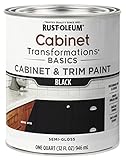
- CABINET TRANSFORMATION: Refresh outdated cabinets, vanities, furniture and trim with rich Black color and a smooth semi-gloss finish
- DURABLE PERFORMANCE: Easy-to-clean finish resists dirt and grime while standing up to household chemicals
- SMOOTH APPLICATION: Outstanding flow and leveling help create a beautiful finish with brush, roller, pad applicator or airless sprayer
- FAST PROJECT COMPLETION: Dries to touch in 30 minutes, recoats in 2 hours and is ready for normal use after 24 hours
- INTERIOR CABINET COATING: Ideal for kitchens, bathrooms, laundry rooms and other interior cabinet and trim applications
How coating choice should be made
Choose a cabinet-specific system based on the desired sheen, substrate, expected wear, and application method. Benjamin Moore names ADVANCE waterborne alkyd and Cabinet Coat urethane-acrylic products as examples in its contractor guidance, while Sherwin-Williams advises selecting a coating according to the result, cabinet condition, and expected wear (Benjamin Moore; Sherwin-Williams cabinet-coating guide). These are examples, not endorsements or guarantees.
Before buying any product, read the current label and technical data sheet for allowable substrates, cleaning, sanding, primer, temperature and humidity limits, recoat window, ventilation, cure, and cleaning restrictions. A coating that works on previously painted wood may not adhere to laminate or thermofoil. Test the complete system on a hidden area and inspect adhesion and appearance before committing to every door.
Free tools Windows power users keep installed
One-click scans. No signup required.
Questions to ask before signing
- Are you painting, lightly scuff-sanding, or fully stripping the existing finish?
- Which doors, drawer fronts, boxes, interiors, end panels, and toe kicks are included?
- What substrate did you identify, and how will you handle veneer, laminate, thermofoil, or MDF?
- Which repairs are included, and what happens if hidden damage appears?
- What cleaner, primer, topcoat, sheen, and application method will you use?
- Where will spraying or stripping occur, and how will the kitchen be ventilated and protected?
- What are the touch-dry, reinstallation, and full-cure times?
- When can the kitchen be used normally, and what cleaning products are permitted?
- What workmanship warranty applies, and does it exclude moisture, impact, or substrate movement?
Maintaining the new finish
Prevent the two major sources of deterioration identified by HUD USER—abrasion and standing moisture. Wipe spills promptly, repair sink or dishwasher leaks, use soft nonabrasive cloths, and follow the coating manufacturer’s approved cleaner. Do not hang wet towels over finished edges or repeatedly slam doors and drawers. Keep abrasive powders, solvent cleaners, and unapproved polishes away from the surface.
Inspect sink-base edges, corners, pulls, and high-use drawers periodically. Early touch-up or hardware adjustment can prevent a small chip or misalignment from becoming a larger failure. If a finish begins to peel, identify the adhesion or moisture cause before recoating; painting over a loose layer usually transfers the failure to the new coating.
Bottom line
Paint when the cabinet structure and substrate are sound and you want an opaque color with the simplest finish change. Strip and refinish when suitable wood and its grain are central to the look and you accept more labor, testing, and potential surface surprises. Price either project from an identical, itemized scope, and judge durability by preparation, coating system, cure, moisture control, and use—not by an unsupported number of years.
Quick Recap

Product prices and availability are accurate as of the date/time indicated and are subject to change. Any price and availability information displayed on Amazon at the time of purchase will apply.
Recommended Free Tools

