Crashes, No Sound, or Screen Glitches?
Random freezes, missing sound and display glitches usually trace back to one bad driver. Find and replace yours safely.Free scan · under a minuteWindows Errors? Fix Them Before They Spread
Repair common Windows errors and clear accumulated junk for a smoother, more stable PC - no reinstall needed.Free scan · no reinstallThatPainter is reader-supported. When you buy through links on our site, we may earn an affiliate commission. Learn More
Choose paint if you want a uniform, specific color and a clean, opaque look. Choose stain if you want the wood species, grain and natural variation to remain visible. Neither finish is automatically more durable or less expensive. The right choice depends on the cabinet material and door construction, how wear will show in your kitchen, your cleaning habits, and the complete quote for the project.
As an Amazon Associate I earn from qualifying purchases.
Paint and stain create fundamentally different looks
Paint forms an opaque film over the cabinet surface. It hides the grain and visual variation beneath it, so a cabinet can be blue, white, green or any other solid color with a consistent appearance from door to door. This makes paint the more flexible option when your priority is an exact color, a two-tone scheme or a deliberately uniform finish.
The Tool Desk
Outbyte PC Repair FREEClear out junk files and repair common Windows errorsFree Scan →Outbyte Driver Updater FREEScan for outdated or missing drivers - takes under a minuteDriver Scan →Stain is translucent. It colors the wood while allowing its grain, pores and natural variation to show through. The result depends heavily on the species, cut and condition of the wood: two doors may not look identical because they do not absorb stain in exactly the same way. That variation is a feature for people who want a warm, natural or furniture-like kitchen, but it is not the right route to a perfectly consistent solid color.
#1 Best Overall
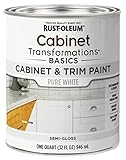
- CABINET TRANSFORMATION: Refresh outdated cabinets, vanities, furniture and trim with rich Pure White color and a smooth semi-gloss finish
- DURABLE PERFORMANCE: Easy-to-clean finish resists dirt and grime while standing up to household chemicals
- SMOOTH APPLICATION: Outstanding flow and leveling help create a beautiful finish with brush, roller, pad applicator or airless sprayer
- FAST PROJECT COMPLETION: Dries to touch in 30 minutes, recoats in 2 hours and is ready for normal use after 24 hours
- INTERIOR CABINET COATING: Ideal for kitchens, bathrooms, laundry rooms and other interior cabinet and trim applications
The broad visual and practical differences are summarized below. They are tendencies rather than guarantees; the primer, topcoat, substrate, door profile and workmanship all influence the final result.
| Decision factor | Painted cabinets | Stained cabinets |
|---|---|---|
| Visual effect | Opaque color conceals the wood grain and supports an exact solid shade. | Translucent color leaves grain and natural variation visible. |
| How small damage reads | Chips, scratches and joint lines can contrast sharply with the surface and be easy to notice. | Grain and color variation can camouflage some small dings, although scratches may expose lighter wood. |
| Typical cost tendency | Often requires more preparation and application labor; the substrate and project scope can outweigh the finish difference. | May involve fewer application steps, but hardwood species or a more complex door can cost more. |
| Routine care | Gentle cleaning, no abrasive products, and prompt attention to chips or moisture. | Gentle cleaning, no abrasive products; follow any finish-specific instructions from the maker. |
| Changing the finish later | Can be repainted after thorough preparation. | Can be painted after preparation, but removing paint to expose attractive wood is difficult and may be impractical. |
How cabinet material and construction change the decision
Solid wood, veneer, MDF and other substrates
Finish should be chosen with the substrate, not in isolation. MDF has a smooth, grain-free face that is well suited to paint. A painted MDF door can cost less than a stained walnut door because walnut is a more expensive wood and stain is intended to showcase it. Conversely, painting a solid-wood door can require enough preparation and finishing labor that the price approaches, or exceeds, a comparable stained door. Kitchen & Bath World makes the same material distinction in its comparison of paint-grade MDF and stained solid wood (Kitchen & Bath World, September 21, 2026).
Ask whether each quoted component is solid wood, wood veneer, MDF, laminate, thermofoil or another wrapped surface. A finish that is appropriate for one substrate may fail on another. The product and preparation instructions must specifically allow the material you have.
Five-piece doors and one-piece doors
On a traditional five-piece door, the center panel is surrounded by rails and stiles joined at the corners. Wood moves as humidity and temperature change. That movement can open a fine line or crack at a joint. The line may be more conspicuous against a smooth painted field because the exposed or shadowed joint contrasts with the solid color. Stain can make the transition less visually abrupt, but it does not stop movement or guarantee that a crack will not appear.
One-piece doors avoid rail-and-stile joints, which removes that particular source of visible joint lines. Door construction is therefore a practical selection criterion, not merely a style preference. Ask the cabinet maker how the chosen finish behaves on the exact profile and whether movement is covered by its warranty. Deslaurier explains these construction differences in its stained-versus-painted cabinet comparison.
Rank #2

- Includes 30 featured and newest released color card. Sprayed on color to see our colors in your homes lighting for more accurate color choices.
- ALL-IN-ONE Paint - NO Sanding, NO Priming, NO Top Coat Required, Low Luster, Velvet Sheen Finish
- Interior/Exterior - Paint your whole house - Ideal for hard surfaces including walls, doors, cabinets, counters, furniture, metal, glass, ceramics and floor and wall tile
- Durable yet stretches to paint smooth fabrics, vinyl and leather
- Results cannot be guaranteed. Digital screens may not show color accurately. Product search "ALL-IN-ONE PAINT by Heirloom Traditions, Color Confidence Card", for an accurate color choice.
Which finish holds up better over time?
There is no universal durability ranking. A well-prepared, properly cured coating on a suitable substrate can perform well, while a poorly prepared finish can fail regardless of whether it is paint or stain. The useful question is not “Which is indestructible?” but “How will damage appear, and can I live with that appearance and repair process?”
Why paint can make wear more visible
On a smooth painted door, a chip may reveal primer, bare wood or a darker substrate. A scratch creates a contrasting line. On a five-piece door, a movement crack can stand out against an uninterrupted color. These defects may be physically small but visually prominent, especially on dark or high-contrast colors.
This visibility does not prove that painted cabinets fail sooner. It means the same impact can attract more attention. Touch-up paint can blend well when the original color and sheen are still available, but an aged coating may have changed slightly from light exposure and cleaning.
Why stain can camouflage some marks—and still be damaged
Wood grain and natural color variation break up the visual field. A small dent or bit of grime may therefore be less conspicuous on a stained door. A scratch can still cut through the finish and expose lighter wood, and a chip can still remove the protective coating. Stain is not a protective substitute for a clear sealer or topcoat; the complete finishing system matters.
Deslaurier’s practical guidance describes this as a visibility trade-off rather than a controlled test proving that one finish always lasts longer. Treat maker commentary as useful expectation-setting, not as a guarantee for every cabinet system.
Rank #3

- Includes 30 featured and newest released color card. Sprayed on color to see our colors in your homes lighting for more accurate color choices.
- ALL-IN-ONE Paint - NO Sanding, NO Priming, NO Top Coat Required, Low Luster, Velvet Sheen Finish
- Interior/Exterior - Paint your whole house - Ideal for hard surfaces including walls, doors, cabinets, counters, furniture, metal, glass, ceramics and floor and wall tile
- Durable yet stretches to paint smooth fabrics, vinyl and leather
- Results cannot be guaranteed. Digital screens may not show color accurately. Product search "ALL-IN-ONE PAINT by Heirloom Traditions, Color Confidence Card", for an accurate color choice.
The damage risks common to both finishes
The U.S. Department of Housing and Urban Development identifies repeated abrasion and standing moisture as the two major sources of cabinet-finish damage (HUD, Kitchens & Baths: Surface Maintenance and Repairs). Cabinet doors near a sink, dishwasher, coffee station or range face more frequent wetting and wiping than doors in a dry pantry.
Once a finish is disturbed, moisture can enter the underlying material. HUD specifically warns that fiberboard can absorb moisture and deteriorate. A small edge chip should therefore be sealed or repaired before repeated wetting turns a cosmetic defect into swelling or delamination.
What painted and stained cabinets cost
The published 10–15% estimate—and its limits
Deslaurier estimates that painted cabinets cost roughly 10–15% more than stained cabinets in its comparison. It attributes the difference to additional painting labor: its example describes staining as three steps—stain, sealer and top coat—while painting uses an eight-step process involving primer, base paint, paint and top coats. The figure is that manufacturer’s estimate, with no publication date stated on the opened page; it is not a universal market statistic or a quote for your kitchen.
Material, door style, color, sheen, edge profile, hardware, number of doors, installation and regional labor can change the total far more than the finish label. A simple slab door and a detailed five-piece door do not require the same preparation. A color change on existing cabinets can also require extra sanding, masking, repairs and curing time.
Compare like with like when requesting quotes
Ask each contractor to price the same cabinet material, door profile, finish level, hardware, interior components, installation scope and repair allowance. Request separate line items for removal, preparation, priming, finishing, new hardware, masking and touch-ups. Without that detail, a “paint versus stain” comparison may actually be comparing MDF with walnut, a new installation with a refinish, or a basic door with a custom profile.
Recommended Free Tools
Rank #4

- Includes 30 featured and newest released color card. Sprayed on color to see our colors in your homes lighting for more accurate color choices.
- ALL-IN-ONE Paint - NO Sanding, NO Priming, NO Top Coat Required, Low Luster, Velvet Sheen Finish
- Interior/Exterior - Paint your whole house - Ideal for hard surfaces including walls, doors, cabinets, counters, furniture, metal, glass, ceramics and floor and wall tile
- Durable yet stretches to paint smooth fabrics, vinyl and leather
- Results cannot be guaranteed. Digital screens may not show color accurately. Product search "ALL-IN-ONE PAINT by Heirloom Traditions, Color Confidence Card", for an accurate color choice.
- Confirm the substrate and whether any veneer, laminate or wrapped surfaces are included.
- Specify the exact color or stain, sheen and sample approval process.
- Ask how many finish coats are included and how long curing takes before normal use.
- Clarify who repairs dents, loose joints, swollen edges or water damage discovered during preparation.
- Check whether the quote includes both sides of doors, drawer fronts, end panels, toe kicks and cabinet interiors.
Choose by the appearance you want every day
Paint is usually the better fit when:
- You want a specific solid color that does not depend on wood species.
- You prefer a calm, consistent field with little visible grain.
- You are using paint-grade MDF or another smooth substrate.
- You want to coordinate cabinets precisely with walls, trim or an appliance color.
- You accept that chips and joint lines may be easier to see and that touch-ups may be noticeable on aged coatings.
Stain is usually the better fit when:
- You selected a wood species for its grain, pores or natural variation.
- You want a furniture-like or warmer appearance rather than a uniform block of color.
- You prefer small variations between doors to remain visible.
- You are comfortable evaluating large samples because stain can look different on the actual species and cut.
- You want grain to disguise some minor visual wear, while accepting that scratches and moisture damage remain possible.
Use a door sample, not a tiny color chip. View it beside the countertop, flooring, backsplash and hardware in morning, afternoon and evening light. Stain color is especially sensitive to species and grain; paint color is affected by sheen and surrounding light even when the coating is uniform.
Can you combine paint and stain in one kitchen?
Yes. A two-finish kitchen is a deliberate design option, not a compromise. Common arrangements include painted perimeter cabinets with a stained island, or painted uppers with stained lowers. The contrast can define work zones and add wood warmth without covering every visible grain surface.
How to make two finishes look intentional
- Place full-size paint and stain samples together in the actual kitchen, under its installed lighting.
- Repeat one element—such as the island countertop, flooring tone or hardware finish—so the two cabinet finishes share a visual connection.
- Decide which finish is dominant. A large perimeter usually reads as the background; the island can act as the accent.
- Check sightlines from adjoining rooms. A stained island that looks balanced close up may appear too dark or disconnected from the living area.
- Confirm that the two products have compatible sheen and cleaning requirements, even if their colors differ.
Do not assume that a paint color and a stain from different manufacturers will age or clean identically. Obtain written care instructions for both systems and keep the approved samples for future touch-up matching.
Independent reader supportYour contribution helps us test, update, and keep practical guides available for everyone.Care routines that protect either finish
Daily and weekly cleaning
Use a soft cloth and a mild cleaner suitable for the cabinet maker’s coating. Dampen the cloth rather than saturating the door, wipe with the grain where there is visible grain, and dry the surface afterward. Kitchen & Bath World and H & J Cabinets both advise soft-cloth cleaning, mild products and avoidance of abrasive pads or harsh chemicals (H & J Cabinets’ care guidance).
PC Slower Than It Used to Be?
A free scan shows the junk files, broken settings and background clutter dragging Windows down - then fixes them in one click.Free scan · Windows 10 & 11Crashes, No Sound, or Screen Glitches?
Random freezes, missing sound and display glitches usually trace back to one bad driver. Find and replace yours safely.Free scan · under a minute- Wipe cooking grease and food splashes promptly instead of allowing a film to build.
- Keep steam and standing water away from door edges, sink bases and dishwasher seams.
- Do not use scouring powders, abrasive sponges, strong solvents or unapproved polishes.
- Lift spills from the surface; do not leave a wet cloth draped over a door or drawer front.
- Use the manufacturer’s product-specific instructions whenever they differ from generic advice.
Preventing abrasion and impact
Repeated rubbing is especially hard on the areas around pulls, trash bins and frequently opened drawers. Install or maintain bumpers so doors do not slam, adjust hinges that allow doors to scrape, and use liners that do not trap moisture. Keep appliances that generate steam from exhausting directly onto cabinet faces.
Best Value
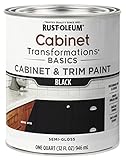
- CABINET TRANSFORMATION: Refresh outdated cabinets, vanities, furniture and trim with rich Black color and a smooth semi-gloss finish
- DURABLE PERFORMANCE: Easy-to-clean finish resists dirt and grime while standing up to household chemicals
- SMOOTH APPLICATION: Outstanding flow and leveling help create a beautiful finish with brush, roller, pad applicator or airless sprayer
- FAST PROJECT COMPLETION: Dries to touch in 30 minutes, recoats in 2 hours and is ready for normal use after 24 hours
- INTERIOR CABINET COATING: Ideal for kitchens, bathrooms, laundry rooms and other interior cabinet and trim applications
Responding to a chip, scratch or swollen edge
- Clean and dry the area so you can see whether the damage is only in the coating or has reached the substrate.
- Stop the moisture source—repair a leak, adjust a dishwasher seal or change a wet storage practice.
- Photograph the defect and check your cabinet warranty before sanding or applying a product.
- For a small paint chip, use the manufacturer’s touch-up coating matched for color and sheen; test it on an inconspicuous area first.
- For stained wood, ask whether the maker supplies a matching stain and clear coat. A spot repair can look darker or glossier than the surrounding aged finish.
- If MDF or another fiberboard is swollen, do not simply cover it. A cabinet professional may need to replace the affected component.
Refinishing existing cabinets: what is realistic?
Painting or staining existing cabinets is possible only when the substrate and existing coating can accept the preparation. HUD describes stripping and refinishing solid-wood portions with new stain or paint and sealer, but calls the work time- and labor-intensive, generally less durable than a manufacturer-applied finish. Its described method does not apply to veneer, laminate or wrapped finishes (HUD, Kitchens & Baths).
Before choosing a DIY or contractor refinish
- Identify the existing surface: solid wood, veneer, MDF, laminate or thermofoil.
- Determine whether the coating is intact, peeling, waxed, contaminated with grease or already damaged by moisture.
- Remove a door or drawer front if necessary to inspect edges and the back of the panel.
- Confirm that the proposed primer, paint or stain is labeled for that substrate and existing finish.
- Plan for dust control, ventilation, drying space and enough time for full curing before reassembly.
Changing stained cabinets to paint generally requires cleaning, deglossing or sanding where appropriate, repairs, a bonding primer and multiple paint coats. The effort is usually practical when the wood is unattractive, mismatched or not worth exposing. Going from paint back to natural-looking wood is a different proposition: removing paint without damaging veneer, soft edges or joints can be difficult, and the revealed wood may not be suitable for stain.
If a contractor proposes painting a surface without identifying the substrate or specifying preparation, ask for that information before signing. The cheapest finish is not a bargain if moisture enters an unsealed edge or the coating fails at a joint.
A decision process you can use with samples and quotes
- List your non-negotiables. Write down the color, visible grain, door style, cleaning tolerance and areas exposed to water or heavy use.
- Identify the cabinet construction. Record the substrate, whether doors are one-piece or five-piece, and where joints or veneers are present.
- Obtain matched samples. Compare the actual paint color or stain on the actual material, at a useful size, in your kitchen’s lighting.
- Evaluate wear visibility. Imagine a chip near the pull, a scratch on a drawer front and a joint line after seasonal humidity changes. Decide which appearance you would rather touch up.
- Request comparable written quotes. Keep material, profile, hardware, labor scope and finish level constant, and treat any 10–15% paint premium as a cited estimate rather than a rule.
- Read the care and warranty terms. Confirm approved cleaners, moisture exclusions, touch-up support and what happens if a finish cracks at a door joint.
- Choose the finish that matches your maintenance reality. A visually perfect finish that requires care you will not provide is a poor fit; select the system you can clean promptly and repair correctly.
Common mistakes to avoid
- Choosing from a phone image or tiny chip: grain, sheen and surrounding light can change the perceived color.
- Comparing finish names instead of complete assemblies: paint on MDF and stain on walnut are not equivalent material choices.
- Assuming stain hides all damage: scratches can expose lighter wood and moisture can degrade the substrate.
- Assuming paint always chips more: visibility depends on color, preparation, coating, impact and construction; there is no universal test-based ranking.
- Ignoring door joints: seasonal movement can create lines in either finish, with greater contrast often visible on paint.
- Using abrasive cleaners to remove a mark: abrasion itself is a major source of finish deterioration.
- Painting over an unidentified wrapped surface: veneer, laminate and thermofoil may require a different solution or replacement.
- Accepting a finish-only price comparison: material, door profile, labor and scope can reverse the apparent winner.
Bottom-line recommendation by homeowner priority
| If your priority is… | Start with… | Check before committing |
|---|---|---|
| An exact, solid color and consistent appearance | Paint | Substrate suitability, joint visibility, touch-up color and preparation labor. |
| Visible grain and natural variation | Stain | Species, sample variation, clear-coat care and moisture protection. |
| Lower quoted price | Compare both on identical materials and scope | Do not apply the 10–15% estimate as a universal rule. |
| Less noticeable minor dings | Often stain, because grain can break up the visual field | Scratches, chips and substrate damage can still be obvious. |
| A future color change | Paint if you expect repeated color changes | Repainting still requires preparation; removing paint to reveal wood may not be practical. |
| A designed contrast | A coordinated paint-and-stain combination | View both samples together and align sheen, lighting and care requirements. |
The most reliable choice is the finish that suits the actual cabinet material, the door construction and the way your household uses the kitchen. Approve a real sample, compare complete project quotes and plan for moisture and abrasion control from the first day.
Quick Recap

Product prices and availability are accurate as of the date/time indicated and are subject to change. Any price and availability information displayed on Amazon at the time of purchase will apply.

