Quick wins for a faster PC:
Fix the driver behind crashes, sound loss and screen glitchesFind Drivers →Clear out junk files and repair common Windows errorsFree Scan →
ThatPainter is reader-supported. When you buy through links on our site, we may earn an affiliate commission. Learn More
A portable generator is useful when your home or a temporary location needs electricity but the utility supply is unavailable. FEMA describes it as a secondary source of power during an electric failure, while the U.S. Consumer Product Safety Commission (CPSC) also identifies temporary and remote power needs.
The nine reasons below are practical household situations drawn from that guidance—not nine guarantees that every generator can run every appliance. Capacity, fuel, wiring, placement and local rules determine what you can safely power.
As an Amazon Associate I earn from qualifying purchases.
Do these 3 things before closing this tab:
1Scan for outdated or missing drivers - takes under a minute2Repair Windows errors before they cause bigger problems3Fix the driver behind crashes, sound loss and screen glitchesSafety comes before every benefit
Portable generators produce carbon monoxide (CO), an invisible, odorless gas that can kill quickly. The CPSC states, “CO from a generator is deadly and can kill you in minutes.” Its January 30, 2026 guidance estimates that nearly 100 U.S. consumers die each year from portable-generator CO poisoning.
Run the machine outdoors, at least 20 feet from your house, with the exhaust directed away from the home and other buildings. Never operate it inside a home, garage, basement, crawlspace, shed, porch, carport or another enclosed or partially enclosed area. Opening a door or window, using a fan or adding ventilation does not make indoor operation safe. The CPSC’s plain-language rule is: “NEVER use portable generators indoors or in garages, basements, or sheds.”
#1 Best Overall

- 𝗣𝗼𝘄𝗲𝗿𝗳𝘂𝗹 𝗢𝘂𝘁𝗽𝘂𝘁 - 4400 peak watts and 3400 running watts, perfect for RV camping and home backup
- 𝗠𝘂𝗹𝘁𝗶-𝗢𝘂𝘁𝗽𝘂𝘁 𝗢𝗽𝘁𝗶𝗼𝗻𝘀 - Includes 2*120V AC ports, 1*12V DC port, 1*RV port
- 𝗟𝗼𝗻𝗴 𝗥𝘂𝗻𝘁𝗶𝗺𝗲: Runs for up to 14 hours at 25% load with ECO mode, 2 gallon fuel tank with fuel gauge, allows you to check fuel levels at a glance, keeping you prepared
- 𝐋𝐨𝐰 𝐍𝐨𝐢𝐬𝐞: Under 72 dBA from 23FT away, this generator provides steady power for your home during a power outage or RV nights
- 𝗟𝗶𝗴𝗵𝘁𝘄𝗲𝗶𝗴𝗵𝘁 𝗮𝗻𝗱 𝗣𝗼𝗿𝘁𝗮𝗯𝗹𝗲: Only 56lbs, easy to move around
Keep working CO alarms in the home and follow the alarm maker’s placement instructions. A generator with an automatic CO shut-off feature adds protection, but it does not permit closer placement or indoor use. The CPSC also discusses models certified to PGMA G300-2018 and UL 2201; its 2025 estimates associate those standards with reductions in CO deaths of 86% and 100%, respectively. Those are agency estimates tied to the named standards, not a ranking of individual models.
Set up a generator safely
- Choose the location first. Measure at least 20 feet from the house and neighboring buildings, and position the exhaust so wind carries it away from doors, windows and vents.
- Check the weather instructions. Read the owner’s manual before operation. CPSC notes that a manual may require an NFPA-rated, non-combustible generator tent or may tell you to wait until rain or snow passes. A tent is not permission to operate indoors or close to the house.
- Use the correct connection. Never plug a generator into a wall outlet; that can backfeed house wiring and electrocute workers or neighbors. Use heavy-duty extension cords rated as the manual specifies, or have a qualified professional install an appropriate connection for selected household circuits.
- Control fuel and heat hazards. Follow the label and manual for refueling, storage and maintenance. Keep fuel and the hot engine away from ignition sources and allow the unit to cool as directed before refueling.
- Inspect before each use. Look for damaged cords, loose connections, blocked exhaust and signs of wear. Stop if the unit behaves abnormally and use the troubleshooting and service instructions in the manual.
9 practical reasons a household may need a portable generator
Official guidance does not establish nine independent household benefits. It does identify several outage and temporary-location situations. The list below separates those situations so you can decide whether one applies to your household without assuming whole-home backup, medical continuity, refrigeration duration or a particular runtime.
1. Keep a secondary source of electricity during an outage
When utility power fails, a portable generator can provide temporary electricity from a safe outdoor location. FEMA defines generators as emergency equipment that supplies a secondary source during an electric failure. That makes one relevant to households that need a plan for an unplanned interruption.
“Temporary” matters. A generator is not automatically a whole-house system. The unit’s rated output, starting-watt requirements and connection method determine which loads are safe. List the equipment you actually intend to use, check each manufacturer’s electrical requirements, and have a qualified professional handle any connection to household wiring.
2. Prepare for weather-related outages
The CPSC’s 2022 review of fatal generator incidents identified weather-related power outages among the leading contexts. Storms can interrupt utility service when households are at home and conditions are changing quickly, so a preplanned outdoor location, charged CO alarms, suitable cords and fuel procedures are more valuable than improvising after the lights go out.
Do not move the generator under a porch, into a garage or into a carport to protect it from a storm. Follow the manual’s weather precautions, including any instruction to wait until rain or snow passes.
3. Maintain a plan for utility shut-offs
Utilities may shut off service during emergencies or planned work. A portable generator gives a household a possible temporary source while the utility is unavailable, provided the machine can be placed at the required distance and connected safely.
Rank #2
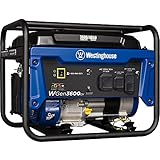
- 3600 Running Watts and 4650 Peak Watts; Recoil Start; 4 Gallon Fuel Tank With Fuel Gauge; Up to 14 Hours of Run Time Per Tank
- Feature Two 5–20R 120V Household Duplex Receptacle, One RV-Ready TT-30R 30 Amp Receptacle, and One L5-30R 30 Amp Receptacle; All Outlets Have Rubber Covers for Added Safety
- Plug-and-Play: Comes With Oil, an Oil Funnel, a Tool Kit, and a User’s Manual to Get You Started Right Out of the Box (Minimal Assembly Required)
- Powered by a 212cc Westinghouse 4-Stroke OHV Engine Featuring a Long-Lasting Cast Iron Sleeve With Automatic Low Oil and Carbon Monoxide (CO) Shutdown
- All Westinghouse Portable Generators are Functionally Tested in the Factory and May Contain Minimum Residual Oil and/or Fuel Odor; EPA Compliant; Backed by 3-Year Limited Service, Labor, and Parts Coverage with Nationwide Customer Service Network
Before a planned shut-off, identify the loads that matter most, confirm that their starting and running demands fit the generator, and test your extension-cord lengths and outdoor placement in daylight. Do not connect the unit to a wall outlet or assume that every circuit will remain powered.
4. Supply electricity at a property without utility service
FEMA and CPSC both recognize remote or temporary power needs. A portable generator can serve a property where a permanent utility connection is absent or impractical, as long as there is a safe outdoor operating area and a lawful way to store and use fuel.
At an unoccupied or seasonal property, secure the generator against unauthorized use, protect it from weather as the manual allows, and inspect it before starting. The absence of a utility line does not change the CO, fire or electrical-shock rules.
5. Bring temporary power to a cabin
CPSC’s 2022 fatal-incident review specifically mentions attempts to provide power to cabins. A portable unit can be moved to a cabin when utility service is unavailable, but the same 20-foot outdoor placement rule applies. A cabin’s small size can make dangerous placement especially tempting: never run the generator inside, in an attached porch, under a roofed enclosure or near doors and windows.
Plan the cord route before arrival so cords remain dry, protected from damage and within the ratings in the owner’s manual. If a cabin needs fixed wiring, use a qualified electrician rather than an improvised outlet connection.
6. Provide electricity for a camper
Campers are another temporary-location example in the CPSC’s 2022 review. A portable generator may supply power where a campground hookup is unavailable, but the vehicle’s small interior and nearby awnings do not make operation safe. Keep the generator outdoors at least 20 feet from the camper and direct exhaust away from openings.
Use only the cords, adapters and connection method approved for the generator and camper. If you are unsure how the vehicle’s electrical system should be connected, ask a qualified technician instead of experimenting.
What’s actually slowing this PC down?
Pick the symptom - the matching free tool is one click away.
Rank #3

- 1200 peak watts and 900 running watts
- Frequency 60Hz , 120V household outlet, equipped with one American-style duplex socket, one AC overload protection, one 12V DC power supply, one DC overload protection and one indicator light
- Powered by a 71cc Aceup Single Cylinder, 2 Cycle Engine with air cooling system and a recoil start, 35.3 lb weight
- This generator uses a 50:1 gasoline-to-oil mix (no separate oil change required), and its 1.1-gallon fuel tank enables 6 hours of operation at half load
- All generators EPA compliant are functionally tested before leaving the factory to guarantee quality; Backed by 1-year limited warranty under normal use and FREE lifetime technical guidance from experts
7. Power a trailer at a remote site
Trailers appear alongside cabins and campers in the CPSC’s list of temporary locations associated with fatal incidents. That makes a trailer a recognizable use case for portable power, not a safety exception. Place the generator in open air, maintain the full separation distance and keep CO alarms operating inside the trailer.
Check the trailer’s electrical requirements and the generator’s available outlets before relying on the setup. A portable generator may not support every load simultaneously, and a safe connection still requires the correct cord or professional wiring.
8. Cover a short-term need at another temporary location
CPSC describes portable generators as useful when temporary or remote electric power is needed. That can include a household’s temporary site away from its normal utility connection. The reason to choose a portable unit is that it can be transported to that site instead of requiring a permanent installation.
Because the location changes, repeat the safety check every time: clear outdoor air, 20 feet from buildings, exhaust pointed away, working CO alarms in occupied spaces, weather protection consistent with the manual and no backfeeding through a receptacle.
9. Move the power source as the need changes
Portability is itself useful when the household’s electricity need is not tied to one fixed room or building. The same category of equipment can be taken from an outage location to a seasonal property, cabin, camper or trailer, subject to safe placement and connection at each destination.
That flexibility does not eliminate planning. Account for the unit’s weight, handles or wheels, fuel-storage rules, noise and outlet types when choosing a product. A generator that is difficult to move may not be practical for the locations where you expect to use it.
Independent reader supportYour contribution helps us test, update, and keep practical guides available for everyone.How to decide whether one fits your household
Define the loads before shopping
Write down the equipment you want to operate and separate essential loads from conveniences. For each item, record running watts and starting watts from its nameplate or manufacturer documentation. Motors and compressors can demand more power when starting. Add the starting requirement for the largest simultaneous combination, then compare that total with the generator’s rated output rather than relying on a headline maximum figure.
Rank #4

- Gasoline: 5300 Running Watts & 6500 Peak Watts; Propane: 4800 Running Watts & 5800 Peak Watts; 4.7 Gallon Fuel Tank with Fuel Gauge; Up to 14.5 Hours of Run Time with 120/240V Volt Selector Switch
- Features One 5–20R 120V 20V Household Duplex Receptacle, One RV-Ready TT-30R 30A Receptacle, and One Transfer Switch Ready L14-30R 30A Receptacle; All Outlets Have Rubber Covers for Added Safety
- Plug-and-Play: Comes with Oil, an Oil Funnel, Propane Hose, Tool Kit, Wheel Kit, and a User’s Manual to Get You Started Right Out of the Box (Minimal Assembly Required)
- Powered by a 274 CC Westinghouse 4-Stroke OHV Engine Featuring a Long-Lasting Cast Iron Sleeve with Automatic Low Oil and Carbon Monoxide (CO) Shutdown
- All Westinghouse Portable Generators are Functionally Tested in the Factory and May Contain Minimum Residual Oil and/or Fuel Odor; EPA Compliant; Backed By 3-Year Limited Service, Labor, and Parts Coverage and Nationwide Customer Service Network
This exercise prevents a common mistake: buying a unit because it has enough capacity for one appliance, then discovering that several starting loads cannot run together. It also keeps expectations realistic; the evidence does not establish a universal wattage, runtime or appliance list for every household.
Quick wins for a faster PC:
Fix the driver behind crashes, sound loss and screen glitchesFind Drivers →Repair Windows errors before they cause bigger problemsFix Now →Compare the factors that affect real-world use
| Factor | What to verify |
|---|---|
| Intended load | Running and starting watts for the equipment you plan to connect at the same time. |
| Fuel and storage | Fuel type, approved storage method, shelf life and the manual’s refueling instructions. |
| Runtime | The manufacturer’s stated runtime under its specified load and fuel conditions; do not treat one figure as universal. |
| Portability | Weight, handles, wheels and whether one person can move it safely to the required outdoor location. |
| Outlets and cords | Outlet types, cord ratings, outdoor-use requirements and compatibility with the intended equipment. |
| CO protection | Automatic CO shut-off capability and certification information such as PGMA G300-2018 or UL 2201. |
| Weather and maintenance | Manual requirements for rain, snow, covers, inspections, oil or other maintenance tasks. |
Budget for the safety equipment and installation
A working battery-operated or battery-backup CO alarm is a relevant companion item, as is a properly rated heavy-duty generator extension cord. Neither replaces outdoor placement, the 20-foot separation or a certified household electrical connection. If you want selected household circuits connected through fixed wiring, include a qualified electrician in the plan and follow local requirements.
Hazards that make shortcuts unacceptable
CO is not the only danger. CPSC warns that portable generators can cause electrical shock or electrocution and fires. Wet conditions, damaged cords, overloaded connections, hot engine parts and incorrect fuel handling can all turn an emergency measure into an injury source.
The scale of the CO problem is documented in agency estimates. CPSC reported in 2022 that about 85 U.S. consumers died each year from CO poisoning caused by gasoline-powered portable generators, and that 81% of generator-related CO deaths in its study occurred in residential locations. That 2022 estimate is older than the nearly 100-death estimate in the agency’s January 30, 2026 guidance; the figures should not be combined as though they were one measurement.
CPSC’s 2022 review found weather-related outages, power shut-offs and attempts to provide power to cabins, campers and trailers among the leading contexts in the fatal incidents it examined. These contexts explain why households seek portable power, but they are not endorsements of operating a generator in or near an enclosed space.
A simple readiness checklist
- Confirm an outdoor location at least 20 feet from the house and other buildings.
- Verify that exhaust can point away from doors, windows and vents.
- Test CO alarms and replace batteries as required.
- Read the owner’s manual, labels and maintenance schedule before an outage.
- Keep the correct heavy-duty outdoor extension cords available.
- Write down the loads, running watts and starting watts you intend to use.
- Store fuel only as the manual and local rules allow.
- Decide who will perform setup, refueling, shutdown and inspection.
- Arrange qualified help for any connection to household wiring.
- Stop operation immediately if anyone develops symptoms such as headache, dizziness, nausea or weakness; move to fresh air and call emergency services.
A portable generator can be a sensible secondary power source for outages, weather disruptions and temporary or remote locations. It is worthwhile only when the household can provide safe outdoor placement, correct connections, CO monitoring, maintenance and realistic load planning. Those conditions—not the word “portable” alone—determine whether owning one improves your emergency readiness.
Quick Recap

Product prices and availability are accurate as of the date/time indicated and are subject to change. Any price and availability information displayed on Amazon at the time of purchase will apply.

