Do these 3 things before closing this tab:
The Tool Desk
Outbyte Driver Updater FREEScan for outdated or missing drivers - takes under a minuteDriver Scan →Outbyte PC Repair FREERepair Windows errors before they cause bigger problemsFix Now →1Fix the driver behind crashes, sound loss and screen glitches2Repair Windows errors before they cause bigger problems3Scan for outdated or missing drivers - takes under a minute
ThatPainter is reader-supported. When you buy through links on our site, we may earn an affiliate commission. Learn More
The best raised garden bed is the one that fits your site, reach, crops and maintenance routine. A low mound may be all you need on workable ground; a framed or elevated bed can improve drainage, make a patio usable, or reduce bending. The 13 ideas below cover framed, unframed, accessible, decorative and problem-solving layouts, followed by dimensions, soil, construction and safety guidance.
Raised soil often warms earlier in spring and drains quickly. That can extend the planting window, but it also means more frequent watering. As the University of Minnesota Extension explains, raised beds can “give you a head start on gardening in the spring by warming up the soil earlier in the season.”
As an Amazon Associate I earn from qualifying purchases.
Plan the bed around sun, reach and water
Choose the location before choosing the lumber or blocks. Put the bed where a hose or watering can can reach easily, and match the light to the crops. Tomatoes, peppers and eggplants need at least 6–8 hours of sun daily; leafy greens and some quick crops tolerate more shade, according to the University of Minnesota Extension.
Design so you can reach the center without stepping on the soil. Oregon State University Extension gives 4 feet as a general maximum width for adult gardeners, while the University of Minnesota recommends using your actual arm reach as the deciding measurement. A bed that is against a wall should be narrower because you can work from only one side. Boards 6 feet or shorter are less likely to warp or break than very long boards.
#1 Best Overall

- Large capacity: Provide enough growth space for deep-rooted plants like potatoes, tomatoes, broccoli, etc. Tall enough to keep pets away from the garden planter and give you easy access!
- Stable and Solid Construction: Double card frames on the two sides of the sheet make the raised garden kits more durable and stable, and 4 reinforcing rods make the whole raised garden bed more stable. Never worry about its distortion or collapse and it presents a much more beautiful design.
- Open bottom: Sits on the ground garden bed, provide good drainage, keep weeds away from soil, defense against pests, and protect your plants. An open base design supports soil drainage, It is more conducive to the healthy growth of plants and balances soil moisture. Planter raised beds will be the best choice for your garden planting.
- Environment-Friendly: Built with an open bottom so it keeps the plants away from root rotting and water built up.
- Easy to assemble: We come with nuts, bolts, washers and instructions so that you can easily assemble without any experience.
Height is a function of access and site. A few inches can define a ground-level garden. Taller beds reduce bending and can make gardening possible over pavement, but they require stronger construction, more soil and more irrigation. The University of Minnesota gives 27 inches as a generally comfortable height for wheelchair users; keep the planting area within the gardener’s reach rather than making the structure tall for appearance alone.
For beds longer than 6 feet or taller than about 18 inches, Oregon State recommends reinforcement such as cross-cables, anchored stakes or another method that resists outward soil pressure. Leave paths wide enough for your stride and, if needed, a wheelbarrow.
13 raised garden bed ideas to adapt this spring
1. Simple ground-level frame
Build a rectangle from four boards, set it directly on the ground and fill it with improved soil. This is the least complicated framed option and can be moved or dismantled later. It gives a clear planting boundary without the cost, engineering or visual weight of a tall structure. Remove grass and perennial weeds first, then keep the frame narrow enough to reach the middle from both sides.
2. Unframed raised mound
Shape amended native soil into a low, flat-topped mound with gently sloped sides. This avoids buying and maintaining a retaining frame, so it suits a garden with workable ground soil and a naturalistic look. A broad, level top sheds less soil than a sharp ridge and provides a stable planting surface. Mulch the surface after planting to slow evaporation and suppress weeds.
Rank #2
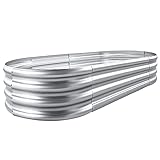
- Each raised metal garden bed size: 4×2×1ft ,7.14Cu
- Upgraded quality and structure: raised garden beds outdoor are made of Q195 galvanized metal sheet, double-layer anti-corrosion galvanizing and oval structure design, which is more beautiful, can withstand greater pressure at the interface, is not easy to loose, and the interface will not Deformed and can be reused for many years.
- Easy to set up, this galvanized stock tank only takes about 5 minutes to easily assemble and continue planting plants.
- Open base: This planter raised garden bed metal galvanized is designed with an open base, which can effectively avoid water accumulation and decay, protect the roots of plants, and allow the roots to better absorb nutrients
- Double thickness: The average thickness of this galvanized planter galvanized sheet reaches 0.78mm, and the thickest part can reach 1.56mm, which is extremely stable. Compared with the ordinary rectangular elevated garden bed with a thickness of 0.3mm, it will be the right choice for you. buy it! ! !
3. Raised rows with mulched paths
Instead of one large block, create several planting rows separated by permanent walkways. Mulched paths mark circulation, reduce mud and limit weeds while keeping every row accessible from the side. This arrangement is useful when you want the drainage and warming of raised soil but do not want to build multiple boxes. Refresh path mulch as it decomposes and keep it out of the planting soil.
4. Cedar or redwood framed bed
Cedar and redwood cost more than common pine or fir, but Oregon State identifies them as more decay-resistant choices. They suit a long-term backyard bed where the frame will remain exposed to weather. Use boards thick enough to resist bowing, fasten corners securely and account for the local climate. A durable frame still needs sound drainage and regular soil testing; rot resistance does not replace good design.
What’s actually slowing this PC down?
Pick the symptom - the matching free tool is one click away.
5. Modular set of smaller beds
Several small beds create separate growing zones for herbs, vegetables, flowers or crops with different soil needs. They can simplify crop rotation and help isolate a disease problem. Arrange them with paths that let you work from both sides and turn a wheelbarrow if you use one. Shorter modules are easier to level, repair and cover with row fabric than one very long box.
6. Metal trough-style bed
A trough-shaped metal bed provides a crisp, contemporary outline and can be useful where a contained planting area is desired. Confirm that the trough has adequate drainage holes and is intended for garden use. The University of Minnesota warns that lead has been found in some prefabricated metal beds sold online, so verify the product’s material information and seller before filling it. Zinc leaching is possible in highly acidic soil below pH 5, although the Minnesota soils described by the extension service are mostly neutral to alkaline.
Rank #3

- Multifunctional Design: This garden planter is separated into two growing areas for different plants or planting methods. The baffle can be removed to form a bigger growing area.
- Practical Use: With this plants box, you can cultivate plants like vegetable, flower, or herbs in your patio, yard, garden, and greenhouse, making it more convenient to manage.
- Simple Assembly: This divisible garden bed is built in a simple yet stable structure by heavy-duty screws and tight connection piece by piece. It is very easy and quick to put them together.
- Flexible DIY: The corner posts have been upgraded that the number of slotting on the posts is increased from 2 on the opposite 2 faces into 4 on 4 faces. Such a change enables users to combine two or more such planting beds more flexibly and fixedly.
- Stable Construction: Our planting raised bed has a piece of complete side plate at each side of the garden bed. It is fixed firmly without leakage of soil. The whole structure is very stable, and the installation is very easy.
7. Masonry or stone-edged bed
Pavers, concrete blocks or local rocks create a permanent-looking edge that works with paths, walls and patios. Masonry is stable and does not rot, but it can cost more and takes more effort to level than boards. Some bricks or other materials can affect soil pH, so avoid unknown salvaged units around acid-loving crops and test soil when plant performance changes. Leave drainage openings where a solid wall could hold water against the bed.
8. Accessible-height bed
Raise the planting surface to reduce bending and allow seated gardening. A height near 27 inches is generally comfortable for wheelchair users, but the correct height depends on the gardener, chair and reach. Keep the bed narrow enough that the far edge is workable, round or soften sharp corners, and build a rigid base capable of holding heavy, wet soil. A seat-height ledge can provide a transfer or resting point without widening the bed.
9. Low-sided family bed
Low sides make a bed inexpensive and approachable for children while still defining the growing area. Choose sturdy, smooth-edged boards and keep the width within an adult’s comfortable reach so an adult can help without stepping into the bed. Use the bed for crops children can harvest easily, such as salad greens, peas or strawberries, and leave a generous path for supervision and watering.
10. Patio or hardscape bed
A raised bed can turn a patio or other hard surface into growing space when topsoil is unavailable. Protect the surface and preserve drainage: the University of Minnesota recommends a permeable bottom liner such as landscape fabric rather than impermeable plastic. Check the load capacity of balconies or decks before adding saturated soil, keep drainage water away from doors and walls, and plan how you will lift compost and water to the bed.
Rank #4

- 2 feet height: Compared with the ordinary 1-foot garden bed, this raised garden box has been improved in all aspects in terms of aesthetics, stable performance, and soil volume. It is time to replace the previous small planter box with a large raised planter box Now, it must be your better choice! ! !
- Large volume: Our large metal raised garden boxes of several specifications have a planting volume of 8×4×2ft=64 cubic meters Feet = 396 gallons. The box with 24 inches deep is very suitable for planting beans, broccoli and other medium to deep root plants
- Durable high-quality material: Galvanized steel raised garden bed is made of upgraded coated steel plate, which has strong anti-rust and corrosion resistance. It can be exposed to the sun, rain and snow for a long time, Reinforced cross bars and fixed piles have been added to help the metal panel maintain its shape and prevent warping and soil leakage over time. Environmentally friendly paint is used on all parts, which does not pollute the soil and provides a healthy environment for plants.
- Open base: This Galvanized planter raised beds uses a bottomless design that allows crops with developed rhizomes to grow without restriction, allowing excess water to be easily drained, and maintaining soil and nutrients.
- Easy to assemble: We provide detailed installation instructions, you can complete the assembly in a short time and start your planting immediately
11. Trellised bed
Add a trellis for peas, cucumbers, beans or other crops that need vertical support. Anchor it to the bed or ground so wind and crop weight cannot overturn the structure. Place tall or trellised crops on the north side of the garden plan, as Oregon State advises, to reduce shade on shorter plants. Leave enough clearance to water, tie vines and harvest from the path.
12. Spring succession bed
Use one bed for more than one crop sequence. Sow a cool-season crop in early spring, then replace it with a warm-season crop after harvest, or follow quick radishes and greens with a later crop. Draw the sequence on a calendar so the second planting is ready when the first space opens. This idea changes the planting layout rather than the frame style, so it works with mounds, boxes or troughs.
Quick wins for a faster PC:
Repair Windows errors before they cause bigger problemsFix Now →Scan for outdated or missing drivers - takes under a minuteDriver Scan →Clear out junk files and repair common Windows errorsFree Scan →13. Clean-soil bed for a documented lead problem
This is a safety response, not a decorative upgrade. Test the soil and follow local guidance before deciding how to garden. For soil above 400 parts per million (ppm) lead, the U.S. Environmental Protection Agency recommends shallow-rooted plants in raised beds containing at least 16 inches of clean soil over garden fabric, or food grown in containers; it does not recommend deep-root crops in that situation. Do not apply the 16-inch figure to every raised bed. Read the EPA guidance and base the response on the measured result.
Independent reader supportYour contribution helps us test, update, and keep practical guides available for everyone.Choose a material with its trade-offs in mind
| Material or form | What it does well | Important cautions |
|---|---|---|
| Common wood such as pine or fir | Usually economical and easy to cut and fasten | Decays sooner than cedar or redwood; inspect and replace weakened boards |
| Cedar or redwood | More decay-resistant for a long-lasting exposed frame | Higher initial material cost |
| Metal | Long service life and a distinctive trough appearance | Verify product source; some online prefabricated beds have contained lead; very acidic soil can increase zinc leaching |
| Brick, block or stone | Permanent edge that integrates with hardscape | Higher construction effort and cost; some bricks can influence soil pH |
| Unframed mound | No retaining material and a natural profile | Needs workable native soil and stable, well-mulched paths |
Old railroad ties are unsuitable for edible beds. For any wood sold for ground contact, Oregon State advises using residential-use, ground-contact-rated lumber and coating fresh cuts with the product’s preservative treatment. If you prefer to avoid treated wood, cedar, redwood, stone or concrete block are alternatives.
Best Value
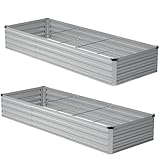
- Specialized in Garden Bed: Size:10x2x1ft.Ideal choice for your gardens,yards and patio to grow vegetables,flowers,fruits and other plants.
- Upgraded Structure and Extra Thickness: The garden bed is made of galvanized metal steel, which can be used for many years without getting rust and deformed.
- Open Bottom Design: The transparent structure at the bottom can prevent water accumulation and protect the roots of plants.At the same time,it can be planted in any position as needed.
- Four Plastic Caps: The garden bed come with 4 protective caps, which install in the 30 corners of the garden bed. Compared with the ordinary rectangular raised garden bed with none components, the caps can protect you from injuring and better looking!
- Quick Setup: With lesser screws and better structure, you just need few minutes to setup your new raised garden bed!
Build and fill a spring bed step by step
- Mark the footprint. Lay out the bed in full sun or the amount of shade appropriate for your crops. Confirm hose access and leave working paths before digging or buying materials.
- Set the width and height. Keep a freestanding bed no wider than your reach; 4 feet is a useful adult starting limit. Narrow beds against walls. Choose only as much height as access or site conditions require.
- Prepare the base. Remove sod and perennial weeds from a ground bed and level the site. Over ordinary garden soil, a bottom barrier is generally unnecessary and can restrict roots. On a patio, use a permeable liner that allows water through. Add hardware cloth beneath or around the bed only when burrowing animals are a problem.
- Assemble and reinforce. Fasten the frame, check it for square and stake it. Add cross-cables, anchored stakes or equivalent reinforcement when the bed exceeds about 6 feet in length or 18 inches in height.
- Install support features. Add trellis posts, irrigation tubing or a wheelchair-accessible edge before filling, when possible. Make sure every feature leaves the planting area reachable.
- Fill with balanced soil. A practical starting blend is about one-half to two-thirds topsoil and one-third to one-half plant-based compost. Do not fill entirely with potting soil; it can dry rapidly. Use manure sparingly and only when a soil test indicates a phosphorus need.
- Settle and plant. Water the filled bed thoroughly, allow it to settle, then top up low spots. Plant according to the crop’s spacing and season, keeping tall or trellised plants on the north side.
- Plan irrigation and maintenance. Raised soil dries faster than surrounding ground. Use a soaker hose, watering can or raised-bed drip kit, and check moisture at the root zone rather than relying on surface appearance. Test soil every 2–3 years and base fertilizer additions on the results.
Manage water, fertility and seasonal changes
Fast drainage is an advantage in wet spring soil but a liability during hot, windy weather. Water deeply enough to moisten the root zone, then check again before the surface becomes hard and dry. Mulch reduces evaporation, while a timer-controlled soaker or drip line can make a collection of beds easier to manage. Do not let irrigation splash soil onto edible leaves when contamination is a concern.
Compost improves structure, but more is not always better. Excess compost can create nutrient imbalances, and all-potting-soil mixes may require frequent watering. A soil test every two to three years provides a better basis for lime, fertilizer or additional organic matter than a fixed annual dose.
Safety checks before you plant food
Raised beds do not automatically remove exposure risks from the surrounding site. If lead contamination is known or suspected, test the soil and follow the EPA’s measured-lead recommendations rather than assuming a standard box is protective. Keep contaminated soil from being tracked indoors, wash produce and hands, and use clean soil or containers when the guidance calls for them.
Preservative advice is also specific, not universal. In an Oregon State Willamette Valley study of copper-azole-treated lumber intended for ground contact, copper rose about 20–68 ppm above untreated beds within 1 inch of the bed edges over four growing seasons; no increase was found in the tested vegetables and herbs. That result applies to the tested wood, site and crops, not every preservative or location. Gardeners uncomfortable with copper leaching can choose untreated naturally durable wood, stone or concrete block.
Quick Recap
Match the idea to your backyard
- Choose a mound or raised rows when native soil is workable and you want the lowest material cost.
- Choose a simple or modular frame when you need clear boundaries, crop separation or a movable layout.
- Choose cedar, redwood, masonry or stone when appearance and longer service life justify more upfront cost.
- Choose a taller accessible bed when bending or kneeling limits gardening, while keeping the planting area within reach.
- Choose a patio bed when the surface is sound and drainage can pass through a permeable liner.
- Choose a clean-soil configuration only after testing identifies a contamination problem and the EPA or local authority specifies the required depth and crops.

Product prices and availability are accurate as of the date/time indicated and are subject to change. Any price and availability information displayed on Amazon at the time of purchase will apply.

