PC Slower Than It Used to Be?
A free scan shows the junk files, broken settings and background clutter dragging Windows down - then fixes them in one click.
Run a Free PC Scan →Free scan · Windows 10 & 11
ThatPainter is reader-supported. When you buy through links on our site, we may earn an affiliate commission. Learn More
As an Amazon Associate I earn from qualifying purchases.
The cheapest way to make a cold window feel better depends on what is actually wrong. Draught-proofing strips stop air moving through gaps around an opening sash; curtains and blinds add a barrier; secondary-glazing film creates another layer over the pane. None is a guaranteed substitute for replacement double glazing, and no single measure suits every window.
Start by checking whether you have an air leak, a cold pane, or simply lose warmth when coverings are left open after sunset. The four measures below work on existing windows, with options for renters, older homes and listed properties.
#1 Best Overall
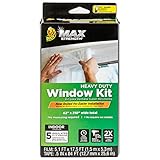
- Save on energy costs during cold weather months. Duck Max Strength shrink window film is puncture-resistant and two times thicker than standard window kits to create an airtight seal inside your home to block drafts and cold weather
- Easy-to-install roll of shrink film means no measuring needed - once applied, cut film to size
- Tools needed: scissors and hair dryer. For best results apply window films indoors on clean and dry surfaces, including painted or finished wood, aluminum or vinyl
- After installation, crystal clear and transparent window film is easy to see through. Once season is over, the window kit removes easily
- Window Kit includes 1, 62" x 210" roll of shrink film and 1, 0.5" x 84' foot roll of tape; Can insulate up to 5 standard sized 3' x 5' windows
Choose the fix by the problem
A draught is unwanted air entering through a gap. It is different from the normal ventilation a room needs for fresh air and safe appliance operation. A window can feel cold because its glass radiates heat away even when the frame is airtight, so sealing every visible opening is not the answer.
| Measure | Upfront cost | Window alteration or tools | Durability or limitation | Best use |
|---|---|---|---|---|
| Foam draught-proofing strip | Low; described as cheap | Self-adhesive; no specialist tools | Easy to fit but may not last long | Small, regular gaps around an opening frame |
| Brush or wiper strip | A little more than foam | Requires accurate fitting; strip must not prevent closure | Described as longer-lasting than foam | Sliding sash and other moving windows |
| Secondary-glazing film | Lower-cost secondary-glazing option | Usually a DIY installation over the pane | May not last, can be hard to make attractive, and offers the least thermal benefit among the secondary-glazing options described by Energy Saving Trust | A temporary or budget extra layer where a full glazing upgrade is not practical |
| Heavy or thermal curtains | Lower-budget purchase; exact current price not established | No window alteration; curtain hardware may already be present | Product life and measured saving are not stated | Renters and rooms where you cannot modify the frame |
| Sun-timed curtains or blinds | No purchase required | None | Relies on daily use; not measured as equivalent to double glazing | Any window that receives useful winter sun |
These are qualitative trade-offs, not a promise of a particular bill reduction. The available guidance does not establish a uniform saving for strips, film or curtains, and prices vary by country, retailer, size and date.
1. Seal gaps around opening windows
If air enters between a moving sash and its frame, draught-proofing strips are the most direct low-cost response. Energy Saving Trust recommends fitting a strip around the opening window frame to fill that gap. The strip must compress when the window closes without making the latch difficult to operate.
Do these 3 things before closing this tab:
1Repair Windows errors before they cause bigger problems2Fix the driver behind crashes, sound loss and screen glitches3Clear out junk files and repair common Windows errorsRank #2

- Save on energy costs during cold weather months. Duck Max Strength shrink window film is puncture-resistant and two times thicker than standard window kits to create an airtight seal inside your home to block drafts and cold weather
- Easy-to-install roll of shrink film means no measuring needed - once applied, cut film to size
- Tools needed: scissors and hair dryer. For best results apply window films indoors on clean and dry surfaces, including painted or finished wood, aluminum or vinyl
- After installation, crystal clear and transparent window film is easy to see through. Once season is over, the window kit removes easily
- Window Kit includes 2, 62" x 210" roll of shrink film and 2, 0.5" x 54' foot rolls of tape; Can insulate up to 10 standard sized 3' x 5' windows
How to fit a strip
- Identify the moving joint. Look around the edge of the opening sash, where the window meets its frame. Curtains moving when the window is shut can indicate a draught; Energy Saving Trust puts it this way: “If you can see curtains moving, it’s a good indicator that you have a draught.”
- Measure the gap. Check the width and depth at several points rather than assuming the gap is uniform. Choose a strip that fills the space but still allows the sash to close fully.
- Clean and dry the contact area. Dust or damp can stop an adhesive strip bonding. Follow the product’s fitting instructions for preparation.
- Apply in short, accurate runs. Keep the strip continuous around the relevant edges and press it firmly into place. Do not cover hinges, latches or any part that must move freely.
- Test the closure. Open and close the window several times. If it rubs, bows or will not latch, remove and refit with a slimmer profile rather than forcing the frame.
Foam, brush and wiper choices
Self-adhesive foam is the cheapest and simplest type in the guidance, but its easy installation comes with a durability trade-off: it may not last long. It can suit a straightforward, evenly sized gap where replacing the strip later is acceptable.
Brush or wiper strips cost a little more and are described as longer-lasting. A brush profile is particularly suitable for sliding sash windows, where the seal must accommodate movement along the track. Select the profile for the actual gap and movement of your window; a thick strip that works on a hinged casement can stop a sash from sliding.
When not to use an opening-window strip
A window that does not open has no moving gap to fill. The cited guidance recommends silicone sealant around a fixed window instead of an opening-window draught strip. Seal only unintended cracks around the frame and preserve any designed ventilation opening.
Rank #3

- Designed for interior use on windows
- Accommodates up to 4 standard sized windows
- Shrinks with hair dryer and applies with included double-faced tape
- Each sheet measures 62 in. L x 42 in. W
- Helps R-value increase up to 90%
2. Add secondary-glazing film for a cheap extra layer
Secondary glazing means adding a second layer inside the existing window rather than replacing the original pane. Thin transparent film is the lower-cost, usually self-fit option described in the guidance. It can reduce the direct exposure of the room to a cold pane, but it should not be presented as equivalent to replacement double glazing.
Recommended Free Tools
What the installation involves
- Check the pane and frame. The film needs a clean, sound surface and enough room for the supplied fixing method. Read the kit instructions before cutting anything.
- Clean and dry the perimeter. Dust, grease and moisture can spoil the seal or leave visible marks under a transparent film.
- Cut with an allowance. Leave the margin specified by the kit so the film can be secured without pulling away from the edges.
- Fix and tension the film. Apply it evenly to avoid creases and trapped dirt. Some kits use double-sided tape and heat to shrink the film; use only the method supplied with that kit.
- Inspect the seal. A loose edge or damaged film can undermine the result. Replace it when it clouds, peels or tears rather than assuming it will keep performing.
Understand the compromise
Film may not last long, and making a large clear sheet look neat can be difficult, especially on windows that are prominent from inside the room. Among the secondary-glazing options discussed by Energy Saving Trust, film provides the least thermal benefit. It is therefore a low-cost experiment or interim measure, not a claim that the window now performs like a modern sealed unit.
Use film where the existing window is sound and a full secondary frame or replacement is outside the budget. If appearance, long service life or maximum insulation matters more than the lowest purchase price, the film’s limitations are reasons to investigate a more substantial glazing solution rather than layering on more film.
Rank #4

- Save on energy costs during cold weather months. This rolled window kit creates an airtight seal inside your home to block drafts and cold weather
- Easy-to-install roll of shrink film means no measuring needed - once applied, cut film to size
- Tools needed: scissors and hair dryer. For best results apply window films indoors on clean and dry surfaces, including painted or finished wood, aluminum or vinyl
- After installation, crystal clear and transparent window film is easy to see through. Once season is over, the window kit removes easily
- Window Kit includes 3, 62" x 210" rolls of shrink film and 3, 0.5" x 54' foot rolls of tape; Can insulate up to 15 standard sized 3' x 5' windows
3. Hang heavy or thermal curtains
Heavy or thermal curtains improve the window’s overall barrier without altering the glass or frame. Energy Saving Trust lists them among lower-budget ways to improve window performance. Because the window itself remains untouched, this is often the most practical choice for a renter or for a room where frame work is undesirable.
Fit for coverage, not just appearance
- Choose a curtain wide enough to cover the full opening when closed, including the sides where cold air can spill into the room.
- Use a length that reaches the sill or floor appropriately for the room, while keeping fabric clear of heaters and other heat sources.
- Close the curtains across the whole window at the time you want to retain warmth; leaving a central or side gap reduces the barrier.
- Check the lining and care instructions. “Thermal” is a product description, not a quantified guarantee of a specific temperature or bill saving.
The guidance does not establish a standard saving for curtains, nor does it identify one universal fabric, lining thickness or hanging arrangement as best. Treat them as a heat-retention layer and judge the result by comfort and condensation or temperature changes in your own room, not by an assumed percentage reduction.
PC Slower Than It Used to Be?
A free scan shows the junk files, broken settings and background clutter dragging Windows down - then fixes them in one click.Free scan · Windows 10 & 11Outdated Drivers Are Slowing You Down
One free scan finds every outdated or missing driver and matches the right update for your exact hardware.Free scan · exact hardware matchCombine curtains with a known draught source carefully
Curtains can make a room feel less exposed to a cold pane, but they do not fill a gap between a sash and its frame. If you can feel moving air, seal the appropriate opening joint first and use the curtain as a separate barrier. Do not use a curtain to cover a fixed air vent that an appliance needs.
Best Value
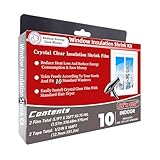
- Window insulation kit Contains 62"x 420" Of Window Clear Shrink Film And 1/2 Inch By 168 Feet Roll of Double Sided Tape
- Clear Insulation Shrink Film To Keep Out The Wind And Cold, Dust Prevention
- By Insulating Your Window Save Energy Costs And Reduce Heat Loss
- Crystal Clear Shrink Film Without Blocking Sunlight
- Easy And Quick Installation
4. Use curtains and blinds around the sun
This costs nothing and requires no change to the window. Open curtains and blinds when winter sunshine can warm the room, then close them as the sun goes down to slow heat loss after daylight fades. Energy Saving Trust’s practical instruction is: “If it’s sunny, open the curtains and blinds to let in as much warmth and UV as possible, and close them as soon as the sun goes down to keep the heat in.”
A simple daily routine
- Open coverings on sun-facing windows when direct sunlight reaches the room.
- Leave them open while the sun is contributing useful warmth, provided glare or privacy is not a problem.
- Close them as the sun goes down, before the glass and room cool noticeably.
- On a dull day, keep coverings positioned according to comfort and daylight rather than opening them in expectation of heat that is not arriving.
This is practical behaviour, not a measured guarantee that the window performs like double glazing. Its value is that it uses free solar warmth when available and adds a barrier when the outside temperature falls. It can also be combined with thermal curtains: open them for useful sun, then close the heavier layer at sunset.
Keep draught-proofing safe
Do not block required ventilation
Sealing unwanted gaps is not the same as sealing every opening. Energy Saving Trust warns that fixed ventilation openings needed by flueless or open-flue gas appliances must not be blocked. Inadequate ventilation can contribute to poor air quality and moisture problems. Before applying sealant, film, a strip or a curtain near an air opening, establish whether it is a deliberate vent rather than a defect.
- Leave appliance ventilation openings unobstructed.
- Do not use draught strips to disable a designed ventilation path.
- If you are unsure whether an opening is required for an appliance, ask a qualified heating professional before sealing it.
Take extra care in listed or historic buildings
Changing windows in a listed building may require permission. Check with your local council before altering the frame, glass or external appearance. Secondary glazing can be a less intrusive way to improve the thermal performance of historic windows, but the appropriate consent and installation method depend on the building and location.
A practical order of attack
- Check for moving air. If the problem is a gap around an opening sash, measure it and start with the correct foam, brush or wiper strip.
- Separate fixed panes from opening panes. Use suitable silicone sealant for unintended gaps around a fixed window, not an opening-window strip.
- Add a barrier where the pane remains cold. Consider secondary-glazing film when the lowest-cost DIY glazing layer is the priority, while accepting its appearance and durability limits.
- Use coverings immediately. Heavy or thermal curtains require no window alteration, and sun-timed opening and closing costs nothing.
- Recheck ventilation and permissions. Keep required vents clear and confirm local consent before changing windows in a listed property.
These steps address different causes, so combining them can make sense: a correctly sealed sash can stop air leakage, while a curtain or second layer deals with a cold surface. None of the four options comes with a universal saving figure in the available guidance, so choose based on the window type, your ability to alter it, durability needs and the safety of the room.
Quick Recap

Product prices and availability are accurate as of the date/time indicated and are subject to change. Any price and availability information displayed on Amazon at the time of purchase will apply.

